Welcome to our community

Be a part of something great, join today!

  • Hey all, just changed over the backend after 15 years I figured time to give it a bit of an update, its probably gonna be a bit weird for most of you and i am sure there is a few bugs to work out but it should kinda work the same as before... hopefully :)

Introducing the Panavision DXL

You can argue what is usuable and what is technically available. I don't think RED is overselling their Dragon sensor.

Precisely.

It's a bit like arguing that zoom lens X is soft at f2.8 at one end so you shouldn't call it f2.8.
 
Last edited:
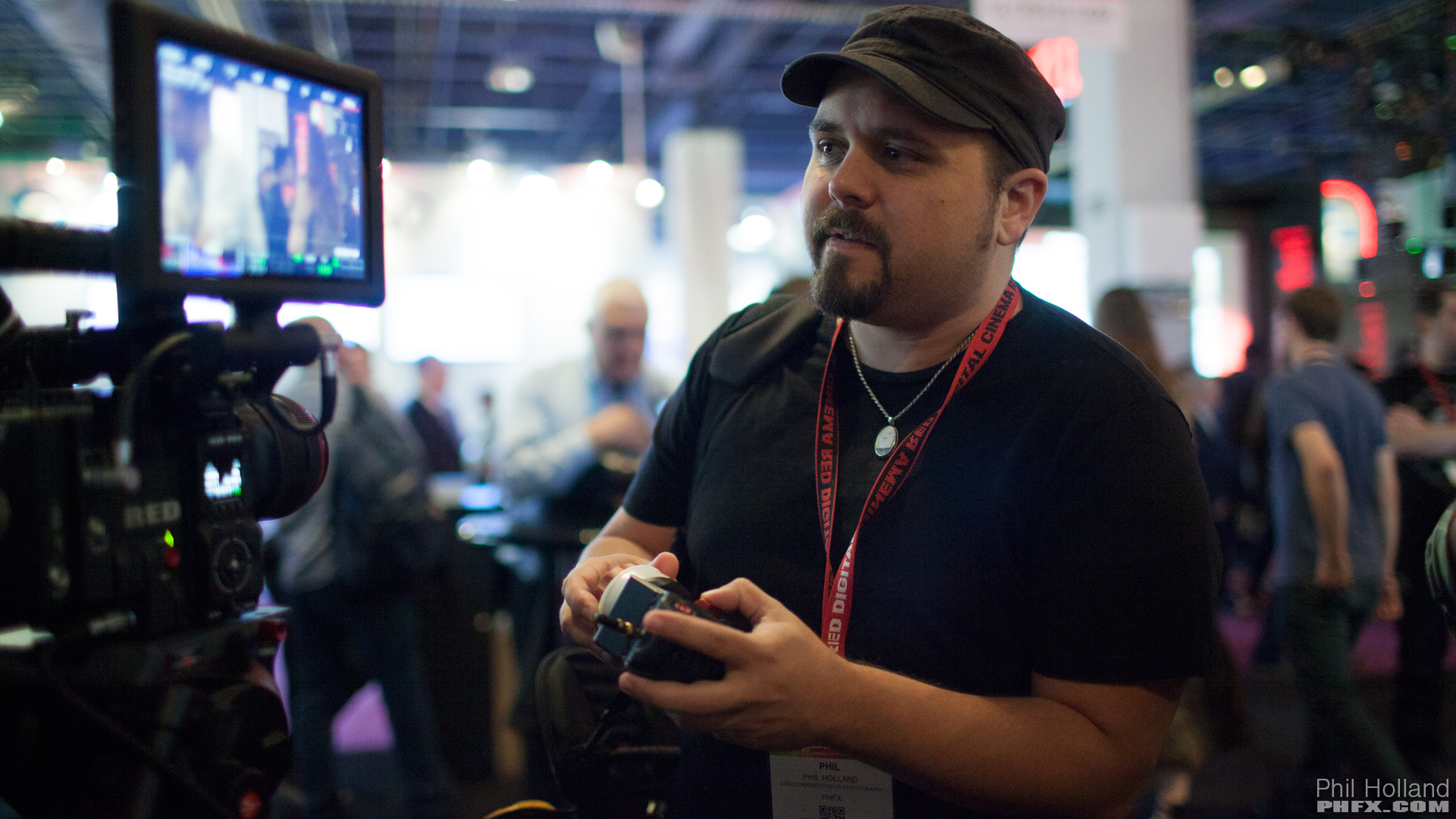
2 years and 2 months ago, photograph by Jarred Land:

phfx_NAB2014_redThings_0006.jpg


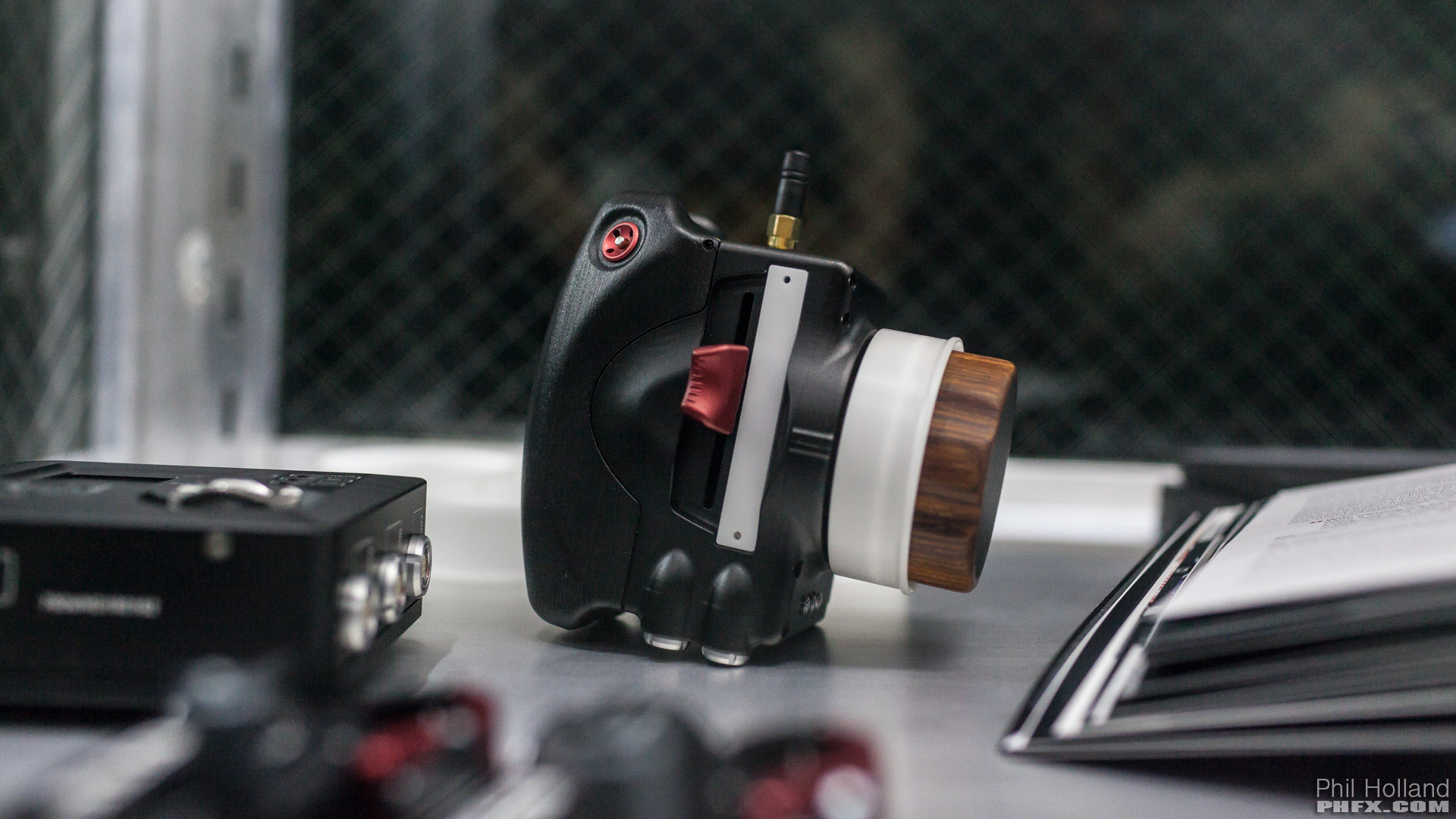
And the thing:

phfx_NAB2014_redThings_0001.jpg
so i guess this handset is not available?
 
Dragon sensor has 15 stops of usable dynamic range. Red just loves to bloat the numbers a bit for marketing reasons.

With our in house tests, I easily see 16stops. What is usable and what is available are two different things.

15 stops for sure.
 
Just to back up what Mark is saying.

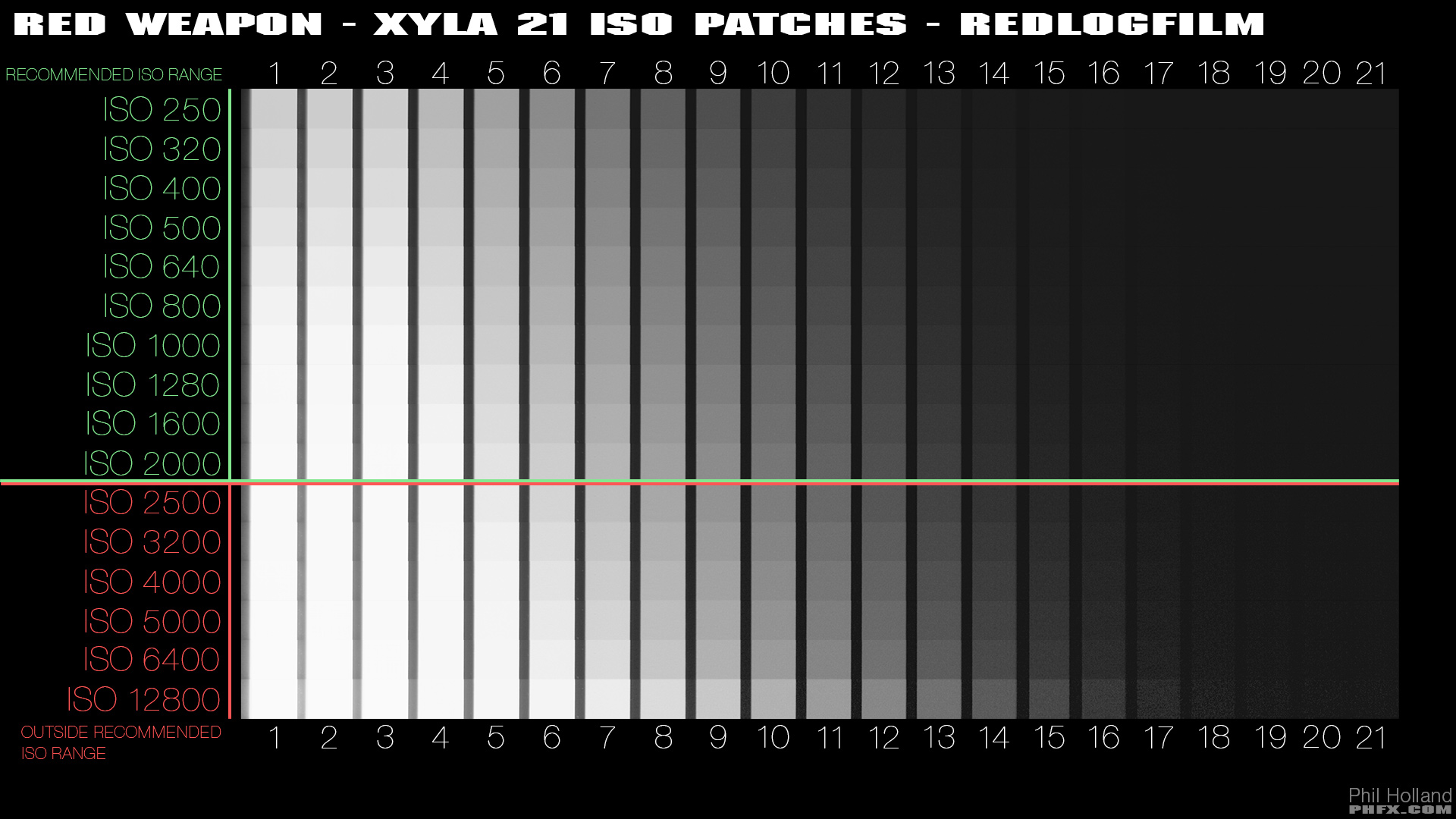
Here's everything you need to know about Weapon Dragon's Dynamic Range:

phfx_REDWeaponTest2015_xyla21_ISOPatches_RLF.jpg


We can debate about what a usable stop is. My methodology mainly has to do with noise versus captured detail within the patch within a specific tolerance based on video and log gamma spaces for a given ISO Rating. Long and the short of that, since you can see separation between darkness with patches 16 and 17 here at ISO 250, the cleanest rating, it's pretty clear it's a 16+ stop imaging system. Taken into account the recommended Base ISO of 800 with a bit of interesting flux in the area around ISO 1280 especially with the LLO and Standard OLPFs, you have a lot of usable Total Captured Dynamic Range.

I spoke to PV at the show at some of their numbers are conservative as they haven't finished their OLPF and Color Science yet. 15 is a nice safe number in my mind.
 
Amazing Jarred. RED on top of the game! very impressive!!!
 
Wow! REDuser schoolhouse.

It seems the gauntlet has been thrown down in re color science. It will be interesting to learn what Graeme's next tweaks will look like. Personally satisfied with what the RED does now, but choice is good.


That was good read.


Still strange how all this "color science" talk is still a woodoo thing and no objective infos are out there. The infos I got reading all the DXL articles is that LI is still using RED's OLPF and RED's ColorScience for the tests in this article.
What have they effectively done color wise on this test? Did they perform the debayer and RGB matrix "as close to the sensor as possible"? What was effectively possible?

Pat

PS: explaining that LI ground breaking idea is made by using substractive VS additive color science is an insult to all colorist out there IMHO.
 
Still strange how all this "color science" talk is still a woodoo thing and no objective infos are out there. The infos I got reading all the DXL articles is that LI is still using RED's OLPF and RED's ColorScience for the tests in this article.
What have they effectively done color wise on this test? Did they perform the debayer and RGB matrix "as close to the sensor as possible"? What was effectively possible?

Pat

PS: explaining that LI ground breaking idea is made by using substractive VS additive color science is an insult to all colorist out there IMHO.

I honestly don't really know why they would need to change it, the camera got more lut inputs than most cameras and if they can camera RGB raw.... from there you can do most of color transformations,
 
I honestly don't really know why they would need to change it, the camera got more lut inputs than most cameras and if they can camera RGB raw.... from there you can do most of color transformations,


Because they are trying to customize the camera for the rental only market. If they simply did their color science as a LUT, anyone who rented their camera could simply make a copy and have 'Panavised' color science in their own personal camera. Panavision does not want that, they want their camera and it's color science to be exclusive to their customers. Hence the custom OLPF and deep system level color science.
 
Because they are trying to customize the camera for the rental only market. If they simply did their color science as a LUT, anyone who rented their camera could simply make a copy and have 'Panavised' color science in their own personal camera. Panavision does not want that, they want their camera and it's color science to be exclusive to their customers. Hence the custom OLPF and deep system level color science.

Sure, but color science is nothing but a lut ontop of camera RGB and if PV make such it can be easily recreated. ofcourse together with a special OLPF things are different, but I would think it was odd if they went far from the red standard olpf.

And honestly I have doubts that PV will quickly and easily make better OLPFs than red. If that was an easy task then I think the RED guys would have gone and paid somebody to make them one long ago. Different OLPF sure, that is easy, but better in the sense that everyone finds it better, that I think is fairly difficult. The Standard OLPF to me is pretty freaking good. Then you can have all kinds of arty kind of olpfs which I think most large rental houses have and so will PV and for sure they will make some of their own and try to differentiate their cameras as far as they can, like they always has. I mean that is their core business and have always been. But no matter how many hats and feathers they put on that camera there is a weapon brain siting inside and the basic feature of that brain I think RED provide for very well, kind of hard to beat your maker so to speak.

Again this is me guessing I never even touched this camera.
 
And honestly I have doubts that PV will quickly and easily make better OLPFs than red. If that was an easy task then I think the RED guys would have gone and paid somebody to make them one long ago.
I think Red wants colors accuracy where PV wants Alexa less realistic but more "filmlike" images. Two different spirits, two different goals. PV is doing what many guys here kept asking for.
So they will probably mimic the Arri lowcon filter that everybody is talking about for years and make it shine with their color science.
 
The 8K resolution is the 'goodness' here. Having a color palate that doesn't get in the way of a production needing or wanting to this product is the dealmaker. The Provideocoalition.com piece honestly stated the color wasn't perfect but performed robustly and consistently under mixed lighting, strong backlighting and managing the critical memory colors. Along with the hardware refinements, the DXL greatly reduces or speaks to those critical barrier points of production and post.
 
I think Red wants colors accuracy where PV wants Alexa less realistic but more "filmlike" images. Two different spirits, two different goals. PV is doing what many guys here kept asking for.
So they will probably mimic the Arri lowcon filter that everybody is talking about for years and make it shine with their color science.

problem is the data is not super accurate, especially under mixed lighting... just shoot color charts and see where targets are... and then the green/yellow haze everywhere... most of it fixable in post, but as I said before I think this is a great example of a post house with tons and tons of in depth .r3d experience custom improving results from the sensor...

this is great and should be done more. collaboration with high end DPs and post houses. get quality feedback from peeps that have actually real world experience day in day out with RED cams in all kinds of conditions, and then actually have to deal with these images in post.

our hard working friends at RED are not top-of-the-food-chain DPs or colorists. And color science and color grading are two different things. Nobody cares about the color science involved, but DPs wanna see what they (think they) shot on set and colorists don't wanna waste time wrestling with footage and bringing images into a better starting place... it's repetitive, redundant - they just wanna paint

Image acquisition is one thing - which RED clearly have now provided a gazillion options. But the only thing that matters is the final end product and that means post and post workflow...

this is a good thing and hopefully will move the ball into the right direction and we can see further improvements here.

The 8K resolution is the 'goodness' here. Having a color palate that doesn't get in the way of a production needing or wanting to this product is the dealmaker. The Provideocoalition.com piece honestly stated the color wasn't perfect but performed robustly and consistently under mixed lighting, strong backlighting and managing the critical memory colors. Along with the hardware refinements, the DXL greatly reduces or speaks to those critical barrier points of production and post.

IMO, the PVC article is pretty much irrelevant because the only thing that needs to be seen is what the cam does once they got the custom OLPF in there, that the LI custom color science will take advantage of... everything right now is just introduction of gear and improved 8K Panny workflow... footage at Cinegear was good, nothing special - that was standard RED 8K VV footage with a custom grade.... but def 1000 light years better than the 8K footage from last year, due to the horrible 8K TV they had...

and then we need to see what and how one can actually manageable deal with 8K data in post... LI pushes the Pablo system, lots of peeps don't like that platform...

5K/6K with custom, improved color science would be sufficient for many... a lot of times 8K is overkill or unsuitable for projects due to the change in image characteristics...
 
Sure, but color science is nothing but a lut ontop of camera RGB...

Is it, though? I'm just a DP, I don't know much about color science but this seems awfully reductive to me. We used to talk about the difference in quality of the color separation dyes used in prism block cameras and the resulting images. The same thing is relevant today with the proprietary color dyes used on single chip Bayer sensors. It seems to me that once you add an optical filtration component before the sensor into the mix, the conversation becomes exponentially more complex since the optical elements help to determine what colors the sensor is capable of seeing. Which the new OLPF would be. I'm just not so sure that you can easily dismiss what's going on under the hood in this case.
 
Back
Top