
Navigation
Install the app
How to install the app on iOS
Follow along with the video below to see how to install our site as a web app on your home screen.

Note: this_feature_currently_requires_accessing_site_using_safari
More options
Welcome to our community
Be a part of something great, join today!
You are using an out of date browser. It may not display this or other websites correctly.
You should upgrade or use an alternative browser.
You should upgrade or use an alternative browser.
The First Komodo Out in the Wild
- Thread starter Phil Holland
- Start date
Jacob Tsering
Member
- Joined
- May 17, 2020
- Messages
- 12
- Reaction score
- 0
- Points
- 0
V Mount Attachment
V Mount Attachment
Hey Phil,
Quick question: how do you attach the v-mount battery to the back of the Komodo?
V Mount Attachment
Hey Phil,
Quick question: how do you attach the v-mount battery to the back of the Komodo?

Björn Benckert
Well-known member
That airport footage looks kind of stuttery to me -- isn't global shutter supposed to help with that?
Global shutter is not less studdering. The difference is only that global shutter does not ”wobble” the image or make someting that moves quick upp trough the frame appear shorter then it actually is etc.
Hey Phil,
Quick question: how do you attach the v-mount battery to the back of the Komodo?
I think Phil replied to this in post #90...

Nick Morrison
Well-known member
- Joined
- Nov 9, 2011
- Messages
- 9,141
- Reaction score
- 50
- Points
- 48
- Location
- Brooklyn
- Website
- www.smallgiant.tv
Global shutter is not less studdering. The difference is only that global shutter does not ”wobble” the image or make someting that moves quick upp trough the frame appear shorter then it actually is etc.
Exactly.
A global shutter helps reduce rolling shutter, which is a symptom of CMOS sensors (and how fast they scan north to south).
But it can't solve judder, which is an optical anomaly determined by your focal length and panning speed.
David Rasberry
Well-known member
- Joined
- Aug 20, 2008
- Messages
- 4,266
- Reaction score
- 0
- Points
- 0
Exactly.
A global shutter helps reduce rolling shutter, which is a symptom of CMOS sensors (and how fast they scan north to south).
But it can't solve judder, which is an optical anomaly determined by your focal length and panning speed.
Rolling shutter cameras don't completely image any temporal picture elements that happen over a fraction of the frame exposure time. Flash banding at concerts is the most obvious example. But anything that moves through a portion of the frame not being scanned during the frame interval won't appear in the image. It is less of a problem when the camera refreshes the frame at several multiples of the frame rate

yann LHENORET
Well-known member
Thank you guys for sharing these informations yesterday.
And for asking Jarred so many questions. Especially about sound Phil!
A must see for everyone who's interested in buying a Komodo.
https://www.youtube.com/watch?v=Yobu7KCF9LM

And for asking Jarred so many questions. Especially about sound Phil!
A must see for everyone who's interested in buying a Komodo.
https://www.youtube.com/watch?v=Yobu7KCF9LM

Joel Arvidsson
Well-known member
Thank you guys for sharing these informations yesterday.
And for asking Jarred so many questions. Especially about sound Phil!
A must see for everyone who's interested in buying a Komodo.
https://www.youtube.com/watch?v=Yobu7KCF9LM
Poor Scott looking at his 3d printed version=)
OK so stutter/studder/judder/"temporal picture elements" are not helped by global shutter. Thank you for correcting me and I get the difference now. I have to admit I'm disappointed though as the normal SSJTPE is very annoying to me in any kind of digital pan. Komodo only looks marginally better in that regard.

Karim D. Ghantous
Well-known member
OK so stutter/studder/judder/"temporal picture elements" are not helped by global shutter. Thank you for correcting me and I get the difference now. I have to admit I'm disappointed though as the normal SSJTPE is very annoying to me in any kind of digital pan. Komodo only looks marginally better in that regard.
I think you can minimise it with a wider shutter angle (but don't quote me). Also, the Motion Mount has a soft shutter effect, I think, which ramps the shutter angle in and out. Someone who knows can clarify.

Jonathan Keane
Well-known member
Hey Phil I was wondering if you tested the run time with the GDU mini v-lock battery? I like the idea of having 2 of them for a shoot vs 4 or 5 bp batteries. I thought it would be simple math but I'm not sure if things will change power wise on the normal black komodos.
Thanks Phil!
Thanks Phil!
- Thread starter
- Moderator
- #172

- Joined
- Apr 19, 2007
- Messages
- 13,392
- Reaction score
- 796
- Points
- 113
- Location
- Los Angeles
- Website
- www.phfx.com
Just did a healthy round of wireless tests for Komodo. No need for me to say much in the form of a diary here:
https://www.instagram.com/p/CBJPT-jHOvK/
Cliff notes version. Wi-Fi. 5GHz and 2.4GHz, RED Control App incoming for OIS (soon) and Android (slightly later than soon), IP connectivity and camera control via a web browser even. And yes, hard lined serial connection.
Three more tests to film, then I can goof off. Anyways.
Rolling Shutter is slightly different on motion picture film versus Digital. On film you have a spinning disc with a wedge slotted out. Digital you have "usually" a horizontal frame readout, and readout is the key there as depending on how fast or slow it is reveals how decent essentially the camera would be at handheld filming, panning, etc. Generally speaking as well, most digital cinema cameras have a nice and fast readout.
Komodo has a Global Shutter. And what is going on is every frame is instantly captured. Every pixel, all at once. Not a horizontal scan line.
Global Shutter has been real desired for action filmmakers in particular in the world of cinema. And also in the world of cinema Global Shutter has "sucked" due to really crappy Dynamic Range primarily. RED's sensor team found a way to produce a Global Shutter sensor with really good Dynamic Range. If you watched the stream, you already have my pre-measurment "guess" on how much DR is in this baby dragon.
That was actually fun and I was going to do some night work, but we had rain. So instead Scott ran that sucker for hours! Truly rad seeing that first Komodo prototype. I don't know if anybody has seen that before.
As for audio. I'm always going to be the whole pie filmmaker. I see the way cameras are used these days as our industry becomes more dynamic as we evolve to both larger and smaller camera teams ranging to the one man band. Komodo is in the wheelhouse and price point where people are going to use it in a bazillion different ways. And you know, 1/2 the movie is sound
For the curious, and you'll see soon, I've tested Komodo with audio gear from Sound Devices, Zaxcom, and Zoom so far as well as mics and things from Sennheiser, Rode, etc. Jarred inspired me to look into that Sony thing from the stream, but I have a similar wireless solution.
Outside of the forum questions, people are hitting me up from all over the world right now asking "can you test this", "I'm on the small camera team on film XXXXXX", "doesn't Komodo work with this"?
Footage requests, pretty much every minute right now. My goal really is have answers to all the usage, compatibility, features questions while unlocking how to best film with this cam.
But I've got some goodies coming for the patient folks. Bare in mind I am a filmmaker. Some things take longer than others. Quarantine, Curfew, Murder Hornets, and other hurdles aren't helping. But I'm still plowing through the stuff that will actually be most useful to you in the long run. Image quality though is there. You heard my general thoughts on that in the live stream and for a certain types of filmmakers, Komodo is going to make a lot of sense.
The Motion Mount was indeed cool though you had to work in a small box of limitations. It's absolutely most interesting feature was indeed the Soft Shutter mode, which truly helped with Temporal Aliasing, somewhat useful in our HDR display work. Curious to see how and if that technology is further explored. The Motion Mount through it's sine wave interaction with the sensor readout provided an ND, Global Shutter Mode, and Soft Shutter Mode. These were "effects" and not true Global Shutter like Komodo, which is why we don't have those shutter speed limitations on this little thing.
Long time and I am indeed using those a lot right now to power Komodo and the external displays. Something on my mind there as I've now tested the larger 7" screens. Some of these external camera monitors draw more power than you think, especially "true" bright stuff. I'm finding the 5-ers from various companies provide a nice balance between long run times and power draw. I have a SmallHD Cine 7 on there right this second and I love the big screen, but in full bright more, it does use some juice. Makes me respect the draw on the DSMC2 touch screens a bit more actually. It's not a huge things, but a thing to look out for if you are packing light and planning your kit around that. Most don't think of how much juice external monitors actually use. Hell most people can't tell me how long they run of the batteries they use now even.
https://www.instagram.com/p/CBJPT-jHOvK/
Cliff notes version. Wi-Fi. 5GHz and 2.4GHz, RED Control App incoming for OIS (soon) and Android (slightly later than soon), IP connectivity and camera control via a web browser even. And yes, hard lined serial connection.
Three more tests to film, then I can goof off. Anyways.
Rolling shutter cameras don't completely image any temporal picture elements that happen over a fraction of the frame exposure time. Flash banding at concerts is the most obvious example. But anything that moves through a portion of the frame not being scanned during the frame interval won't appear in the image. It is less of a problem when the camera refreshes the frame at several multiples of the frame rate
Rolling Shutter is slightly different on motion picture film versus Digital. On film you have a spinning disc with a wedge slotted out. Digital you have "usually" a horizontal frame readout, and readout is the key there as depending on how fast or slow it is reveals how decent essentially the camera would be at handheld filming, panning, etc. Generally speaking as well, most digital cinema cameras have a nice and fast readout.
Komodo has a Global Shutter. And what is going on is every frame is instantly captured. Every pixel, all at once. Not a horizontal scan line.
Global Shutter has been real desired for action filmmakers in particular in the world of cinema. And also in the world of cinema Global Shutter has "sucked" due to really crappy Dynamic Range primarily. RED's sensor team found a way to produce a Global Shutter sensor with really good Dynamic Range. If you watched the stream, you already have my pre-measurment "guess" on how much DR is in this baby dragon.
Thank you guys for sharing these informations yesterday.
And for asking Jarred so many questions. Especially about sound Phil!
A must see for everyone who's interested in buying a Komodo.
That was actually fun and I was going to do some night work, but we had rain. So instead Scott ran that sucker for hours! Truly rad seeing that first Komodo prototype. I don't know if anybody has seen that before.
As for audio. I'm always going to be the whole pie filmmaker. I see the way cameras are used these days as our industry becomes more dynamic as we evolve to both larger and smaller camera teams ranging to the one man band. Komodo is in the wheelhouse and price point where people are going to use it in a bazillion different ways. And you know, 1/2 the movie is sound
For the curious, and you'll see soon, I've tested Komodo with audio gear from Sound Devices, Zaxcom, and Zoom so far as well as mics and things from Sennheiser, Rode, etc. Jarred inspired me to look into that Sony thing from the stream, but I have a similar wireless solution.
Outside of the forum questions, people are hitting me up from all over the world right now asking "can you test this", "I'm on the small camera team on film XXXXXX", "doesn't Komodo work with this"?
Footage requests, pretty much every minute right now. My goal really is have answers to all the usage, compatibility, features questions while unlocking how to best film with this cam.
But I've got some goodies coming for the patient folks. Bare in mind I am a filmmaker. Some things take longer than others. Quarantine, Curfew, Murder Hornets, and other hurdles aren't helping. But I'm still plowing through the stuff that will actually be most useful to you in the long run. Image quality though is there. You heard my general thoughts on that in the live stream and for a certain types of filmmakers, Komodo is going to make a lot of sense.
I think you can minimise it with a wider shutter angle (but don't quote me). Also, the Motion Mount has a soft shutter effect, I think, which ramps the shutter angle in and out. Someone who knows can clarify.
The Motion Mount was indeed cool though you had to work in a small box of limitations. It's absolutely most interesting feature was indeed the Soft Shutter mode, which truly helped with Temporal Aliasing, somewhat useful in our HDR display work. Curious to see how and if that technology is further explored. The Motion Mount through it's sine wave interaction with the sensor readout provided an ND, Global Shutter Mode, and Soft Shutter Mode. These were "effects" and not true Global Shutter like Komodo, which is why we don't have those shutter speed limitations on this little thing.
Hey Phil I was wondering if you tested the run time with the GDU mini v-lock battery? I like the idea of having 2 of them for a shoot vs 4 or 5 bp batteries. I thought it would be simple math but I'm not sure if things will change power wise on the normal black komodos.
Thanks Phil!
Long time and I am indeed using those a lot right now to power Komodo and the external displays. Something on my mind there as I've now tested the larger 7" screens. Some of these external camera monitors draw more power than you think, especially "true" bright stuff. I'm finding the 5-ers from various companies provide a nice balance between long run times and power draw. I have a SmallHD Cine 7 on there right this second and I love the big screen, but in full bright more, it does use some juice. Makes me respect the draw on the DSMC2 touch screens a bit more actually. It's not a huge things, but a thing to look out for if you are packing light and planning your kit around that. Most don't think of how much juice external monitors actually use. Hell most people can't tell me how long they run of the batteries they use now even.
- Thread starter
- Moderator
- #173
- Joined
- Apr 19, 2007
- Messages
- 13,392
- Reaction score
- 796
- Points
- 113
- Location
- Los Angeles
- Website
- www.phfx.com
Okay, onto some actually pretty damn useful stuff. I've just finished several days of power testing. Yes. Days.

Komodo Diary: Day 11[/yellow]
My general circadian rhythm nets me between 18-32 hours extra uptime per week than average, and as such I've been investigating Komodo's power draw for several days. Which is a time consuming test to do right, but necessary if you're going out the field and building your kit.
So first thing to know, at the moment Komodo takes about 20 seconds to boot, no biggie. As things are added and/optimized that might go up or down.
You have choices for power. You can use one or both of the Canon BP slots on the camera brain and yes it's hot swappable (drains left to right, one at a time). Or you can use the 2-pin LEMO-style DC-in on the back and feed a V-Mount, G-Mount, or whatever battery. I do recommend using the actual Canon batts. The chip in there transmits the charge info to the cam and the cells are good. Some of cheap options are, well... Cheap and actually suck, not all, but some.
Onto the meat of this meal.
Komodo Power Draw as of now. 1X Canon BP-955 ~ 1.5 hours. 1X Canon BP-975 ~ 2.5 hours. GDU Mini V 98Wh ~ 4 hours. Anton Bauer 150Wh Dionic XT ~ 6.25 hours. Now in particular be aware if you powering things like accessories through the D-Tap from those bigger batteries, some things draw more power than you'd think, like super bright displays. But for a straight run, you get the idea. I have a brick here that can power Komodo for over 11 hours. Using a Shark Fin, you can literally be up all day on a camera you can still lug around.
TL;DR, Komodo is not very power hungry and is rather power efficient, which is nice to see in a raw recording compact camera. Hope that helps you plan your juice. This is actually inspiring me for some specific recording ideas, but that's for a different day.
- Moderator
- #174

Jeff Kilgroe
Well-known member
Great info on power, Phil.
What battery plate are you using with the GDU vmount? Seems like a nice option and can still lift up if we want to keep Canon batts for the camera and something like the slim GDU for d-tap stuff.
What battery plate are you using with the GDU vmount? Seems like a nice option and can still lift up if we want to keep Canon batts for the camera and something like the slim GDU for d-tap stuff.

luigivaltulini
Well-known member
- Joined
- Oct 26, 2009
- Messages
- 2,524
- Reaction score
- 0
- Points
- 36
- Location
- Switzerland- LUGANO
- Website
- www.cine5k.ch
Phil how does clip playback work R3d and Prores?
via touch screen?
via touch screen?
Jonathan Keane
Well-known member
Thanks for the power info Phil! It would be cool if someone could make a bp style plate that slides into the battery slot and the other side is the vmount. Maybe one of the guys with a 3d printer *hint *hint
- Thread starter
- Moderator
- #177
- Joined
- Apr 19, 2007
- Messages
- 13,392
- Reaction score
- 796
- Points
- 113
- Location
- Los Angeles
- Website
- www.phfx.com
Phil how does clip playback work R3d and Prores?
via touch screen?
You press playback and it is extremely quick compared to DSMC2 to jump in there. You have your playback controls and you can scrub and all that.
Thanks for the power info Phil! It would be cool if someone could make a bp style plate that slides into the battery slot and the other side is the vmount. Maybe one of the guys with a 3d printer *hint *hint
That is how this battery plate works.
Great info on power, Phil.
What battery plate are you using with the GDU vmount? Seems like a nice option and can still lift up if we want to keep Canon batts for the camera and something like the slim GDU for d-tap stuff.
This is the V-Mount from Wooden Camera, I guess I should probably have grouped all this in one post or something, but you guys are essentially getting this info in realtime and I can see how stuff is missed.
The WC V-Mount (also making a G-Mount) has that little kip handle to place it up or down or tilt it outwards. You don't want something totally flush with the camera because getting it lower is nice and you also don't want to interfere with SDI out or anything. You will notice in this setup I'm using nothing by right angle SDI and all that. Those are handy. You don't need them because you can reposition the battery plate, but it's a nice and tidy way to be.
Todd G. Peterson
Well-known member
FYI, I saw that Jarred teased on IG qualified CFast cards. Not official yet, but likely. Happily, it includes my Sandisk Extreme Pro cards.
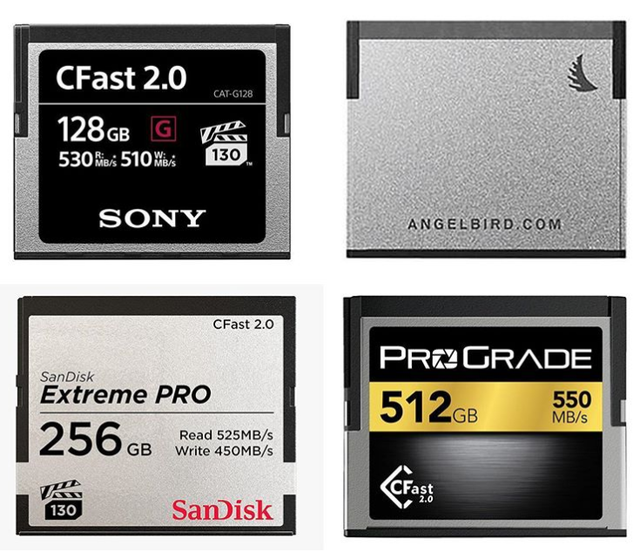
image sharing sites
image sharing sites
paulcurtis
Well-known member
Hi Phil,
Glad you're one of the first. I've held off asking anything just because i know you'll probably cover it anyway. But.
I would be curious to know if that is a real global shutter or just a very very fast readout? (It's a vfx tracking thing i'm asking for).
Whether the top display does magnification fast and during record (unlike DSMC2!)
I assume there's no HDRx (wouldn't that work really well with a global shutter...?)
And when you do manage to get your hands on some Leica M glass that would be super cool to see if it works, especially the wider glass.
Have fun!
Cheers
Paul
- Thread starter
- Moderator
- #180
- Joined
- Apr 19, 2007
- Messages
- 13,392
- Reaction score
- 796
- Points
- 113
- Location
- Los Angeles
- Website
- www.phfx.com
Y'all got anymore of that Komodo R3D laying around?
Okay. I'll bite:
https://www.youtube.com/watch?v=L97EF-ZK4UA
Direct link to R3D:
https://www.dropbox.com/s/vts9klvkvlw31f5/phfx_REDKomodoSampleClip_20200608.zip?dl=1
Happy World Oceans Day!
Here's a long clip you guys can use to test playback and your general workflow. Details are:
Format Size = RED Komodo 6K 17:9
Frame Rate = 24p
Codec = REDCODE RAW HQ
Look = Straight out of camera, a wee bit of white balance, but only a wee. Straight IPP2 of Medium Contrast/Soft Highlight Roll-Off, No Grade
Lens = Tokina Cinema Vista 35mm T1.5, set to a 2.8/4 split
Audio = Sennheiser MKH416 going to a Sound Devices MixPre II 10, 3.5mm balanced out back into Komodo (.WAV is in the .RDC folder)
Key Light = Lightpanels Gemini 2X1 through a Matthews 4x4 Full Silk, slightly feathered, a smidge of negative fill, various other lights in the BG
Take special note, if you crank the audio the fans on the Hive 200-C about 12 feet behind me providing the rim light is the fan you are hearing, then likely the high winds outdoors. The mic is next to Komodo and that should tell you indeed that Komodo is damn quiet. By far the quietest RED camera to date. I'll do a side by side DB w/ DSMC2, but it is the answer you want from Komodo.
Enjoy!
Okay. I'll bite:
Direct link to R3D:
https://www.dropbox.com/s/vts9klvkvlw31f5/phfx_REDKomodoSampleClip_20200608.zip?dl=1
Happy World Oceans Day!
Here's a long clip you guys can use to test playback and your general workflow. Details are:
Format Size = RED Komodo 6K 17:9
Frame Rate = 24p
Codec = REDCODE RAW HQ
Look = Straight out of camera, a wee bit of white balance, but only a wee. Straight IPP2 of Medium Contrast/Soft Highlight Roll-Off, No Grade
Lens = Tokina Cinema Vista 35mm T1.5, set to a 2.8/4 split
Audio = Sennheiser MKH416 going to a Sound Devices MixPre II 10, 3.5mm balanced out back into Komodo (.WAV is in the .RDC folder)
Key Light = Lightpanels Gemini 2X1 through a Matthews 4x4 Full Silk, slightly feathered, a smidge of negative fill, various other lights in the BG
Take special note, if you crank the audio the fans on the Hive 200-C about 12 feet behind me providing the rim light is the fan you are hearing, then likely the high winds outdoors. The mic is next to Komodo and that should tell you indeed that Komodo is damn quiet. By far the quietest RED camera to date. I'll do a side by side DB w/ DSMC2, but it is the answer you want from Komodo.
Enjoy!