Welcome to our community

Be a part of something great, join today!

  • Hey all, just changed over the backend after 15 years I figured time to give it a bit of an update, its probably gonna be a bit weird for most of you and i am sure there is a few bugs to work out but it should kinda work the same as before... hopefully :)

Sony F5 and F55...

Status
Not open for further replies.
WHAT???? YOU GONA BE KIDDING ME SONY!!!

SSDC

Same EXMOR thick edges, over-saturated, lossy image? Oh no-o-o-o. No.
And who is sabotaging promotional materials about f5/55 cameras?
First - lame presentation in "cheap rental camera shop" style with zero test footages,
Second - this 720P (you gonna be f...g kidding me SONY) TEST VIDEO???? I can pull out same picture from my $300 digital rebel if I downscale it properly from 1080 to 720.
Feels like SONY created these products on purpose and purpose is to deliver very important message to the audience - "4K and UP cameras sucks and you will never get any kudos using it! Go buy 1080"

Why you doing this SONY - it is not fair to compromise technology revolution! Please stop!

What happened Dmitry?!...
Cool down.

George
 
The RED website does not calculate tax for you. It will be added locally when delivered.


Sony F5 EU pricing is about $17400 (excluding taxes). Who can describe "taxes" for me?
1. How much is it?
2. Are RED prices at red.com have excluded taxes too?
Thanks!

Sony F5 article link here:
http://www.cinema5d.com/news/?p=13415
 
I know this is the F5 and F55 thread but the trailers for Oblivion and After Earth are out now and both of them were shot on the F65, Which has the same sensor as the F55 but double the photosites. Both movies are really effects heavy so you have to keep a sharp eye out for the real footage but when you do see it it looks really great, it has a very different feel to it then what I've seen before. I'm looking forward to when they come out with a higher quality trailer for After Earth, this one is so compressed. I hate Yahoo video.

http://trailers.apple.com/trailers/universal/oblivion/
http://movies.yahoo.com/movie/after-earth/trailers/earth-trailer-1-170245149.html
 
The F65 is fat. Do not know why but here in stockholm there is one and it's hardly ever in use. If I was to rent a camera for a change then the F65 would be my first pick. Would be fun to play with a camera thats impressive even just for it's size.
 
Here is a test film shot on F55 called "Dig":
http://vimeo.com/54571154

Download of 20Mb/s version avialable.

The one thing that stood up for me is that this is by far the BEST camera-showcase purpose short-film I have ever seen. It shows the camera in every imaginable lighting situation and it is executed with the outmost professionalism - both principal photography and the postproduction. And of course it helps to actually have a great narrative story. Simply amazing...

Peter
 
I know this is the F5 and F55 thread but the trailers for Oblivion and After Earth are out now and both of them were shot on the F65, Which has the same sensor as the F55 but double the photosites. Both movies are really effects heavy so you have to keep a sharp eye out for the real footage but when you do see it it looks really great, it has a very different feel to it then what I've seen before. I'm looking forward to when they come out with a higher quality trailer for After Earth, this one is so compressed. I hate Yahoo video.

Adam if you really want to get RAW files from SONY F65 you can download it here:
http://www.jasonmyres.com/2012/07/sony-f65-4k-raw-footage-for-testing/

RAW files have a huge size because they have 16-bits as I know. I have downloaded the smallest (14Gig size) and sadly to said cant open it in After Effects for testing. But Resolve reads it ok.

By my opinion picture looks more cleaner overall than Epic's picture but it have strange and terrible color noise in the shadows of F65 footage. Not even pixels but groups of pixels. How clean it in post I have no idea.
 
I know this is the F5 and F55 thread but the trailers for Oblivion and After Earth are out now and both of them were shot on the F65, Which has the same sensor as the F55 but double the photosites. Both movies are really effects heavy so you have to keep a sharp eye out for the real footage but when you do see it it looks really great, it has a very different feel to it then what I've seen before. I'm looking forward to when they come out with a higher quality trailer for After Earth, this one is so compressed. I hate Yahoo video.

http://trailers.apple.com/trailers/universal/oblivion/
http://movies.yahoo.com/movie/after-earth/trailers/earth-trailer-1-170245149.html

Looks good to me. Image feels like a mix of all the good parts of Red, Alexa and film.
 
Adam if you really want to get RAW files from SONY F65 you can download it here:
http://www.jasonmyres.com/2012/07/sony-f65-4k-raw-footage-for-testing/

RAW files have a huge size because they have 16-bits as I know. I have downloaded the smallest (14Gig size) and sadly to said cant open it in After Effects for testing. But Resolve reads it ok.

By my opinion picture looks more cleaner overall than Epic's picture but it have strange and terrible color noise in the shadows of F65 footage. Not even pixels but groups of pixels. How clean it in post I have no idea.

I work at a camera rental house so I actually have access to one and am considered the authority on the camera at said rental house, but thanks for the link! ;)

I went to Sony's unveiling a few weeks ago for the F5 and F55 but the short films they screened to showcase the cameras were all terrible. One of them was a decent enough story but it still looked like a no-budget short film and hardly cinematic. One of them was a straight up student film and its (poor) quality reflected the association. I wish they would have shown that "dig" short and additionally nothing else. It would have been much more impressive.
 
So is the generaly opinion is F5 of F55 just different or is it any better that what we have in Epic ?
 
The image produced is different, as usual it's mostly a matter of taste and budget, both sets of cameras are priced similarly, even when you account for the RAW recorder added to the sony cameras. But speaking in purely measurable specs, the F55 sensor is better than the Epic/scarlet (except in resolution as it is only 4K) but the Epic/Scarlet sensors are better than the F5 sensor.

Advantages of F5/F55 over Epic/Scarlet:
-Can record multiple debayered compressed codecs to SxS as well as Raw to AXSM...
-...even at the same time, making for easier/faster RAW workflow.
-in addition to HDMI, has 4 HD-SDI outputs, capable together of 4K monitoring.
-F55 native ISO of 1250, F5 ISO of 2000
-2 Hirosi power outputs
-internal NDs
-4-pin XLR power input
-overcrank functions that don't crop the sensor
-2 sets of lens data/power pins in the lens mount to enable ENG style powered lens options (like the Fujinon Cabrio)
-small mounted modules for XLR, timecode, genlock, sync, etc.
-no touch controls/intuitive physical control layout with shallow menu tree


Some of these points, especially towards the end may sound like matters of preference, but I work at a rental house and from my observations these points are VERY important to seasoned customers who are the kind of DP's, operators and AC's who dont own their own cameras which tend to be more traditional and work on bigger shows. Whereas owner/operators tend to have very different set of preferences, usually based around the camera(s) they own, are more open to new ways of doing things and do smaller but more numerous jobs.

Advantages of Epic/Scarlet over F5/F55:
-HDRx
-higher overcrank rates
-5K (for Epic only)
-doesn't require additional recorder for RAW
-very customizable interface

The number of advantages I list aren't as many as I listed for the Sony cameras but the Red cameras are 1-2 years older and I would say that the HDRx function is quite a serious advantage if a given production could make use of it.
 
The image produced is different, as usual it's mostly a matter of taste and budget, both sets of cameras are priced similarly, even when you account for the RAW recorder added to the sony cameras. But speaking in purely measurable specs, the F55 sensor is better than the Epic/scarlet (except in resolution as it is only 4K) but the Epic/Scarlet sensors are better than the F5 sensor.

Id be interested in how to quantify better, i.e. DR etc, Res is quite easy or subject to cleaness of image.

I think you sum it sum quite well. I can see them making in roads to high end TV but Im not sure they will make a big impact in features. Will be difficult to Displace Arri and Epic in this area in part to brand allegence. Im not so interested in the numbers but the images. The one thing Im frustrated about is if camera companies produce a camera why not build the recorder in to it. I don't want external boxes bolted on to the whole issue adding to cost and complexity.

Not strictly relevent here, but worth noting we are working on CS6 on a 2008 mac ie not latest but reasnoble spec. We have 8 layers of Epic 5k r3d's in the timeline, works faultlessly at 1/4 res for creative edit and was very quick to export rough cuts for client viewing. No Ive not tried Sony's media offering yet but its a real good sign the workflow issues are receding.

The Recorder is for the Raw recording, the two SxS card slots are in the body itself, so they can record the debayered codecs without the additional RAW recorder. It's essentially a similar strategy to Red, modular design and all.

The specifics of the difference between the sensors is extensive far beyond DR and resolution i.e. photosite layout, debayering algorithm, color filter material quality, bit depth, compression ratio, sensor structure. These kinds of things contribute to a measurable difference in in resolution, DR, ISO, color range, gamut, accuracy, etc.

The recorder in my view should be built in, I guess thats just what Id like to see. I suppose with Meisler and the 'Toia' module if it happens are similar.

There's no doubt Sony make great sensors and I also know their encoding is good, I met some of the Sony developers once based in the UK, where I am based who lead in this area. What Id not like to see is a Genesis on Steroids. Any secifics on whats better, like sensor layout and debeyer algorithm would be interesting to hear.
 
The Recorder is for the Raw recording, the two SxS card slots are in the body itself, so they can record the debayered codecs without the additional RAW recorder. It's essentially a similar strategy to Red, modular design and all.

The specifics of the difference between the sensors is extensive far beyond DR and resolution i.e. photosite layout, debayering algorithm, color filter material quality, bit depth, compression ratio, sensor structure. These kinds of things contribute to a measurable difference in in resolution, DR, ISO, color range, gamut, accuracy, etc.

It's funny but one of the things that I really, really like about the red systems is the modular design! I think that's great and personally wish Sony would go FURTHER in that direction, but to each their own.

Just to point out one important thing tho, the F5 can't record to the SxS cards in 4k! That's a F55 only feature. So out of the box, the F5 can't record 4k AT ALL! As regards the sensors on the F5 and F55, I understand they are actually kind of similar, but the colour layer stuff on the F55 is the same as on the F65, and on the F5 it's the same as that which was used on the F3 and also the F55 has the global shutter too of course.

I made a slam it and go video of David Young giving the basics on the cameras, which is kind of fun and only 1 minute long, so worth checking out:

http://www.youtube.com/watch?v=kW1gZGii8cg

Apologies that my video is very much the opposite of 4k! ;)

I think this is all really positive for those who are interested in a 4k/8k digital future, red ray etc. We may well be facing a future without film and it will be good to have very different cameras with different looks (a bit like different film stocks), so I think things like the EPIC Monochrome and new Sony cameras are a step in the right direction.

love

Freya
 
The image produced is different, as usual it's mostly a matter of taste and budget, both sets of cameras are priced similarly, even when you account for the RAW recorder added to the sony cameras. But speaking in purely measurable specs, the F55 sensor is better than the Epic/scarlet (except in resolution as it is only 4K) but the Epic/Scarlet sensors are better than the F5 sensor.

Advantages of F5/F55 over Epic/Scarlet:
-Can record multiple debayered compressed codecs to SxS as well as Raw to AXSM...
-...even at the same time, making for easier/faster RAW workflow.
-in addition to HDMI, has 4 HD-SDI outputs, capable together of 4K monitoring.
-F55 native ISO of 1250, F5 ISO of 2000
-2 Hirosi power outputs
-internal NDs
-4-pin XLR power input
-overcrank functions that don't crop the sensor
-2 sets of lens data/power pins in the lens mount to enable ENG style powered lens options (like the Fujinon Cabrio)
-small mounted modules for XLR, timecode, genlock, sync, etc.
-no touch controls/intuitive physical control layout with shallow menu tree


Some of these points, especially towards the end may sound like matters of preference, but I work at a rental house and from my observations these points are VERY important to seasoned customers who are the kind of DP's, operators and AC's who dont own their own cameras which tend to be more traditional and work on bigger shows. Whereas owner/operators tend to have very different set of preferences, usually based around the camera(s) they own, are more open to new ways of doing things and do smaller but more numerous jobs.

Advantages of Epic/Scarlet over F5/F55:
-HDRx
-higher overcrank rates
-5K (for Epic only)
-doesn't require additional recorder for RAW
-very customizable interface

The number of advantages I list aren't as many as I listed for the Sony cameras but the Red cameras are 1-2 years older and I would say that the HDRx function is quite a serious advantage if a given production could make use of it.

You seemed to have overlooked a very important feature on both: 16 bit color.
 
The image produced is different, as usual it's mostly a matter of taste and budget, both sets of cameras are priced similarly, even when you account for the RAW recorder added to the sony cameras. But speaking in purely measurable specs, the F55 sensor is better than the Epic/scarlet (except in resolution as it is only 4K) but the Epic/Scarlet sensors are better than the F5 sensor.

Advantages of F5/F55 over Epic/Scarlet:
-Can record multiple debayered compressed codecs to SxS as well as Raw to AXSM...
-...even at the same time, making for easier/faster RAW workflow.
-in addition to HDMI, has 4 HD-SDI outputs, capable together of 4K monitoring.
-F55 native ISO of 1250, F5 ISO of 2000
-2 Hirosi power outputs
-internal NDs
-4-pin XLR power input
-overcrank functions that don't crop the sensor
-2 sets of lens data/power pins in the lens mount to enable ENG style powered lens options (like the Fujinon Cabrio)
-small mounted modules for XLR, timecode, genlock, sync, etc.
-no touch controls/intuitive physical control layout with shallow menu tree


Some of these points, especially towards the end may sound like matters of preference, but I work at a rental house and from my observations these points are VERY important to seasoned customers who are the kind of DP's, operators and AC's who dont own their own cameras which tend to be more traditional and work on bigger shows. Whereas owner/operators tend to have very different set of preferences, usually based around the camera(s) they own, are more open to new ways of doing things and do smaller but more numerous jobs.

Advantages of Epic/Scarlet over F5/F55:
-HDRx
-higher overcrank rates
-5K (for Epic only)
-doesn't require additional recorder for RAW
-very customizable interface

The number of advantages I list aren't as many as I listed for the Sony cameras but the Red cameras are 1-2 years older and I would say that the HDRx function is quite a serious advantage if a given production could make use of it.

To advantages of Sony's cameras you can add:
- Global shutter used in F55.
- Set of similiar sized lenses. It is a good advantage to new customers.
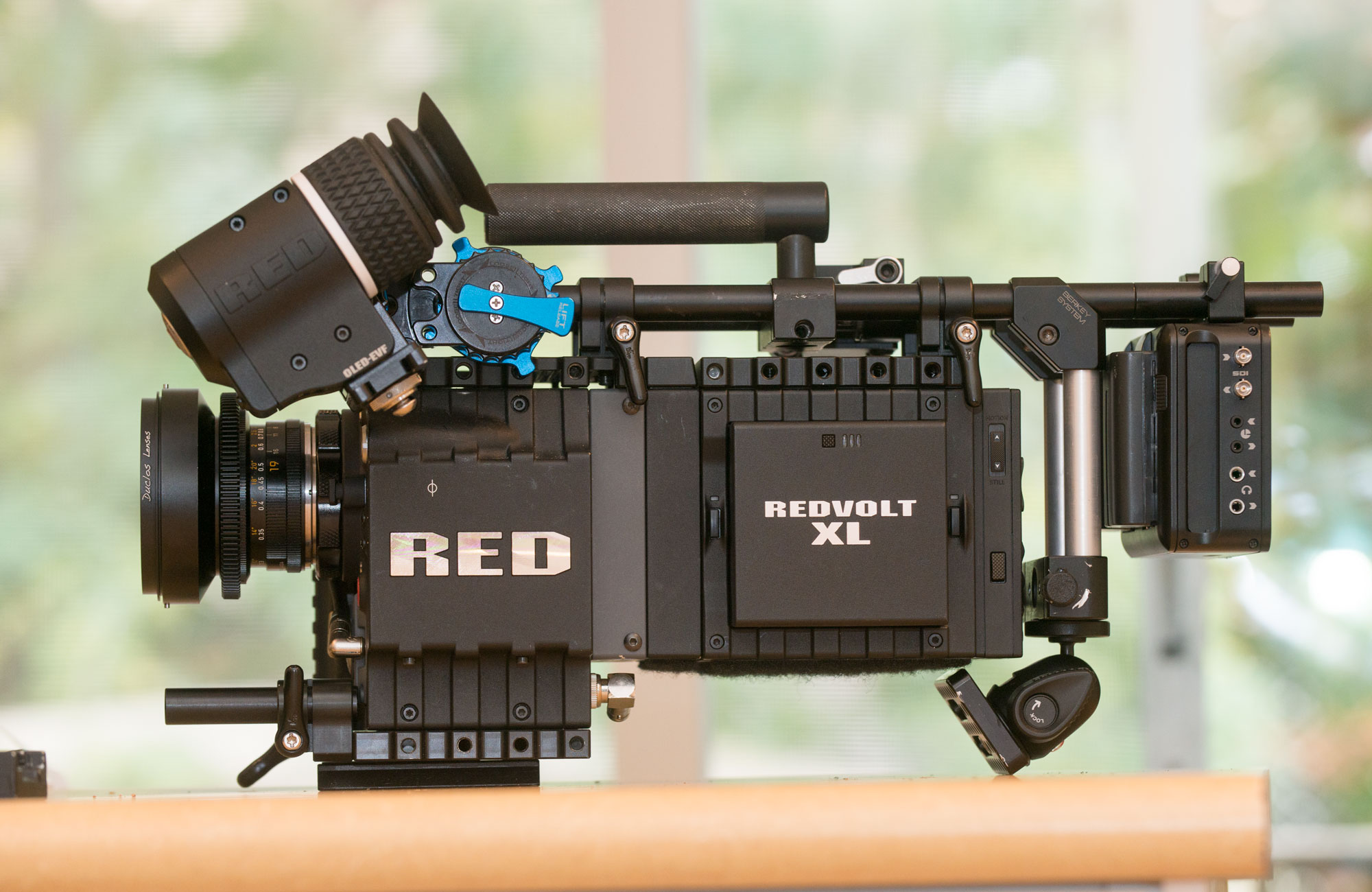
- Product design. I know that you all can kill me after this words but this point I set here because modularity in the Sony's cameras is simple and transparent. It just looks as one piece. Red cameras looks like a bricks sometimes. But RED's modularity in overall and from point of usability is the best I ever seen! It terribly hard to understand to beginners but have a huge advantages for pro users. I want to add just a pair of pictures that you can understand what I am talking about (see pics at the end of the post).

Advantages to add to RED cameras:
- Reduser.com - HUGE advantage over a Sony's cameras especially for beginners. Direct talking with producers of RED's cameras is a huge and huge advantage in XXI century.
- Redcine-X software
- Wider support of editing/compositing software

side.jpg


It just look like a mechanical thing from the Michael Bay's film. And compare with Sony:

SonyPro_F5-F55_group.jpg
 
Status
Not open for further replies.
Back
Top