Welcome to our community

Be a part of something great, join today!

  • Hey all, just changed over the backend after 15 years I figured time to give it a bit of an update, its probably gonna be a bit weird for most of you and i am sure there is a few bugs to work out but it should kinda work the same as before... hopefully :)

HDR Mode...

Here is an different perspective. (well, different than the HOW)

I have been listening to Cinematography podcasts with various people, and both Wally Pfister, ASC (All Chris Nolan movies inc Prestige and Dark Knight) and Owen Roizman, ASC (Exorcist, old Pelham 123, French Connection) mention film superiority. While they might mention resolution, Pfister said that anamorphic SHOULD be scanned at 8k and projected at 4k, the real criticism of digital technology came in the form of DYNAMIC RANGE.

so I don't ramble, I will just modify something they said:

I can't wait to take Scarlet out and follow a car going in and out of shadows and tunnels using HDR!!!

Jeff
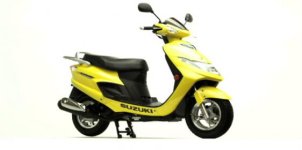
 
RED ONE's HDR mode

RED ONE's HDR mode

I use RED ONE's HDR all the time, take a look at this pictures. The offline has no information on the bike's headlights. At post we exported 2 versions, one at ISO 320 an another at ISO 100, combined the headlight looks great! I do this kind of things quite often...
 

Attachments

  • Suzuki offline.jpg
    Suzuki offline.jpg
    14.8 KB · Views: 0
  • Suzuki online.jpg
    Suzuki online.jpg
    17.4 KB · Views: 0
All bizarre tone mapping issues aside, what I like about the possibility of shooting HDR is that I will be able to capture closer to what I see. The dynamic range and contrast ratio of the human eye exceed current digital capture technology (at least affordably or in a single click). You see a sunset and try to capture it and it never looks quite how you saw it. HDR Photography in a single click is a great step towards solving that.

http://www.cambridgeincolour.com/tutorials/dynamic-range.htm
 
The ArriD21 has a HRD-ish workflow
It can have the first HDSDI output set to 200-ISO and the second HDSDI set to 100-ISO.
Both streams are recorded onto (for example) an SRW1 HDSR-recorder kind of like if it was a stereoscopic shoot.
In post you could then manually use the highlights from the second output and combine that with the first output.

A "simple" way would be if Red made two new tools in the SDK:
HDR-Hi
HDR-Low

"HDR-Hi" would take the current setting, lets say 320-ISO, and at the same time do a second reading from the RAW-file as 50-ISO, and use its highlights and combine it to the original image. And maybe have a slider that determens how much (many ISO-steps) the second image would retrive from the RAW-file.

And the "HDR-Lo" would do the same but in the lowlights by exposing up.

Actually, thats sort of how the ArriScan does it, ish.

(no affiliation with anyone)
 
HDR motion is a revolution in and of itself. Knew Red could pull it off, but didn't think it'll be this soon.

My guess is that HDR mode will not be without sacrifice. Hence why the addition of HDR 1 month after the camera release. The cams are set to go as they have planned, but they must have stumbled onto a new trick that'll let them do HDR via some firmware upgrade, so the trick must have something to do with sensor manipulation and processor algorithms

I suspect the higher frame rate trick with ghosting/softening image is not up to Red standards.

The pixel bracketing idea sounds more feasible, with a 5K sensor you could easily get a 1080 or 2K image using the sensor to bracket off different pixel groups.

Another guess is the A/D trick mentioned earlier. Perhaps they found a way to bracket the A/D conversion and take in more of the real analog data coming in before conversion into digital data. Or, a way to shift the native ISO of the sensor, not just the baked in meta data.
 
For capturing HDR motion the most effective way of "bracketing" each frame I can think of would be tripling the project frame rate and capturing 3 images at different exposure times.

This is similar to how I've done HDR timelapse in the past. I would assume it could be sped up to 24fps with a fast enough sensor. although capturing fast moving objects could be tricky.
 
Last edited:
HDR can be tastefully done. Check out this image from Stross Arts on Interface Lift entitled "Exit Yosemite."

01336_exityosemite_1024x768.jpg
 
HDR modes and flexibility on epic/scarlet are extremely powerful and flexible.

Timelapse mode will be even more so.

Now I have to ask... Is any of this possible on the RED One with Mysterium-X? Especially would be interested in better timelapse abilities and longer exposures, HDR would just be huge bonus!
 
Why not use the sensor at a higher frame rate and then just not reset the sensor on the read for a few consecutive frames? This way, assuming three frames if you will, the first frame is underexposed, the second frame regularly exposed, and the third frame is overexposed. Then you can take those three frames and blend them together, and they are all based on each other successively?

This is what I have never understood about bracketing on a stills camera (on my D90 for instance). But may be because the reading of the sensor is too slow (which Red sensors do not suffer from). I don't see why resetting the sensor is necessary because it just adds MORE time for that is wasted in the recording process.

Given the bad vibe HDR has received, my first thought of using this is on bright days outdoors where the sky easily overexposes and the details around are underexposed. I could see this being fantastic in these settings to get some more details in the darker areas and shadows. Am I off base here or is that what others hope for as well?
 
RAWMAN strikes again!

How many gamma curves can Graemme apply to one photo??? :-))

I think for RED's next presentation, they should have Lady Gaga open, "Raw raw aw-aw-aw! Ro mah ro-mah-mah..."

Ah, terrible joke.
 
Maybe a multi-dimensional gamma curve should be called a Graemme Curve :)

Pertaining to green pixel quantities, here is a quote from this websitehttp://scien.stanford.edu/class/psych221/projects/07/demosaicing/introduction.htm:

"The density the green samples are twice that of the red and blue ones. The reason for why there are more green samples than red or blue samples is that the human visual system is more sensitive to luminance rather than chrominance. Luminance contains important spatial information, and we would like to preserve as much spatial detail as possible during the process. We can think of the green channel as the luminance record because the spectral response of a green filter looks like the spectral response of the eye’s luminance channel. Therefore, by having more green samples, we can preserve more luminance information."

And regarding line skipping in terms of HDR, honestly, what is the point? Anyone with any experience using a camera that uses line skipping (which I have 2) will be one of the first people in line to get a camera that does not do this. Aliasing and Moire are just not worth it. What you gain in range you will loose to the fact that all that fine detail you just pulled out of the picture is now coupled with crappy patterns. No thanks! Not to mention you have two images which are offset from each other by a row of pixels which is a whole new problem to deal with.
 
any idea of the dynamic range of said HDR mode?

Another game changer!

Are you for real? Some questions on Reduser are getting ridiculous. HDR is a welcome add on, but really folks!!! some how I wish Jim never announced this. Lately i think Jim has just been stirring trouble.
Witzke I don't mean to be a sour puss, but many rabid fans will continue posting about HDR and features etc, whilst most of us are interested in perfecting what we already have for a better production experience.
 
I have to laugh at all the flack HDR is getting—HDR is a technology that can be 'creatively abused' just as much as a filter, photoshop, a camera, or any other kind of imaging technology.

Classic situations for HDR:
Outside, dark alley, the sky is clipping.
Inside a house, the windows looking out are clipping.
Inside a car, everything outside is clipping.
Gadget commercial, the screen on your iPod or laptop or whatever is overexposed, this is a situation where most companies choose to rotoscope the screen in.
For me I even use it for family portraits when I'm more worried about people's smiles being genuine rather than getting the exposure exactly right as everyone gets antsy and bored.
And as it has been mentioned a few times in the thread, the sunrise/sunset.


And I'm with Graeme, the fact that there's a few definitions of HDR floating around is interesting... to me HDR means one thing- High dynamic range. It doesn't necessitate multiple exposures, and it certainly isn't tonemapping (that's just a [terrible] way of uniting multiple photographs to form one photograph)
 
HDR means High Dynamic Range to us... it does not mean tone-mapping. Speculate all you want here. We aren't giving out the specifics of how it works until it is released.

Jim
 
HDR means High Dynamic Range to us... it does not mean tone-mapping. Speculate all you want here. We aren't giving out the specifics of how it works until it is released.

Jim

I think tone mapping will be one of the greatest uses of it though, to preserve highlights or bring out shadow details... although subtlety, instead of insanely surreal (although this is an option too... more tools to bring visions to life)
 
definitions of tone mapping vs. high dynamic range

From Wikipedia, the free encyclopedia:
Tone mapping is a technique used in image processing and computer graphics to map one set of colours to another, often to approximate the appearance of high dynamic range images in a medium that has a more limited dynamic range. Print-outs, CRT or LCD monitors, and projectors all have a limited dynamic range which is inadequate to reproduce the full range of light intensities present in natural scenes. Essentially, tone mapping addresses the problem of strong contrast reduction from the scene values (radiance) to the displayable range while preserving the image details and color appearance important to appreciate the original scene content.

From Wikipedia, the free encyclopedia:
In image processing, computer graphics, and photography, high dynamic range imaging (HDRI or just HDR) is a set of techniques that allow a greater dynamic range of luminances between the lightest and darkest areas of an image than standard digital imaging techniques or photographic methods. This wider dynamic range allows HDR images to more accurately represent the wide range of intensity levels found in real scenes, ranging from direct sunlight to faint starlight.
 
Back
Top