- Moderator
- #361

- Joined
- Apr 19, 2007
- Messages
- 13,392
- Reaction score
- 796
- Points
- 113
- Location
- Los Angeles
- Website
- www.phfx.com
Virtually every "pro" camera out there does exponentially more noise reduction internally than any RED camera. A perfect example is the Sony F55 which uses extensive on board DSP to achieve roughly 14 stops of DR. IMO the image looks "airbrushed", with subtle textures lost along with the noise. When viewed on a 1080 monitor, even the Dolby, the image looks pretty darn good as the downscale process combined with the resolution limits of the monitor dovetail nicely. The "price" of this approach is a more "artificial" looking result with no guts - AND - no way to change that personality.
IMO, noise reduction in developing/processing (RCX, Scratch, Resolve) that didn't require significantly more resources (read time) would be ideal. As a practical matter, a new calibration that trades a little bit of high frequency detail for less noise seems like the right move. Thanks to the Dragon's (roughly) 18 megapixels (or even the 9 John Galt might posit) I really doubt even a "de-tuned" decode would be too soft. As others have noted, the reality of such adjustments are several times more complex and interdependent than such broad terms can adequately describe.
This is where the war on the motion picture front is truly happening. There is a contingent of cinematographers, directors, producers, studios, filmmakers, etc.... Who absolutely will not shoot with cameras that utilize on board noise reduction. There's also a contingent that don't care or "know".
With filmmakers like Quentin Tarantino having extremely strong thoughts about digital versus film (very real thoughts actually) there is a battle between glass clean images and something with a bit more character.
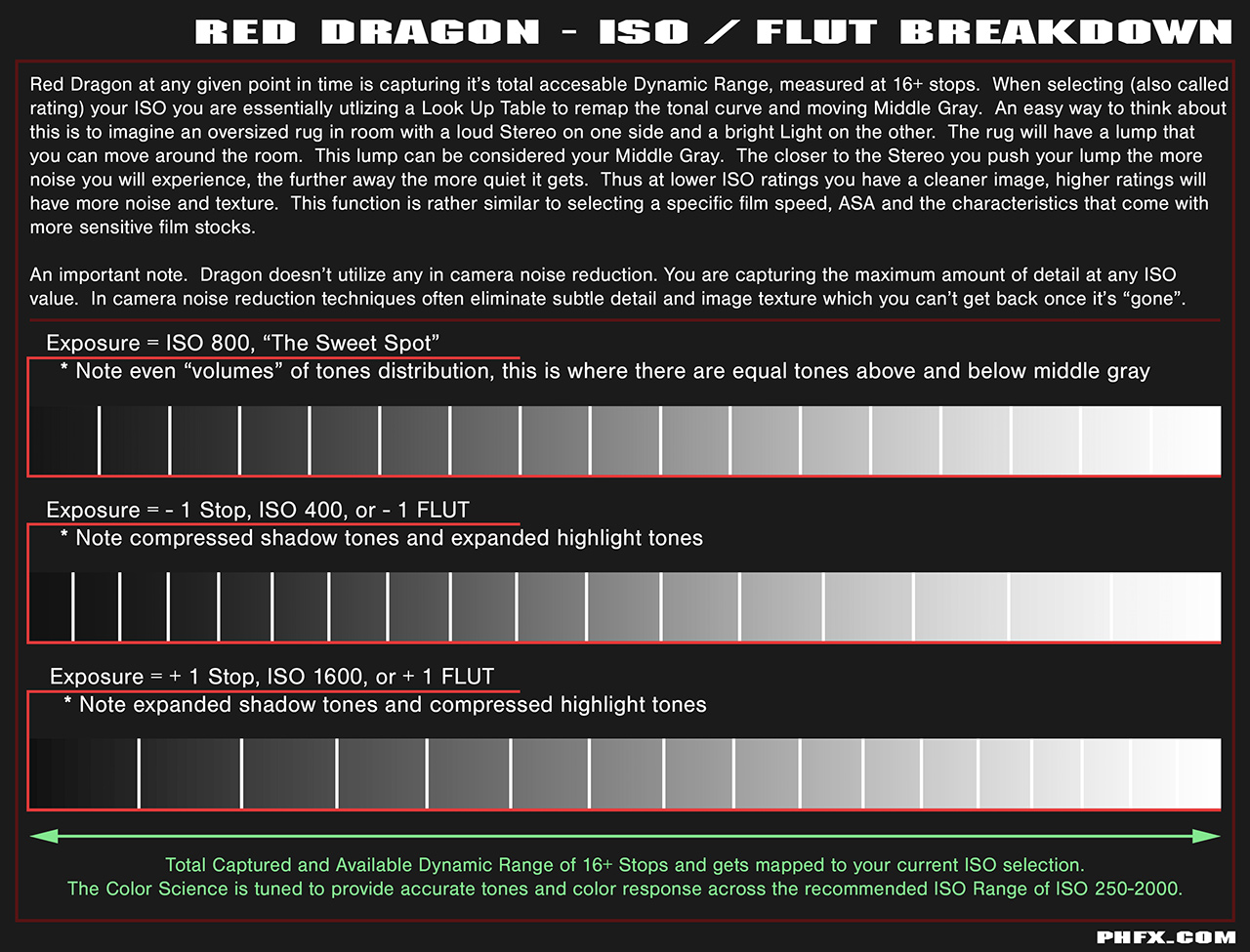
Red is producing cameras that capture the maximum dynamic range and detail within the system. Increasing the ISO has a similar effect to selecting various film speeds. Higher speed film = more grain. This is why film guys "really get" what Red cameras are all about.
There are those who want just a "clean image" all the time at any ISO. That's fairly intense. But we have to observe what the cost of on board noise reduction is. And that's usually texture, fine detail, and resolving power. Which more or less hinders you when shooting at a specific resolution because you are losing that detail. Red does oversample handsomely and it receives post noise reduction nicely when shooting at high ISOs and scaling that image down to a deliverable resolution is an interesting approach if necessary.
What I will say, that if you shoot properly you don't "need" noise reduction within the recommended ISO range of 250-2000. You do have to acknowledge what the differences are of shooting low ISO versus high ISO though.
I've examined the noise/texture characteristics fairly closely at ISO ranges 100-6400. The texture itself is actually pretty pleasing and I think Red is doing some voltage magic somewhere back there even.