Welcome to our community

Be a part of something great, join today!

  • Hey all, just changed over the backend after 15 years I figured time to give it a bit of an update, its probably gonna be a bit weird for most of you and i am sure there is a few bugs to work out but it should kinda work the same as before... hopefully :)

Big Sur

This has been a long week for us and I hope david posts some photos. Today is our last day and its gonna be LOOOONNNG.

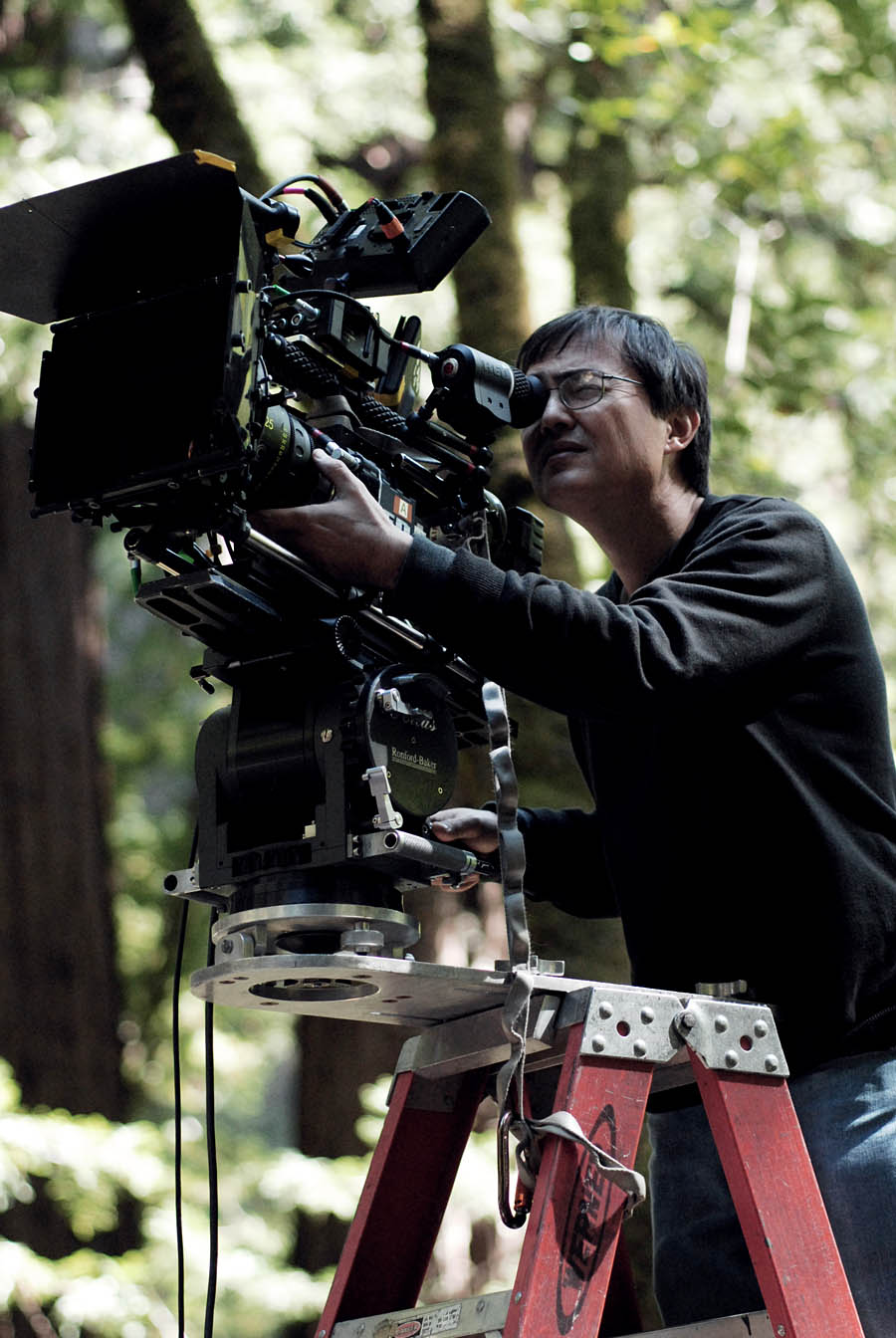
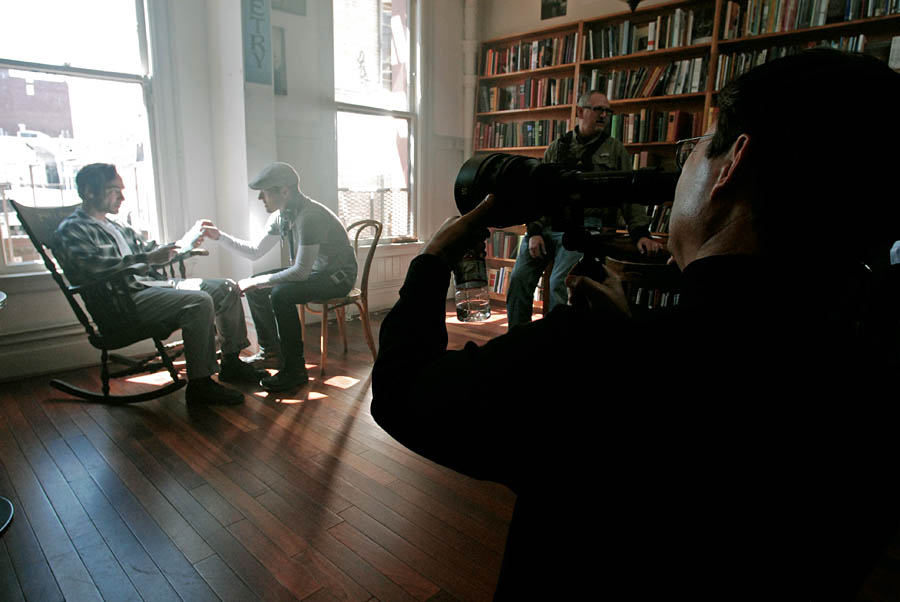
I got some great behind the scenes photos;)


I was too tired to write-up Week Three so I'll probably just do the last two weeks in one post next weekend.
 
Thanks... but I don't want any compensation -- how can I be generous if I'm being compensated? Then it's like work. The fact that some people will find what I say useful to them in some manner is enough compensation for me. The greatest gift is to know that my accumulation of knowledge has practical value for others.

David,

It's this spirit which keeps the community strong!

The times when I and others have asked you for technical advice for our shoots, you have obliged and shared all your knowledge with us where others may have charged a small fortune for it.

I love this.

Let me say, if you are ever around Japan and need any help, you can count on it.

Best of luck on Big Sur.

Ivan
 
Two photos of me on the set taken by Adam Rehmeier:

david_bigsur19.jpg


david_bigsur20.jpg
 
The first one is a framable shot of you David. Thanks for posting :)
 
Week 3

We started shooting the day after Easter deep inside Bixby Canyon. About half the crew members were new at this point, for a variety of reasons – the main one being that it took three days to haul all of our gear up a narrow road/trail in small 4-wheel-drive vehicles, crossing a river eight times in the process, to arrive at the cabin location where we would be shooting for seven days. This required an entirely different grip & electric crew to prep and move the equipment while we were still working in San Francisco. A minor reason was that some of the San Francisco crew members didn’t want to work in Big Sur when they heard that, due to hotel shortages south of the highway closure, we’d have to double-up on hotel rooms. However, this problem disappeared a few days before we arrived with the re-opening of Highway One just north of Bixby Canyon, allowing us to use hotels in Carmel (I thank God and the road crews – we now had cell service, WiFi, restaurants, and bars after wrap every night…)

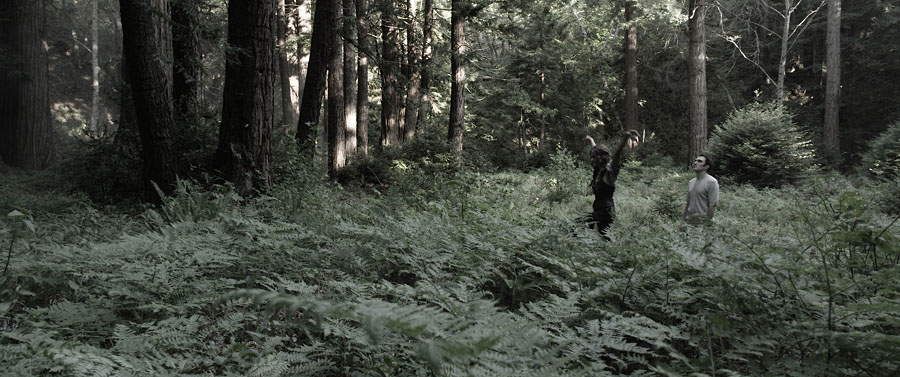
There is a steep dirt road leading down from Bixby Bridge that goes into the canyon, probably part the original highway before the bridge was built in 1932. It reaches a number of gates to private properties. We originally scouted the property that is linked to the tiny beach under the bridge, a very overgrown area with dense brush and oak trees. We think we found the actual cabin described in the novel that Ferlinghetti loaned to Jack Kerouac, though it was heavily modified and barely larger than an outhouse… but it had a tiny stone fireplace as described by the novel and two windows. The area near the ocean end of the cabin however was not particular scenic in terms of the plant life, just a creek and some bushes, and it was a hard hike to the ocean due to the overgrowth everywhere, which didn’t clear until you were just ten yards from the ocean. During the scout period, we asked one of the other property owners what it looked like deeper up the canyon and he said it was full of tall redwoods and an old wooden cabin, so we felt compelled to go and look at it.

After crossing a fast, turbulent creek eight times in a rental car while winding for twenty minutes on a narrow dirt & rock road surrounded by beautiful ferns and tall redwoods (we felt like we were in Jurassic Park) we got to this wonderful old wooden cabin with moss growing on the roof and a stone fireplace, large enough to stage the scenes inside (at times in the novel, Jack has nine people visiting him inside this one room) though we did pick some planks to be pulled on the back side of the cabin for camera portals when we needed a wider shot of the interior. It was something that would have been hard to recreate, the age of this cabin, and the surrounding redwoods, rocks, and ferns were very photogenic… but it seemed too production-unfriendly to get to this place for seven shooting days straight, with interior work and night exterior lighting being involved, so it was more than a simple second-unit size shoot. But our line producer, seeing the advantage of not having to build the cabin or having to break-up interiors and exteriors in multiple locations, felt that he could find a way of making the location work. But it meant that all our trucks had to be parked at the start of the canyon and everything hauled in using small vehicles piece by piece.

The main problem with this approach was that there was very little level ground around the cabin, boxed in by steep hills and redwoods, and I had to have a small mountain of equipment staged off to one side, plus pop-up tents for the everything to protect it from any overnight rain. So there was a grip tent, an electric tent, and a camera & sound department tent, though the assistants took the Epics back to their hotels every night.
But it meant that I was forever either framing out all of this gear, or throwing camouflage net over it, or having everyone move their stuff out of the shot every couple of set-ups, which was our daily challenge. Plus the cabin had three windows and enough gaps in the planks on the walls that I could see people and equipment outside even when I was inside the cabin shooting.

I also was determined to be able to haze the interiors of the cabin even though in the novel, it says that there was no glass on the windows, just wooden shutters. So I had the grips cut plexiglass to fit over each window on-camera to hold the smoke in the room (it still leaked out constantly because the cabin had too many gaps and holes in it – but at least the leaking and drafts were slowed down.) In a few shots, you sometimes saw a reflection in the plexi, but most of the time, you didn’t notice that I had sealed the windows because of the haze in the air.

Another challenge that I had all through the Big Sur portion of the shoot was the amount of night work in the script, enough that every day we had to shoot some night scenes. This meant that our call times would never be at sunrise, but some time around 10AM, and often we weren’t shooting until noon. So not only did I never have a chance to shoot any scenes in morning light, I often started by day with a scene in high noon sunlight. Normally I’d start with the closer shots first and silk & light them, then shoot the wide shots later in the day, but with this show, we had too many scenes on the call sheet to shoot, by the afternoon we’d be shooting our third or fourth scene. Plus we were working too fast and in difficult locations with wind for me to fly silks overhead. And only in a few pre-determined spots did I have generator power (it was hard enough to tow the generator to the cabin, but anytime we were a certain distance away from the cabin, it was all available light only plus a few putt-putt hand-carried generators to run tiny things.) So this pretty much meant that I had to embrace hard overhead noon sunlight as part of the Big Sur look and experience (luckily most of the cast were men where I could get away with that harsh overhead light). That didn’t bother me so much as not being able to shoot any scene in morning light… because the cabin faced west, in the morning it would have been nicely backlit once the sun got over the high canyon walls.

The first day there we had overcast weather and some light drizzle now and then, which was nice photographically, but after that, we had clear weather for the next two weeks more or less. Most of the time, this was nice in the woods because I got shafts of sunlight once we fogged everything, but I had hoped for more variety while I was there, maybe some heavy fog or something one day, but it didn’t happen. However, being boxed in a narrow canyon full of tall trees, it wasn’t like I was seeing much of the sky, and the sun itself was blocked by the canyon walls by mid afternoon so it might as well have been overcast at that point.

In terms of weather, we got lucky when we finally moved out to the beach on the second to last day, so when it really mattered, the weather cooperated with us in terms of giving us a bit of visual drama. But more of that later.

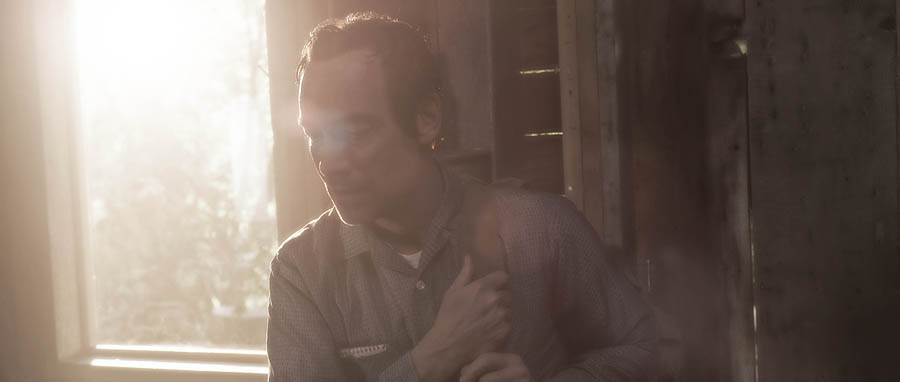
Day exterior work for the next week was 99% available light with the occasional bounce card. Only a few times did I feel the need to bring out a big HMI. The interiors were lit with HMI’s coming through the window, soft and hard, mostly 1.2K’s and 4K’s, but for a few shots, I switched to a 5K tungsten PAR for a warm late afternoon or sunrise effect. What I like about the 5K PAR, besides being very reliable, is that I can stick it outside a window and point it right into the camera lens and as long as I hide the stand and power cable with some greenery, you just get the bright circle of the lamp, so it looks like the sun is in the shot. Inside the cabin, I first stapled a white bedsheet up into the A-framed ceiling to give myself the option of bouncing a Source-4 Leko into it to bring up the ambience inside the room (HMI Source-4 for daytime scenes and a tungsten one for night interiors). I also used Kinoflos and Woodylights inside there.

I would have liked to use more available daylight inside the cabin but being deep in the woods, there was hardly any available light to shoot by once you stepped inside.

(cont.)
 
Week 3 cont.

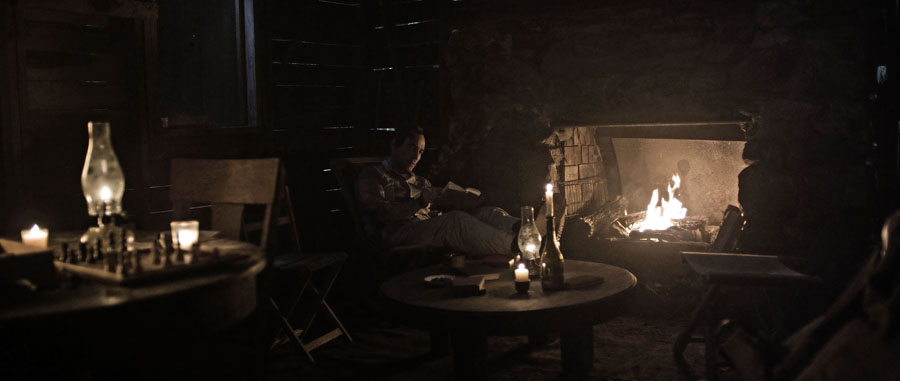
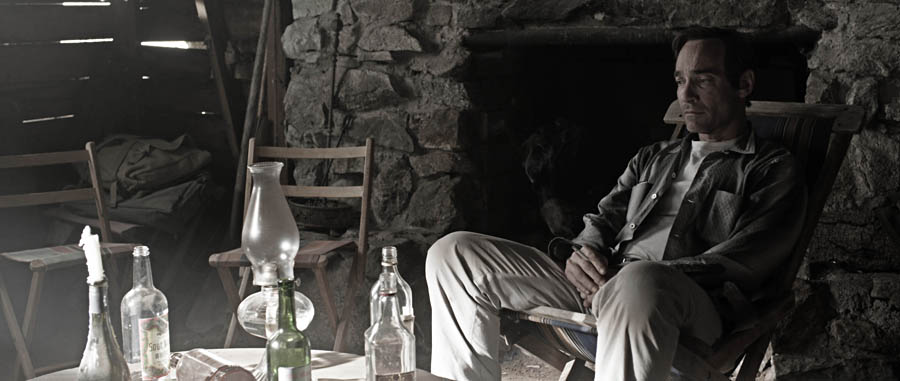
The night interiors were interesting because there was no electricity in the cabin, story-wise, so either the room was moonlit or it was lit by the fireplace and kerosene lanterns. Most scenes at night in there were shot at 1250 ASA with the camera set to 3700K, at around an f/2.0-2.8 split on the Master Primes in order to get as much exposure from the real fire and kerosene lanterns as I could, then augmented with some tungsten lamps with Full Orange gel on them, knocked way down. Most everything was on some sort of flicker gag, either by using a flicker box (which I wasn’t completely satisfied with) or done manually with electrics playing with dimmer knobs (looked more organic to me, but was more manpower-intensive.) One of my favorite tricks was to bounce an orange-gelled Source-4 Leko into a white card and just have an electrician wiggle (or waggle) a finger or two randomly in front of the lens of the Leko.

Based on something I read by Roger Deakins about the fireplace scene in “The Big Lebowski”, I had the electrics make a three-bulb fixture that could be placed inside the real fireplace while it was burning. It was something Steven Poster had also once mentioned to me years ago, that quartz bulbs burn hotter than a real fire, so they won’t melt inside a fireplace (as long as the wiring is protected) – I just had to dim the bulbs way down to warm them up. But I didn’t use this device too often because the fireplace wasn’t large or deep enough to hide it from camera, so most of the time, I augmented the fire from just off-camera near the fireplace, often bouncing off of white or silver cards right along the edges of the fireplace.

In general, I went for a more extreme difference between the color of the fire and the moonlight – uncorrected HMI for the moonlight and Full Orange to Full + Half Orange for the fire. Normally this would be too extreme for my tastes, but with the level of desaturation I plan on doing, I needed to go this extreme to maintain some difference in color effect.

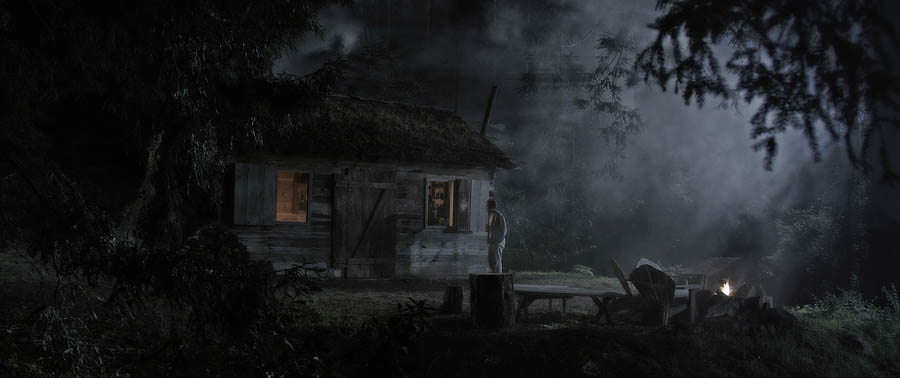
As for night exteriors around the cabin… the challenge here was the fact that we were in such remote and rough terrain that there would be no lifts or condors possible to get any moonlight source high above the frame. And I didn’t want to deal with lighting balloons when surrounded by trees and unpredictable wind, I’ve had them get blown into tree branches and get punctured one too many times on shows. I had this idea based on a number of things, my use of string lights for outdoor dance halls and recently the tire depot scene, and Kubrick’s use of ceilings of light bulbs for the African desert set in “2001”, not to mention the submarine pen in “The Spy Who Loved Me”, which was lit with Kubrick’s help by the request of Ken Adams (presumably the DP was stumped when presented with this floor-to-ceiling aluminum set – Kubrick’s solution was to install thousands on light bulbs in the ceiling.) Anyway, my idea was to take a 20’x20’ frame and cover it with a grid of string lights, but instead of 60w clear bulbs, I’d use small daylight compact flos. Then I’d use the tall redwoods to mount some sort of block & tackle system and haul the frame up in the air and get this overhead soft toplight for the moonlight effect. It was the only thing I could think of.

Anyway, on the first day of shooting in there, the property owner nixed us using a professional tree-climber and rigging something to the redwoods. So now I had no choice but to point to the rugged cliff-like hills surrounding the cabin and ask if somehow the electrics could scale them safely, hauling some big HMI’s and cable up there, not to mention, find some clear shot through the big trees of hitting the cabin area. Luckily, my electric crew was game and managed to pull it off, though it left those bigger lights up the hillside for the rest of the week rather than have me take them up and down each day. By the last day there, I was worried about the angle of the moonlight, and thus the camera, favoring the same direction on too many scenes, so I asked the electrics if they could take it all down… and climb the rough slopes of the opposite side of the canyon and do it all over again. Again, they pulled it off, which was great because I had no other way of lighting wide shots of the cabin in moonlight. On the first hill, they got a 6K and 4K HMI up there; the second time, it was a 4K and some 1.2K’s with medium lenses. I filled with some daylight Kinos around the property.

Adding some smoke into the air always increased the exposure dramatically, which was good because I was shooting so much at 1250 ASA or 1600 ASA out there. In post, I may have to darken the areas of the frame where the HMI light is too close to the smoke, making it too hot. For some shots, I used a ND.60 grad filter on the camera to darken the part of the frame closest to the HMI’s on the hilltop.

This brings up another issue, which is shooting dark scenes at high ASA ratings. Early on, I got fooled a bit by the fact that in low light, the LCD monitors on set tend to glow in the dark and make the image look brighter, particularly the shadows, which get lifted, giving you the false notion that you have less contrast than you really have. Combine this with the fact that even if you are rating the camera faster, the sensor isn’t actually any more sensitive. What this means practically is that you have to be honest about your underexposures, and you have to be more conservative with your exposures the faster you rate the camera. In other words, if you want everything to look two stops underexposed for a dim effect and you are at 1600 ASA, things may be fine but what if you accidentally exposed everything two and a half stops and end up lifting it back up by a half-stop in post? Then you didn’t really shoot at 1600 ASA, you were defacto shooting at higher than 2000 ASA. It’s similar to the issue of pushing film stock, the more you do it, the more accurately you have to expose, especially for your shadows, because you have less information down there to work with in post. For example, I set the cameras to 1250 ASA at f/2.0-2.8 split for one shot at night and once the smoke rolled in, the scene now looked a bit bright so I was about to ask the assistants to close-down by a one-third stop when instead I asked them to lower the ASA to 1000 instead of 1250. Which had the same effect of darkening the image on the monitor a tiny bit more but without actually underexposing the sensor more. This is what I mean about understanding exposure. It probably means more to me than to some other DP’s because in general I prefer low-key images and thus tend to light and expose on the moodier side, so I have to be honest with myself about what is going on with the sensor or the film stock.

As the week went on, it struck me that we were spending 25% of our total shoot at this cabin, which shows you just how much of the dramatic action takes place around it. In comparison, only four days of the entire schedule would be along the coastline, and only two of those four on the beaches of Big Sur. It just seemed strange for an entire week after we left San Francisco to drive along this amazing coastline down Highway One, only to turn down a dirt road and travel for another half-hour into the canyon to actually shoot something.

Once we arrived in Big Sur, we had a B-camera crew with us the entire time. My original plan was to break them off maybe 50% of the time to get footage (nature, weather, etc.) but due to the volume we had to shoot around the cabin, we needed a B-camera there most of the time, and even if there was a shot here and there with just one camera, I couldn’t afford to lose the B-camera crew down some nature trail for an hour or so. Towards the end of the third week, I finally had some time to send them away for a few shots.

(cont.)
 
Week 3 cont.

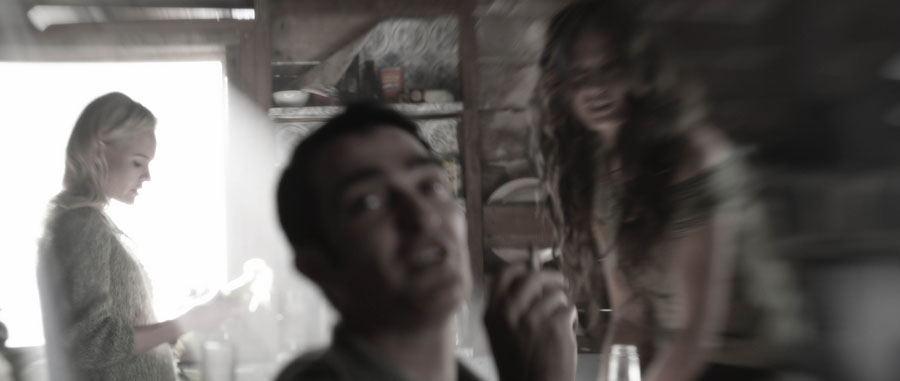
Due again to the large amount of work to get done in a short period of time, the director and I had to improvise a lot, trying to find time-saving solutions to shooting scenes that were also creative rather than compromised. One example is a scene where Jack wakes up hungover one morning and sees his guests making breakfast, with some dialogue. We lost the daylight and this cabin had no curtains on the windows, so whiting-out the view to make it seem like daytime was going to look a bit surreal. We decided to embrace that look, making the room look distorted from Jack’s POV, with really hot windows. We also shot those angles on the Lensbaby to further enhance the feeling of the POV of a person with a massive hangover. So the whole scene was basically shot with one POV shot and a reverse angle on Jack. When it came to large group scenes, when Jack ends up having several visitors, we decided to shoot them in a looser, more verite manner, two cameras on long lenses, or the long end of the zoom, and just let the actors move about freely and grab whatever action we wanted on the fly. It fit the nature of the scenes while also saving us some time, though it did require that I light the shots more broadly and evenly. Though I’m not a big fan of zoom lenses, there was no way of making this schedule without putting the 24-290mm on B-camera half the time and letting them pick-off shots. For the interiors, it meant lighting to an f/2.8. For some shots, I replaced the kerosene lantern with an electrified one that allowed me to get the f-stop up in the room while making it look like a group of people were all lit by the one lantern (which many of them were.)

The terrain was so uneven, and the cabin so small, that we didn’t set-up a lot of dolly moves, just a few key ones now and then. I wish I had time to build more dolly track but I would have been killing the crew not to mention losing the light. I did get a 6’ slider for the Big Sur portion of the shoot, which allowed me to quickly set-up very short moves in difficult locations. The last, or maybe near last, shot of the movie is a slow dolly-in on Jack’s face in front of the cabin, reminiscent of a shot in a Sergio Leone movie or the end of “Godfather Part II”. It was always important that we shoot key moments like that properly and not rush them, and generally we did.

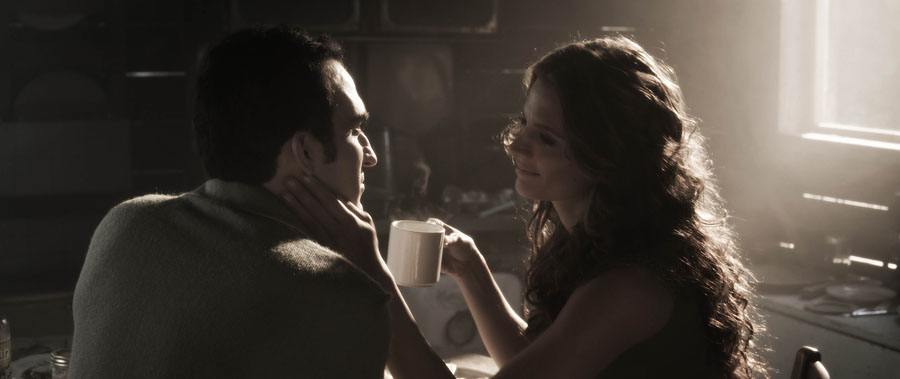
Week Three ended with a lot of day and night scenes with Jack’s visiting friends around the cabin.
 
Normally I don't notice the odd lingo of film sets, but this was the week I recall saying to Gaffer Keith Morgan after a set-up, "OK, you can kill the baby in the fireplace now." A half-second later, that struck me as very strange.
 
Thanks David, this was fantastic info yet again.
 
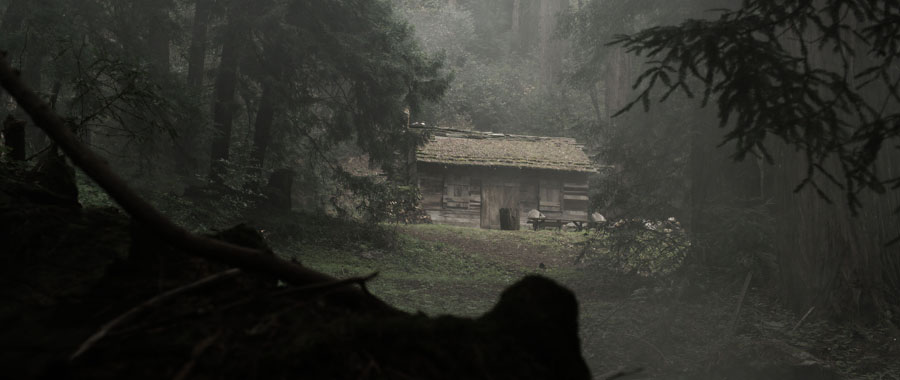
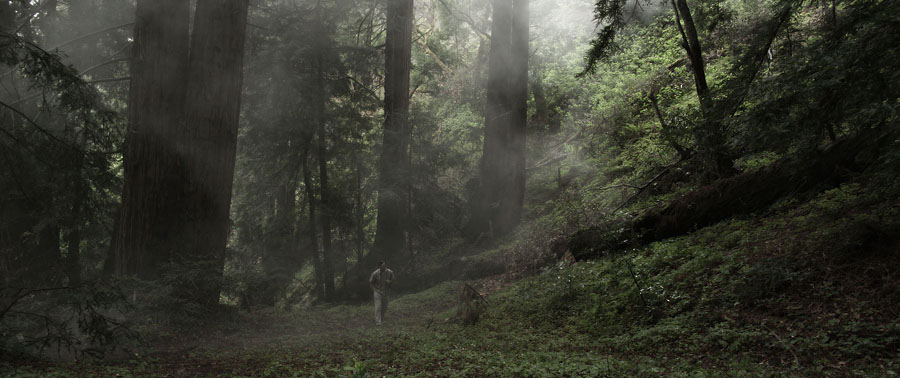
Some pictures, keep in mind that these Epic frames were manipulated by me in Photoshop, reduced, and compressed, etc. so don't draw any conclusions about the image quality, which by the way is amazing if you could see the original 5K files.

The cabin and surrounding area:

(Note the hanging pine branch in the f.g. and compare it to the night shot later.)
bigsur27.jpg


bigsur28.jpg


bigsur32.jpg
 
Last edited:
Jack at the fireplace, with the quartz bulbs hidden in the back corner of the fireplace:
bigsur29.jpg


Cabin at night, lit with the HMI's lugged up the hillside -- because I couldn't get them high enough in frame, I took a cut tree branch and hung it on a c-stand in the foreground of the lens to hide the light fixture's hot spot from camera:
bigsur30.jpg


An example of putting the 5K tungsten PAR in the actual shot outside of the window to simulate the sun hitting the lens:
bigsur31.jpg


Using the 5K tungsten PAR as a warm backlight in a daylight scene:
bigsur35.jpg
 
Last edited:
An example of shooting a POV using the Lensbaby, shot at night but lit for day:
bigsur33.jpg


The reverse angle on Jack, also shot at night (we also shot a close-up to tie into the POV):
bigsur34.jpg


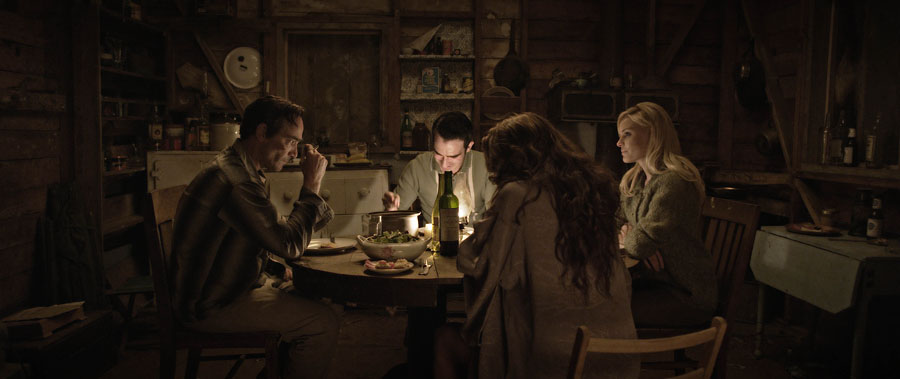
Night interior dinner scene, the table lit with a light bulb hidden behind a real kerosene lamp, soft backlight from a Woodylight, and some ambience from bouncing a Source-4 off of the ceiling:
bigsur36.jpg


I would have normally played the room darker except for the table... however, two of the four people in the shot start the scene against the background wall before sitting down, with dialogue back there, so I had have light on the background.
 
Last edited:
I love that cabin at night, David. Epic use of the tree branch! Ha.
 
I love that cabin at night, David. Epic use of the tree branch! Ha.

Heh heh heh. I was thinking much the same thing.

Nice stills David. Keep em coming! The lens baby shot was especially interesting. What was that scene about by the way?
 
Holy Frack... all the shots are stunning, your cinematography with the redwood trees, I need to shoot there at some point in my life.
 
Back
Top