Welcome to our community

Be a part of something great, join today!

  • Hey all, just changed over the backend after 15 years I figured time to give it a bit of an update, its probably gonna be a bit weird for most of you and i am sure there is a few bugs to work out but it should kinda work the same as before... hopefully :)

All the Epic/Dragon Vs. Alexa/Sony threads are belong to us...

All RED have claimed is that ISO2000 on Dragon is "as clean" as ISO800 on MX. That's presuming you've properly exposed at either of those ISOs. Truth is, MX and Dragon are clean enough at pretty much any ISO, as long as there is enough light hitting the sensor (so you aren't boosting signal in the shadows that was never recorded in the first place.)

In the example you referenced, there were no highlights -- it was massively underexposed to see how the new and old OLPF handle noise. Clearly the new OLPF takes a stop off the bottom and puts it on top, hence why it's low-end is noisier than the old OLPF. Personally, I think that's definitely a step in the right direction (pun intended), and I kind of wish they could do the same thing with MX.

As for the MX being 13.5 ('when it isn't'); there have been a couple of third party tests that questioned that value (Ryan E Walters being the only one I remember off hand). In those tests, Alexa was measured at ~16+ stops scientifically, but only ~13+ realistically useable (which seems to hold true then and now), while MX was measure at 12.5 stops, but only ~10 or so realistically useable (which also seems confirmed, if Dragon is claiming 16 but has ~14 or so useable, while still being clearly 3+ stops above MX). In the case of MX, it was *heavily* weighted to the low end, which made it's highlight retention look meagre... but everyone has known that for a while, and hence exposes at a higher ISO to protect highs when necessary... And the new OLPF of Dragon seem to do just that inherently (even out the over/under stops).

Edit: My numbers were off, so memory didn't serve, apparently. Here is one of the articles I was referring to (note that "useable stops" is subjective, and the author tried to be conservative). http://www.ryanewalters.com/Blog/blog.php?id=8375868975844575706
 
Last edited:
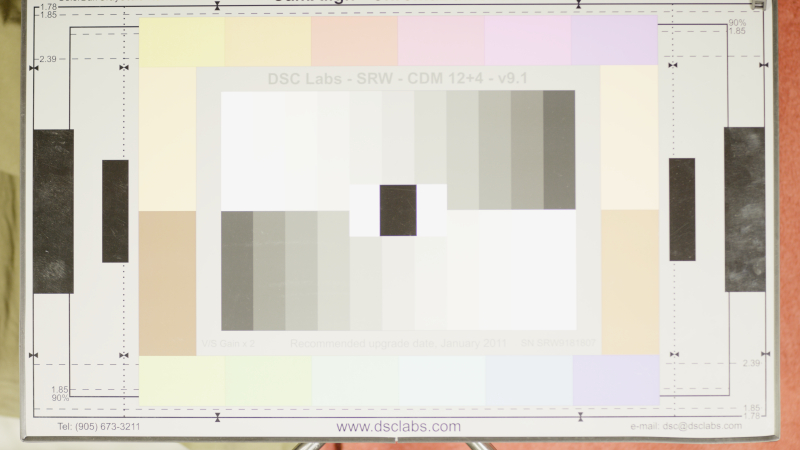
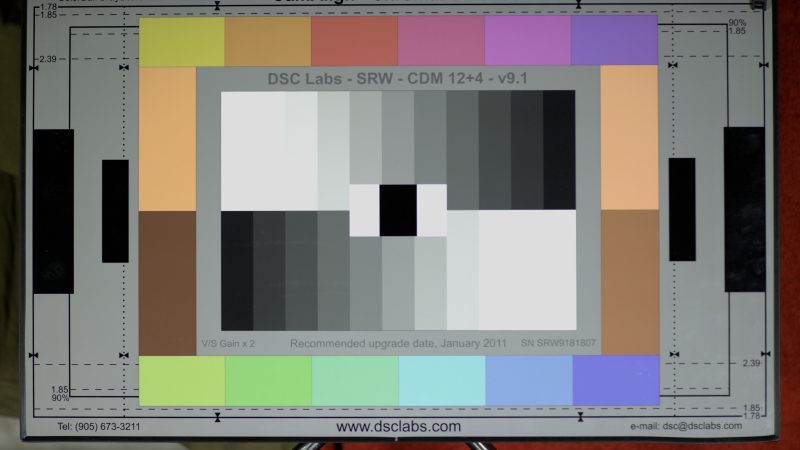
I was referring to Luigi's most recent test in which the difference in highlights aren't that apparent whereas the alarming amount of noise in the new OLPF suggest the OLD OLPF looks a lot better imo:


James,

To be fair, I do think that this is the first calibration of the sensor/NEW OLPF and perhaps things have not been tweaked just yet. I do realize it is a shipping sensor and Luigi is probably one of the few people right now who can post these kinds of direct comparisons between OLD and NEW OLPF. I'm not sure where that red channel noise is coming from, but as they pushed the highlights up a stop to see more in the top then something has to give somewhere. that RED channel noise is right through the spectrum and not just in the deepest blacks. I'd give it a few more calibrations before we settle on the old vs. new.

To me noisy blacks and shadows are worse than blown highlights if the highlights don't hard clip (like MX but rolloff smooth) and are more (like Gunliek's first tests) that showed blown out, but smooth highlights and a nice transition. The RED dots stuff was a thing that needed to be addressed and this OLPF does that. and I think now, there will be some tweaking.

Battistella
 
I was referring to Luigi's most recent test in which the difference in highlights aren't that apparent whereas the alarming amount of noise in the new OLPF suggest the OLD OLPF looks a lot better imo:

I'm a little confused. Are you judging highlight performance in those super underexposed grabs you just posted?

If so, I don't think they're appropriate for judging highlights.

Or, am I misunderstanding you?
 
Last edited:
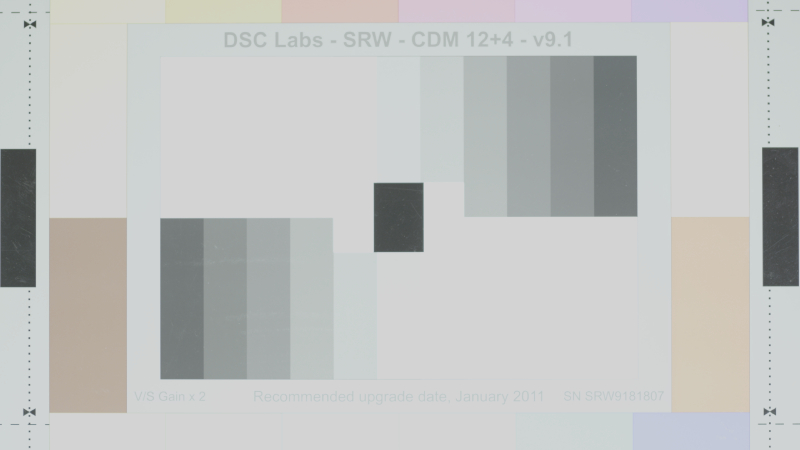
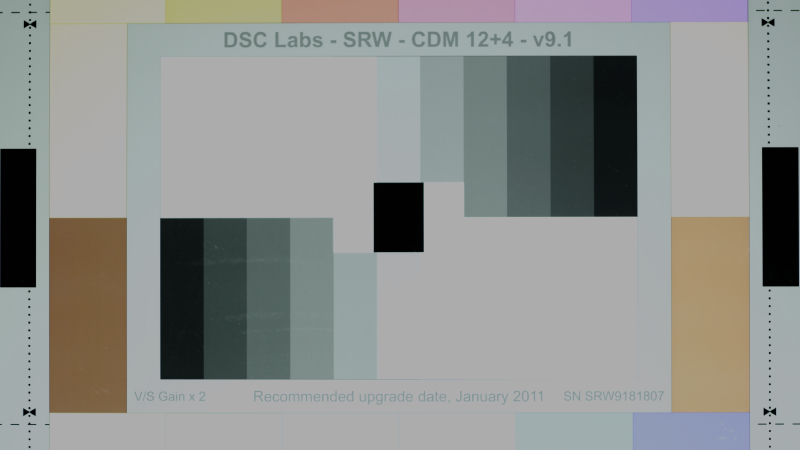
Really? You don't see the 1+ stop of difference between the old OLPF and new OLPF with calibration in these two images?

Or, the 2 stop or so difference between the new OLPF with calibration and the MX sensor in Scarlet?

That is not a dynamic range chart, that is a color chart designed for color testing and color correction, used in DR tests for gathering more info.

Those grey patches do not represent stops.
 
What Dragon is about is WHAT YOU CAN RECOVER from the file it creates.

Here is the best way for me to show you this.

Here is a frame Luigi shot to blow the shit out of the sensor and really over expose it (Gunleik did this too in his tests)

D_as_shot.jpg


now here is what can be recovered from that same frame.

D_recovered.jpg


What happens when I try that with the MX sensor?

E_as_shot.jpg


and then I try to recover that over exposure, I am basically effed

E_recovered.jpg


So to claim there is not much difference is just not true. LOOK at the difference.

Battistella


Its a cool example Battistella, it did convince me...

Can someone please explain me what do you people mean with A.D.D?
 
That is not a dynamic range chart, that is a color chart designed for color testing and color correction, used in DR tests for gathering more info.

Those grey patches do not represent stops.

I stand corrected. But, I also blame what must be a typo in this graphic (near the bottom of the page).

It states, "11 Stop Greyscale Guide" when it should probably read, "11 Step Greyscale Guide."

http://library.creativecow.net/adcock_gary/magazine_charting-your-camera/1

What do the brightness differences in the steps represent? I read a little further and I guess they're showing different degrees of reflectivity.

How useful is knowing the various reflectivity values?

From DSC Labs - http://www.dsclabs.com/Images2/PDFs/DSC Labs Basic Chart Use Matt.pdf :

"Neutral 11 Step Crossed Grayscale - For testing and setup of lighting, exposure, gamma and dynamic range."

How is DR measured if the steps don't represent stops?
 
Last edited:
What Dragon is about is WHAT YOU CAN RECOVER from the file it creates.

Here is the best way for me to show you this.

Here is a frame Luigi shot to blow the shit out of the sensor and really over expose it (Gunleik did this too in his tests)

D_as_shot.jpg


now here is what can be recovered from that same frame.

D_recovered.jpg


What happens when I try that with the MX sensor?

E_as_shot.jpg


and then I try to recover that over exposure, I am basically effed

E_recovered.jpg


So to claim there is not much difference is just not true. LOOK at the difference.

Battistella

Great comparison and explanation. Thanks, David.

My concern was never whether or not the Dragon outperforms the MX. I'm just a bit tired of the exaggerations and equivocations of RED as a company and of REDusers as fanboys.

When it comes down to it, the Dragon seems to outperform Alexa in multiple ways. Is it a better camera? I don't know and I don't really care because it's absolutely at least comparable and is much cheaper and is available to me because RED has given us the brilliant trade in route. There's so much to love about what RED is doing with their products that I'd prefer we just quit the hyperbole for a change.
 
baking powder.

Sorry, couldn't resist.

I think more important than stops in David's recovery example (of Dragon v MX) is just how colour accurate Dragon remains even when you bring it back down. Look at the MX chart, and even if it had the stops, I doubt you could realistically get accurate colours/saturation back, regardless of how much grading you did.

To be fair, Alexa has been doing that since it's inceptionr (maintaining colour accuracy)... but Alexa is 2.88k+MassiveFiles or 2k+non-Raw... And it also costs at least double (if not triple) that of Epic-Dragon.
 
Last edited:
Or in the case of the camera this forum is built around, "What is more important, an r3d or the tool you use to develop it?"

The key idea being that the development of an r3d is an integral part of the exposure decision. This relates to a discussion we had in real depth a week or two ago in the "Exposure and Native ISO" thread. I think Adrian and I understand the role of development in an r3d image very similarly, but we have different views on just how that should inform the design of a shooting set.

If I understand him correctly, Adrian would like the image out of the camera to be pretty much finished. I'm happier when it's more like what we used to see in dailies: an image that tells you what you captured, but not necessarily an image will look like in post. (Or maybe I'm mis-interpreting him -- Adrian, please chime in here if that's the case.)

Back at the beginning of time, i spent about as much time in a darkroom as I did shooting, and I came to understand the relationship between exposure and development very intimately. It took me a long time to realize that the same relationship exists in digital cinema. And for me, that's the primary differentiator between digital cinema and video.


I'm not interested in having the image out of a camera be "finished" but I do want that image to represent the full tonal and color range it's capturing. The ALEXA does this. So does the F65. The F55 is getting closer. I struggled with the R1 and MX. The EPIC has been refined and there is a way to almost get there but it requires a bit of over engineering on-set. And it doesn't quite line up the way it should. Close. Almost.

The point about a R3D vs. RCX is that together they are the process. It's just like shooting negative film. You need to expose and you need to develop. The art comes into play when you decide how intentional you will be with your exposure and your development. This is about pre-visualization. It's about learning the intentions of a Master like Ansel Adams. 50 years ago Ansel would take his camera on a hike. He'd find some amazing vista at just the right time of day. He'd load his camera with his film of choice. He'd wait for just the right moment and then he'd take his shot. What f-stop did he use? What shutter speed? What film ISO? Did he meter the scene? How would he develop the negative? What solution? How long? Over or under developed? Dodge and burn? Ansel needed to take it all under consideration before he snapped the shutter. It was based on years of experience, a scientific approach to exposure, and his intentions of what his picture would ultimately look like.

Here's the thing: today we have the opportunity to "preview" the entire process on-set. Before, after, and during every shot. In real-time. No waiting. If this "preview" is capable of actually showing us the final shot then it will inform our approach to it.

There are many shooters who think this level of pre-visualization is overkill. They are fine with lighting and exposing a scene by "eye" and the "stop lights". They know what looks good on set and they know they can make it look even better latter in Post. They have learned the process much like Adams did. But take a moment and consider what Ansel would do today. If he could, would he treat today's digital cameras just the same as he did with film? Or would he realize the inherent power in actually being able to preview the entire finished image, live, on the set, while he was lighting his subject? To me it is about control. I want total control.

I've played around a bit with some of the DRAGON posted R3Ds and I'm extremely impressed. As others have noticed there is a lot of juice in those images. I want to be able to squeeze all of it out not just in Post but also on the set. That's where we make our images. With the camera and the lights and the set and our actors. Professionally I'm a workflow guy. I try to build the clearest path from camera to Post. I try to "see" everything I can do latter, during the shot. I like log/CDL/3D LUT pipelines. When put together the right way they show me every possibility while we shoot. It informs our choices on set. Can RED's in-camera tools (gamma/color mods in menu) help with this kind of pre-visualization? A bit but they're too brute to be effective. You can dial in a "look" but often it may mislead you in your exposure choices to the point where it's more trouble than what it's worth. Plus it's a one time deal. You can't change your Look settings on the fly. It's just not feasible to change them shot to shot and scene to scene. And they don't really work well with 3rd Party Post software. They can show intent but not the finished product.

What I want is a full range log output from the DRAGON. I want to be able to see all of the highlight and shadow range the camera is capturing during the scene. I want proper 3D transform LUTs that I can turn on and off in the camera that will take that log output and conform it for a TV broadcast (rec709) or the cinema (P3). And I want CDL (Color Decision List) support built into the camera and RCX so I can begin to create my final image properly while I am shooting it.

You wouldn't believe the possibilities.
 
I think we're within spitting distance of 16.5

Can someone with a Dragon shoot one of those DSC charts @320, 800 and 2000, t8 to middle gray, then t2, then t22.

Preferably at 5000k. New olpf if possible.

That would give us something to chew on...
 
And, yeah, 3d LUTs in camera would be great.
 
(snip) The reliance on the idea of shooting raw first and foremost often overshadows the reality of developing it into a usable image. IMO a camera system should be able to show you on-set what you'll be able to get in Post.

Has the idea of RAW taken on a mythology beyond its actual value? In the industry as a whole, yep. FWIW, I think a lot of RedUsers have reprocessed old footy to find it much better rendered in more recent color science/algorithms so their enthusiasm is understandable, even if its a bit over the top.

Being able to see more of what the image could be on set is a fine goal, one I share. That said, it becomes a slippery slope very quickly;

1) Who chooses the default RGB rendering metrics? What would be the best gamma for review on set?

2) A more customizable output path might be ideal when a sharp DIT in on set to manage it. What if there's not?

3) How do you reconcile the competing goals of accurate (warts and all) representation - with pretty, confidence inspiring contrast-ier presentation?

4) How much DR would need to be crammed into the 8 -10 stops a set monitor can display to suit technical evaluation of exposure extremes? How valuable would that "look" be if it meant that the stops (zones) represented had distorted relationships with other density levels due to being modified to fit the monitoring DR?

Like you I relish these discussions and typically learn more from people whose opinions/ideas are different than mine than those who agree.

Cheers - #19
 
I'm not interested in having the image out of a camera be "finished" but I do want that image to represent the full tonal and color range it's capturing. The ALEXA does this. So does the F65. The F55 is getting closer. I struggled with the R1 and MX. The EPIC has been refined and there is a way to almost get there but it requires a bit of over engineering on-set. And it doesn't quite line up the way it should. Close. Almost.

The point about a R3D vs. RCX is that together they are the process. It's just like shooting negative film. You need to expose and you need to develop. The art comes into play when you decide how intentional you will be with your exposure and your development. This is about pre-visualization. It's about learning the intentions of a Master like Ansel Adams. 50 years ago Ansel would take his camera on a hike. He'd find some amazing vista at just the right time of day. He'd load his camera with his film of choice. He'd wait for just the right moment and then he'd take his shot. What f-stop did he use? What shutter speed? What film ISO? Did he meter the scene? How would he develop the negative? What solution? How long? Over or under developed? Dodge and burn? Ansel needed to take it all under consideration before he snapped the shutter. It was based on years of experience, a scientific approach to exposure, and his intentions of what his picture would ultimately look like.

Here's the thing: today we have the opportunity to "preview" the entire process on-set. Before, after, and during every shot. In real-time. No waiting. If this "preview" is capable of actually showing us the final shot then it will inform our approach to it.

There are many shooters who think this level of pre-visualization is overkill. They are fine with lighting and exposing a scene by "eye" and the "stop lights". They know what looks good on set and they know they can make it look even better latter in Post. They have learned the process much like Adams did. But take a moment and consider what Ansel would do today. If he could, would he treat today's digital cameras just the same as he did with film? Or would he realize the inherent power in actually being able to preview the entire finished image, live, on the set, while he was lighting his subject? To me it is about control. I want total control.

I've played around a bit with some of the DRAGON posted R3Ds and I'm extremely impressed. As others have noticed there is a lot of juice in those images. I want to be able to squeeze all of it out not just in Post but also on the set. That's where we make our images. With the camera and the lights and the set and our actors. Professionally I'm a workflow guy. I try to build the clearest path from camera to Post. I try to "see" everything I can do latter, during the shot. I like log/CDL/3D LUT pipelines. When put together the right way they show me every possibility while we shoot. It informs our choices on set. Can RED's in-camera tools (gamma/color mods in menu) help with this kind of pre-visualization? A bit but they're too brute to be effective. You can dial in a "look" but often it may mislead you in your exposure choices to the point where it's more trouble than what it's worth. Plus it's a one time deal. You can't change your Look settings on the fly. It's just not feasible to change them shot to shot and scene to scene. And they don't really work well with 3rd Party Post software. They can show intent but not the finished product.

What I want is a full range log output from the DRAGON. I want to be able to see all of the highlight and shadow range the camera is capturing during the scene. I want proper 3D transform LUTs that I can turn on and off in the camera that will take that log output and conform it for a TV broadcast (rec709) or the cinema (P3). And I want CDL (Color Decision List) support built into the camera and RCX so I can begin to create my final image properly while I am shooting it.

You wouldn't believe the possibilities.

Even though I agree with you to a certain extent I think your approach kind of forgets that image processing is an artform in it self. As I see it the image is never finnished on set, you need to have the shots in an edit and feel how they intercut to be able to make such decisions. So still even if we do not work on film which we can not see while shooting, this new digital age does not really change things much. To me shooting is still about creating a fat negative.... A negative that can be processed to taste later.. I actually think having color calibrated monitors and such disturbs the shooting process, as those makes people look more at the picture then what they actually expose. Focus on the framing, the lightning and all the other stuff that can not be changed later and do the grading decisions in post is what I prefer.

You kind of say it your self: "You can dial in a "look" but often it may mislead you in your exposure choices to the point where it's more trouble than what it's worth." I do not think better menus or better outputs from the camera would change things to much. The Looks function is quite quick but if / when you start using it it's quite easy to loose track of what is actually going on. So I find it much better to work with light meters and histograms and possibly do so simple grading tests at the DIT station. But no need to have fully fledged color pipeline on set that, as I see it would just start confusion and slow things down.

When we grade an edited 30sec commercial usually the work takes about a full day for a top of the line colourist when he got the director, DP and clients full attention... if you would start to do the same line of work on set, who will then actually focus on whats being shot?
 
BINGO!

BINGO!

(snip) Back at the beginning of time, i spent about as much time in a darkroom as I did shooting, and I came to understand the relationship between exposure and development very intimately. It took me a long time to realize that the same relationship exists in digital cinema. And for me, that's the primary differentiator between digital cinema and video.

To me, this is the core understanding that many folks still haven't wrapped their head around. From the beginning Jim wanted to create a worthy replacement for film, a medium that always required the development step, not a better video camera. IMO, this approach looked at the RAW development step as an integral part of authoring the image. Like D I spent many an hour in the darkroom back in the day. I would experiment with different developers/temperatures/agitation methods, etc. I would try different papers and light modifiers when printing. Nowadays the darkroom is virtual and the toolsets far larger, but when crafting an image I still think about how choices during capture might serve particular processing options.

IMO the RED platform can support both the "virtual darkroom two-step" and the "WYSIWYG video line dance". Many of the difficulties and misunderstandings I see are when people mix and match these strategies without understanding the ramifications. Moreover, any methodology that relies solely on the signal sent down the monitoring path to SDI/HDMI output typically requires even deeper understanding of the camera system than the two-step approach. The kicker is, when folks with years of experience in WYSIWYG world assume that the RED cams will behave in the same manner as a video camera that puts the best image its capable of out over SDI. This "expectation failure" often leads to blaming the camera - few people in this business (or in general) have the stones to stand up and take responsibility for user error.

Several of my long time friends in the biz point to how easy it is to screw up RED projects as the biggest impediment to wider adoption. Sort of a corollary to "nobody ever got fired for buying IBM". This is where things like REDucation, proper pre-production and other ways of fostering understanding are so important to getting RED out on more jobs. In the higher end its typically more of a horses for courses evaluation. Once the Dragon ecosystem evolves a bit, I expect it will be chosen more often vs Alexa than it has been over the last 2 years - of course there may be new contenders come NAB…

Cheers - #19
 
Yep, this is completely where its all at right now and has been form some time.

To me, this is the core understanding that many folks still haven't wrapped their head around. From the beginning Jim wanted to create a worthy replacement for film, a medium that always required the development step, not a better video camera. IMO, this approach looked at the RAW development step as an integral part of authoring the image. Like D I spent many an hour in the darkroom back in the day. I would experiment with different developers/temperatures/agitation methods, etc. I would try different papers and light modifiers when printing. Nowadays the darkroom is virtual and the toolsets far larger, but when crafting an image I still think about how choices during capture might serve particular processing options.

IMO the RED platform can support both the "virtual darkroom two-step" and the "WYSIWYG video line dance". Many of the difficulties and misunderstandings I see are when people mix and match these strategies without understanding the ramifications. Moreover, any methodology that relies solely on the signal sent down the monitoring path to SDI/HDMI output typically requires even deeper understanding of the camera system than the two-step approach. The kicker is, when folks with years of experience in WYSIWYG world assume that the RED cams will behave in the same manner as a video camera that puts the best image its capable of out over SDI. This "expectation failure" often leads to blaming the camera - few people in this business (or in general) have the stones to stand up and take responsibility for user error.

Several of my long time friends in the biz point to how easy it is to screw up RED projects as the biggest impediment to wider adoption. Sort of a corollary to "nobody ever got fired for buying IBM". This is where things like REDucation, proper pre-production and other ways of fostering understanding are so important to getting RED out on more jobs. In the higher end its typically more of a horses for courses evaluation. Once the Dragon ecosystem evolves a bit, I expect it will be chosen more often vs Alexa than it has been over the last 2 years - of course there may be new contenders come NAB…

Cheers - #19
 
Back
Top