Welcome to our community

Be a part of something great, join today!

  • Hey all, just changed over the backend after 15 years I figured time to give it a bit of an update, its probably gonna be a bit weird for most of you and i am sure there is a few bugs to work out but it should kinda work the same as before... hopefully :)

a bit disappointed with the 4K coming from the Scarlet

There is a reason high end productions shoot on mater primes and such and not still camera lenses and it's not just mechanics, yes still lenses can be used but they are not going to give you the best image and remember the scarlet has a much more intense OLPF than on a typical DSLR to get rid or moire and aliasing so a better lens will help you out significantly compared to an DSLR.
 
Yeah, mostly corner and wide open performance. But, at least for center performance, as said before an ordinary decent stills lens at f8 can resolve good enough here.
 
Okay. I'll make a much larger post on this subject very soon, but here are some thoughts and tips.

Some quick tips:

- Not every lens is created equally
- RedCode Raw is a compressed raw stream that is designed to be post processed
- RedCode Raw holds very well to post processing
- Your RedCode compression ratio effects your final image quality
- You can determine how much of an "edge" your image has depending on your tastes (i.e. you may want a softer feel on say close ups)
- Not all sharpening techniques and algorithms are created equally
- Critical focus is very important working at 4K/5K if you want tack sharp images
- Remember atmospheric conditions can effect the quality of your image


Right. Now the key thing to remember here is there is no right or wrong answer to how you want your finished image to look. There is the "technically" correct answer however.

In the world I came from (near Saturn) we used several scaling and sharpening algorithms to enhance the final image depending on the look we were after.


That said, I've prepared Andy's image 3 ways. These are 100% crops from the 4K .R3D he posted.

1. Color Corrected + No Sharpening. Exactly what it sounds like. Color corrected, but no sharpening applied.

phfx_forAndy_NoSharp.jpg


2. Color Corrected + Sharpening "Full Sharp". This is a "full" sharpening pass that brings out a great deal of detail within the image, however, depending on the subject matter it may produce unwanted effects such as enhancing noise or creating halo artifacts.

phfx_forAndy_FullSharp.jpg


3. Color Corrected + Sharpening "Natural". This is one my sharpening passes that I refer to as "natural", which is subjective. It produces a nice image while enhancing detail and not producing unwanted artifacts. I show this one here as it's been the most used sharpening process for features that's been approved by clients and has been described as "feeling like film".

phfx_forAndy_NaturalSharp.jpg


I have many sharpening presets, I think over 60. And I still create unique ones occasionally. Finished image quality is one of those "little things" that really helps carve out a consistent look on a production. Again, there's no truly right or wrong way to go about sharpening. There are also ways to make something more "film like" by applying a grain pattern and sometimes *gasp* blurring the image. I've worked on a lot of productions that mix different cameras and we have to make them all perceptually "match" so when the shots inter-cut they feel seamless. Noise reduction is another part of the puzzle if working at higher ISOs, but that's another topic.

The very cool thing about RedCode Raw is that it doesn't "bake" in a look. Many cameras actually do a lot of processing before baking the image into a codec. A raw stream or a raw format is exactly the opposite and give you the control to bake whatever look you want.


On that note, here's an example of image that's been processed to be "sharp" but also has a film grain pattern applied to it:
phfx_HSP_AddictedMask.jpg


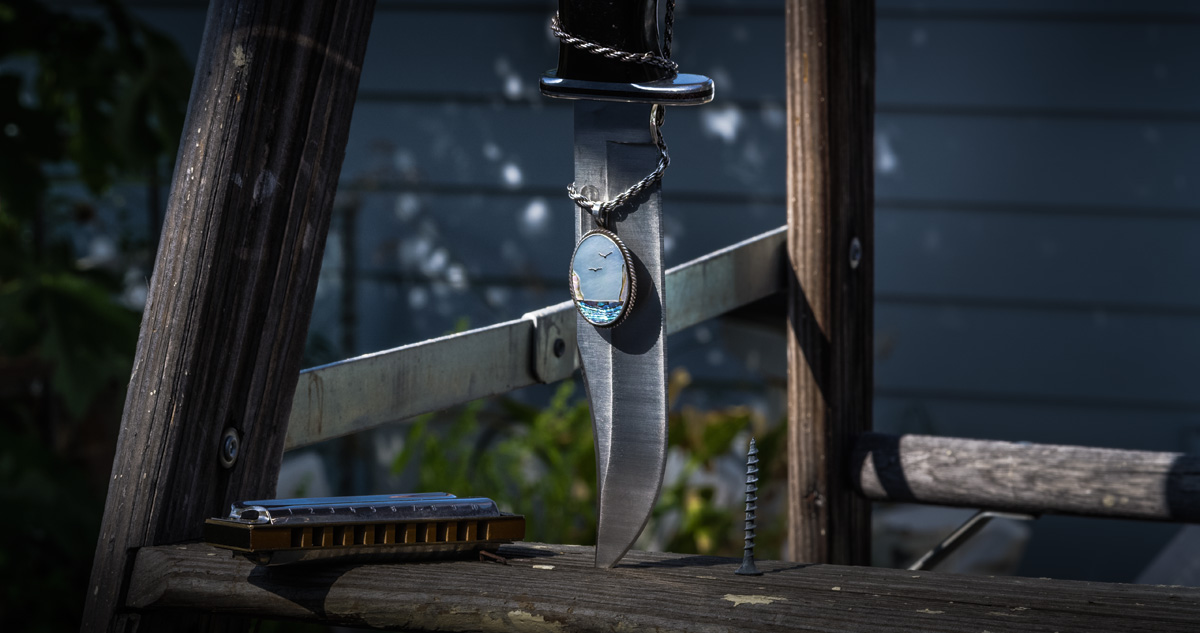
And here's an example of an image that I would describe as ruthlessly sharp and clean:
phfx_knifeNecklace.jpg
 
scale your others cameras up to 4K and them compare them at 100%. Or scale (not crop) 4K to 1080. It makes no sense to compare two different resolutions at 100 percent.

You are right but in a way, I disagree. Imagine you've never shot RED before, and are thinking of purchasing a scarlet. What's so good about the scarlet!? It's 4K silly! 4K!!?? Wowsers! That's like 4x the resolution that my DSLR shoots!!! So you get your camera and do some tests....and heavin behold, you look at your 100% crop and compared to the DSLR, it's soft! Sure, sharpen it and process it and starts to look good. I guess I'm just asking why defend this fact, why try and justify or deny it? Look at the 100% crops from the monochrome....amazeballs.

So, this is the thing I'm pointing out. I own and love my Scarlet, and I'm not dissappinted in it. But, for a newcomer or new owner, I'd prefer to know this before purchasing/preaching the 4k magic that is RED.

But I would hate to have a "in camera sharpening" as that will ruin things in post. You want to to do your keys etc on the image before somebody mess around with sharpness grain etc. So , no red is doing it right. RAW is raw and if you apply sharpening then it's not, and thats no good. I think it's vice to say that RED should not aim for the people that just jumped from their GH1's.... RED make digital cinema cameras, just as film negative is rather soft before going trough processing and especially the digital process of a filmscanner where sharpening is one part of the process. Red gives you the RAW image and let you debayer, grade and process the material in post, just as film been handled for a long time.

If your camera would add sharpening.. how much would you like to add? It very much has to do withe the nature of the shot exposure etc. And making that call from looking in the EVF or at the touch screen is impossible. Are those stripes on the shirt going to crack?... you do not know until you see it in the finalized grade / deliverable file size / format.
 
There is a reason high end productions shoot on mater primes and such and not still camera lenses and it's not just mechanics, yes still lenses can be used but they are not going to give you the best image and remember the scarlet has a much more intense OLPF than on a typical DSLR to get rid or moire and aliasing so a better lens will help you out significantly compared to an DSLR.

This is not quite the case. The OLPF is designed to in effect blur the image so that it can not produce an overly sharp image on the sensor. An even sharper lens does nothing if the extra sharpness is within the range that the filter is cutting out.
An analogy : if you have shitty speakers and normally just play an ipod through them, you won't know the difference if you hook up a $50K audiphile system to the same speakers.
Another closer analogy: If you are shooting through a dirty window pane, a better lens will not make the image look better.

Now I'm not saying that good glass is a waste, the aberrations are more controlled, etc. But my $600 glass makes 'pixel on pixel off' type of sharpness much of the time when I shoot with no OLPF.
I have a post methodology that controls much of the aliasing at the moment, and feel that for me I like the results. The post processing will always get better, and I don't want the baked in blur that can prevent the future post processing.
I am getting 6K out of stuff I shot at 5K.
Here is where we are headed: http://research.microsoft.com/en-us/um/people/celiu/cvpr2011/
The examples of this primitive example ( it does not do moving objects yet ) are none the less stunning. Video examples are provided. Red staff take note.
 
yeah, yeah... that is right, didn't really make the point I was going for(regarding the OLPF). Once again didn't really think it through... just another reason to cross check anything I say.... and perhaps I should be doing that before posting but that would just make far to much sense!

I blame it on the hellish cold ravaging my body!
 
Les, so did you remove the OLPF?
Yes. and I have a new love for my camera since. 4K .... bring it on. Now I can actually get real 4K.

( see my post# 86 in this thread. I could NEVER get that resolution before, even with a $55K lens. )
 
But, for a newcomer or new owner, I'd prefer to know this before purchasing/preaching the 4k magic that is RED.

But this is his quote...

I don't know you but for me and most people I know thefinal deliver is 1080p maximum. One of the points of 4K is take advantage of the extra resolution for cropping and reframing

This sounds to me like he has a fundamental misunderstanding of what why RED (and Sony) are advocating 4K. Since digital film scans yield 4K resolution, RED's position has always been that 4K capture was the minimum resolution needed for digital cinema to be a suitable successor to film.

It's NOT in order to be able to resize and reframe for a 1080p or 2K finish. 4K allows you some flexibility to change your mind about framing (or to stabilize) in post but you don't shoot with the primary intention of composing shots in post, unless you can't achieve the desired look practically.

That's just poor filmmaking technique. However, based on his comments and the fact that he even saw fit to do this type of test suggests that's exactly how he intends on using the camera.

I don't think shooting 4K to scale down to 1080p is a good practice or smart move after all my tests. To my eyes cropping Scarlet 4K to 1080p looks very similar to shoot 1080p with the fs100 and scaled up to match the framing of the scarlet crop. I'm not saying 4K is bad but the 4K coming from the scarlet is not good

What? How can that be? Scaling from a higher resolution to a lower one increases apparent resolution and sharpness. This is true for RED footage or any other image. It's due to the oversampling everyone's been trying to explain to him.

In fact, I can achieve the same results he's seeing in his Photoshop scaling example with pure CGI and 3512x1960 Aaton Penelope cinemaDNG footage. It's more a testament to Photoshop's scaling algorithms than the quality of RED's 4K image.

I'm no expert but, in his PS example, his assumptions about the results seem to be flawed in that he's starting with oversampled footage (4K). He's getting the benefit of starting out with all of those pixels when he scales down/up to 1080, which is what everyone has been trying to tell him.

Lastly, he seems to use "crop" and "scale" interchangeably. So, maybe I'm missing some of his meaning.
 
Is anyone using Redcine-X tools for sharpening?
Sometimes, when there is no real post / composting that is going to happen. It slows down the transcodes but works just as well as any other sharpening tool and it does it before sample wich is nice.
 
Yes. and I have a new love for my camera since. 4K .... bring it on. Now I can actually get real 4K.

( see my post# 86 in this thread. I could NEVER get that resolution before, even with a $55K lens. )

Great! I was so curious to know how much it would improve detail but I didn't dare remove the OLPF as the sensor has no protection then. You didn't install any replacement glass to protect the sensor, did you?
 
I wouldn't say this looks pretty good, but it does look like a raw file should that has no unsharp mask, noise reduction, or grade applied.... and possibly a cheap lens

I updated the image, by color correcting only. Sharpness same. Now you can see how color/contrast effects your perception of the sharpness!
Wow, now his 'cheap lens', as you said, looks better. Compare to Phil's image. I color matched his. Sharpness different.

8759c7a1132e57cb4605b6f349575e38151acfaa4f354a57c9d13c9f1d42a89d6g.jpg
 
Great! I was so curious to know how much it would improve detail but I didn't dare remove the OLPF as the sensor has no protection then. You didn't install any replacement glass to protect the sensor, did you?
The sensor has it's own cover glass to protect it. That is normal for sensors, and is epoxied on. No reason to remove that one. The OLPF is friction fit in a rubber frame. Just pulls out.
Yes, I used a multi coated 'dummy' OLPF that is also IR cut. You need IR cut unless you want an IR camera.
 
Very nicely demonstrated Phil!

And Phil, as usual you defend RED with real world examples and prove everyone wrong, but hey, I solute you and your results.

Thanks guys. A few years ago you would have had to torture me to get information on things like this. Every Red camera released can create really nice 4K images, but many don't have the experience or patience to make it sing. It's always good to experiment. And I can assure you when Red material is processed nicely it looks amazing projected at 4K on the big screen.

Having the extra power of Epic's 5K and soon Dragon's "K" will give you even more clay to sculpt with. Exceeding many of our expectations of what 4K can or should look like.

I should also add that the main point of reframing/cropping is to assist with the story and often simplify the frame. To do this well you should upscale and sharpen in my opinion. The good news here is that RedCode holds really well to scaling and sharpening. I'm a bit of composition nut and try to frame as close as possible to avoid that, but nobody is perfect and sometimes the unexpected happens.

When you guys hear of directors like Peter Jackson and James Cameron choosing Red cameras for their productions these tests and many more have been done. You can't sell picky professionals snake oil. They want the good stuff.
 
Back
Top