Welcome to our community

Be a part of something great, join today!

  • Hey all, just changed over the backend after 15 years I figured time to give it a bit of an update, its probably gonna be a bit weird for most of you and i am sure there is a few bugs to work out but it should kinda work the same as before... hopefully :)

Why Bigger is Better (but not much else) S35mm vs. Vistavision Comparison

Mark K.

Well-known member
Joined
Apr 18, 2007
Messages
1,199
Reaction score
1
Points
38
Location
Melbourne, Australia
G'day everyone,

So, I compared some stuff and wrote a thing:

http://dreamsmiths.com.au/blog/why-bigger-is-better-but-not-much-else

If you're interested in the objective differences of large format cinematography to regular S35mm images, you might find it worthwhile.

It's a quick test comparing regular S35mm Alexa, matched for both field of view and depth of field against the shiny new Vistavision-sized sensor of the Alexa LF, using spherical lenses.

The size and aspect ratio of the LF sensor is a bit different to 8k VV on the Monstro, but the intrinsic technical, aesthetic and optical differences of a larger format versus a smaller one, essentially remain the same regardless of such differences.

If you click through to the vimeo link, you can download the full 4.4k ProResHQ file in all its glory, which I'd highly recommend pulling into a piece of grading software to look at up close.

The test certainly helped clarify a few things for me. Hopefully it'll be of some use to other people too.

Cheers,

Mark Kenfield
 
Thanks for Sharing
 
Great write up. Agreed 100%. Another myth busted haha...
 
This has been my opinion for a while, I think VV and larger formats are very useful and offer real benefits but there are still many uses for S35 and I think it's still the sweet spot for cinematic DOF Vs. lens speed and size.
 
An alternate view (no pun intended) using the VV sensor in a DXL:

https://vimeo.com/253322347

Also according to the FDTimes article on the Arri LF there is a 2 stop difference in depth of field between S35 and the LF when matching for same field of view.
 
Last edited:
An alternate view (no pun intended) using the VV sensor in a DXL:

https://vimeo.com/253322347

Also according to the FDTimes article on the Arri LF there is a 2 stop difference in depth of field between S35 and the LF when matching for same field of view.

Strange that PV puts out a clip like that. To me it sounds like stupid sales talk nonsens as they dont explain that the smaller the image circle the faster lens you can get. So it very much goes both ways, s35 can match VV and VV can match the look of s35 but S35 actually allows for more light per sqare unit of the sensor.

when comparing S35 to vv then you will find that if you match the fov by changing the focal length you can also open up more on the s35 lens as its faster so the falloff can be matched. Its only when using lenses with the same size image circle the comparision they do make sense. But there is no rule saying you can only use FF lenses on S35, on the conterary.


A certain field of view goes through glas and hits a sensor. No matter if the sensor is big or small its the same amount of light entering so a smaller sensor gets more light per square unit.
 
An alternate view (no pun intended) using the VV sensor in a DXL:

https://vimeo.com/253322347

Also according to the FDTimes article on the Arri LF there is a 2 stop difference in depth of field between S35 and the LF when matching for same field of view.

1.71x image size ratio = ~ 1.5 stops. Some might round that up to 2.
 
1.71x image size ratio = ~ 1.5 stops. Some might round that up to 2.
That's what I find too and it creates a HUGE feeling on some shots. Another thing I've been thinking about is I really like the feel of 8k resolution but don't want the pixel pitch getting smaller. With 5 microns I some times hit the diffraction limit at higher t-stops faster then I expect as I just twisted the T stop ring(and it's hard to see while shooting that I have messed up with the diffraction limit with my current monitors so I basically now never go above T8). Given that, I'd prefer if red grows the sensor size with more pixels and stays with the 5 micron sites.
 
I think we're forcing film paradigms on digital, which isn't necessarily beneficial after a point. Look how awful the output is from phones - surprisingly good considering how small the modules are, but disappointing compared to sensors with a bit of breathing room. IMHO.

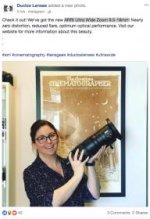
BTW I just saw this on Facebook from Duclos. ARRI 9.5-18mm. It's a S35 lens, BTW.
 

Attachments

  • Duclos_ARRI_9.5-18mm.jpg
    Duclos_ARRI_9.5-18mm.jpg
    12.2 KB · Views: 0
An alternate view (no pun intended) using the VV sensor in a DXL:

https://vimeo.com/253322347

Also according to the FDTimes article on the Arri LF there is a 2 stop difference in depth of field between S35 and the LF when matching for same field of view.

I noticed that in the FDTimes article too, and I had a lengthy chat about it with Thorsten Meywald, Arri's product manager for optical systems (the guy in charge of the Signature Primes), and specifically about Jon Fauer's mention of a two stop difference in depth of field between Vistavision and S35mm, and the answer is... complicated.

Jon's argument is that (in judging DoF between S35mm and Vistavision) circle of confusion should remain the same between the two formats because the pixel density is the same. But as I understand it, that's wrong. Unless your final viewing medium were to expand 1.5x in width between the two formats (to maintain the same level of magnification between the pixels displayed in both formats).

Circle of confusion changes between format sizes when you're viewing the final outputs at the same size and distance (i.e. playing them both on the same screen) because the magnification of your pixels is proportionally reduced as your capture format gets larger.

Which seems to be born out by just about every depth of field calculator I've tried, and empirically from looking at the images themselves.

A one stop difference in aperture, brings the perceived DoF between the two formats to approximately the same place (i.e. near enough as to make no difference).
 
Nice write up Mark. Also, thank you for including a maximum resolution high quality file as that's a good way to go about this. Not always the case with tests like this.


difference in depth of field

Outside of a DoF calculator, there's a great deal of variance and what it exactly takes to match say circles of confusion between different formats and different lenses, this is something that Yedlin's article actually points out rather well, despite ignoring magnification related things.

In relationship to that, Super 35mm, and RED 8K VV for instance you are typically looking at a difference between 1.5-2 stops depending on glass.

Most of my exact tests in the last two years with the vast majority of lenses I use land in an approximate 1.62 stops between S35 (Monstro/Dragon 5K) and VV (Monstro/Dragon 8K). And by approximate, I mean that number is a number that's rather real in most situations.

I've got a few pieces regarding format size incoming and I've chatted with other experienced large format folks to discuss some of the rather intangible and tangible differences. I'm enjoying a lot of the conversation happening to both experienced and inexperienced large format shooters as of late. Particularly down to the technical, creative, subjective, and objective results. The ASC Clubhouse a couple weekends ago was an interesting thing. Also ran into Nolan yesterday and hope to have an expanded conversation on the topic when the time is right. There's a lot "to this" for some people, myself included, that makes large format (or any format) alluring.

In the face of the larger format storm, which will take grasp of hearts and minds for some filmmakers, I personally don't think any format is dead. S35 will still be the backbone that much of this industry is supported by, especially if capture is there in 4K-8K resolutions. I would like to see more 4K S16 happening and I suspect there will be more of that shortly. For larger formats in the realm of VistaVision I think somewhere between 6K-12K is ideal. Large format will be a hot item for a while industry wide where people can deploy for sure. I'm personally very invested in it for the work I produce, though take note I didn't get rid of my S35 glass as I'll still dip into 5K-6K for a 4K finish when needed.
 
I would like to see more 4K S16 happening and I suspect there will be more of that shortly.

THANK YOU. I feel like a crazy person for missing the R16/S16 look, and apart from Digital Bolex it sort of felt like everyone else left it behind. Not like I expect Red to take aim at such a niche market, but some of my favourite films were shot on those formats and I wish there was someone targeting a lower-cost body at that. Not like I'm in a huge rush to move away from my D16 for smaller personal projects... ;)
 
THANK YOU. I feel like a crazy person for missing the R16/S16 look, and apart from Digital Bolex it sort of felt like everyone else left it behind. Not like I expect Red to take aim at such a niche market, but some of my favourite films were shot on those formats and I wish there was someone targeting a lower-cost body at that. Not like I'm in a huge rush to move away from my D16 for smaller personal projects... ;)

Nothing will be left behind in my mind. Digital cinema is merely catching up to motion picture film just in the last few years here in terms of providing generally decent resolution relevant to format size options, while providing a bit more in the technical categories than film ever achieved to the physical limitations of the technology.

If you're curious, you can shoot resolution relevant S16 on Monstro or Dragon, or a bit beyond that with up to 4K on Helium which is suitable for a 4K finish if shot well. Not the cheapest option out there, but you have tremendous access to frame rates and a fully fledged camera.
 
I noticed that in the FDTimes article too, and I had a lengthy chat about it with Thorsten Meywald, Arri's product manager for optical systems (the guy in charge of the Signature Primes), and specifically about Jon Fauer's mention of a two stop difference in depth of field between Vistavision and S35mm, and the answer is... complicated.

Jon's argument is that (in judging DoF between S35mm and Vistavision) circle of confusion should remain the same between the two formats because the pixel density is the same. But as I understand it, that's wrong. Unless your final viewing medium were to expand 1.5x in width between the two formats (to maintain the same level of magnification between the pixels displayed in both formats).

Circle of confusion changes between format sizes when you're viewing the final outputs at the same size and distance (i.e. playing them both on the same screen) because the magnification of your pixels is proportionally reduced as your capture format gets larger.

Which seems to be born out by just about every depth of field calculator I've tried, and empirically from looking at the images themselves.

A one stop difference in aperture, brings the perceived DoF between the two formats to approximately the same place (i.e. near enough as to make no difference).

Using a couple of different online dof calculators, and for simplicity using a Canon full frame dslr vs. Canon APS-c dslr I see that you are correct, there is only 1 stop difference for equivalent depth of field (roughly but close enough) and yes the circle of confusion does change (as the calculators must be assuming same viewing distance and image size).
 
Well the 1 stop increment numerically is a square root of 2 i.e 1.43. The crop factor is about 1.5. Simple math tells us that the stop difference between the formats would be 1.1 or so....
 
Back
Top