Welcome to our community

Be a part of something great, join today!

  • Hey all, just changed over the backend after 15 years I figured time to give it a bit of an update, its probably gonna be a bit weird for most of you and i am sure there is a few bugs to work out but it should kinda work the same as before... hopefully :)

What to expect from a RED camera with Z mount?

fgonz031

Well-known member
Joined
Mar 11, 2024
Messages
54
Reaction score
12
Points
8
8K, 9K, 10K, 12K, HFR over 17 stops dynamic range, novel design, Electronic ND filter and more.
Leave you free to debate and if you have some info add here
 
I’m not particularly good at these predictions but these topics make for interesting discussions.

For 2025 I predict more action in the below $10k arena.

- I wouldn’t be surprised if a Full Frame Komodo X class camera with a Z mount was released.
Perhaps sensor improvements of .5-1 stop in both shadows and highlights compared to existing Komodo X.

-Maybe a lower end Komodo OG Full Frame might be released after the proposed Komodo X Z mount cam.
I would also predict both in 6K and nowhere near the frame rates as Raptor X.

- Nikon may announce more mid range cinema/hybrid lenses as a counterpart to the new cameras.

- Raptor X released almost a year ago and is still very bleeding edge.
I have doubts there will be any new models in that high end area just yet.

- I think AF updates and perhaps enhancements to Extended Highlights might happen

Special note on the high end:
2 films (Conclave and September 5) that are likely front runners for best picture at the Oscars were shot on RED V Raptor.

2 of the bigger budget films for 2025 (Superman and Tron:Ares) were also shot on V-Raptor.
I expect RED to build on that momentum.

I do think RED and Nikon are likely working behind the scenes on a grander plan for the high end market that would ultimately see RED release higher end cameras with larger than VV sensors
and a new lens system (Nikon) to accompany them.

This would likely be a long multi year strategy and something that would be deeply thought out and spread over different announcements and products.

-Also more integration with MRMC which is also owned by Nikon.

- I think IPP3 or some type of color science or debayering update might happen

Having said all of this the existing RED cameras from Komodo OG to Raptor X XL are at the top or near the top of their class.

I look forward to more firmware updates for the existing cameras.

If one needed a camera now there would be no reason to wait as those cameras give excellent performance now and likely into the future.

Brian Timmons
BRITIM/MEDIA
 
Last edited:
Just improve the dynamic range for gods sake.
Nobody cares about more than 8K.

Wishlist:
S35/FF Sensor
+17 REAL stops of DR (based on CineD IMATEST V-Raptor VV has only 15.1 stops)
8K
240fps
Record to NVME drives
V/Gold-Mount
Completely Wireless Video/Audio/TC comms (500 different cables for everything is so unnecessary, cmon its 2025, the time has come)
USB-C Power/Communication Ports all over the body for accessories
Drop the predatory RMI-Cable fuckery, don't go as low as Apple and rewire it back to USB-C lol
Internal ND
 
Dynamic Range is going to be topped out where it is right now without new innovation. RED's HDRx solution was a step in the right direction and needed to step up to 3+ streams to really get the HDR video aspect going. Spheron's prototype 1080P HDR video camera several years ago was the ideal solution to anyone's dynamic range needs but nobody has matched it in all this time. The thing is, if you are lighting your projects and exposing properly, there is already more than enough dynamic range in modern cameras than anyone could need. If Nikon/RED can keep the current dynamic range going and increase resolution and/or sensor size, then that clearly is the path forward. A medium format RED camera would fit a lot more in the current trends going forward than trying to sort out a specialized ultra HDR model that may have to have a compromise of 4K/5K/6K resolution. If we're not advancing resolution then many would have been fine with a 1080P Sony F35 or Arri Alexa HD for a lot longer than they were in the face of new 4K models coming out and sensor size makes a difference as well, otherwise we'd all be using Micro 4/3.
 
HDRx is unusable sometimes. Dynamic range is never unusable.

Arri, for example, is still hesistant to go way beyond 4k, and rightly so. Their DR is unparalleled and unbeaten. Their cameras are continuing to be the workhorses of the industry for a good reason. In my mind this is not only due to their exceptional reliability, but also because of the superior DR that allows a picture quality no other camera manufacturer can offer.

In short: Resolution falls short to improve the picture, when current viewing devices wouldn't be able to utilize the resolution.

High resolution sensors are substitutes for a lack of innovation.
If a manufacturer would be able to create a Alexa 35 equivalent sensor for a reasonable price, I predict (estimate) that the whole market would change. In such an environment it would be deemed unwise and a dangerous business decision to stay asleep.
Currently however it seems that no such efforts are made and therefore no market participant is forced to react. There is no incentive for innovation, as long as everyone is making money.

I'm confident that, given the same purchase price, people would find cameras with 4k and higher DR more desirable than cameras with 12k and miserable DR.

Increased DR would also allow for easier lighting setups in environments that aren't as easy to control, reducing costs by the thousands.
 
There's a great deal of layers to what tools are needed, in demand, and what each filmmaker will benefit from.

High resolution sensors are not a lack of innovation, not by a long shot. The benefit of oversampling on a Bayer Pattern sensor alone is worth while. And that's before getting to topics like frame extraction and for those who do deliver higher resolution deliverables.

I'll back the older quote from Jim, as it really has become true over the last few years, pixel design has become rather important both in motion and still cameras.

There's been a weird topic of thinking you need to choose resolution over dynamic range. Just to squarely use the Alexa 35 as the example, if you want that exact dynamic range and had a sensor that is 49.77x26.24mm, you'd have an 8K version of that technology.

Perhaps the most interesting thing about this current moment is the cameras on the market that professionals tend to use have pretty interesting strengths and weaknesses to examine. Features, image quality, right down the imaging pipeline.

I'm mainly working with the RED V-Raptor [X] bodies for my work. I am delivering 8K, 4K, and still doing array work for higher resolution delivery (global shutter really is great for that).

I'm not sold on NVMe as the recording media. I am however upset that the pandemic and a few other factors have delayed CFexpress Type-C cards from coming to market. That will provide a media form factor and data rates to get to the next level needed by a few manufacturers.

The critical thing for RED is to make a set of cameras to fit various pricing tiers. Komodo and Komodo-X sales and adoption have shown the power of more entry level pricing, with Komodo-X having a lot of value when it comes to this style of production camera.

There's a few things I would differently when it comes to DSMC3 however. Most of the design is very, very good. But there's about 20% I'd love to tackle and improve upon. RMI is certainly one aspect there, but there's a few more things.

Pricing is an interesting topic in general. Observationally, I always hear that people want camera X, Y, or Z at significantly lower prices. Like 50-75% lower. That won't make sense, particularly on bleeding edge technology with some difficult to manufacture bits. But it will be interesting to see what next gen flagships come in at versus say the lowest tier offering and what features separate them.
 
March 2025 will mark the first anniversary of the RED acquisition by Nikon.
Perhaps they were already working (informally) on a new strategy before the public announcement, but significant new product releases are probably going to be further into the future.
Nevertheless, there could be an interim release perhaps a Z Mount video camera together with the first new lenses.
Nikon has probably been working on these Optical designs for the Z System for significantly longer. Their executives have been emphasizing the significance of video to Nikon over the past 5 years, at least. This commitment is confirmed in interviews with the new CEO of RED.
 
Last edited:
@Phil Holland I just want to iterate and mention that I'm not against resolution, I would however prefer more dynamic range over resolution any day.

It's my opinion that going after more resolution is that path of less resistance (ie money) and ultimately the reason for the current trend.

More DR would solve more problems in the real world, I'm pretty sure about that.

I think this is just one of those things that most people don't realize they need because they are too busy following trends, until someone solves that problem and everyone goes: "Why didn't nobody think of that earlier?"

The company that brings high DR sensors to market and keeps the technology to themselves will make a lot of money. I'm 100% sure.
 
 
@Phil Holland I just want to iterate and mention that I'm not against resolution, I would however prefer more dynamic range over resolution any day.

It's my opinion that going after more resolution is that path of less resistance (ie money) and ultimately the reason for the current trend.

More DR would solve more problems in the real world, I'm pretty sure about that.

I think this is just one of those things that most people don't realize they need because they are too busy following trends, until someone solves that problem and everyone goes: "Why didn't nobody think of that earlier?"

The company that brings high DR sensors to market and keeps the technology to themselves will make a lot of money. I'm 100% sure.
Agree, I think DR improvement is way more important now than resolution. Super high resolution solves mostly a theoretical problem at the moment, as in it doesn't really solve any real world problems but it does look good on the spec sheet.

Alexa 35 is the gold standard when it comes to image quality and the sensor is barely over 4K. The technology they use to create the high DR is some form of DGO, which I'm sure is protected by patents. That's why you don't really see the same kind of improvement in DR with any of the other camera manufacturers.
 

This is an historic day (quoting the Press Release)

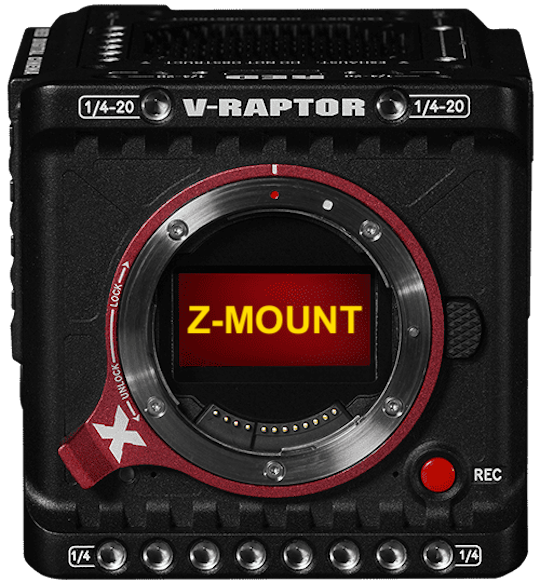
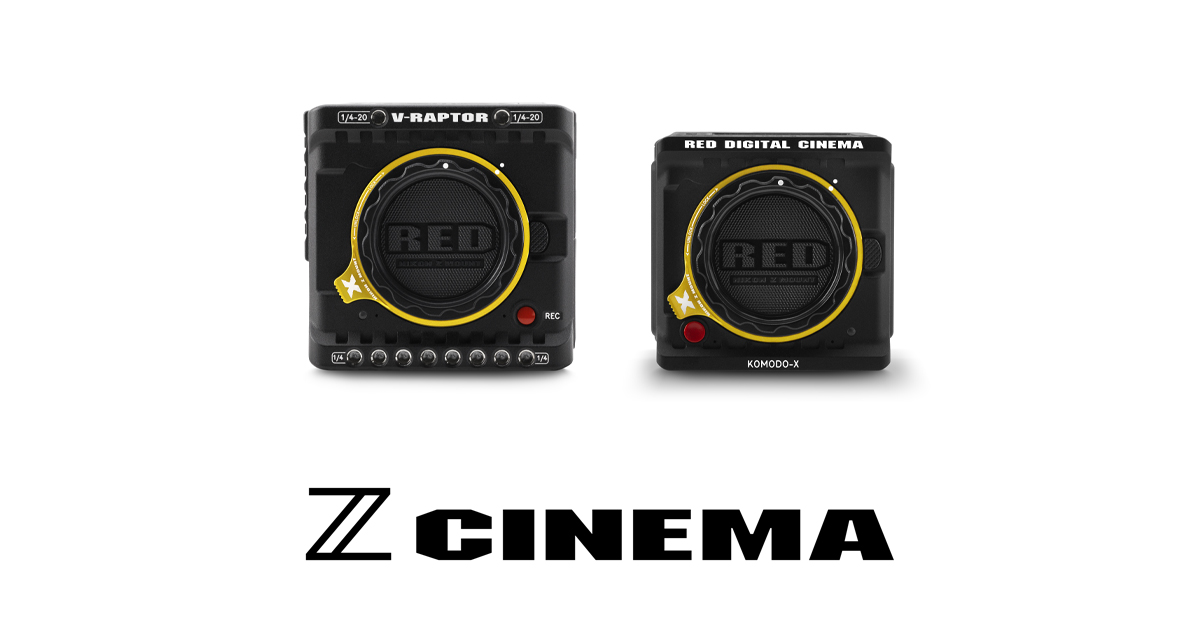
"....The V-RAPTOR [X] Z Mount and KOMODO-X Z Mount are the first entries into the all-new Z CINEMA series; a new product line of co-developed solutions from Nikon and RED. The Z CINEMA series is targeted at providing high-quality solutions for the cinema, high-end production and creator market.

It marks the initial stage of integrating Nikon's rich history and powerful technology and RED's cutting-edge cinema solutions, to create products designed for filmmakers and content creators operating at the highest level across the globe...."
 
Observationally, I always hear that people want camera X, Y, or Z at significantly lower prices. Like 50-75% lower. That won't make sense, particularly on bleeding edge technology with some difficult to manufacture bits. But it will be interesting to see what next gen flagships come in at versus say the lowest tier offering and what features separate them.
I'm not so sure. I think consumers are just very well aware that tech gets cheaper and better every year.

I'm going to talk about the lower end, which is also the biggest market by a long shot. The type of people who rigs up mirrorless cameras (me). But it's awful body design for video.

So someone like me looks at Nikon and compares what they have with the competition, and my own needs:
- Red, Kinifinity, Z-cam (or fx6 even) have box designs that work great so let's get that
- The xh2s has a 14bit readout and opengate, but the z8 sensor/ processor is faster/ better so why can't we have that
- I also don't care about global shutter. the z8 is okay, but if it did video in stacked sensor mode, it'd be 3.7ms
- 32bit float is cheap and widely available in recorders now so let's have that
- Internal NDs are common in cheap video cameras (yes there's minor compromises but at this price point, it's a very small price to pay)
- I'm already using v-mounts so put that on there
- Mirrorless cameras already let you use the internal battery as well as a v-mount, so let's have a slot for an internal Nikon battery too. An extra hour as a backup is a great idea
- Obviously Red's IPP2
- Obviously Nikon's autofocus
- And this kind of consumer doesn't need or want many extra ports that the Z8 doesn't already have beyond maybe xlr or sdi

We all know this tech has existed for several years and isn't that expensive to add in, especially at wholesale prices. So how unrealistic is it to want the above for the price of a fx6/ c80/ z9?
 
I just came back from my first "non controlled" environement with the V-Raptor in south west china for French fragance brand (🫢) about beekeeper in remote location. I'm freaking blowned away by the sensor. The amount of details and depth you have in each frame is insane, and I was always surprised to see more in Resolve that on the red monitor.
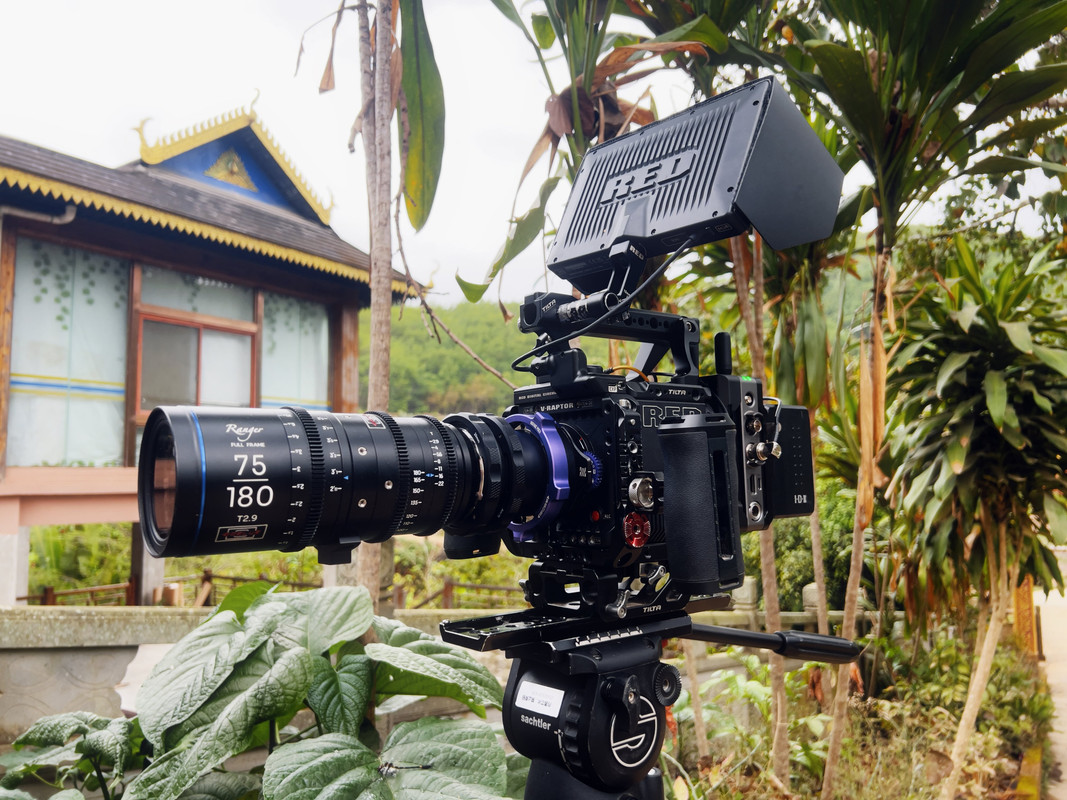

What I'd like to see from Red/Nikon is a direct take against the Sony Burano : IBIS / EVF / Low power and ULTRA fast bootuptime.
That sensor is pure gold. But the body is just a cube, with non ergonomic button placement.

IMG-1252.jpg


IMG-1258.jpg
 
Last edited:
I just came back from my first "non controlled" environement with the V-Raptor in south west china for Guerlain about beekeeper in remote location. I'm freaking blowned away by the sensor. The amount of details and depth you have in each frame is insane, and I was always surprised to see more in Resolve that on the red monitor.

What I'd like to see from Red/Nikon is a direct take against the Sony Burano : IBIS / EVF / Low power and ULTRA fast bootuptime.
That sensor is pure gold. But the body is just a cube, with non ergonomic button placement.

Nice frames and yes I got the DM as well.

Some thoughts.

EVF. Yes, big I have some very real and good ideas for EVF related things. I have formerly shared this with Jarred, but Nikon should be aware.

IBIS. Touch subject as it causes issues in a variety of other directions for production work, but everybody understands the desire. Body stabilizing the body itself is the most bulletproof way for all productions still.

Power Consumption. Komodo really is the star of low power draw. V-Raptor is designed to do 8K 120fps and has more physical hardware to drive on top of that. Plus the LCD draws some decent power too. I don't think there's a real way to maintain this level of image quality, performance, and bringing the power needs down as of yet. In fact, for some other companies, they've had to utilize higher voltage. Even XL does.

Boot Time. Yep, things are vastly improved in DSMC3 bodies, but always more to do on this front. I'll underline it's incredible that we have Sensor Calibration to under 30 seconds now. Down from about 8-45 minutes from previous generation body types.

Body Layout. You are specifically describing single op/doc workflow. Tricky one to lean into a camera purely designed for that while also maintaining functionality for other professional workflows. There is a divide here and I feel what RED has done in general with the LCD Touch screens in particular is a good solution to both worlds. Also half press, full press, and long press button support is ideal for shortcuts. Probably some fun stuff to be done with side handles again. I have some other interesting ideas I'll run by RED/Nikon about this shortly as this style of operation is about 1/2 my production year as well.
 
Hello Phil,

Interesting to exchange about this with you.

Raptor is designed for 8K / 120fps I admire that it can do that on regular V-Mount. Traveling with large amount of B-Mount is expensive and non convinient.
But I kinda feels that it is the future.

I know that Raptor is quicker in everyway, (I've shot with Dragon, Gemini, Monstro) but the bootup time could be a great way to save battery life.
Other manufacturer manages that, Nikon as well with their hybrid cameras that's what I'd like to see.

Thermal is also a big thing, Raptor get hot in prep without recording to a point you get a message of caution regarding "hot media".

As for body-layout I'm not only talking about Doc/ Single OP workflow.
My area of work is from Doc to Ads and brand content from solo to 10people in crew.
Some client asking for high rez and stills extraction other wants quick turn-around projects.
I'd sure can have an FX3 and a higher end camera but that's now, not what I want in the future.

Talking about sensor stabilisation,
I've shot car rig with Gemini and R2 / Blackarm as well as lower end with tilta arm / RS3 Pro and FX3.
I must say that having IS from Sony got rid of a lot micro shakes that would take more rigging and time on set.
I disagree with you as I feels like nowadays sensor must help stabiliszing the footage (except for hollywood and major motion picture);
I've been shooting for 13years and my industry has changed and I just cannot rely on my easyrig on every job, nor that I can always rely on trusting an editor to stabilized the footage with gyro data when I'm handing over footage. He must deliver content fast, just like me. Everything is faster.

Raptor Body layout is great for gimbal work, underwater, moco and major motion picture (rigged to every situation).
Its great in its own way but if I'm talking about what I want for the future of Red/Nikon is not a Raptor body style.

It's a 15K to 20K$ Camera body
That's where I think Red/Nikon must strike hard, Burano is selling great, but has not the IQ of Raptor, has bad sensor readout but :
It boot fast, shoot for hours, it got LL and NDs and got compressed codecs for the smaller client and heavier compressed codecs for even smaller client.
But it sure does have the 16 bit RAW for higher end projects.
Nikon must strike there, with an ergnomical body (Burano / Eterna) aimed at smaller crew and single op.

That's my tough and wishes.
 
Last edited:
Back
Top