Welcome to our community

Be a part of something great, join today!

  • Hey all, just changed over the backend after 15 years I figured time to give it a bit of an update, its probably gonna be a bit weird for most of you and i am sure there is a few bugs to work out but it should kinda work the same as before... hopefully :)

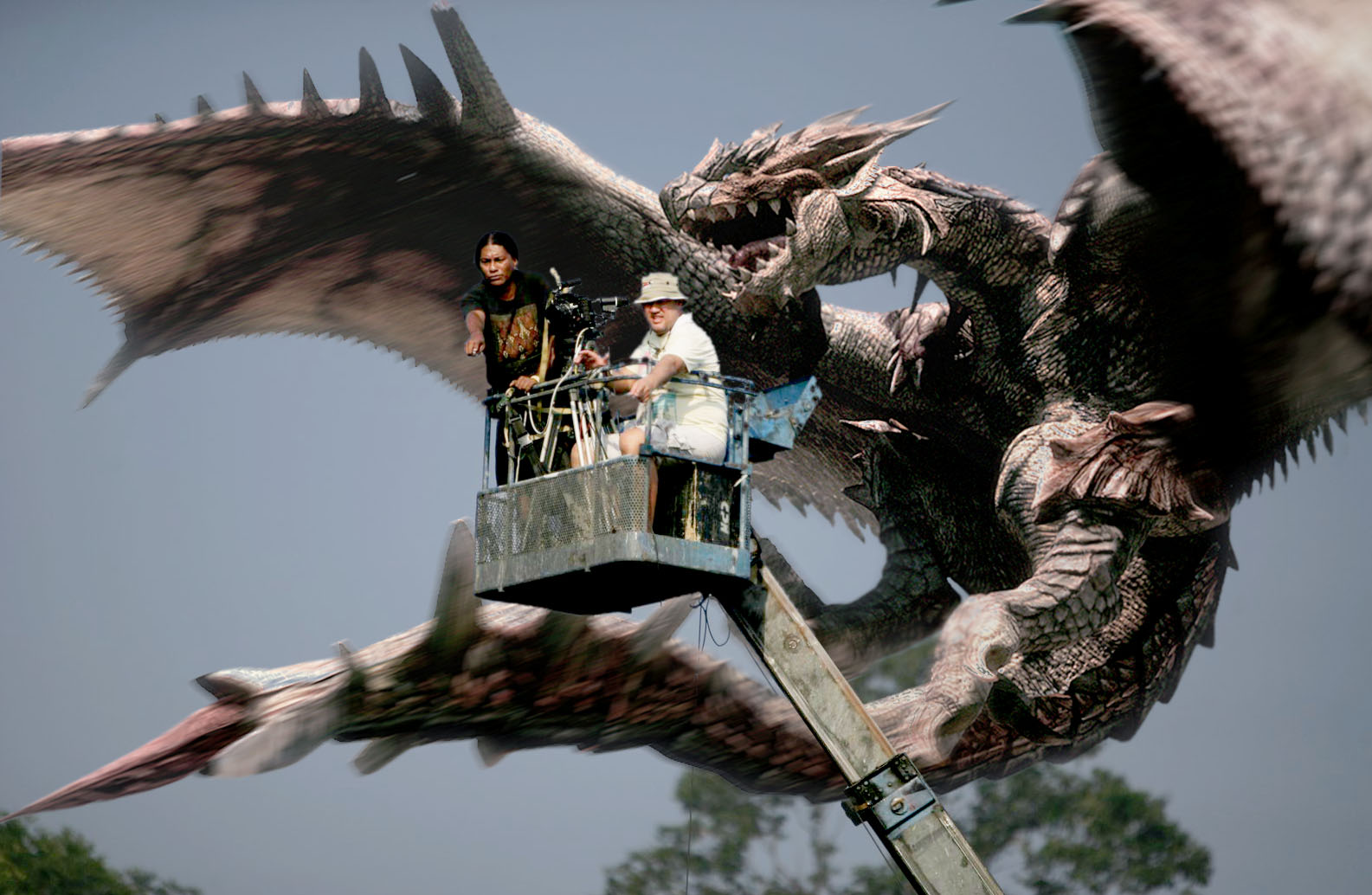
Dragon....

I just got home and caught this myself. Looks like they are just doing tests, although who knows what PJ has in store after The Hobbit...something fun?

I had friends firing messages to me about it; they know me a little too well. Haha. I realize Mr. Jackson has an immense adulation for RED, but I wonder who he is taking these pics for -- the fans or us? I think he's indirectly teasing the film community. Haha. Lucky.

Actually...it's not "luck" at all. :)
 
Last edited:
Time for my annual PJ and the whale post: Would someone at RED please ask Peter Jackson if he would consider making Moby Dick.
No filmmaker has come close to realizing this epic story.
 
I was not excited about Dragon when it was focussed on 6K, but now that I hear more about improved dynamic range and improved color I am excited indeed.

There is still something I do not understand - how can ISO 200 and ISO 800 BOTH have 16 stops of range? ("No penalty for lower ISO" as Jarred said)

That means that either:

A) ISO is now baked-in, at least to some degree (not a terrible thing)
or
B) - REALLY EXCITING - we now have even more than 16 stops available in post - because we can set one part of the image to be one ISO, and the other to be another, and composite the layers.
C) Something else I don't understand.

Anyone know what the case is?
thank you...i thought i was the only not so smart one here....and actually the claim is 200 to 2000....16.5 stops...i don't get it either....
but i am afraid if someone can explain it to me, i would still not get it...and honestly if it does do 16 stops across the whole iso range, i won't ask why, i don't care....i will just use it and be happy...
 
Alrighty then, I was saving this pic for an inevitable dragon footage thread, but since PJ posted photo of himself with Dragon on his facebook, I can't help myself. Sorry ;).
QZhWX8q.jpg
 
Last edited:
thank you...i thought i was the only not so smart one here....and actually the claim is 200 to 2000....16.5 stops...i don't get it either....
but i am afraid if someone can explain it to me, i would still not get it...and honestly if it does do 16 stops across the whole iso range, i won't ask why, i don't care....i will just use it and be happy...

Based on the article here, http://www.red.com/learn/red-101/exposure-with-red-cameras, MX sensor cameras redistributed middle gray based on the ISO setting. Decreasing ISO came at the expense of less latitude above middle gray, resulting in highlights clipping earlier.

Perhaps Dragon no longer remaps middle gray (or somehow compensates) such that it stays constant throughout the ISO range, always giving access to the same 16+ stops.

My limited understanding of how all of this works makes this guess seem reasonable. It also seems to suggest (again, based on my limited knowledge) that Dragon may capture more than 16 stops in order to pull this off.

A more informed mind than mine should probably weigh in on this, however.
 
Last edited:
Based on the article here, http://www.red.com/learn/red-101/exposure-with-red-cameras, MX sensor cameras redistributed middle gray based on the ISO setting. Decreasing ISO came at the expense of less latitude above middle gray, resulting in highlights clipping earlier.

Perhaps Dragon no longer remaps middle gray (or somehow compensates) such that it stays constant throughout the ISO range, always giving access to the same 16+ stops.

My limited understanding of how all of this works makes this guess seem reasonable. It also seems to suggest (again, based on my limited knowledge) that Dragon may capture more than 16 stops in order to pull this off.

A more informed mind than mine should probably weigh in on this, however.

There are no baked ISOs in Red at this time, so you are not really shooting at anything, you are lighting/shooting based on an assumption of ISO.

If you light/iris/ND based on an assumption of a low ISO, then you will be putting more light on the sensor, so more areas of the image might clip or be close to clipping (thus less headroom) but since there is more light hitting the sensor, less parts of the image will be dark or under the noise floor (so more room at the bottom).

if you light/iris/ND based on a high ISO, you will be putting less light onto the sensor, so you will more likely have areas that are too dark (so less room at the bottom) but, assuming the same scene as above, since there is less light overall needed to light "fast high ISO film", likely fewer parts of the image will clip.

In both cases above, you find f-stop based on an 18% grey card. At a low ISO, that grey will need more lighting hitting it than at a high ISO, in order for you to determine that the scene is correctly exposed. SO at a low ISO, you'll for example not add ND to the mattebox, ND that you would add of you were shooting at a higher USO, and ND that would obviously protect higher brightness areas of the image from clipping/burning.

The RAW recording does not care what ISO you chose - ISO is just a setting to help you visualize what a graded image could look like, and help you use tools such as light meters which were developed for use with film stock, which has a fixed ISO.

I feel like you're responding to something other than what I stated in my comment. I know ISO isn't baked in and I'm not sure what I wrote to suggest otherwise.

From the article: "With RED cameras, the best way to shift the balance between noise and clipping protection is with the ISO setting. Although ISO doesn’t actually change the raw image data, it does change how the image is displayed, since it shifts which portions of the scene are mapped to middle gray."

Also: "Note how the tonal range remains identical for both ISO settings, but that in each case the number of stops above and below the midtones has been redistributed. A higher ISO setting allocates a greater fraction of the camera’s tonal range to the highlights—thereby providing more clipping protection. Furthermore, even when highlights become clipped, these often appear smoother at a higher ISO since the roll-off from highlights to clipping occurs over a broader tonal range. On the other hand, using a higher ISO also causes darker and therefore noisier portions of the scene to become brighter—thereby increasing visible noise"

According to the article, despite ISO being metadata, middle gray shifts with the change in ISO and affects the image. The Alexa behaves the same way, if I'm not mistaken.

All I was suggesting was that a redistribution of middle gray no longer takes place in Dragon, enabling the same latitude (the same number of stops above and below middle gray) for both 200 ISO and 2000 ISO. This is not the same thing as saying any values get baked in.

I'm not saying what I initially said was right. I'm saying it's not what you thought I said. Maybe I'm misunderstanding what you're trying to tell me.
 
Last edited:
I feel like you're responding to something other than what I stated in my comment. I know ISO isn't baked in and I'm not sure what I wrote to suggest otherwise.

From the article: "With RED cameras, the best way to shift the balance between noise and clipping protection is with the ISO setting. Although ISO doesn’t actually change the raw image data, it does change how the image is displayed, since it shifts which portions of the scene are mapped to middle gray."

Also: "Note how the tonal range remains identical for both ISO settings, but that in each case the number of stops above and below the midtones has been redistributed. A higher ISO setting allocates a greater fraction of the camera’s tonal range to the highlights—thereby providing more clipping protection. Furthermore, even when highlights become clipped, these often appear smoother at a higher ISO since the roll-off from highlights to clipping occurs over a broader tonal range. On the other hand, using a higher ISO also causes darker and therefore noisier portions of the scene to become brighter—thereby increasing visible noise"

According to the article, despite ISO being metadata, middle gray shifts with the change in ISO and affects the image. The Alexa behaves the same way, if I'm not mistaken.

All I was suggesting was that a redistribution of middle gray no longer takes place in Dragon, enabling the same latitude (the same number of stops above and below middle gray) for both 200 ISO and 2000 ISO. This is not the same thing as saying any values get baked in.

I'm not saying what I initially said was right. I'm saying it's not what you thought I said. Maybe I'm misunderstanding what you're trying to tell me.


I feel a little confused on this subject also, Since Jarred has stated that there is no penalty going at lower ISOs in Dragon.

I`m guessing that wat he meant, was that Dragon has higher highlight latitude at 200 ISO than MX at 800 ISO. But unless something changed on the way the deal with ISO and RAW, one would imagine that 2000 ISO will still have more highlight protection then 200 ISO.


Is it possible that with the new color science, the highlights now follow an even shallower logarithmic curve, so as you change ISO, the middle gray shifts while maintaining the highlights, whereas in the past, the highlights would get lifted (and eventually appear to clip) as the ISO moves higher?

In essence, could the new ISO affect the middle regions of the latitude much more than the highlight regions?

Maybe that would help, but it still doesn't make sense. If lighting/irising/ND-ing for a lower ISO, you are still throwing more light at the sensor, so unless ISO is baked-in, you are still going to clip faster because you are going to allow more light to hit the sensor, which unless ISO is baked-in, not just a metadata setting, has a fixed dynamic range regardless of which ISO you are pretending/assuming the camera is, on set or in post.

Something clipped as pure white is clipped, period, no matter how the curves work.

I have no problem with baked in ISO, or ISOs which we have the option to bake-in at lower values (using electronic limiting or factional computation before compression) instead of using ND.

In fact I would welcome this option - much faster than pulling out filters, cleaning them, etc. Perhaps others feel this way?

@ Brian I did misunderstand you, but I was also just trying to clarify how Red ISO currently works for all.

Good point Robert!

I suppose that if the ISOs remain metadata (the same as current .R3D files) then perhaps the 'no highlight penalty' actually comes from the color/latitude space within a single de-bayered .R3D file.

Maybe a single-track de-bayered .R3D file can only display 16.5+ stops of latitude, but the DRAGON sensor actually sees closer to 20 or so stops, so between the ISO range of 200 - 2000, there is no perceivable difference between the final, de-bayered .R3D image. The RAW data would hold more highlight info, but the actual image we see once it has been de-bayered could have a limit to only display 16.5+ stops. I know others have mentioned this idea, but in different ways.

If this is close, then that means that you would need HDRx (and a second .R3D track) to gain more stops of perceivable latitude in the de-bayered image. Of course at this point, all of this is just speculation.

Does that make more sense?
 
<Guess>

The Dragon's Analogue to digital conversion can 'see' >19.8 stops.
Dragon's Signal to Noise is > 16.5 stops when a very bright image is seen.
When the image brightness is reduced by 3.3 stops from maximum - the camera still has a S/R > 16.5 stops.

Therefore in a 3.3 stop range (ISO200 - ISO2000), the S/N is the limiting factor for the Dynamic Range - and the DR is therefore >16.5 stops

For each stop the picture is 'brighter' than an ISO200 image - you loose one stop DR
For each stop the picture is 'dimmer' than an ISO2000 image - your DR bottom end is going to be swamped in Noise (some of which you can probably regain through judicious Noise Reduction and/or reduction in image resolution)

AJ

This sounds like sound reasoning to me......but only a real Dragon holds the truth.
 
Back
Top