Welcome to our community

Be a part of something great, join today!

  • Hey all, just changed over the backend after 15 years I figured time to give it a bit of an update, its probably gonna be a bit weird for most of you and i am sure there is a few bugs to work out but it should kinda work the same as before... hopefully :)

Bold prediction: Red's 645 sensor is coming, but...

Karim D. Ghantous

Well-known member
Joined
Oct 6, 2011
Messages
2,682
Reaction score
89
Points
48
Location
Melbourne AU
When the history of Red is written, part of the lore will be this chart:
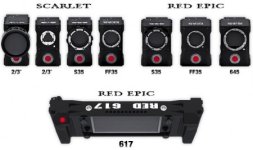
EpicScarlets_thumb.jpeg

I still believe that Red is working on a 645 sized sensor. But not for the sake of it - there absolutely has to be a significant advantage, otherwise it's just size for size's sake. (For those new to photography, larger formats have the exact same perspective compression as smaller formats). We can't use the same one-dimensional metrics for digital as we do for film. Digital is more elastic.

The big three advantages of a sensor that large are sensitivity, DR and resolution - and a lot of each. But there's a catch. Electronics get better as they get smaller, and they get less efficient as they get bigger. CPUs have more transistors than ever before, yet they are smaller and less power hungry. Image sensors are a different thing - they are transducers, and as such, image quality get worse as they get smaller. But, as they get bigger, they use more power, they have a much slower refresh rate, and the lenses get bigger.

So, if there is to be a point to a 645 sensor, it has to improve in at least two out of the three catogories: DR, resolution, sensitivity. But, with a sensor that big, can refresh rate be kept under control? Sure, the Red ONE was popular even though its refresh rate was double that of Dragon, and probably four times that of Monstro. But, nobody wants to go back to that.

The refresh rate problem could be solved with a rotating shutter, but that would limit shutter angle choice, and just introduce more moving parts. So there's only one thing left to do: make it a CCD.

The power draw will be pretty significant, but, if I understand CCDs at all, you'll have a global shutter as an innate part of the system. DR will be handicapped, just like it is for Komodo. But, it could be the case that overall image quality is one step up from V-Raptor.

Perhaps Red knows how to make a large CMOS sensor with a global shutter, but they choose not do due to DR considerations. ARRI can't do it at all, so it's not like there's any competition.

I hope that you enjoyed this thought experiment as much as I did.
 
So this is pretty much MF sensor but in a cinema camera. I saw a video about this sensor and how it vanished years ago and there wasn't much talk about it.
 
Here are some numbers and calculations based on current sensors (there might be some errors there, but the concept is the point) -

645 Format Film
9216x6830 (1.35:1AR)
63MP (62.95 megapixels)
6.08μm approx equivalent pixel size
56.00x41.50mm (69.70mm image circle)

To match that with the RED sensor that has the maximum resolution per pixel -

Helium 8K S35
8192 x 4320 (1.9:1AR)
35.4 MP (35.39 megapixels)
3.65μm pixel size
29.90mm x15.77mm (33.80mm image circle)

Helium 8K S35 (With Theoretical AR to match 645 Film Format)
8192 x 6068 (1.35:1AR)
49.7 MP (49.71 megapixels)
3.65μm pixel size
29.90mm x 22.15mm (37.21mm image circle)

645 Format Film (1.35:1AR) has a 2.06 times bigger image circle (69.7mm) than Helium 8K FF (1.9:1AR) (33.80mm)
645 Format Film (1.35:1AR) has a 1.87 times bigger image circle (69.7mm) than Helium 8K (with theoretical 1.35:1AR) (37.21mm)

So, multiplying the Helium 8K sensor by 1.87 times, to match the 645 image circle and AR -

Helium
15319 x 11347 (1.35:1AR)
173.83MP
55.92mm x 41.42mm (69.59mm image circle)

Rounding up the Helium resolution to match or exceed the 645 Film Format (5% larger image circle and 3x the resolution) -

Helium 16K 645
16000 x 11850 (1.35:1AR)
189.6MP
58.4mm x 43.3mm (72.7mm image circle)


For a closer match to the RED sensor that has the most similar pixel size to 645 Format Film -


Gemini 5K S35
5120x3000 (1.71:1AR)
15.36 megapixels
6μm pixel size
30.72x18.00mm (35.61mm image circle)

Gemini 5K (With Theoretical AR to match 645 Film Format)
5120x3792 (1.35:1AR)
19.40 megapixels
6μm pixel size
30.72x22.75mm (38.23mm image circle)

645 Format Film (1.35:1AR) has a 1.96 times bigger image circle (69.7mm) than Gemini 5K (1.71:1AR) (35.61mm)
645 Format Film (1.35:1AR) has a 1.82 times bigger image circle (69.7mm) than Gemini 5K (with theoretical 1.35:1AR) (38.23mm)

So, multiplying the Gemini 5K sensor by 1.82 times, to match the 645 Format Film image circle and AR -

Gemini
9318x6901 (1.35:1AR)
64.30 megapixels
6μm pixel size
55.91x41.41mm (69.58mm image circle)

Rounding up the Gemini resolution to match or exceed the 645 format (7% larger image circle and 15% more resolution) -

Gemini 10K 645
10000x7406 (1.35:1AR)
74 megapixels
6μm pixel size
60mmx44.44mm (74.67mm image circle)

What interests me more is the idea of having sensors with that overall resolution, but dividing the pixels into two or three ranges of sensitivity and capturing all that dynamic range on the one sensor simultaneously. It would mean lowering your resultant resolution back down to current 4K-ish levels, and would require a new technical and creative workflow to deal with the increased processing and manipulation of the resultant data, but the benefits would be worth it imo.
 
Thanks for doing the numbers, Les. :-) As for the idea about pixels of differing sensitivity, I suggested something like that several years ago. My idea was to have every other green photosite as either an L (luminance) pixel or a G pixel with a 2 stop ND. But apparently if neighbouring photosites are oversaturated, they spill over into the next one in that row. Or something stupid like that. I wonder if that happens on Komodo, given its global shutter.
 
I don't know enough about it to say whether there's anything unique about the way the pixels are behaving on the Komodo sensor, beyond the extra-high refresh rate that gives it an effective global shutter.

I'd like to think there are existing and potential engineering and sensor design solutions for more advanced and different RED cameras. Some of them could even be as ground-breaking as what we've seen already. I doubt there's much we could imagine that hasn't already been brain-stormed by those who make it their actual business to come up with that stuff.

At the same time, I wonder what the imperatives and priorities are at RED, beyond what we can see in their current operations. If we're still dealing with that same 'it wasn't possible but we did it anyway' 'you ain't seen nothing yet' RED of old, anything is possible.
 
Last edited:
Hey Karim,
I also watched the video that bought up the 645.
It was an interesting video though at times it was on the edge of being a (s)hit piece on RED.

I remember when RED released that chart and TBH I think they fulfilled the more important
parts of that roadmap (S35, FF, 8K, higher frame rates) in relatively timely way.

Perhaps a 645 or larger chip is being aimed at but it's likely further down the line.

There were, however, strong lessons in the "Komodo phenomena" that I hope RED might be considering.
Namely, that there is a bit of demand for a lower end model that can reach a greater market than anticipated.

I think an even lower end Komodo type camera that leverages the already established iPhone/android connectivity
with the power of REDcode would be a major hit particularly for the beginning filmmaker/youtube crowd which is quite large now.

Something affordable that can appeal to the general filmmaker, skateboarder, vlogger, to the beauty guru.
If the camera can shoot modes that mimic the various social media aspect ratios (frame guides and ability to rig it vertically) I really think it will create a new filmmaker market never before seriously considered.

Bundled with an app like REDcontrol that would leverage the smart phone (which most people already own) as both a monitor and control surface, it can be the RED equivalent of the MacBook Air which apparently is the computer that is largely driving Apple's computer sales.

Many of the components to pull this off are already out there.

Lower end models like this enrich the ecosystem, fund the higher end, and help make a 645 sensor or better happen.


Brian Timmons
BRITIM/MEDIA
 
I'm of the almost totally opposite position, and think RED Digital Cinema should steer well clear of making stuff for the markets described above. RED is too small to compete with the companies churning out that stuff and they'd have to turn into a very different kind of company to survive in that area.

I think they could take a 'Name-Brand' role like Zeiss, Leica, Intel or ARRI and co-design and license technology for manufacture or inclusion by other parties, but even that would require a workload equal to or greater than what RED is or has been capable of (or willing to take on) so far (basically requiring a whole new company to deal with that stuff).

There are still uncharted areas of digital motion-image capturing and RED is the best positioned (and arguably the only) up-and-running company in the world capable of expanding into those areas, just like they did at the start.

They can bail out and sell out and let RED get Apple'd at any time. I'd rather see them take another few years leap ahead of their 'competition' again, even if it means breaking their own rules and competing against themselves to beat their own previous best efforts.

Just my opinion, watching from the sidelines.
 
I hear where you’re coming from Les.
My point was that there is a part of the market (low end) that might be considered and may not need much R&D to get to market.
Definitely not implying that RED should not continue pursuing the bleeding edge of digital cinema.
Regarding the logistics, I don’t know. I don’t think it necessarily has to be an either/or situation.

TBH I sort of think that’s where the Hydrogen project was going though not privy to know details on that.
Phil??

Brian Timmons
BRITIM/MEDIA
 
I agree there's stuff that could be done in the lower end of the market that would be unprecedented and raise the bar for 'everyone'. But I think to actually do it would be a harder 'war' to win than the one RED had to wage in order to get things done in the higher-end segment. The Hydrogen is actually a good example of that imo. Probably better to leave that area to evolution than revolution.
 
I think that would be awesome if RED were following the old roadmap without telling anyone! I think to get them going on some of those bigger projects, they need to consider either licensing or acquisitions of:

Spheron for their prototype HDR video camera tech:

and for their larger format sensor stuff, maybe check out this inventor here:
http://largesense.com/

Not that I’m saying RED might need help but there’s niche stuff out there just sitting and waiting to get used by the mainstream.
 
Agree that the business case for competing in the lower end of the market has too many fail points. With the continued evolution of smart phone video capabilities, the true low end can just use the device they already have. A Komodo kit for +/- $10K is an attractive option for the cohort who wants to step up their game.

In terms of a cinema camera with a ginormous sensor, there are certainly interested parties (me included). That said, would there be enough demand? How much up front cost (NRE) would there be? How many units would you be able to spread those costs across?

Cheers - #19
 
Interesting points. Let's not get the cart ahead of the horse here. 645 type sensors have their fair share of problems to get solved before getting into product development stages. Here are a few and please feel free add to this list what's not listed here.

1). Availability of suitable lenses to cover their image circle.

2). Electronics to process massive data throughput and efficient data storage systems.

3). Temperature control issues.

4). Why is this needed in an industry that's happy with 2.8k ~ 6k resolution acquisitions (yes there are 4k, 6k, 8k and 12k resolutions and we've seen some people are not ready or scared of 8k!).

5). Camera size and it's own new echo-system.

6). Cost of ownership. (This is going to be a challenge for RED. Even ARRI has manufactured less than 25 ARRI 65 cameras and they DON'T sell them. They are a rental ONLY item). I asked a person at ARRI as to why they don't offer that camera for sale and his answer was the cost per camera due to the amount manufactured. He guesstimated that each camera would cost over US$280,000.00 or so. And there is NO global demand other than a few movies using them for whatever reasons movie Directors, DPs and perhaps studios who want to stand out from the rest. Therefore, even if RED comes up with the 645 sensor, they probably have to make it an extremely limited specialty offering. Maybe as a rental through Panavison or alike. And hope Panavision can convince movie Directors and DPs to choose their RED based camera over the well established ARRI 65, in the industry.

7). Limitations of large scale digital projection based theaters and venues other than specialty or limited time events like Expos etc. Currently theater owners are struggling to fill enough seats per screening to off-set their costs and make a profit. Its safe to say, this condition is NOT going to get any better.

These are just a few thoughts that came to my mind as I went through this thread. And the list may go on. What do you guys think?
 
Last edited:
Interesting points.

Before I reply fully, I'll make a key point. S35 and VV are very, very ideal for most filmmakers. Glass, general production work, etc. That said.

1. Glass exists. Some actually rather good. Some of us have "made things" in preparation for whatever thing comes that is erm... larger, larger format.

2. Big sensor likely draws more power, but I don't think data rates will be significantly higher unless they are designed to be.

3. Not really an issue if you design the cooling system.

4. The general world of commercial filmmaking seems to be "what everybody else is doing or is doing soon". There are filmmakers out there who don't care about any of that and are looking to do more. Though my array work and such are specialty work, the increase in volume of this work in the last several years is notable.

5. Camera size wouldn't need to be significantly larger. Though I would suggest a new lens mount that could be forward thinking.

6. Correct. Cost of ownership is a factor. Again, not something ideal likely initially for the mass market, but there are filmmakers who will always find a way to rent, own, or finance whatever tools they decide to use. At the moment with previous Monstro prices cresting close to $85K and RED currently not having anything up that high, might be interesting if they do explore something like that.

7. True and untrue. But the concept of in the home 4K and 8K delivery have expanded the "market" for many giant screen filmmakers, including myself.

Back to my first point though. S35 and VV are really a great sweet spot in keeping the whole system size down. I'd make an argument for something in the S16/MFT realm as well as there's new stuff coming there. Nothing is astonishing regarding all of this really. I've said it here perhaps too many times to echo, but digital is still getting to the format flexibility that motion picture film has. We're temporally tied to this innovative and exciting time where digital has really progressed a lot in the last two decades, but we're still early on and if there is demand for certain things, even at a higher entry price, companies will find a way to build it. The major boon to the new and later is technology is rapidly advancing. Sensor manufacturing over this span of time has improved rapidly.

And my one other sweet somber echoed point. If we ever do get a proper 645-ish sensor, that camera can handle 645, VV, S35, and S16 filmmaking. I know not many even consider this stuff that way at this point because of how some aspects of the industry works, but for those that own systems and are free of the common shackles of other ways, for the project you get to decide what you want to use and do. Part of the joy of the RED VV format overall is exactly this multi-format behavior and it does work well in practice.
 
I think the rental only status of the Arri 65 is more about it being sort of an R&D program and maintaining quality control for the high end productions that use it being easier in a rental only mode. $280,000 isn't really that much. 20 years ago pretty much every news photographer in a decent size city carried a $40-50K Betacam which is about $100K in todays dollars - and that was for the Standard def (.6K if digitized) 3rd or 4th generation Betacam - earlier versions were probably more like $150K inn 2022 dollars.

I remember that road map clearly as I went out and bought a whole set of Pentax 645 lenses - ended up giving them and a camera to my nephew.
 
Before I reply fully, I'll make a key point. S35 and VV are very, very ideal for most filmmakers. Glass, general production work, etc. That said.

1. Glass exists. Some actually rather good. Some of us have "made things" in preparation for whatever thing comes that is erm... larger, larger format.

2. Big sensor likely draws more power, but I don't think data rates will be significantly higher unless they are designed to be.

3. Not really an issue if you design the cooling system.

4. The general world of commercial filmmaking seems to be "what everybody else is doing or is doing soon". There are filmmakers out there who don't care about any of that and are looking to do more. Though my array work and such are specialty work, the increase in volume of this work in the last several years is notable.

5. Camera size wouldn't need to be significantly larger. Though I would suggest a new lens mount that could be forward thinking.

6. Correct. Cost of ownership is a factor. Again, not something ideal likely initially for the mass market, but there are filmmakers who will always find a way to rent, own, or finance whatever tools they decide to use. At the moment with previous Monstro prices cresting close to $85K and RED currently not having anything up that high, might be interesting if they do explore something like that.

7. True and untrue. But the concept of in the home 4K and 8K delivery have expanded the "market" for many giant screen filmmakers, including myself.

Back to my first point though. S35 and VV are really a great sweet spot in keeping the whole system size down. I'd make an argument for something in the S16/MFT realm as well as there's new stuff coming there. Nothing is astonishing regarding all of this really. I've said it here perhaps too many times to echo, but digital is still getting to the format flexibility that motion picture film has. We're temporally tied to this innovative and exciting time where digital has really progressed a lot in the last two decades, but we're still early on and if there is demand for certain things, even at a higher entry price, companies will find a way to build it. The major boon to the new and later is technology is rapidly advancing. Sensor manufacturing over this span of time has improved rapidly.

And my one other sweet somber echoed point. If we ever do get a proper 645-ish sensor, that camera can handle 645, VV, S35, and S16 filmmaking. I know not many even consider this stuff that way at this point because of how some aspects of the industry works, but for those that own systems and are free of the common shackles of other ways, for the project you get to decide what you want to use and do. Part of the joy of the RED VV format overall is exactly this multi-format behavior and it does work well in practice.

Also what a lot of people forget to think about is the fact that when moving to a bigger sensor you also need to: 1 increase the light sensitivity of the sensor. or 2. increase the light in the scene to be able to create the same images as you would with a smaller sensor. Which is one big reason why they for most part settled around something 35mm-ish when setting the film size standards.


I think the rental only status of the Arri 65 is more about it being sort of an R&D program and maintaining quality control for the high end productions that use it being easier in a rental only mode. $280,000 isn't really that much. 20 years ago pretty much every news photographer in a decent size city carried a $40-50K Betacam which is about $100K in todays dollars - and that was for the Standard def (.6K if digitized) 3rd or 4th generation Betacam - earlier versions were probably more like $150K inn 2022 dollars.

I remember that road map clearly as I went out and bought a whole set of Pentax 645 lenses - ended up giving them and a camera to my nephew.

280K USD is likely less than the cost for the lenses used on a big feature. So yes I guess Arri keeps the 65 as rental only just because they can, it gives Arri rental houses an upper hand in their competition about those kind of projects where money does not really matter.
 
20 years ago pretty much every news photographer in a decent size city carried a $40-50K Betacam which is about $100K in todays dollars - and that was for the Standard def (.6K if digitized) 3rd or 4th generation Betacam - earlier versions were probably more like $150K inn 2022 dollars.


that is a good point. still market was different then today and not many options and offerings were available. there was less jobs and less camaeraman that can do them. now days is free far all and every kid with bank loan can become DOP over night. i grew up in the days you are referring to and i remember when i started working that Arri SR16 with zeiss 10-100mm and couple mags and batteries, costed as much as the apartment. Bit later in late 1990s i have co owned a studio and we have purchased Digital Betacam recorder DVW-500D that we took on leasing, price was 137k.
in todays money that is far more then my entire setup today, monstro, komodo, all the accessories, computers hard drives, asteras and apertures.... and still i wouldnt be at half of the price of that deck alone.

today 60k camera is considered rental only item and i dont see how commercially viable would be for any of us in this market to go and take 250k loan and go to the wildernes as news camerama did in 1990s. that ship has sinked
 
Back
Top