Welcome to our community

Be a part of something great, join today!

  • Hey all, just changed over the backend after 15 years I figured time to give it a bit of an update, its probably gonna be a bit weird for most of you and i am sure there is a few bugs to work out but it should kinda work the same as before... hopefully :)

Ask David Mullen ANYTHING

Hello David,
Thanks for your support. I replaced the dolly test with a short video "Squirrel goes nuts" because the dolly shot was just a test to see if it could hold the Red.
I'll have to dig into some more Red information. I know how the shutter in a filmcamera works, but I find it hard to understand how you can translate 270 degrees in a Red because here the rolling shutter is not physical.
 
Jennifer's Body - Film prints

Jennifer's Body - Film prints

It went through a 2K D.I. at EFILM -- I saw one of the release prints projected at the The Bridge at the Howard Hughes Parkway and it looked normal. Maybe your presentation was out-of-focus. Or maybe a bad print slipped out, I don't know. I believe the release prints were by Deluxe Labs.

Besides an obviously glourious carreer as film maker, I also work as a film operator. The print we're showing at the theater here in Belgium of 'Jennifer's Body' simply looks amazing. Very very detailed and it has some amazing hues (purples, pinks...) that really stand out. I wonder if you can see all these colors in the color correction suite, or if some are out of gamut. I know of Belgian labs complaining about 'those over saturated American movies', but if you can push the print, why not do it?

By the way, I'm very glad a movie you've photographed made it to European theaters. It's really a joy to see on the big screen.
 
How do you shoot in the corner of a white room when on location (nowhere to mount lights on ceiling) and you want a high contrast/hard shadow look? This is a real question. Negative fill and lots of flags and cinefoil?
 
Last edited:
It's sort of a bad situation to have to cover the windows with green material -- you not only have spill problems from the green being that close to the actors, room objects, and window frames, but you lose the ability to edge light the window frames.

I second this from a vfx-post-compositing view point. (: Also: shadows, not only from the actors, grip gear, but from the frames themselves. Mr. Mullen and other DPs here would be better qualified to comment on this.. but I'd imagine that you really want to have separate value/control of the green vs. the set.. such as keeping the value of green constant/flat while allowing the set to have separate creative/moody/varying contrasts ..even colored.. lighting?

ROTFLMAO:

(humming a 50's superhero theme song tune..)
DATA has no where to hide... "RAIDMAN"!!
When all is lost... "RAIDMAN"!!

:coolgleamA:
 
How do you shoot in the corner of a white room when on location (nowhere to mount lights on ceiling) and you want a high contrast/hard shadow look? This is a real question. Negative fill and lots of flags and cinefoil?

First thing is to avoid getting into the corner of a white room... Not a lot of moody, contrasty Hollywood movies set inside an all-white room, are there?

Second trick, assuming you can't get away from this situation, is to use hard light since that will create hard shadows. Then, yes, you flag that light off of as much white as you can, you use negative fill to reduce ambient bounce, etc.

The other thing to remember is that a dark-haired person wearing a black suit in an all-white room already is contrasty by nature, so use art direction and wardrobe to help you create visual contrast against the white.

White walls are a real problem because often you can't underexpose them enough without the faces going too dark as well. This is particularly true in dark scenes set in moonlight -- the exposure that looks the best for the white objects in the scene (walls, bedsheets, clothing, whatever) is often not correct for the skintones in the scene. This is why you can make your life a lot less stressful by using darker walls, furniture, clothing, etc. in a dark scene, so you can use more light or exposure for the faces but still retain the feeling of darkness around the face.
 
Thanks, that's more-or-less what I thought but much better articulated than I could have put it and a really good point about set/costume design I didn't much consider. I never get anywhere with those "moonlit" scenes so that explains a lot about what I'm doing wrong. It's always a bed or chair or something in the corner of a white room as much as I'd like to avoid that.

One last thing if you don't mind: What about trying to create false contrast with color temperature? I've tried this (a lot) in white-room situations and it kind of invariably gets muddy... Is this a feasible technique or will the spill from so many colored sources just turn to mud in most cases?
 
I believe Tiffen Digital Diffusion-FX filters are just their Black Diffusion-FX filters with the pattern of black dots removed so that they don't come into focus on cameras with 2/3" and smaller sensors.

Digital Diffusion-FX works fine as a diffusion filter in terms of softening the image. Probably closest in effect to the Schneider HD Classic Soft.

Regular Schneider Classic Softs have larger "lenslet" bubble patterns that can come into focus on cameras with a lot of depth of field, but these larger circular indents create a more obvious halation around a bright light, almost like a double edge on a hot edge, or an out-of-focus ring or circular blob of light on longer focal lengths.

The smaller lenslets of Tiffen Diffusion-FX (Black, Digital, Gold, whatever) and the Schneider HD Classic Soft (and Hollywood Black Magic) don't create that effect.

So basically the Digital Diffusion-FX will just soften details without much flaring, halation, etc. That's good for when you just want to soften a face without looking like you stuck a filter on a camera because the other shots are unfiltered -- what I call "invisible diffusion" (as long as you don't go super heavy). But some people use diffusion filters for more optical artifacts like halation around points of light -- what I call "visible diffusion". So it just depends on the reason you are using the filter, which type is better than another.

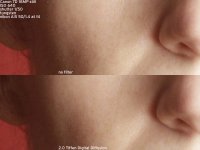
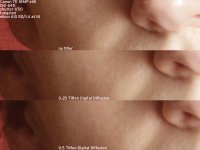
I know your post started with 'I believe' and really wish these filters did what you describe but I'm sorry to report that Tiffen Digital Diffusion filters don't deliver, I've run tests with 0.25, 0.5 and 2 and they do not do what Tiffen claim.

At first I was testing with 0.25 and 0.5 that I had bought and I thought the subtle effect was being swallowed up by the down sampling from 18 megapixel still to 1080p video. (canon 7D) So I re did all my tests with stills. There is no difference before and after and I'm looking at the fine white hairs on the surface of the cheek. I sent the results to Tiffen and the response from the filter tech was 'I see what you mean'. They sent me out a 2.0 to test and its the same - no diffusion. With the 2.0 there is ever so slight light loss but its like shooting thru glass.

If anyone has results that prove otherwise please post as I am very disappointed with these filters.

EDIT
rereading your description again I know you mention that you can see the small bubble pattern. I have used the tiffen soft fx 0.5 in the past and I held it to the light to see the bubble pattern, the three Tiffen Digital Diffusion filters that I used had no pattern whatsever.

Not blaming you david, just trying to warn others about buying them
 

Attachments

  • filters-layers2.jpg
    filters-layers2.jpg
    92.5 KB · Views: 0
I've used the Black Diffusion-FX before on "Big Love" and it does work to diffuse the image -- and the only difference with the Digital Diffusion-FX, I've been told by Tiffen, is that they removed the black dot pattern that is there to restore contrast in the Black Diffusion-FX. The diffusion effect is very subtle with these filters, and they are missing a lot of telltale artifacts, but they are definitely not sheets of clear glass. But as I have said, these filters are somewhat boring because they soften so subtly.
 
I've used the Tiffen Soft FX 0.5 and loved the effect. Wished they made the 0.25 version but they don't. BTW - I attached the largest jpeg I could to my last post. It is of the 2.0 which is the one they sent to me after I sent the 0.25 and 0.5 back.

EDIT here is the original test with 0.25 and 0.5
 

Attachments

  • filters-layers.jpg
    filters-layers.jpg
    93.1 KB · Views: 0
Yes, the #1/2 is pretty subtle, but I can see a little softening in your test. I didn't even know they made a #1/4.

Tiffen's general approach lately is to label their lightest filter a #1, and then later when people start asking them to make even lighter grades, they go into fractions. Hence why the #1 GlimmerGlass is their lightest version of that filter (unless someone has convinced them to make a #1/2) and it looks similar to a #1/8 ProMist. And their lightest Soft-FX and Black Diffusion-FX filters were the #1 until they were asked to make a #1/2. So in the case of the Black Diffusion-FX, even the #1 is pretty subtle.
 
Did you see the 2.0 test jpeg I attached to post 2489 on previous page? Thats the one that surprised me. I think Harry Hofmann the filter specialist at Tiffen that I spoke to seemed like a nice guy. Hopefully they will give me refunds or at least an exchange.

EDIT:
once again, not trying to task you David, I'm just trying to make people aware of what they are getting should they buy these filters.
 
Well, like I suggested, the Diffusion-FX filters are a bit boring to me because they are so subtle and technical, I like the odd kicks, glints, flares, etc. from diffusion filters. On my last project, I alternated between scenes on a Tiffen GlimmerGlass for that ProMist-type look and the more subtle look of the Schneider Hollywood Black Magic filters (1/8 Black Frost + HD Classic Softs in various strengths). I like the Hollywood Black Magic and the Classic Soft Blacks because the 1/8 Black Frost base that they both have ensures a little bit of halation around points of light.

But when I started using the Black Diffusion-FX on "Big Love", it was because previously they had a policy of no diffusion, so I wanted something so subtle that no one would object to the filtration, which I felt was needed for some close-up work. And no one really did.

You can click through some Black Diffusion-FX tests here:
http://www.camerafilters.co.uk/page199.html
 
Yes, the #1/2 is pretty subtle, but I can see a little softening in your test. I didn't even know they made a #1/4.

Tiffen's general approach lately is to label their lightest filter a #1, and then later when people start asking them to make even lighter grades, they go into fractions. Hence why the #1 GlimmerGlass is their lightest version of that filter (unless someone has convinced them to make a #1/2) and it looks similar to a #1/8 ProMist. And their lightest Soft-FX and Black Diffusion-FX filters were the #1 until they were asked to make a #1/2. So in the case of the Black Diffusion-FX, even the #1 is pretty subtle.

Well that's confusing! I thought it was "industry standard" to make a filter set be: 1/8, 1/4, 1/2, 1, 2 with maybe occasionally a 3. Thus a filter strength of "1" being fairly strong.
 
Yes, it's confusing. In some Tiffen sets, a #1 is the lightest, in others, it's a #1/2, etc. I think Schneider though decided to start all diffusion series with a #1/8 being the lightest -- I guess they are confident that no one is going to demand a #1/16 version once they try the #1/8...

I'm a big fan of Geoffrey Unsworth, BSC, who shot "2001", "Cabaret", "Lucky Lady", Superman: The Movie", "A Bridge Too Far", etc. In the 1970's, starting around the time of "Cabaret", he started using a #2 Harrison Fog for almost everything, which is pretty heavy ("Lucky Lady" may have even used a #3 Fog). I just used a #1/4 Fog for a sequence and I thought it was pretty strong.

A lot of "Star Trek IV: The Voyage Home" was shot with a #1/2 Fog.

"Barry Lyndon" was shot with a #3 Low Con. So they were using the whole number versions back in the 1970's, it really wasn't until the 1980's that people wanted lighter versions. For one thing, high-speed film stocks arrived in the early 1980's and most fog-type filters really made the grain stand out.
 
And then of course there is Mitchell diffusion; lettered rather than numbered! (A, B, C, D)
Cheers,
Harry
 
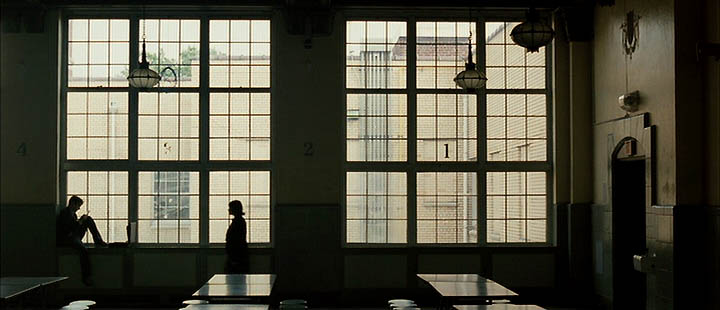
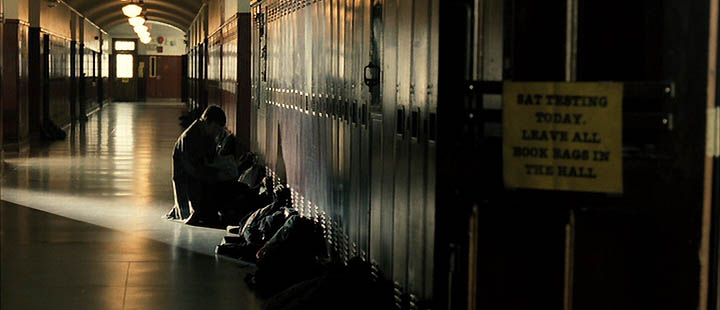
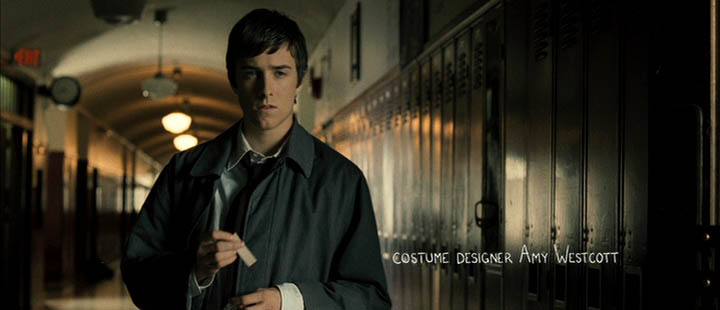
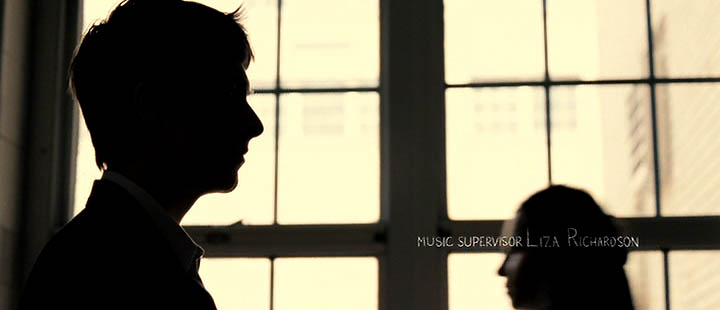
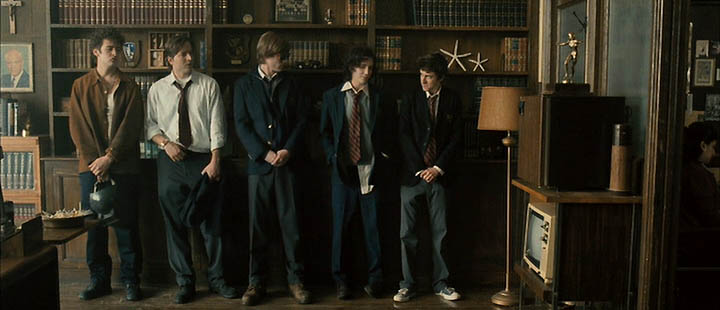
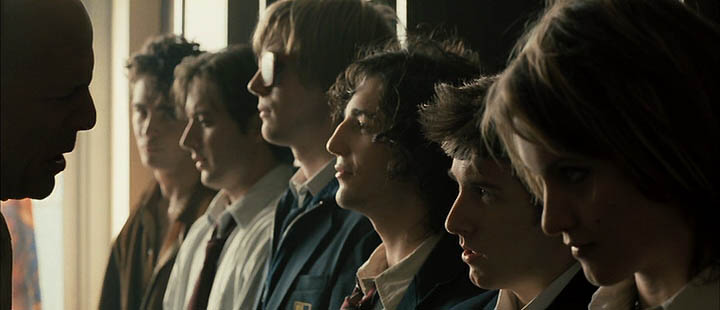
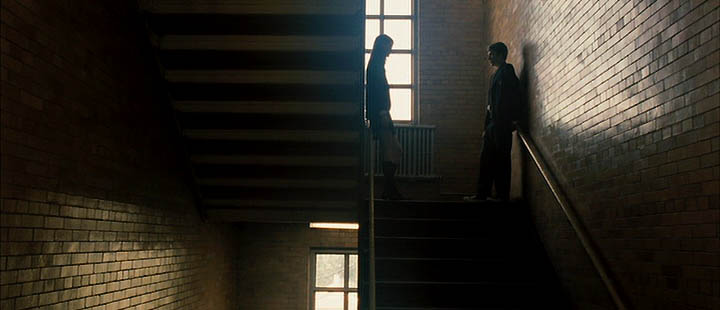
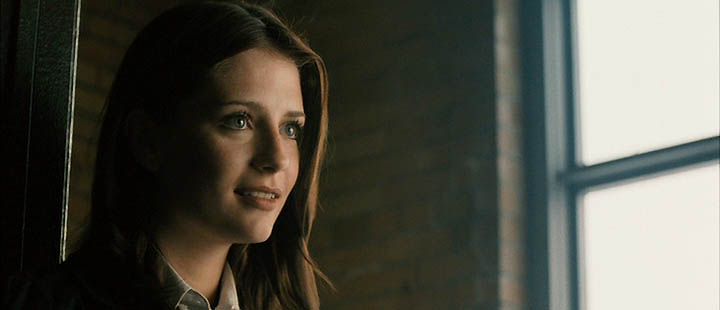
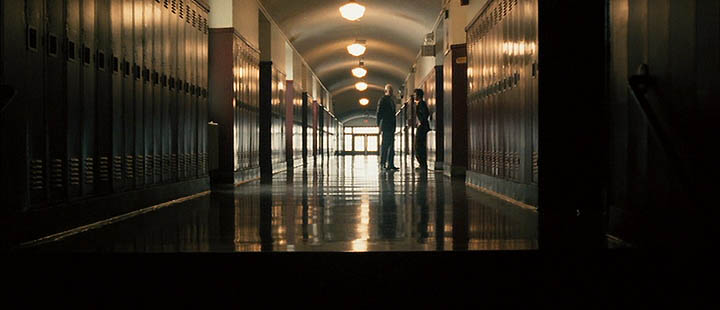
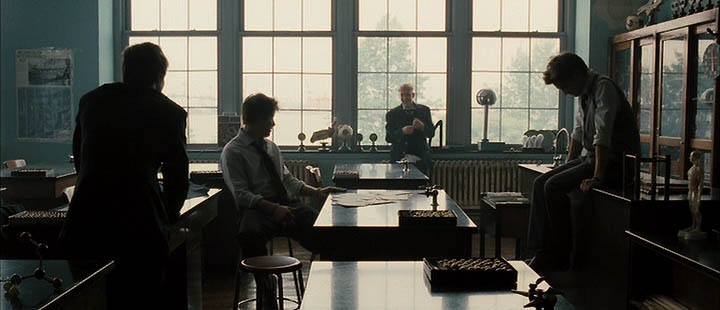
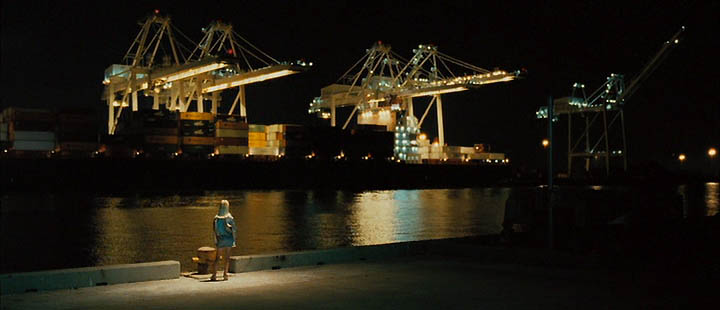
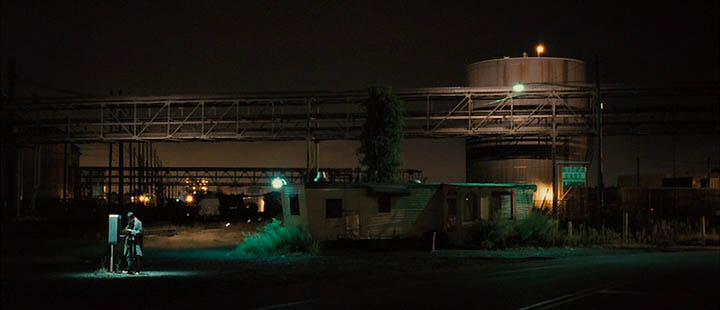
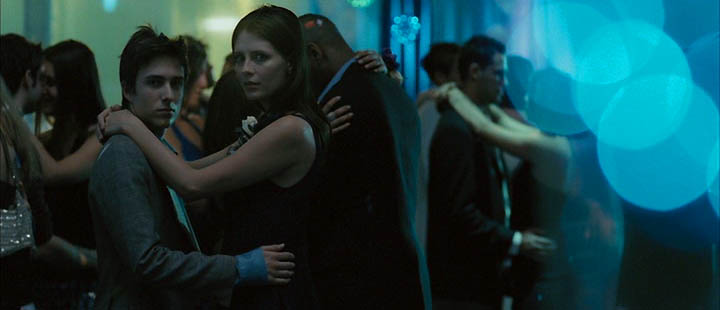
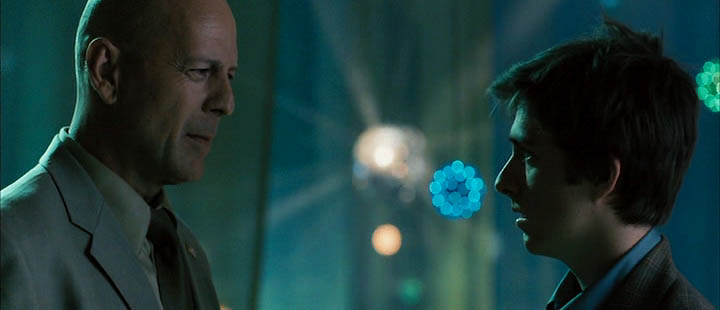
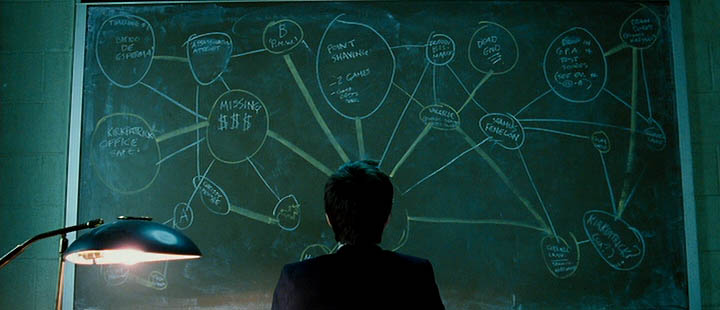
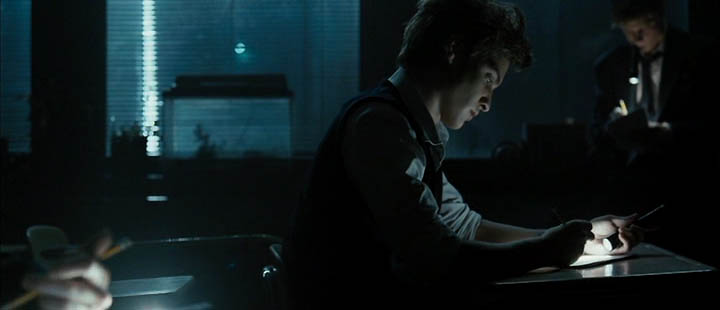
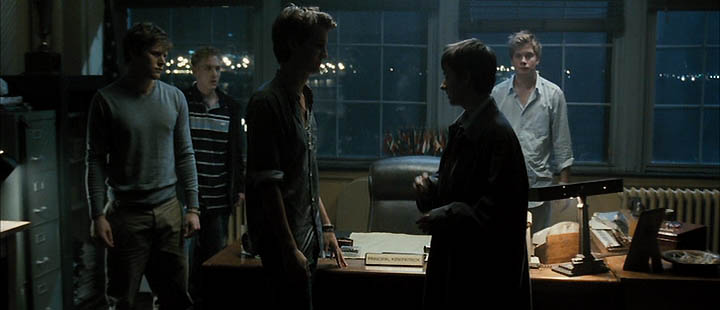
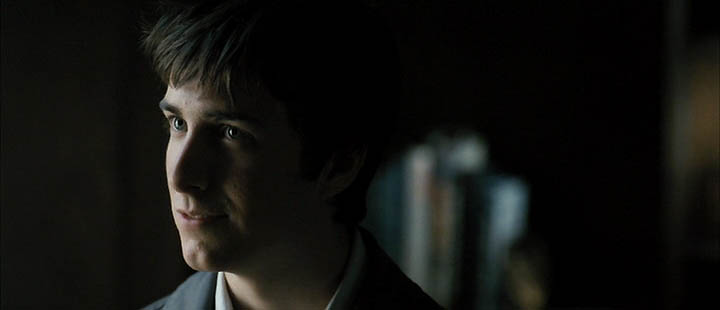
I finally pulled some frames from the DVD of "Assassination of a High School President" that I shot -- it was supposed to get a theatrical release last spring, but then Bob Yari's company went into bankruptcy and the movie was sold eventually to Sony home video. It was around an 8-mil feature, I believe, shot in New Jersey, mostly in Bayonne. 3-perf Super-35, Arricams, Zeiss Ultra Primes (a few days with some Master Primes), Ang. Optimo zoom, Zeiss Master zoom. Fuji Eterna 250D and 500T stocks. It was finished in HDCAM-SR unfortunately, not 2K or 4K, but since the theatrical didn't happen, I guess that doesn't matter now...

I should add that this was a high school comedy with a film noir element, like "Brick"... but not serious.

assassination5.jpg


assassination6.jpg


assassination7.jpg


assassination8.jpg
 
Back
Top