Welcome to our community

Be a part of something great, join today!

  • Hey all, just changed over the backend after 15 years I figured time to give it a bit of an update, its probably gonna be a bit weird for most of you and i am sure there is a few bugs to work out but it should kinda work the same as before... hopefully :)

Ask David Mullen ANYTHING

"This is kind of broad, but what are some of the rookie "mistakes" that low-budget productions and student productions most often make, that you think they don't have to?"

In addition to David's advice concerning the camera...

BAD SOUND -- Sound is as important as image. Every location should be checked out for background noise. Get a GOOD sound guy with a good mic(s) and setup.

SHAKY CAM -- God I hate shaky cam. Anything more than a few seconds, say when an explosion goes off, is too much.

NOT ENOUGH COVERAGE -- This will kill you when it comes time to editing. You will suddenly have continuity errors that you hadn't expected.

BAD ACTING -- What more can I say about that?

BAD SCRIPT -- You either have a good script or you don't.

May the force be with you.
 
David,
Today I was watching 'Atonement' again and after your posts on filtration it leapt out to me how filtered the early parts of the movie are, so I took some screen caps and was wondering if you'd give your opinion on what filters they likely used.

The American Cinematographer article (Dec. 2007) says that the early scenes used a 10-denier Dior black stocking on the back of the lenses, except for a few shots when a bright window caused too much flare, then they used some Classic Soft filters. Later WW2 scenes he started transitioning to lighter Black ProMists instead of the Dior net.

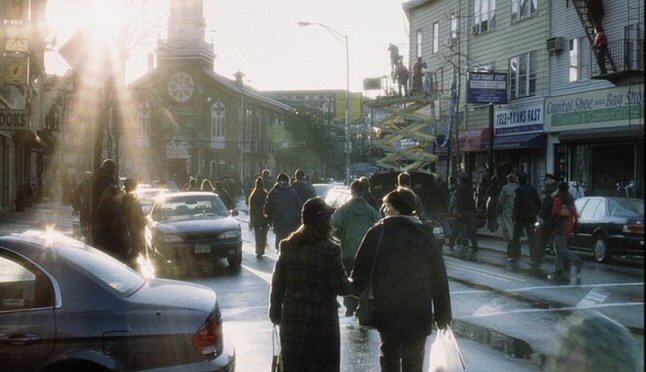
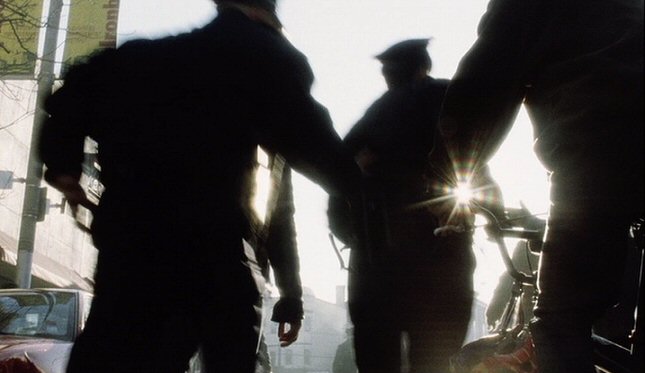
You can see the effect of nets more clearly in these frames from "War of the Worlds" (in this case, the net was on a filter frame in front):

wotw1.jpg


wotw2.jpg
 
The American Cinematographer article (Dec. 2007) says that the early scenes used a 10-denier Dior black stocking on the back of the lenses, except for a few shots when a bright window caused too much flare, then they used some Classic Soft filters. Later WW2 scenes he started transitioning to lighter Black ProMists instead of the Dior net.

You can see the effect of nets more clearly in these frames from "War of the Worlds" (in this case, the net was on a filter frame in front):

wotw1.jpg


wotw2.jpg

Oh wow, thanks!! I was able to find that article in their free online archives
http://www.ascmag.com/magazine_dynamic/December2007/Atonement/page1.php
 
How would I attach a stocking to the rear of a PL mount lens? Also this article talks about stretching further for the long lenses...how do you know how much to stretch a stocking? trial and error based on desired look?
 
It's a bit hit or miss, which is one reason why I have never put a net on the back of a lens myself, and it's probably the reason why Kaminski started putting them on filter frames in front of the lens -- simpler to take on and off.

Panavision made some rear holders for the nets for "Atonement" which helped -- the old method was to glue them on with fingernail polish, which rental houses hated. Plus if you needed some un-netted shots, you sometimes had to spend the money for a second set of lenses that were clean on the back rather than peel-off and then later glue back on, the nets.

You basically have to shoot tests.

To some degree, nets are an example of the classic method of diffusing -- throwing out-of-focus areas over in-focus areas -- but in other ways, the behave somewhat differently than a glass diffusion. When you use a longer lens with a glass diffusion like a Classic Soft, you are not only enlarging the clear areas between the lenslets that blur the focus, but you are enlarging the lenslets themselves. But with a net, a long lens tends to enlarge the gaps between the net pattern more than the fine threads of the net which blur the image (though they enlarge too), so the effect can look more subtle on a long lens -- however, this tends to be more true of a front net, not a rear net. Rear netting tends to look more consistent between focal lengths because the rear element is a bit more consistent in size between the lenses -- the lens "sees" or light passes through a more consistent area of the net pattern, whereas in front of the lens, the wide-angle lens and the telephoto lens enlarge or shrink the area of the net that the image is being passed through.

But as I said, the complexities of net diffusion have tended to make me avoid them. The real problem with nets is that you can't get them in precise degrees of strength, they tend to be all or nothing -- partly because the lightest net ever made is still a fairly visible level of diffusion, so it's hard to get four strengths of nets, let's say, in even increments of strength, where the heaviest one is still fairly subtle.

Which is another reason why some people using nets will switch to Classic Soft filters for other scenes when they need more control.

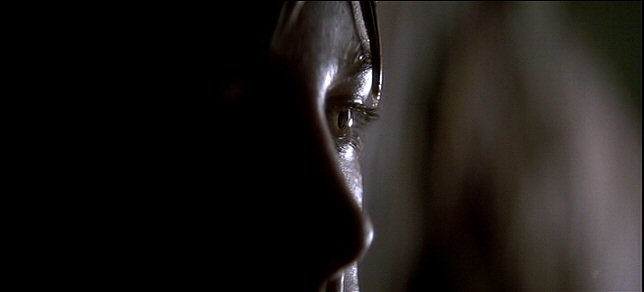
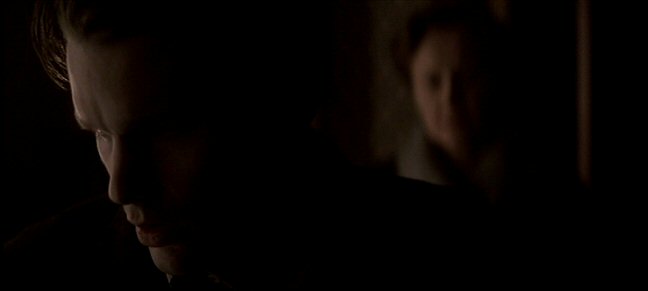
A great use of nets on the back of lenses (in this case, anamorphic lenses) was "Snow Falling on Cedars":

snowfalling1.jpg


snowfalling2.jpg


snowfalling3.jpg


snowfalling4.jpg
 
Hi, Monsieur Mullen -

How important for you is it that Ambient, background light levels remain consistent during a scene? I've taken to shooting everything at night and merely faking daylight through windows, etc, to keep everything consistent from cut to cut. It is no doubt my preferred way to shoot - somewhat akin to working in a studio. Of course you cant schedule every scene with windows to be shot at night time - Is blocking out the natural light coming through the windows, and blasting hmis through in its place the best option? I do most of my shoots myself as a one man band and rigging up stuff to block out natural light is a bit of a chore. Do you find that if the strength of the key and the fill ratio remain consistent, that you've got some leeway in the background, ambient light levels? Might it be alright to shoot a scene over several hours, discounting the natural light changes and focusing on retaining a consistent light on the actors? I imagine that the slight differences in ambient light might bother only cinematographers, and not the majority of people watching the film, especially when moving from a wide to a close up, etc. What are your tolerances for slightly wavering light levels, shadows crawling across a room as the day drags on, etc?

Sorry for the rambling form of this question, Mr. Mullen - I really need to get to my coffee already.

Thanks,

Andrew Wilding
 
How important for you is it that Ambient, background light levels remain consistent during a scene? I've taken to shooting everything at night and merely faking daylight through windows, etc, to keep everything consistent from cut to cut. It is no doubt my preferred way to shoot - somewhat akin to working in a studio. Of course you cant schedule every scene with windows to be shot at night time - Is blocking out the natural light coming through the windows, and blasting hmis through in its place the best option? I do most of my shoots myself as a one man band and rigging up stuff to block out natural light is a bit of a chore. Do you find that if the strength of the key and the fill ratio remain consistent, that you've got some leeway in the background, ambient light levels?

I think you answered a lot of your own questions. Continuity of ambience within a sequence is important, but that doesn't mean you can only do it using artificial lights, it just means you have to keep an eye on it -- if you are using a lot of natural ambience during a day interior and it disappears as the sun goes away, you have to replace it, or find an angle or shot size where you don't notice that it has changed.

Often you plan your coverage in a real day interior so that you end the day shooting the shots easiest to fake with lighting, like some close-ups near a wall, inserts, etc. You try to capture the natural light in the angles where it matters the most (usually looking towards the window or when the person is near the windows, or wide shots.) You sometimes set aside one angle of tighter coverage that you know you can fake with lighting without much compromise, and then it's just a matter of recreating the feel of the room in natural light as best as you can.

Now just because ambience is important doesn't mean that every angle in a day interior has to be lit to the same contrast ratio. Depending on the subject's distance and angle to the source, the contrast may be naturally different -- we expect someone facing window light to be a bit flatter, someone with their backs to the window to be shadowed, etc.

Part of the terror and fun of using a lot of available daylight in an interior is chasing the light -- it's a pain in the a--, sometimes you get screwed, but when it all works, it can look great. So it's a bit of a risk that you have to calculate. For example, you may be faced someday with a location full of windows on the top of a skyscraper and have to shoot it almost like a day exterior, with very little ability to create the daylight artificially. I was watching this movie "Class Action" shot by Conrad Hall (not "Civil Action", also shot by Conrad Hall) -- the one with Gene Hackman -- and there was this law firm location on the top of a skyscraper where they probably faked one office interior on a stage but the larger lobby area was shot on location, and basically they had to use mostly available light -- but it looked stunning to see the real sun rise and set in this glass room overlooking San Francisco, with the fog rolling in.
 
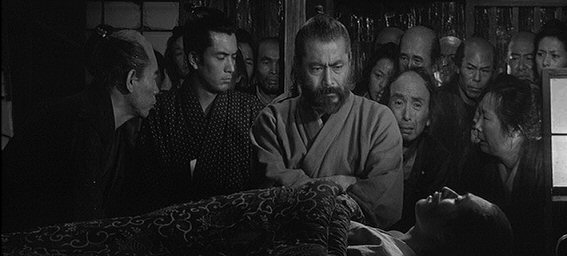
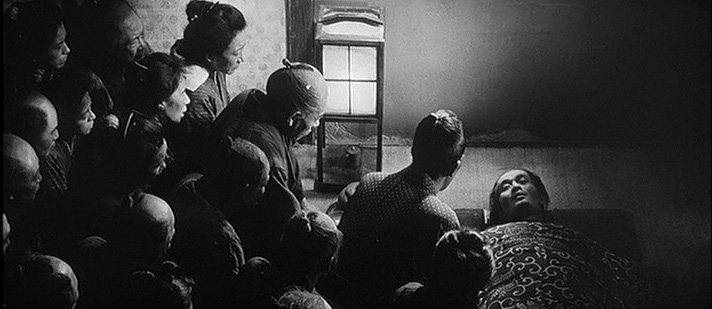
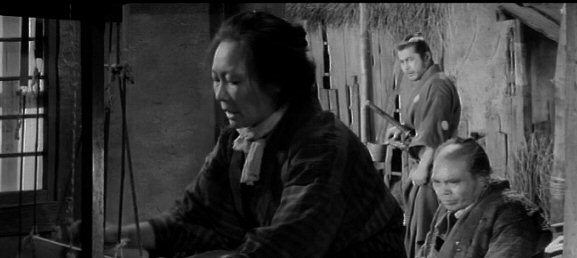
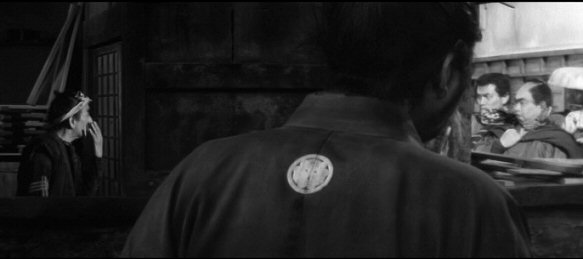
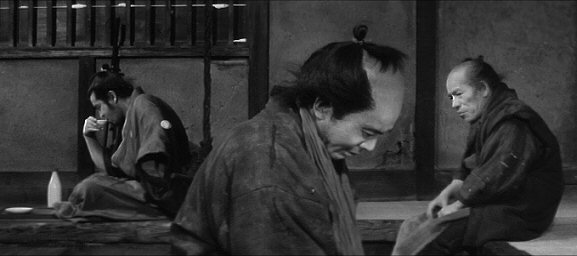
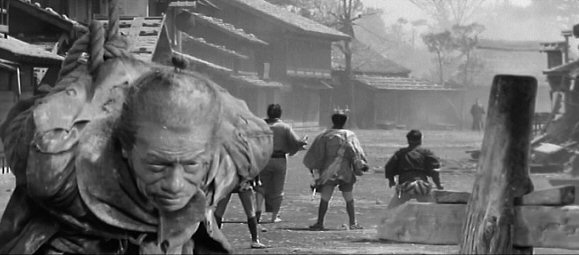
Kurosawa then started applying that technique to interiors. "Red Beard" is probably the most famous example of that -- he used telephoto lenses and sets lit to deep stocks (sometimes f/22) to hold focus, requiring the the sets be built at one end of the soundstage and the camera be at the other end, so he could shoot a scene on anamorphic lenses in the 300mm to 500mm range. See:

redbeard1.jpg


redbeard2.jpg


Also a 300mm lens, if it focuses close enough or if you use a diopter, may allow some extreme close-ups of a face.

That is so awesome to hear! It is so fun to hear they went though all that trouble in such an acclaimed movie. As soon as I got my first camera I found myself shooting long focal lengths as much as possible. I then had some whiner in an other forum tell me I didn't know what I was doing (fair enough) and that I was obviously only doing it for the shallower DoF, when all along in my mind I knew I was going for that compressed look.

I really love what it does to an image. I wonder if I am right to think of it as a way to bring your content to an other dimension given the extreme perspective difference to the human eye. Also, with enough room and hopefully a bit of focal lengths to pick from to make it easier you can frame anything you want just the way you want it. Just gotta get the budget for the sets! Achieving this "story telling dimension" with wide angles sounds quite hard though much more feasible budget wise. I guess with the right lenses you could avoid distortion. But still, close ups would just never look anywhere as pleasing, to me...

Could you share your opinions on going for this "other world" effect I am talking about David? And would you prefer going wide or long? More importantly, if you would, do you feel you could marry the two in a movie? And if so, would there be some sort of story pattern or mechanism that could justify the switch, or call for it?

I also love how you can to confuse the audience and hide the spacial reference to a particular piece of action, be it a fight or anything else you wish to cloak... a phenomenal trick to have available when it is called for.
 
I think you can come up with whatever visual game plan you want as long as you've thought out the groundrules and have based it on the themes of the story. There is no right or wrong choice here, though there may be a practical and impractical choice.

Look at Lumet's "Prince in the City", which has some subtle visual elements in it -- scenes are often either shot with long lenses or wide-angle lenses to deny the viewer a "normal" perspective. Also, the movie is more visually cluttered and busy in the beginning and gradually everything gets stripped away until scenes seem to be taking place in near empty rooms.

I don't personally have a preference one way or the other, though I feel that you have to be careful with oddball focal lengths because they are so stylized. You don't want a super wide-angle look for a "funny" shot if the shot isn't really funny, then it's like a forced joke.

There are issues to consider with focal lengths, like tracking forward and back (as opposed to laterally) doesn't look very good with very long lenses -- it can just look like a bouncy zoom shot. And focus -- if you can't afford to light up the interior and stop down, the backgrounds on long-lensed close shots are so soft that they become abstract. Which may be cool, but it can also negate the reason to be in a certain location since you can't see it in most of your shots.

When I did "Manure" all on soundstage, the art director and director suggested I use long lenses so that the unrealistic background elements would be thrown in softer focus. But it turned out that the longer lenses magnified the background details, killing the forced perspective effect. So we actually used wide-angle lenses when possible to shrink the background details in size, and then long lenses for the close-ups where the background would just be completely soft. So lens choice is a tricky thing in terms of how it represents space.

In the case of Kurosawa's movies like "Yojimbo" and "Red Beard", sets were often designed with the anamorphic telephoto lens in mind. Kurosawa built an entire village with buildings for "Red Beard" but on a long lens, it's mainly seen as a stack of rooftops in the background of scenes. But it's a very graphic shape.
 
David:

since we are on a RED forum, I'm going to go crazy here and ask a RED-related question. Have you used anamorphic lenses on the RED with the latest build (17 or 18 beta)? If so, can you comment on the anamorphic workflow on a RED. Can you also comment on the image quality of RED + anamorphics. Any tips or tricks with this combo versus film capture? Thanks
 
Sorry for the specific and uninteresting technical question; anyone else who knows the answers to these can chime in.

Would it be safe to run HMIs (likely a magnetic 1.2k, an electronic 1.2k, a couple tungsten lights and a kinoflo) off a (6000w) generator with an inverter? Honda claims their inverter generators offer clean enough power for computers and batteries, but I've heard HMIs can disrupt other equipment on the same circuit and need very clean power. Must I go crystal sync?

We're using an ISO 120 camera (due to a 35mm adapter) and have to shoot some wide night exteriors. We're debating between anything from a couple 1.2ks to a 12k HMI for these. There may be other sources available to motivate tungsten-balanced key lights. Is it even worth trying or is this too slow to shoot good-looking night exteriors quickly? Most of the time they will be fill light, but we may need them to be key lights occasionally.
 
Hi David...
I would love to hear your experiences with Driving Shoots.
(If you haven't shared them yet...?)
What is your favorite way to do exterior Shots of the car?
Do you prefer Trailer or Tow Dolly or even Rigs?
And inside the car, how do you realize interesting angles?
Do you at all prefer shooting it on location or do you like Soundstages?
Would/do you use greenscreen or Projection?
What about Sound Problems when doing it for real?
What about lighting espcially at night?
And to get back to the Topic before:
Would you use diffusion Filters to soften the highlights of Streetlamps at night,
do it in Post or is the shallow depth of Field doing enough blurring?
BEST REGARDS
KIM
 
David:

since we are on a RED forum, I'm going to go crazy here and ask a RED-related question. Have you used anamorphic lenses on the RED with the latest build (17 or 18 beta)? If so, can you comment on the anamorphic workflow on a RED. Can you also comment on the image quality of RED + anamorphics. Any tips or tricks with this combo versus film capture? Thanks

Go to Claudio Miranda's website at www.ClaudioMiranda.com

He's got some really cool quicktime clips of him testing Anamorphic lenses at Clairmont camera... and I believe the camera is a RED.
 
David:

since we are on a RED forum, I'm going to go crazy here and ask a RED-related question. Have you used anamorphic lenses on the RED with the latest build (17 or 18 beta)? If so, can you comment on the anamorphic workflow on a RED. Can you also comment on the image quality of RED + anamorphics. Any tips or tricks with this combo versus film capture? Thanks

I have no personal experience with using anamorphic lenses on the RED camera, sorry.
 
Shadow Latitude on Anamorphic

Shadow Latitude on Anamorphic

Hello, David Mullen.

We've met briefly on a few occasions, such as the ASC open house and etc. I always try to save my questions for the good ones and today, I think I've found a good one for ya.

I was recently reading the July 1998 issue of American Cinematographer, and I came upon the article for the best film ever, Armageddon... haha! Despite the film, the article by David E. Williams was quite good and a wonderful read!

In the article, Micheal Bay and DP John Schwartzman, ASC discussed using Super 35 on The Rock, and how they were not happy with the process, liking true anamorphic widescreen better. This made me very happy as I am in love with true anamorphic origination.

However, in their brief dissertation on the anamorphic medium, Schwartzman made a comment regarding an advantage of anamorphic which I was unaware. According to Schwartzman, the larger negative improves latitude in the shadow detail. I am a very young cinematographer, so I apologize if this is a well known fact, but for me, I was completely unaware, and confused on how this happens.

Besides the differences in lens characteristics, I thought shooting the same cut of film stock whether it be in 8mm, 16mm or 35mm had the same characteristics such as latitude, speed ASA/ISO, color rendition, grain structure, etc. The only major difference being, when projected the resolution and apparent size of the grain structure is obviously lacking, the smaller the negative.

To make a long winded thought process come to an end, does a larger negative size increase latitude of a film stock? The only thing I can think of is that Anamorphic is known to have monster flares... perhaps it is the bouncing and refracting of light inside anamorphic lenses which cause a slight "flash" effect (around 10%?), raising the latitude in shadow detail?

Here is the quote:

From American Cinematographer, When Worlds Collide by David E. Williams (July 1998)

Though Schwartzman and Bay expressed enthusiasm for the Super 35 process while shooting The Rock, the theatrical prints were a bit of a letdown for both men.

"The drag about Super 35 is the grain and its 'optical' feeling. We did about 30 ENR-treated prints on The Rock to keep some of the contrast. Those were shown in major cities, but the other prints lost a lot of snap. The film looked good for Super 35, but we were still working with this tiny negative."

- Micheal Bay

"What became very apparent to me was that Super 35 is not just an optical process that makes the grain more apparent; the grain is also bigger because it's enlarged so much during projection. You're getting boned on both ends. The beauty of anamorphic is that there is no intermediate optical process. If you like your dailies, you're going to love your release print. The larger negative also gives you greater shadow detail and greater latitude, so even though I was shooting deeper stops in 'Scope, I felt I was using [relatively] less light to get more image.

On Conspiracy Theory, I was doing very large night exteriors in New York City, and I needed to be working at least a T4 or 4.5 for them to look good. But that didn't mean I had to light everything to that exposure. If I could get the lenses to that range, I found that the level of shadow detail I could get in the darker areas was quite extraordinary. One of the things I explained to Michael on Armageddon was that for shuttle interior scenes, I was going to be shooting at a T4.5. I might only have a T2.8 on the actors' faces, but he'd be able to read them beautifully even though they would be underexposed by a stop-and-a-half. The faces wouldn't be muddy, just dark. I was able to do that simply because of the resolving power you get with anamorphic's big negative."

- John Schwartzman, ASC

So can shooting 5219 on anamorphic yield greater shadow latitude then shooting the same scene with the same stats (shutter, lighting, T-stop, etc) on Spherical lenses?

Does shooting 5219 yield greater shadow latitude then shooting 7219?


Thanks for your time!

Best,

- Ryan
 
Would it be safe to run HMIs (likely a magnetic 1.2k, an electronic 1.2k, a couple tungsten lights and a kinoflo) off a (6000w) generator with an inverter? Honda claims their inverter generators offer clean enough power for computers and batteries, but I've heard HMIs can disrupt other equipment on the same circuit and need very clean power. Must I go crystal sync?

I don't think it would safe to run the magnetic ballast HMI on the non-sync generator; I'd be curious if the electronic ballast can handle it -- probably, within reason. HMI's do need some extra power though when striking them, so you have to have some leeway there.

We're using an ISO 120 camera (due to a 35mm adapter) and have to shoot some wide night exteriors. We're debating between anything from a couple 1.2ks to a 12k HMI for these. There may be other sources available to motivate tungsten-balanced key lights. Is it even worth trying or is this too slow to shoot good-looking night exteriors quickly? Most of the time they will be fill light, but we may need them to be key lights occasionally.

120 ASA is really slow -- you'll either have to shoot around bright store windows and whatnot as a background, or light the background. Hopefully your 35mm lens is really fast. You may have to live with opening up the shutter.
 
What sort of rig I use for cars depends on the type of shot -- two people driving and talking in a car means a sound recordist, it means the two people are taking up the front seat, and it probably means there is no room in the actual car for the sound person, the camera operator, a focus-puller, and the director -- someone has to go... plus it's not always a good idea to have an actor actually drive while they are concentrating on acting.

But a single person in the car, no sound, I'll often climb into the car with a handheld camera and let them drive for real.

If I have to do much lighting around a moving car, I prefer a process trailer so I have a platform to work off of.

The type of rig and lighting also depend on how fast the car has to drive -- there are limits in speed and turning for a heavy, long, wide, process trailer and camera car.

I've never done any projection around a car, and only recently did some greenscreen driving shots, for "Manure" -- certainly it's easier to shoot gobs of footage that way, against green with a parked car, but making it look believable is another matter, plus you're at the mercy of the skills of the compositor and the quality of the background plates.

I would use light diffusion filters at night only if I wanted to get some halation (glowing) around light sources in the frame, not to soften the sharpness of streetlamps -- diffusion filters on the camera don't really soften hard lighting anyway.
 
So can shooting 5219 on anamorphic yield greater shadow latitude then shooting the same scene with the same stats (shutter, lighting, T-stop, etc) on Spherical lenses?

Does shooting 5219 yield greater shadow latitude then shooting 7219?

Depends on how you define "latitude" -- larger negatives capture more fine detail with less grain, so you have more flexibility in making corrections before grain kicks in, and in softer muddier light, the larger negative still resolves detail. Plus a larger negative will differentiate between an area made up of tiny bits of color, like a field of flowers or even fleshtones -- smaller negatives, because they capture less information, tend to reduce fine gradations of color into a single color. I remember seeing a 70mm print of "Far and Away" (shot in 65mm) and there were subtle shades of pinks and golds in warm colors, colors I hadn't quite seen before in 35mm.

But in terms of actual dynamic range and contrast, technically the size of the negative doesn't matter, but again, by dint of capturing more fine detail and subtle variations, you preserve information with a larger negative that may drop away or blur in a smaller negative, giving the impression of more depth to the shadows. Plus if you shot in Super-16 or Super-35 and did the conversion to a 35mm sound format using an optical printer, as was done until recently, you did have contrast build-up from duping, which did lose dynamic range.

So it's sort of a yes and no answer -- if your recording format has more resolution, it picks up more texture and variation in detail, contrast, and color, then dark and bright areas near going black or white will appear to have more "life" to them and thus give the impression of containing more dynamic range.

Plus you have to factor in that both film and digital pick up shadow information in the bottom end, the noise floor or murky grainy level, and if that noise/grain is reduced because you used a larger negative (or a sensor with less noise) then more of that low-end information is usable in the final color-correction. So less noise/grain can give the impression of creating more dynamic range because more of the range is actually usable.
 
Back
Top