Welcome to our community

Be a part of something great, join today!

  • Hey all, just changed over the backend after 15 years I figured time to give it a bit of an update, its probably gonna be a bit weird for most of you and i am sure there is a few bugs to work out but it should kinda work the same as before... hopefully :)

Ask David Mullen ANYTHING

Congratulations, David!
 
Congrats. Well deserved. Among the many things I appreciate about your work:

1) Your facility at integrating moving camera shots with static frames so fluidly that even steadicam moves don't call attention to themselves - unless desired.

2) You keep the contrast characteristic, color palette and lighting geography of your coverage spot on with the master/reverse.

3) Your lighting techniques manage to establish depth in the frame and, at the same time, give your talent the right look and feel to support their performance. All too often I see masters with good dimensional cues cut with singles that "float" in space. Your skill at maintaining spacial relationships with your coverage is one of those subtle things that contributes to the deeper engagement of the viewer.

Cheers - #19
 
Hi David,

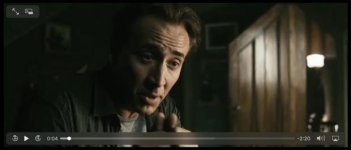
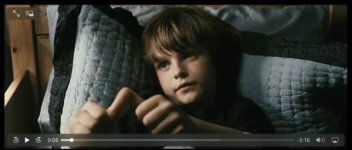
I recently saw the film Knowing (2009) shot by Simon Duggan and noticed several closeups appear to have a key light with mixed hard and soft sources, often times a soft wrapping key to the darker side of face along with an overlapping harder light on the brighter side. I've always assumed you try to keep your key light as 'clean' as possible to avoid double shadows from mixed sources, especially in closeups. I'm assuming Mr. Duggan does this to add shape/definition? Any thoughts on this, and any suggestions for lighting interesting looking closeups?

Screen Shot 2019-10-13 at 10.08.36 PM.jpg
Screen Shot 2019-10-13 at 10.08.07 PM.jpg

Thanks!
 
Hi David,

I recently saw the film Knowing (2009) shot by Simon Duggan and noticed several closeups appear to have a key light with mixed hard and soft sources...

Thanks!

Good eye! I didn't notice that. That looks awesome, I want to mess with that myself now!

David, if I could piggyback on Brandon's question, holy crap how did Simon Duggan get Warcraft to look so amazing?!? The whole thing is like a fantasy art painting come to life. I know there's a lot of CG, but surely a lot of it must also be the lighting?
 
out of the water

out of the water

hi david,

if a camera needs to be able to come out of water to then continue into a shot on land (and thus the camera needs to be in an underwater housing), is there anyway to deal with water remnants still wetting the area in front of the lens? will the image continue to look slightly blurred/soft from the wetness still remaining? or is there a way to deal with this?

thanks
 
Hi David, I'm directing a hi end short film shot with a bedroom set, DOP wants to go with no ceilings so we can light from above.
We are also using a Technodolly and shooting Red Epic dragon at 2.35 cropped spherical.
This will be my first set shoot and I'm nervous about not having a ceiling..., walls are 9 feet high and 22 x 15 feet across, do you think
this is an issue at all?
Have you ever shot with sets with no ceilings? (you probably have)!

Thanks!
 
hi david,

if a camera needs to be able to come out of water to then continue into a shot on land (and thus the camera needs to be in an underwater housing), is there anyway to deal with water remnants still wetting the area in front of the lens? will the image continue to look slightly blurred/soft from the wetness still remaining? or is there a way to deal with this?

thanks

We used Rain-X on the front glass filter for a shot like that but we had to keep reapplying it. There are rain spinners and you could try sneaking in some blast of air from a nozzle.
 
Hi David, I'm directing a hi end short film shot with a bedroom set, DOP wants to go with no ceilings so we can light from above.
We are also using a Technodolly and shooting Red Epic dragon at 2.35 cropped spherical.
This will be my first set shoot and I'm nervous about not having a ceiling..., walls are 9 feet high and 22 x 15 feet across, do you think
this is an issue at all?
Have you ever shot with sets with no ceilings? (you probably have)!

Thanks!

It’s not uncommon for sets to be missing ceilings and having a grid up there for lights. I prefer ceilings because there is lower contrast from the ambient bounce, plus I can always add a bounce quickly where I need it. But on the same hand it helps on a set to be able to remove part of the ceiling or drill into it, etc. If you are worried about seeing off the far edge of the set, have some ceiling pieces made, or make a ceiling that just runs along the edges with an opening in the middle. Sometimes simply laying a 4x8 white card across the area where you catch the missing ceiling is enough.
 
lightning

lightning

Hi David,

I have a shoot coming up that has two different scenes involving lightning. One in the woods inside a cabin, and the other is outside on a lake surrounded by woods. I was just curious what kind of things you've tried and felt succeeded for you in creating a lightning effect for a large area at night.
Also, I was curious how often you tend to use balloon lights to recreate moonlight for large areas at night. If there's any wind, or there's just too many trees in the way, is that the main reason not to use one? It seems the best way to motivate a high moonlight.

Thanks,
- dan
 
I used balloons for a horror movie I shot in the swamps outside of New Orleans years ago, because the ground was soft or non-existent, so it was easier to float balloons. However, on some nights the balloons would float down to the ground and then rise up in the air, over and over again. Drove me nuts. So I'm hesitant now to use balloons outside unless I have some way to fix them in the air, and if I end up tying them under the basket of a condor, that sort of defeats the purpose. Lately I've been making moon boxes using a grid of Skypanels, which works out well as long as they don't get wet. They get buggy if they get soaked in the rain.

I haven't done lightning on a large scale outdoors at night. I did create a fireworks effect using a grid of Skypanels on scissor lifts though. I'd probably look into Lightning Strikes or maybe some LED strobes.

For sets, I like the old-fashioned trick of metal shutters over a big HMI, the type used for signalling ship-to-ship. You slap them randomly open and close.
 
lightning

lightning

hi david,

thanks for your quick reply. by a skypanel grid, you mean you're just adding a handful of 120's together so that it's a bigger source and you have more output in general?
as to the lightning outside, yea the unwieldy balloons outside are definitely a worry. i guess maybe the 12k with the metal shutters is the best scenario for a large exterior, but then you can only have one unit flashing because i don't see how you'd be able to time the shutters opening on multiple lamps by human hands correctly in sync.
 
glasses

glasses

another question for you david. somewhat recently i feel like i've seen eye glasses on set (worn by actors) where the reflections in the lenses basically have a green tint. the lenses themselves are clear, but for some reason the reflections (even of normal daylight windows) sometimes appear green. have you experienced this? are there specific coatings that props/wardrobe needs to get in order to not have this issue? my personal eye glasses have the same problem from light sources.

thanks as always.
 
lens coatings

lens coatings

It’s the anti-reflection coating. You could use glass with no coatings and have much brighter reflections that are neutral...

Ah, interesting. I assume most people don't use the anti-reflective coating, right? I feel like i only tend to see normal white reflections in glasses in film and tv. not the green cast ones. Am i wrong?
 
Ah, interesting. I assume most people don't use the anti-reflective coating, right? I feel like i only tend to see normal white reflections in glasses in film and tv. not the green cast ones. Am i wrong?


Nationally, about 40 percent of lenses sold in the U.S. are anti-reflective, according to American Optometric Association (AOA) data. Aug 29, 2019
 
Back
Top