Welcome to our community

Be a part of something great, join today!

  • Hey all, just changed over the backend after 15 years I figured time to give it a bit of an update, its probably gonna be a bit weird for most of you and i am sure there is a few bugs to work out but it should kinda work the same as before... hopefully :)

Ask David Mullen ANYTHING

Faking sunlight is a necessary skill for any DP. It's fun to some extent to have the control to make a scene sunset or twilight or night quickly... the time-consuming part is recreating the ambient light, and getting a realistic view out of a window if you don't want it to just be white. I spend a lot of time using fake trees, dayblue backings, e-fans, and overexposure to get a background that looks believable. Somewhat burned-out bushes and trees that are moving slightly in a breeze helps a lot to sell the effect. When I can't get the view to look believable, I sometimes put Half Hampshire Frost on the glass, which blurs the view, throws it out of focus. Helpful also if you are shooting on 2/3" video and can't get the view out the window to go soft enough in focus.

I try to get the effect of warm hard sunlight and cooler fill from the sky coming through the windows. I also have a couple of spacelights right above each window to get the soft toplight on the window sill and floor effect.

I also do a lot of bouncing off of the floor covered with white bedsheets, or low bounce cards, for the ambient fill, plus make sure all the sets have white ceiling pieces, which I rarely pull (despite the fact that it makes our sets hotter). When you have no ceiling on a set, the ambience just disappears into the soundstage rafters, making the contrast too high.

...

Here's a shot from the stage last year on "Tara" where I had warm sunlight coming through a kitchen window and I used bounce cards to bounce it back into the face of the actor:
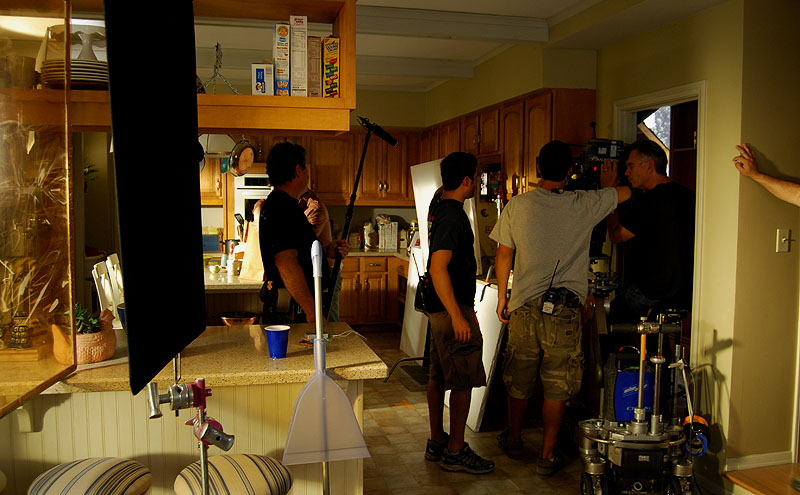
UST37.jpg


Here's a shot of some stand-ins this year on another set. Here I used a couple of Source-4's for the sunlight beams, so I could use skinny light stands and dress them out with some greens, as opposed to a big 10K or something:
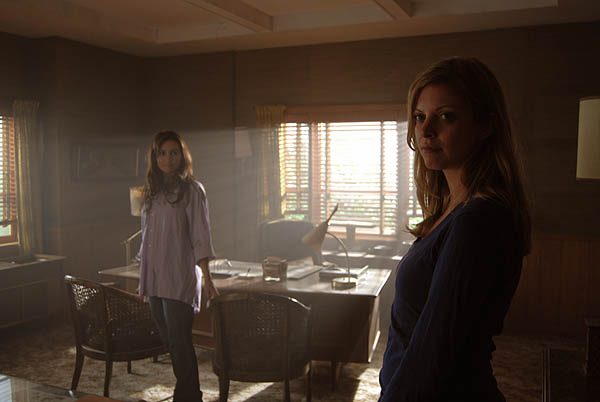
tara2.jpg

Hi David...
I read your Post about faking sunlight on a stage.
For my next Project I'm gonna built a set on a stage and want to create beams of light, that come through the windows. I read you like to use source 4s or 5K Fresnels, without the lense, to do that.
But could you please explain how you get "... the effect of warm hard sunlight and cooler fill from the sky coming through the windows." I mean how do you create the fill.
I understand that if I want to actually see the beams (what I'm not sure about, yet) I would need to smoke the room. What is your favourate technik to do that.
Also I'm thinking where to put the lights when I'm going to use "dayblue backings" in front of the windows.
To give an example:
How would you create this lighting setup, if it was a stage and you would want to see a blue sky outside the windows.


Screengrabs from the "women without men" trailer

The light in the wide shot gives a soft but clear pattern on the wall.
But in the close up the light wraps nice and soft around her face. They may have added an extra fill for that, but is there a way to get a rather soft but very pronounced light through a window?
 
That wide shot just looks like a big light was outside the window, whether a 10K or 20K on a stage, or an 18K HMI on location, with some soft overall fill but not too much.

The close-up looks like she is edged by that big light but they added a 3/4 soft side key from the same direction.

If you want the fill to be cooler, you gel it for that color, or use a cooler source of light. For a late afternoon scene, I will have, let's say, 1/2 CTO on the hard sunlight but 1/4 CTB on the fill, for example, and at sunset, I may have Full CTO on the sun effect and Full CTB on the fill, if they both start out the same color temp before gels.

You need an even amount of light haze to see a beam of light, so the room needs to be draft free because smoke will move until it spreads evenly through a closed space (with some help from you wafting it around.)

A hazemaker works best but a Rosco party fogger can be used on a small budget, you just need to wave it around more to break it up.
 
Thank you for your response...
I assume you mean a 10K or 20K Tungsten on stage, right?
So I would need one for every window and just throw it in an higher angle.
But could you ellaborate on the dayblue Backing.
I would need a rig to put the lights above the backing and out of frame, if shooting towards the windows, or how do you normally set it up.
And how do you light the backing. Kinos would be too dimm I think. Something like mini Brutes?
 
One 20K tungsten would probably handle a row of small windows if backed up enough. If you have a bunch of windows on stage, a series of 5K's or 10K's may be enough but you'd have to separate them to avoid double shadows.

Anything can light a backing, perhaps cyc lights above and 5K skypans below, or maxibrutes, whatever works.
 
So you're saying the actual physical size of the light matters to fake the sun?


How would you create a softer daylight look - bouce it or send it through diffusion?
What about the light fall off if bounced? How do you get a soft but yet concentrated faked daylight?
 
So you're saying the actual physical size of the light matters to fake the sun?


How would you create a softer daylight look - bouce it or send it through diffusion?
What about the light fall off if bounced? How do you get a soft but yet concentrated faked daylight?

Depends on the size of the window -- that example has large windows. Hard sunlight has parallel rays - a Xenon recreates that best but generally they don't have a wide-enough beam to fill a window. Same goes for the Source-4's, you get small beams. If you want the window pattern on the wall, you need a large light backed up for the sharpness and to fill the window and to keep the pattern from spreading too much. For a small bedroom window, for example, a 5K on a stage might create the same effect as the 10K or 20K on a larger set with larger windows. For a tiny bathroom window, a 2K might work fine.

Sunlight is a sharp, hard source. If you are talking about recreating skylight and/or overcast daylight, that's different from what your frame example shows. That would involve creating a big soft light coming through the windows and you wouldn't get a pattern of the window on the wall and floors. In that case, whether you bounced or diffused a light, or a bunch of lights, more depends on your space outside the windows. You'd generally want powerful lamps just because you lose a lot of light level in the process of creating a big soft light. You could use a row of MaxiBrutes through diffusion frames, for example, on a stage.

That example you posted is a bit theatrical in that the window pattern is neither really what a real sun would do (it would be a lot hotter and sharper) nor is it what overcast light would do, it's what a big movie light creates, which is a convention in movies since it is very hard to get the look of real sun on a wall if the window is large.

The important thing is to observe nature. The real sun is a huge source very far away, hence the parallel rays, but it is very bright. It gets warmer as the sun is lower in the sky. Covered over with clouds, it becomes a soft source but with little fall-off over distance compared to a diffused movie lamp several feet away. Skylight is soft but blue-ish, etc. The sky, sun, clouds, etc. are all HUGE sources at great distances, which is why it is hard to recreate them on a stage without big lights, or lots of lights, unless the set is small or the shot is tight. In a closer shot, smaller lights work fine to create these effects.

People think I am always advocating huge lights, but I'm just being honest about what nature creates and what is required to recreate it on a large scale. Now most low-budget people don't have this issue because they don't get huge daytime sets on a soundstage to light that requires a lot of big lights. On location, hopefully you can use a lot of natural light and just augment it rather than recreate it wholesale.

Now sometimes I get away with multiple small units like Source-4's to get beams of sunlight because I justify it by saying that the "sun" is being broken up & blocked by trees outside the window, or other obstructions, so it doesn't have to fill a window evenly.
 
Last edited:
Thanks David...
This was a big help!

That example you posted is a bit theatrical in that the window pattern is neither really what a real sun would do (it would be a lot hotter and sharper) nor is it what overcast light would do, it's what a big movie light creates, which is a convention in movies since it is very hard to get the look of real sun on a wall if the window is large.

This was exactly my confusion, because the pattern was quite soft, if a big light would get too hard.
The set will be quite large (about 50 sqare meters) with three or four windows. It's gonna be designed the next days. Maybe I can post the design and hear your input.
 
Just for playing around in my Head... If I had this setup on a Stage and a 20K Some feet away through the windows creating the pattern of the window on the wall and I would bounce a 1/4CTB gelled fill from the ceiling and would now need to change it to a nightscene.
If I wanted a street lantern that comes through the windows wouldnt I just need to make the fill more blue and stop the lense down two or three stops, but the 20K would remain the same (although I could make it mor yellowish or greenish).
And If I wanted to create a moonlighteffect, as moonlight is hard light aswell, wouldn't I just need to gel the 20K and the fill more blue and stop down the lense a few stops? My question is, doesn't the quality of light stay in all three cases the same, just changing in temperature, brightness and Key to fill ratio?
 
Depends on the mood you want to create -- the moon is a hard source, like the sun, but there is more contrast because you don't get the mix of skylight with the sunlight as in the daytime. With a streetlamp or the moonlight effect, either you are adding more fill just because you need to see into the shadows, or you are trying to suggest that the single source is bouncing back into the shadows... but you don't have to reality of a sky filling in the shadows as in the daytime.

But moonlight is always a theatrical convention in movies anyway, you can make it as hard or soft or low in contrast or as blue as you want artistically. But it is true that there isn't much difference between lighting a room for daytime and for moonlight (other than the view out the window is black at night) other than brightness levels and perhaps contrast levels, and color. That's why you can make real sunlight look like moonlight with day for night techniques.

The only reason why a 20K may be overkill for a streetlamp or moonlight effect is the balance with other sources in the room. A sunlight effect has to be pretty bright, overexposed, whereas a moonlight effect would be underexposed, and if there was a flashlight or candle in the room, you'd want a lot dimmer level for the moonlight to balance correctly. Same goes for a streetlamp if someone turns on a lamp in the scene. If there is a lamp on in the room, suddenly a 650w Tweenie may be enough for a streetlamp effect depending on the size of the window and room.

Now IF you want shadow detail in a moonlit room, the lighting may seem flatter to your eyes than seems realistic, because if you place your moon key two stops under (let's say) and you want the shadows to be four stops under, that's only a 2-stop difference between the key and the fill, which may seem flat to your eyes but once underexposed, it helps preserve detail in the shadows, if you want that.
 
Paranoid Park Shot

Paranoid Park Shot

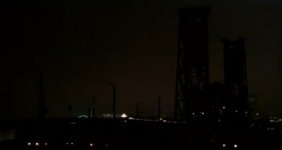
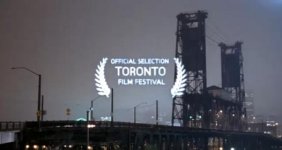
Hi, was recommended this forum by some directing and camera friends in little old New Zealand. My question is about a shot in Gus Van Sant's film trailer of 'Paranoid Park' which is of a bridge in Portland with what appears to be lightning striking and a flickering in the frame. There is some blur and what I think is speed ramping going on also. You can find this shot in the Paranoid Park trailer (1:28). I've read somewhere that film was shot on 35mm film.
http://www.youtube.com/watch?v=ZkMDs3FXVzg

My question is did the cinematographers happen upon a night of a lightning storm or are these effects something that is achievable with lighting?
 

Attachments

  • Picture 5.jpg
    Picture 5.jpg
    6 KB · Views: 0
  • Picture 6.jpg
    Picture 6.jpg
    14.7 KB · Views: 0
  • Picture 7.jpg
    Picture 7.jpg
    9.9 KB · Views: 0
David,

Background: I'm a filmmaker/computer scientist working with a team of engineers, all after-hours, developing a new film production process we've modeled after Pixar's animation process, but for live action. Our 3D renderer uses an unbiased algorithm which simulates the light transport equation, so we need to accurately characterize real-world lights in order to match as closely as possible their counterparts in the 3D renderer. This allows a traditional DP, like yourself, to light a 3D scene –- unlike the army of PhD lighting technicians required to light, say, a Pixar movie.

The next step in development for us is to characterize some real-world lighting gear so that we can use them in our renderer. I've been looking at the Nila JNH LED lights as a possibility, with the various lenses they supply, but of course a DP will need other lights.

The shoots will be done on a sound stage (similar to how 300 was made), and we'll need to light both indoor and outdoor scenes. Any lights used on the sound stage will need a digital characterization, so what I'm looking for is the smallest list of unique lights that a DP would need to do the lighting (yes, I realize that's vague). Each type of light must be independently characterized, and that's a somewhat costly and slow procedure.

It's perfectly fine to have more than one of the same type of light on set – say, 24 Nila JNHs. What I'd like to avoid (if possible) is the proliferation of light types. (I'll also be characterizing ND filters, gels, and everything else that's used in on-set lighting.) It would also help if whatever lights we characterize are consistent from light-to-light in the real world.

Anyway, thanks in advance. I've learned a ton reading this thread.

P.s. I know lighting is story-dependent, but to give you an idea, I typically prefer higher-contrast backgrounds and lower-contrast foregrounds. The first couple episodes of Mad Men, Season 1 are a good example of the kind of lighting I'm talking about. Also, I'll be shooting with a Stage 2 Epic camera.
 
The shoots will be done on a sound stage (similar to how 300 was made), and we'll need to light both indoor and outdoor scenes. Any lights used on the sound stage will need a digital characterization, so what I'm looking for is the smallest list of unique lights that a DP would need to do the lighting (yes, I realize that's vague). Each type of light must be independently characterized, and that's a somewhat costly and slow procedure.

You should start with the most common types of fixtures, i.e. fresnels of different sizes and wattages, and then PAR's (single and multi-bank units) and Open-Faced units, and then ellipsoidals (such as Lekos / Source-4's / Dedos), and then fluorescents. And of course, ordinary light bulbs, either in groups or individually.
 
You should start with the most common types of fixtures, i.e. fresnels of different sizes and wattages, and then PAR's (single and multi-bank units) and Open-Faced units, and then ellipsoidals (such as Lekos / Source-4's / Dedos), and then fluorescents. And of course, ordinary light bulbs, either in groups or individually.

Well, that was my concern (that's basically the whole grip truck sans HMIs). I guess a typical DP would want all that on a generic shoot; I'm sure I would (if I were a DP).

Thanks!
 
David, first of all, thank you for your wonderful contributions to this forum and my knowledge.

Although I am working on it, I have not yet plowed through all pages of this thread and so I apologize if I am being redundant to a question already posed.

I was wondering what you thought about those huge new umbrellas, like Briezes.

Do you use them? When? Where?
 
They aren't very common on features and TV series, which is what I mostly shoot. I haven't used them yet. Lighting packages for narrative tend to have to do double-duty on a lot of stuff, plus it has to be rugged and portable.

I use BargerLites and WoodyLites, which are basically multi-bulb fixtures with a Chimera bag on them, but not Briese lights yet.
 
Back
Top