Welcome to our community

Be a part of something great, join today!

  • Hey all, just changed over the backend after 15 years I figured time to give it a bit of an update, its probably gonna be a bit weird for most of you and i am sure there is a few bugs to work out but it should kinda work the same as before... hopefully :)

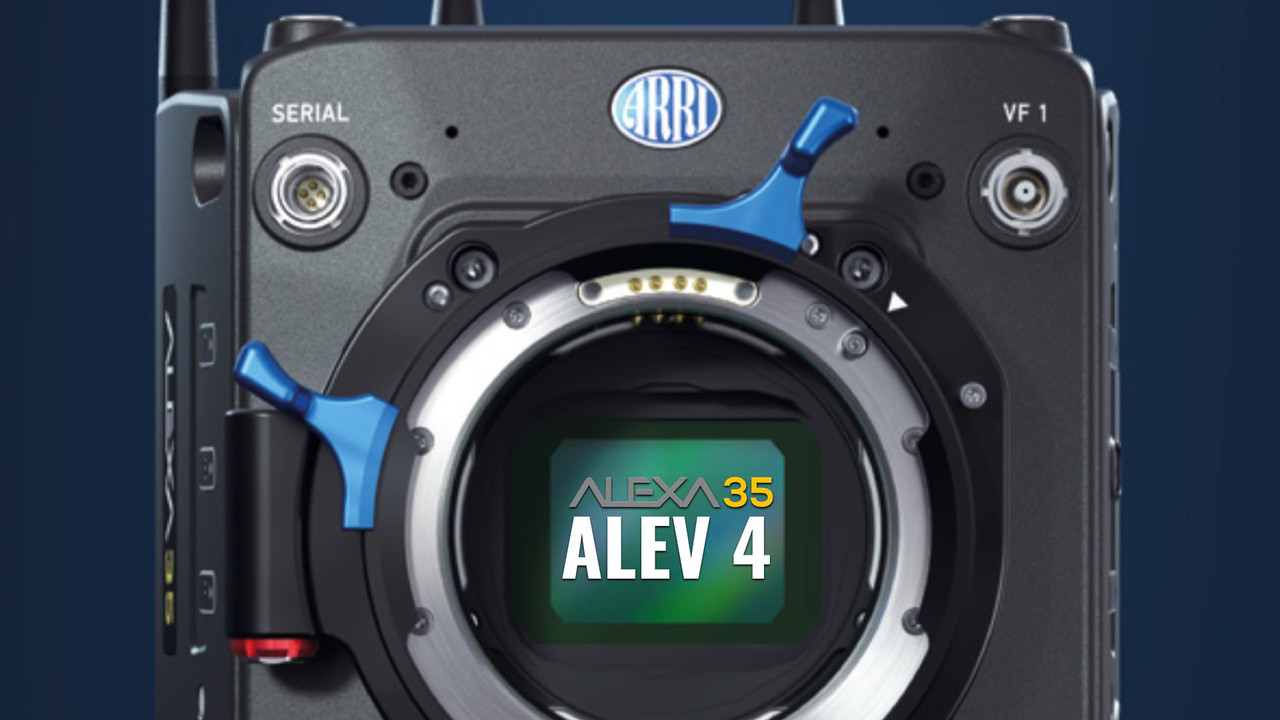
ARRI 4K Super 35 Camera Will be Launched Next Month

To return to the subject of veiling flare that Arri spent over a year trying to suppress, seeing deeper into the blacks also means retaining more color information, which could have implications, particularly for a colorist creating looks.
We've actually seen flare issues on a lot of cameras. I applaud Arri for at least trying to do something about it.
 
To return to the subject of veiling flare that Arri spent over a year trying to suppress, seeing deeper into the blacks also means retaining more color information, which could have implications, particularly for a colorist creating looks.

How? Wouldn't having more colour information deeper down (especially with a sensor that's so clean) only mean more usable DR? And if it's a problem, couldn't you remove/desaturate it, and still be left with more info/detail than you would've had otherwise? If RED would've done as much to wrangle flares, maybe they could've avoided sensor splits and excessive aperture reflection dots.

Besides, ALEVIII is still the best sensor on the market (apparently second only to ALEV4), so Arri were in no hurry to release ALEV4. It doesn't make sense for them to kick it out the door prematurely if there were going to be catches to its design... I could be wrong, but I was under the impression that the suppression they spent so long on was to *add* useable image and retain contrast throughout the dynamic range (rather than having to separate in post or worry about veiling flares).

He says the same thing as you. But remember Alexa pictures where at the beginning contrast less and flary soft. It was I suppose a look colorist embraced with the horrible colorless teal orange.

Arri was perhaps also upset that their not approved sensor (except for the 65 model) was considered obsolete for Netflix.

They have sold more than 3000 S35 cameras in 2 months. Those other obsolete cameras will be sold or rented out for peanuts. But as Deakins say 2k is enough for IMAX… obsolescence is perhaps really dead?
 
veiling flare that Arri spent over a year trying to suppress, seeing deeper into the blacks

I could be wrong

ARRI revised their mounts for the Alexa 35 to feature more "stray light wrangling" than the previous mounts. In terms of the "floor" this may or may not be a factor on material based on subject matter. It didn't revise the black point on the log curve or anything, but it did slightly improve shadow depth in high flare and contrast scenarios.

Interestingly prior to the launch I did get to see a side-by-side comparison with the LF Mount and Alexa 35's new mount in their theater. Very dark alley shot with a bright sign. The differences present were visible as well as what the LF camera and mount combo provided, but it also alluded to some of the saturation choices they are making down in the shadows as well versus LogC3 and LogC4 LUTs.

Fully deconstructing test footage as well as other footage has been interesting as well as the pre-release through release LogC4 LUTs and their current color science.

The LF is victim to a visible seam under certain conditions. It's not clear if the new mount improves this or not, but based on what variables create it, I'd say no.

I don't know if Mike has tested a Komodo or V-Raptor, but "the magenta orbs" at deep apertures have been resolved via the new cameras. I've done "lengthy" tests on both and even my first test shot of Komodo was T16 into the sun. Most interestingly it's a combination of technologies to improve this performance, not just the CSF or OLPF, but it's been a joy to be able to shoot outside without that concern. Those dots are caused by the reflection of the light hitting the sensor back into the CSF/OLPF. They also manifest on ARRI cameras with more of a white point source spread out wider than RED's spots.

Just for the history on all of that. Previous generation DSMC1 and DSMC2 cameras eventually had several interchangeable OLPFs to allow for either more light gathering/clean image versus the extreme end of controlling the optical artifacts at the cost of light sensitivity. The main three OLPFs for DSMC2 ended up being the Low Light Optimized, Standard, and Skin Tone Highlight OLPFs. The STH featured the most protection in the RED world prior to the DSMC3 cameras. The LLO and STD could generate the magenta dot pattern at deeper stops with the LLO being the worst offender as it is the "thinnest" stack with the least anti-reflective properties. Interestingly the vast majority of DXL and DXl2 shoots to date ended up using the LLO OLPF as it's very clean in the shadows.
 
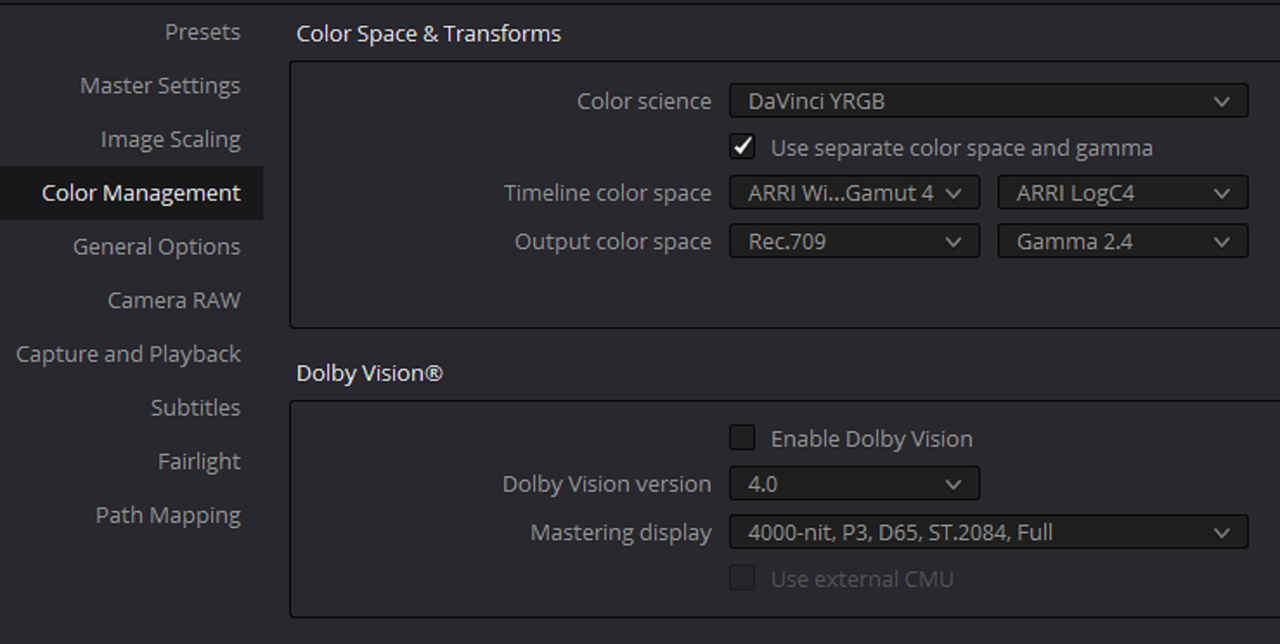
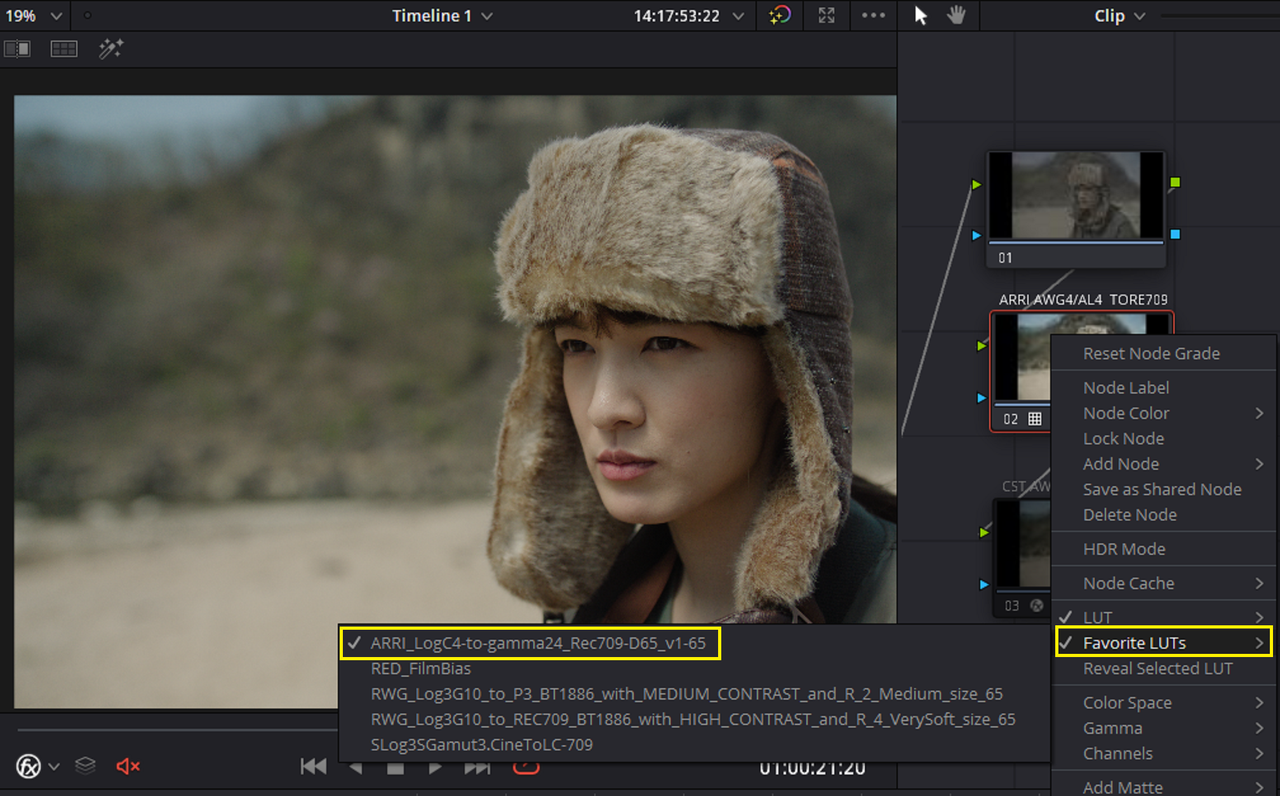
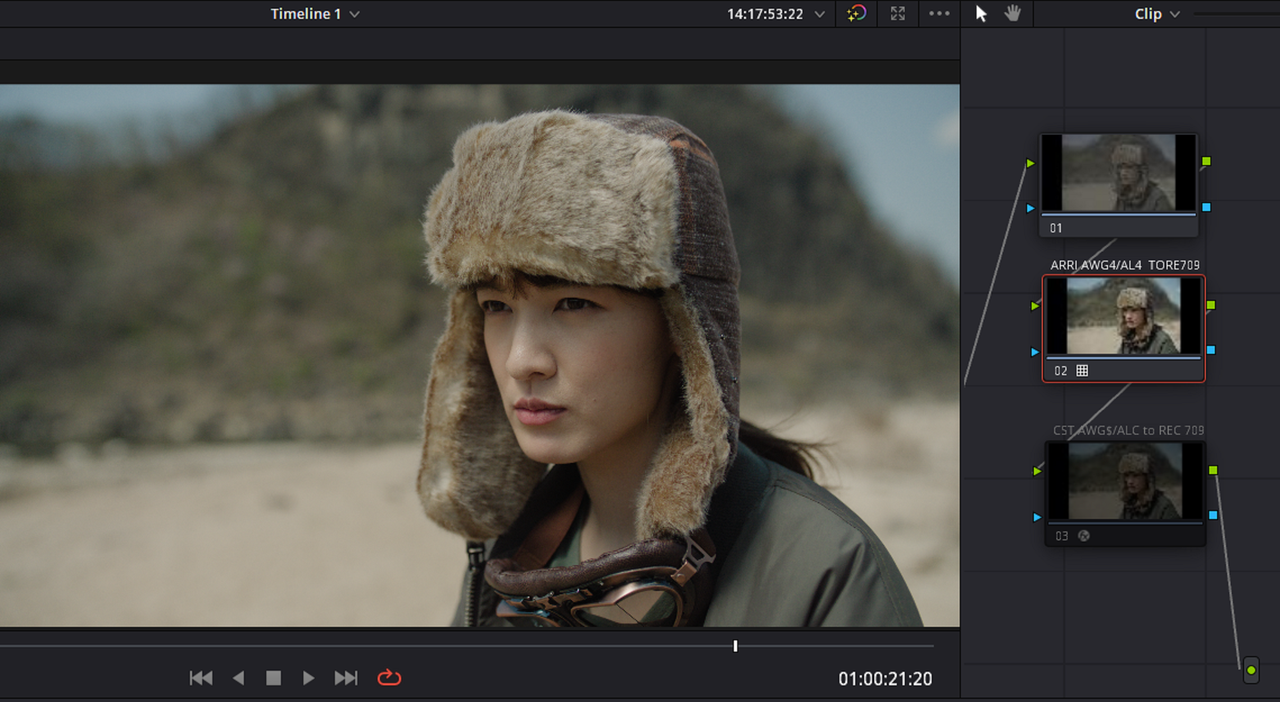
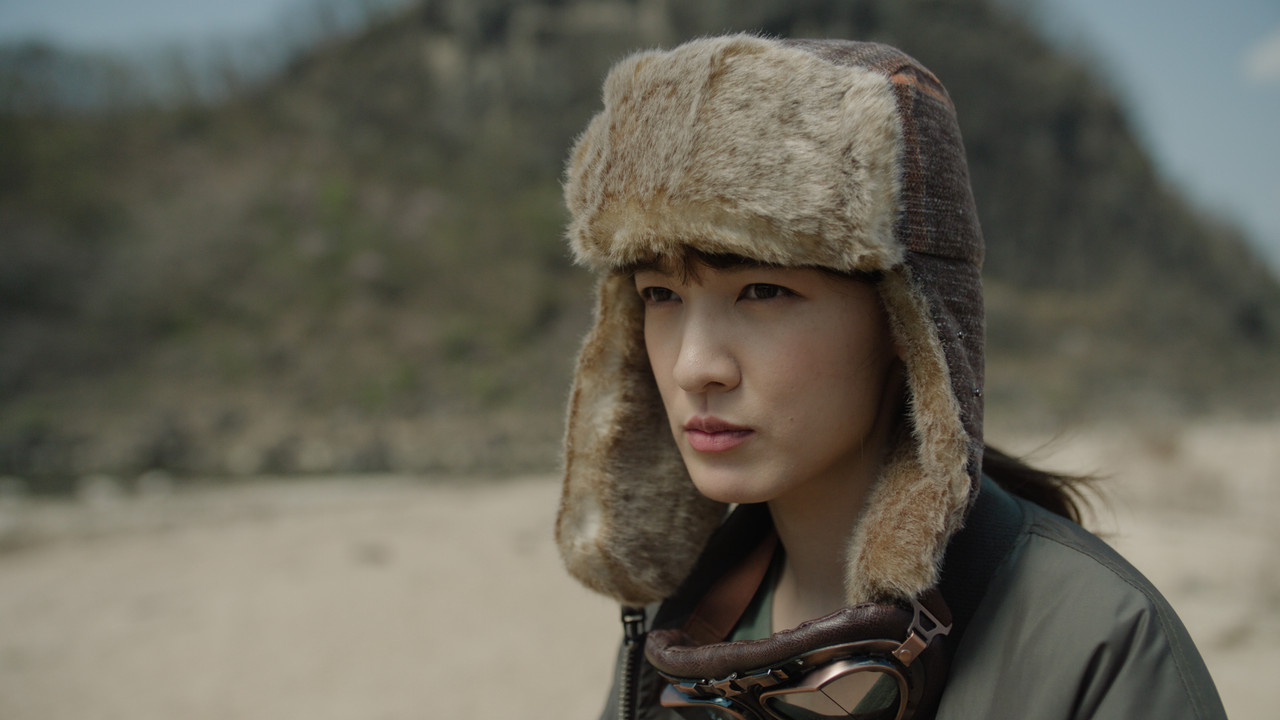
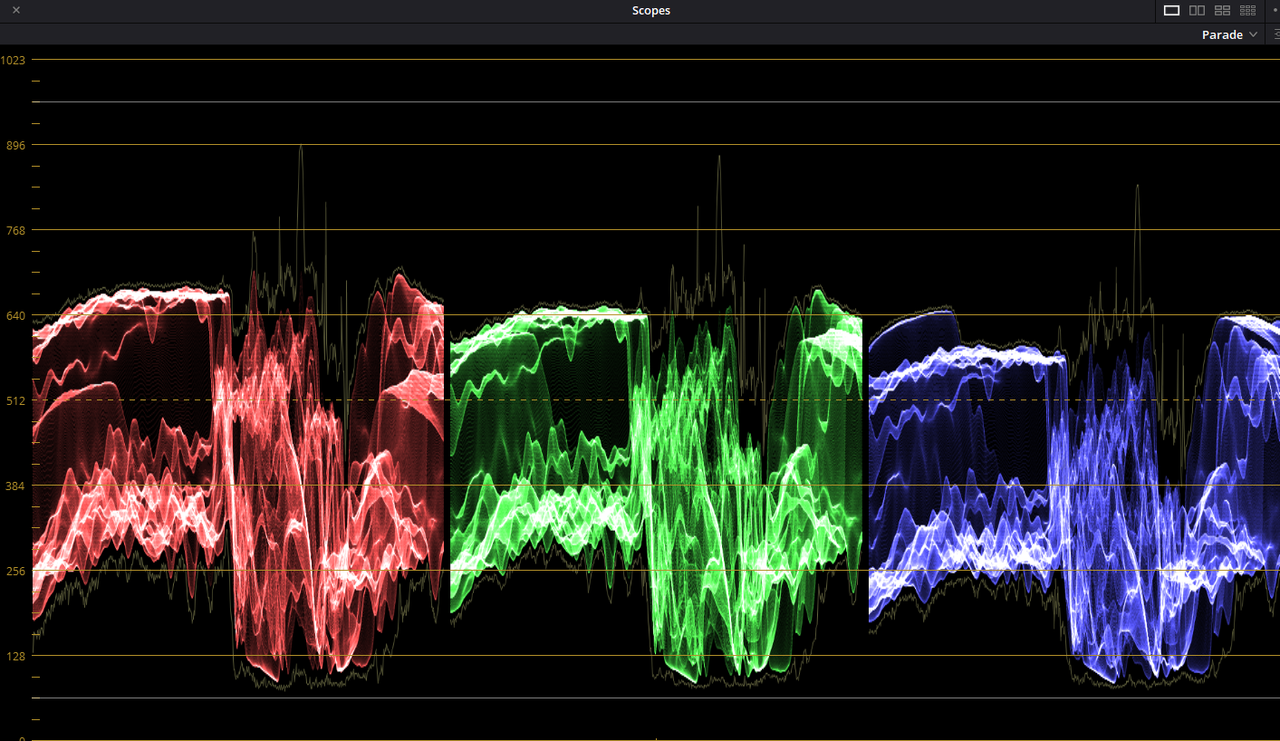
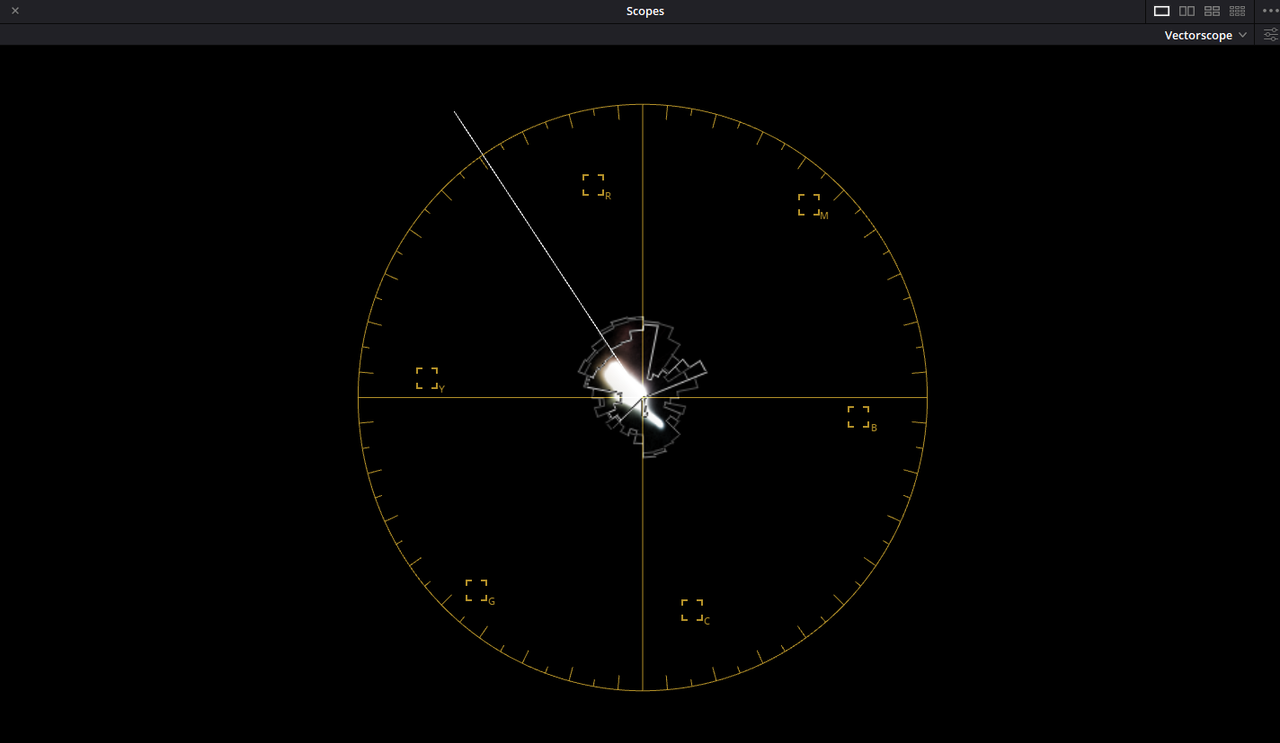
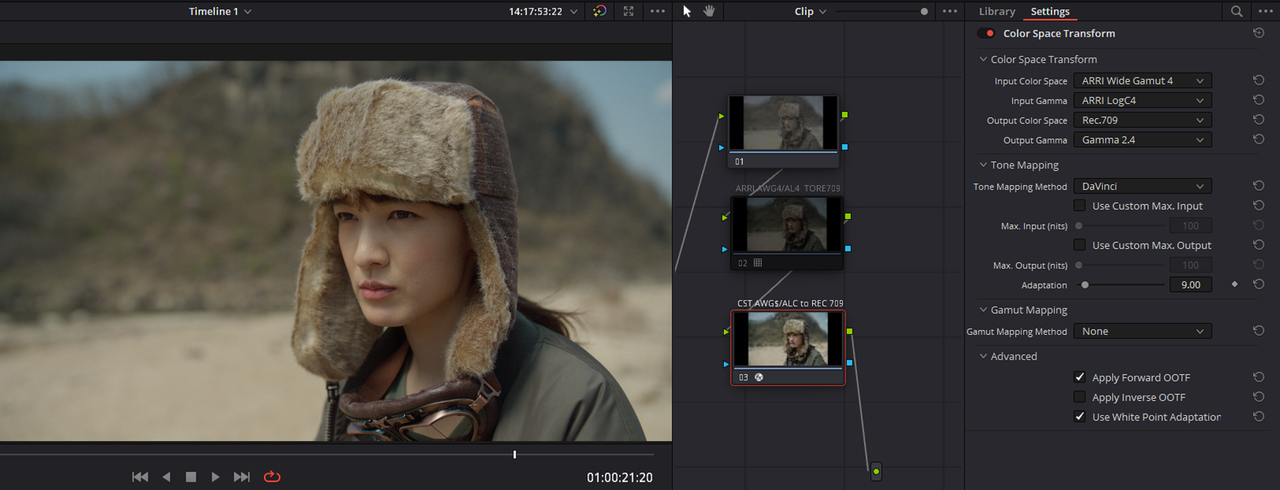
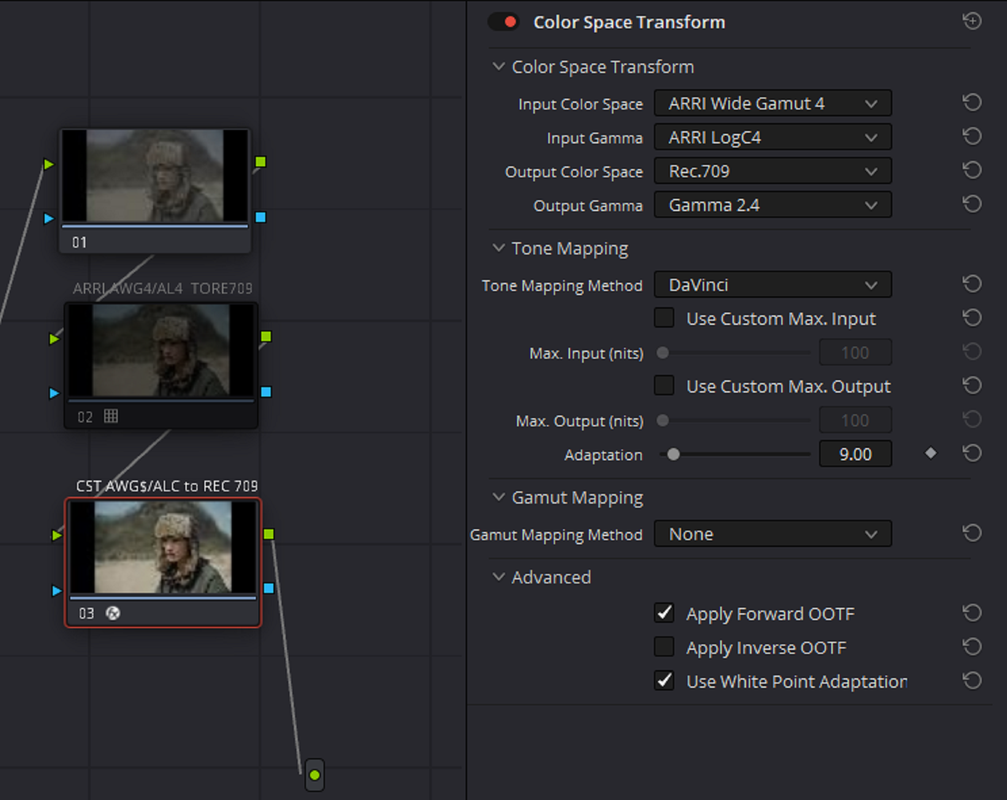
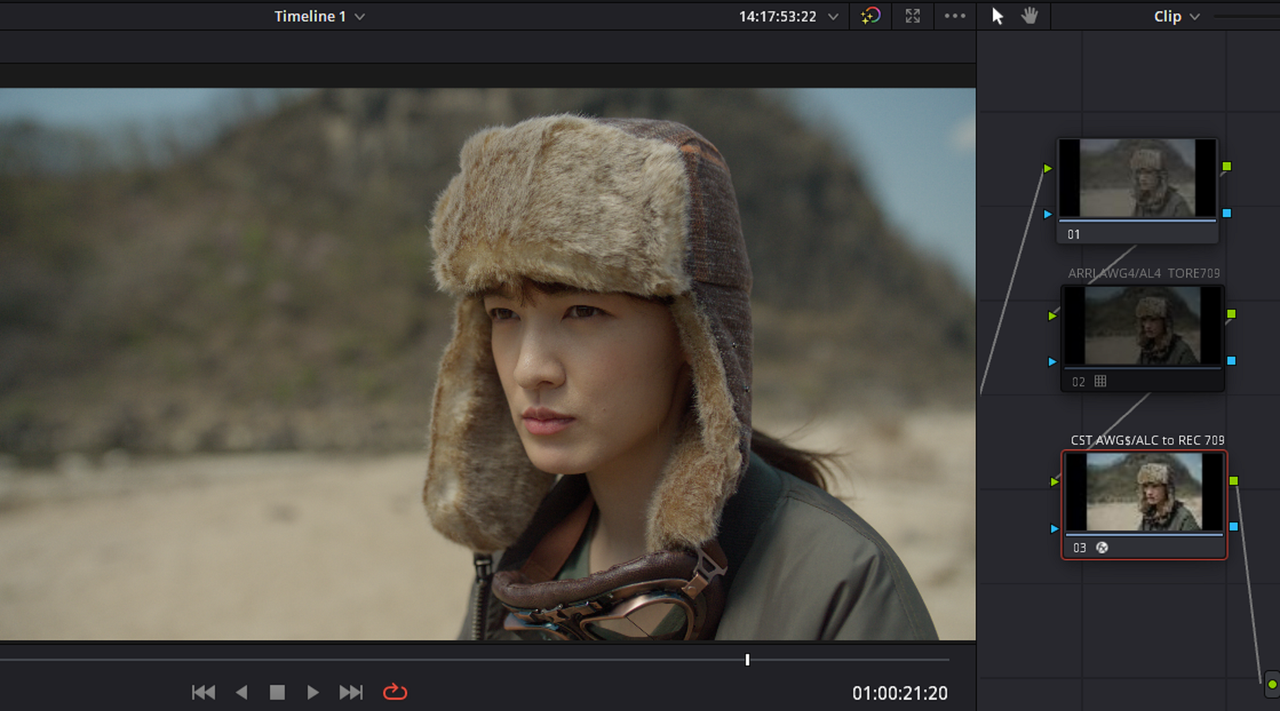
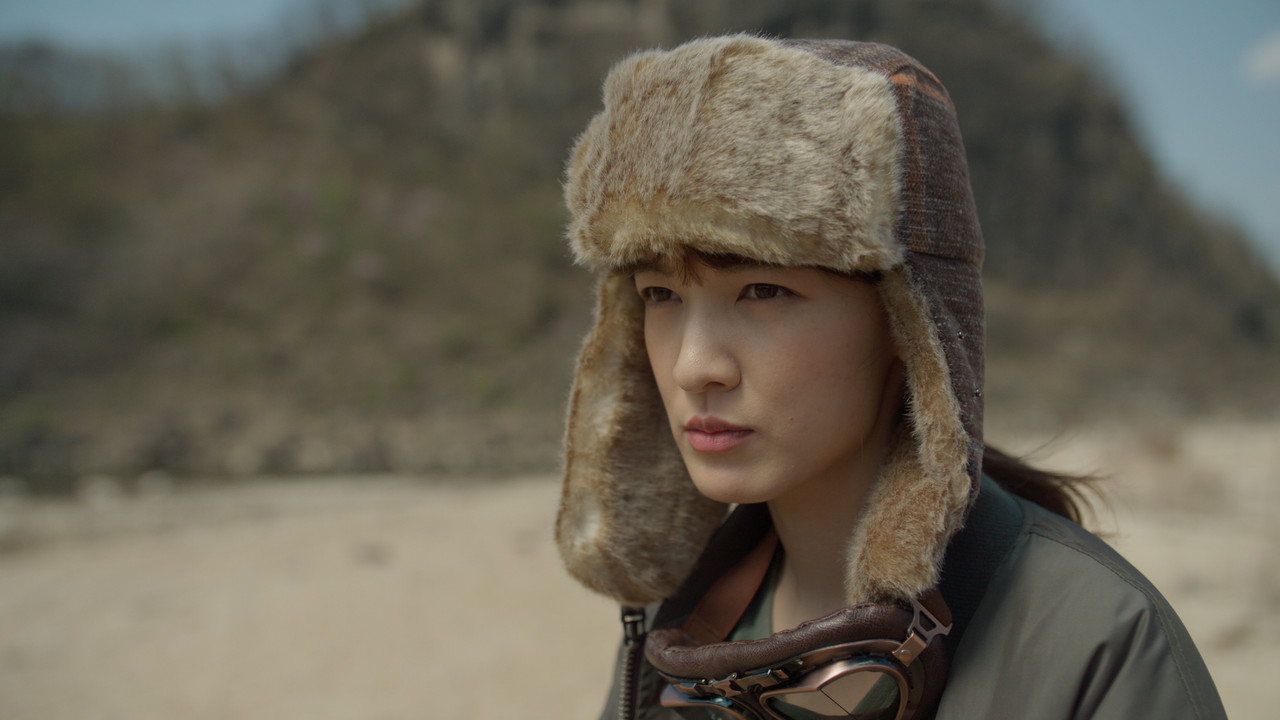
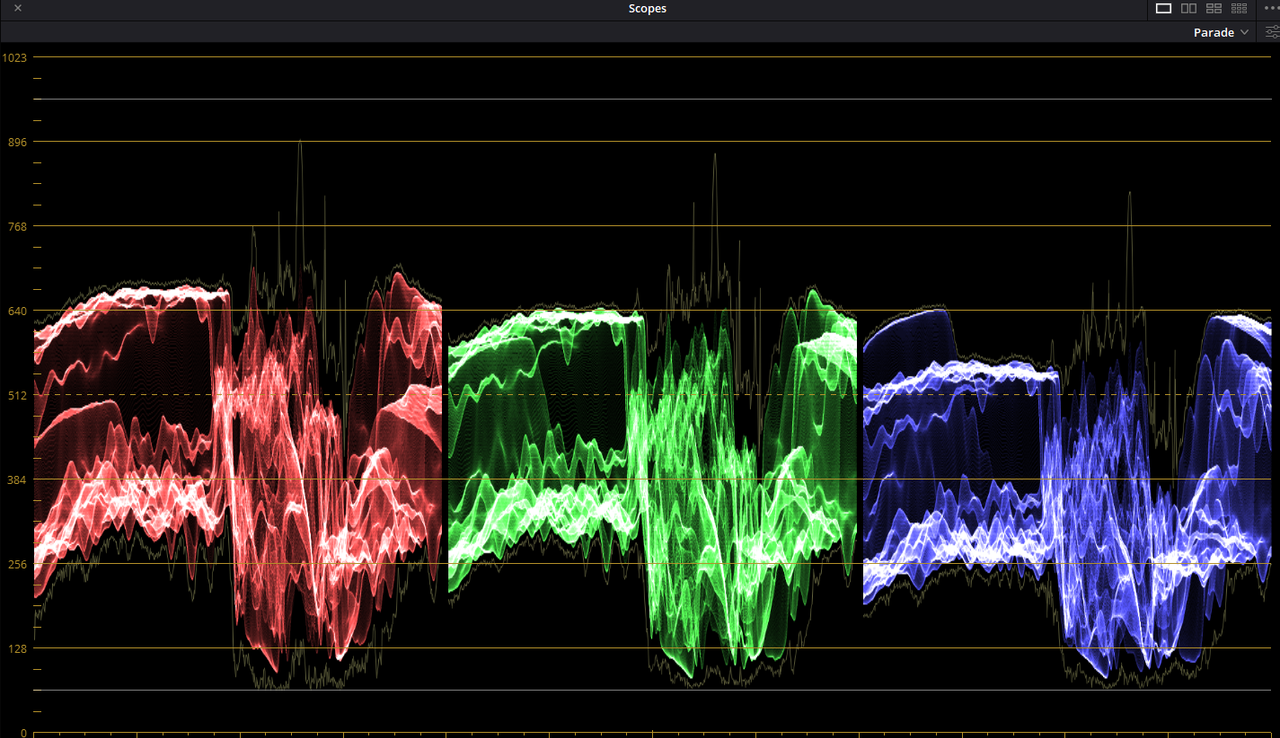
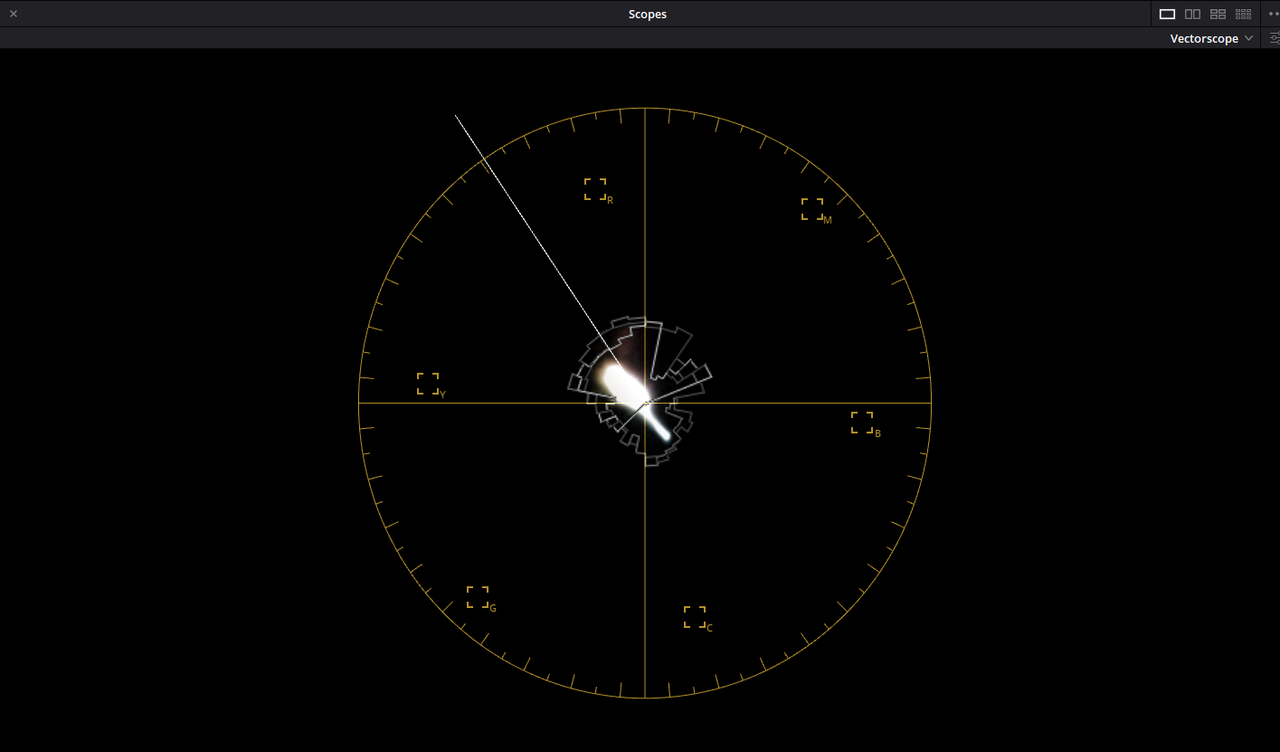
I just did a basic Conversion from ARRI AWG4/ ALC4 to REC709 with both an Official ARRI Transform Lut and with a COLOR SPACE TRANSFORM, the results are below. The ARRI Conversion LUT appears More Contrasty, Less Saturated, and more Neutral. The COLOR SPACE TRANSFORM appears less contrasty, More Saturated, and warmer. Which would prefer as a starting point for grading?


1.png


ARRI'S AWG4/ALC4 TO REC709 CONVERSION LUT

2.png

3.png

4.jpg

4a.png

4b.png


COLOR SPACE TRANSFORM FORM AWG4/ALC4 TO REC709


5.png


6.png


7.png


8.jpg


8a.png


8b.png


ARRI LUT

4.jpg


COLOR SPACE TRANSFORM

8.jpg
 
Which would prefer as a starting point for grading?


That will depend on a lot of things. But as the major manufacturers say, you'll want to use "our" LUTs if you want "our" color science. You can grade within that world for sure.

CST gets you too and from via transforms "roughly" as I've catalogued differences in the shear mathematical ways of doing this across different Color Spaces and Gamma Curves. Slight rendering differences can be found in Resolve, but nothing to get real grumpy about and their backend color engine is always trying to protect from doing weird things for sure. Also a good thing in practice mostly.

If you take a close look at her skin and particularly the roll-off into shadow on her cheek leading to camera right's ear you'll see some of the shadow tuning ARRI is doing in their LogC4 LUTs. There's more sauce in them than that as well, but it's an interesting and bold choice in some situations. Especially for cinematographers who expose under key for moody bits. You'll also notice on their HDR and SDR LUTs that they push into the ceiling, which I've mentioned before. This is fine or not fine depending on your preference or who you talk to. Practical perspective it's all about what you actually want to do with the image and what it contains.

RED also has jazz in their transforms. I do some light funk in philmColor stuff as well. We all like to dance with the devil under the pale moonlight it seems.

Much like the concept of IPP2's Creative Cubes and where they go in the pipeline, ARRI's new color workflow also works for this. In fact everything does really if you plot it out effectively and accurately, which is why I include CGTs in philmColor to get into the RED IPP2 world as well as my own take on things. I mainly use CGT to delineate between Resolve's CST output versus something I may code or whip up in NUKE depending on what I'm doing. More often than not I take 18% gray into account, which is a minefield across camera systems.

I actually just built something in June I've been testing out that's fun, I can wrap it up into an OFX plugin or DCTL, but I generally like LUTs because they work "everywhere" and just don't have it in my DNA to release a subscription based product, but who knows, maybe I'll get greedy. At the same time, there's a metric ton of rubbish LUTs out there that don't exactly work on "everything". Something I'll mull over a bit more later in the year I imagine.

Phil.

Yeah, I keyed in on that shadow area by her ear when looking at the difference between the ARRI Transform Lut and the CST. I also wondered how well that particular characteristic of the lut would go over in an already contrasty scene or night scene. I just thought maybe it might be because ARRi cameras are not known for how well they handle low light scenes so maybe it was to possibly hide some colored shadow noise, but what do I know.

I really now use LUTS more for demonstration than in workflows. I prefer different Color Managed Workflows, Specifically ACES, and ACES TRANSFORM OFX, other OFX and DCTL plugins. But I haven't given up on LUTS completely.

If you decide to do more OFX and DCTLs I for one would be very interested.


BTW,

You can make a LUT from a DCTL grade using a HALD file with a combo of Resolve and 3Dlut Creator on Windows and Resolve and Lattice on Mac.
 
Last edited:
How? Wouldn't having more colour information deeper down (especially with a sensor that's so clean) only mean more usable DR? And if it's a problem, couldn't you remove/desaturate it, and still be left with more info/detail than you would've had otherwise? If RED would've done as much to wrangle flares, maybe they could've avoided sensor splits and excessive aperture reflection dots.

Besides, ALEVIII is still the best sensor on the market (apparently second only to ALEV4), so Arri were in no hurry to release ALEV4. It doesn't make sense for them to kick it out the door prematurely if there were going to be catches to its design... I could be wrong, but I was under the impression that the suppression they spent so long on was to *add* useable image and retain contrast throughout the dynamic range (rather than having to separate in post or worry about veiling flares).
I’m not sure I understand the question. From Imatest, who’ve studied the problem of veiling glare as much as anybody:

“Lenses with low flare have been traditionally known for their excellent color performance. Color saturation is higher, especially in shadows.”

Reducing the amount of scattered light in the entire imaging system increases color information in the shadows. I don’t see how one can talk about dynamic range while disregarding color. If there is no color information in those stops, it becomes unusable.
 
Last edited:
Reducing the amount of scattered light in the entire imaging system increases color information in the shadows. I don’t see how one can talk about dynamic range while disregarding color. If there is no color information in those stops, it becomes unusable.

More or less correct. It's a chaotic thing to generalize as each lens and every frame is different. Some lenses market "HDR" because they have extreme control over internal reflections. You see it more commonly on zooms as those used to be the harbingers of lifted and less saturated hues versus say a decent modern prime. Still relatively true to a degree.

The thing is if your subject and exposure don't cause the lift and veiling glare it's a moot point, which is actually pretty common in more naturalistic cinematography.

Yet again why I measure patches individually to actually figure out what a camera can and can't do. Particularly when measuring mid through lower tones.
 

An example of shoddy Journalism by Yossy. If you are going to use a quote in your headline, make sure that the subject actually said it. Yossy must have missed the F&D times article where the Head of sensor design - Achim Oehler - lays out the process. (Film and digital times June 1, 2022 p.51)

"What other technical advances enabled the new sensor?

We can say that we are using technology similar to the original ALEV 3 because it’s better for a large, fast and artifact-free sensor. It’s important to know that quite a few of the newer technologies used by all the other players currently are all slower in terms of on chip signal propagation.
From the time the first ALEXA was developed until now, what new changes in technology have enabled this new camera, this new sensor? We got a completely new pixel from the fab, which had not been available at the time when we started the original ALEXA cameras. I wanted to have that pixel, I proposed it, but I didn’t get it. And then, 10 years later, I got it. All this sensor business is very much pixel driven. Where do you get the pixel you really need? Is it already there? Is it proven? And so on.

In a chicken and egg analogy, does someone develop the sensor and then you design around it, or do you design the dream sensor and then somebody builds it for you?

There are different models. If you’re doing your own complete sensor design, you would just do a schematic layout, put the pixel in, tape it out and get your sensor back from the fab. If you have pixel design in-house, you are also modifying the pixel, and that can go down to a really deep dive into your own recipes for how many implants to have here and there. It’s like a secret sauce for every fab. Some fabs give you parameters that you can change, others give you a reference pixel, others send you to a service provider. Meanwhile, here at ARRI, we are also working on the pixel-level.
Back to your original question, the pixel finally became available and that was the enabler for the new sensor. Then we had to account for the huge data rates: at 4K 120fps, dual gain. In the end, that’s 240 frames per second. And we have to calibrate it with a lot of data. We have huge memory bandwidth requirements, and that only can be accommodated by the latest and biggest FPGAs. Luckily the FPGA technology also evolved concurrently.
Since the ALEXA and AMIRA, we have one big FPGA absorbing all the data and doing the image processing. It’s not split up in parts anymore."
 
Dan,

I think Yossy was mainly quoting Harald Brendel in the Podcast above at from about the 8:28 minute mark to about the 9:55 minute mark were Harald states that Arri didn't "MAKE" the Alev4 sensor. I think maybe he should have said "ARRI DIDN"T MAKE THE ALEV 4 SENSOR" instead of ""ARRI DIDN"T DEVELOP THE ALEV 4 SENSOR"
 
He says the same thing as you. But remember Alexa pictures where at the beginning contrast less and flary soft. It was I suppose a look colorist embraced with the horrible colorless teal orange.

OHhhh, I see. I read it as the "implications" being a *problem* of the camera's newly designed suppression, rather than 'implications for colourists as they'll likely need to rethink look creation with so much more.' To be fair, that's to be expected when you're going to a different sensor, with more of everything, and a redone/updated colour science.... Also thought that part of LogC4 was to map everything better. In any case, it sounds like Arri took a bit of care in making ALEV4 sit well with ALEVIII (they specifically mention LF and 65 being updated to Reveal colour science so they'd be interchangeable [albeit with less highs and lows]).

Reducing the amount of scattered light in the entire imaging system increases color information in the shadows. I don't see how one can talk about dynamic range while disregarding color. If there is no color information in those stops, it becomes unusable.

Yeah, that's what I was saying. LOOL, but tell that to RED; they measure/promote their DR numbers with 2+ rebuilt/colourless highlight stops and 2+ cast-contaminated/not-accurately-recoverable low-end stops.

Well at the end Arri does have the best pixel out there. ;-) Waiting for RED's response... if even possible?

Does Arri have a patent for dual-read-out/dual-gain? Canon did it, and their DGO cameras have a substantial bump in usable DR. Plus the C70 is sub-$10k, so it's not a price thing (granted "only" 4k/60, but still). A "Monstro 2.0" with dual-gain wouldn't have the same "cinematic-leaning" colour science, but could narrow the real-world DR gap.
 
Well at the end Arri does have the best pixel out there. ;-) Waiting for RED's response... if even possible?

Arri makes excellent cameras and I would never dispute that. Alexa 35 continues that 100+ year tradition.

RED already has an 8K multi format camera (Full Frame & S35) that shoots full res at 120fps in a body that's a little over 4 lbs.

V-Raptor does that at about 3x less the price of an Alexa 35 which has nearly 3x less the resolution, limited frame rates, and a much less flexible RAW system compared to what RED offers.

No doubt that Arri has the best performance in highlights around but people need to seriously look at the V-Raptor's underexposure performance?
RED's color science is great on it's own merit's. Not interested in it looking like Arri.

RED cameras are in use from some of the biggest film productions to even Youtubers.
Panavision has adopted RED's tech in their flagship camera.

I always want to see what RED can do better but seriously, what does RED have to prove other than topping themselves?

There's an odd perception of RED always falling short that does not reflect reality.

Brian Timmons
BRITIM/MEDIA
 
OHhhh, I see. I read it as the "implications" being a *problem* of the camera's newly designed suppression, rather than 'implications for colourists as they'll likely need to rethink look creation with so much more.' To be fair, that's to be expected when you're going to a different sensor, with more of everything, and a redone/updated colour science.... Also thought that part of LogC4 was to map everything better. In any case, it sounds like Arri took a bit of care in making ALEV4 sit well with ALEVIII (they specifically mention LF and 65 being updated to Reveal colour science so they'd be interchangeable [albeit with less highs and lows]).


Yeah, that's what I was saying. LOOL, but tell that to RED; they measure/promote their DR numbers with 2+ rebuilt/colourless highlight stops and 2+ cast-contaminated/not-accurately-recoverable low-end stops.


Does Arri have a patent for dual-read-out/dual-gain? Canon did it, and their DGO cameras have a substantial bump in usable DR. Plus the C70 is sub-$10k, so it's not a price thing (granted "only" 4k/60, but still). A "Monstro 2.0" with dual-gain wouldn't have the same "cinematic-leaning" colour science, but could narrow the real-world DR gap.

No need to teach RED anything: I’ve got no complaints whatsoever about either the dynamic range or the way color is rendered. The Komodo’s dynamic range is no less than that of the C70 even with its vaunted DGO sensor; and that this feat is accomplished with a global shutter makes it an even more remarkable achievement! Let’s not forget that Canon makes the very bold claim of 16+ stops of dynamic range themselves, since disproven by lab tests. CineD recorded the Komodo's dynamic range at 12.5 stops at the maximum resolution of the sensor while downsampling Komodo 6K footage on a 4K timeline actually increases that figure by as much as 1/2 stop. And, as the German website slashcam rightly points out, when discussing dynamic range we’ve also got to look at the processing going on under the hood. When comparing Canon Cinema RAW Light LT to R3D what I’m seeing is mushy, plastic-y noise, whereas that of the Komodo has a beautiful film-like texture. Furthermore, the Canon’s got mediocre rolling shutter performance, its footage is noticeably softer than the Komodo's and Red’s colors are more pleasing than Canon’s. Many user reviews over at N. America’s largest independent electronics retailer praise the stunning color the Komodo produces. Concerning latitude, CineD had this to say about the C70's image at five stops under and brought back, "Unfortunately, noise becomes atrocious, and colors start to fade to brownish / greenish cast. Also, the larger vertical bands of green and pinkish areas are very obvious. Unfortunately, even massive noise reduction cannot save this image and it is “game over”. Compare this to the Komodo, about which the same publication has this to say, "Both [the R3D and ProRes] files show noise, but it is a very fine, grainy noise which can be removed easily by noise reduction in post (if needed)". R3D is the most powerful RAW codec on the market and the excellent IPP2 workflow was built with HDR in mind from the ground up. The C70 body feels like cheap Fisher Price plastic, similar to the $1,300 Blackmagic Pocket 4K, whereas the Komodo is built like a German tank. The RED Control app is the best in the industry. REDs are used by the most accomplished cinematographers to walk the face of the earth and the Komodo is used as a B cam on countless feature films and shows, Canon not so much! Sorry for the rant, I thought this was supposed to be the Alexa 35 thread.
 
Last edited:
Back
Top