Welcome to our community

Be a part of something great, join today!

  • Hey all, just changed over the backend after 15 years I figured time to give it a bit of an update, its probably gonna be a bit weird for most of you and i am sure there is a few bugs to work out but it should kinda work the same as before... hopefully :)

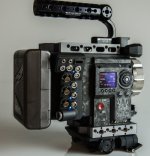
Thoughts on the Panavision Millennium DXL

Can somebody explain what's currently considered "Large Format" and "Medium Format"?
DXL is advertised as "Large Format" and it uses the 8K Dragon sensor, which is 40.96 x 21.60 mm.

According to Wikipedia, "Large Format" is 102×127 mm and "Medium Format" is larger than 24x36mm, but smaller than Large Format.

Also, why is Panavision stating 15 stops on 8K Dragon, while RED states 16.5+ stops?

Some more explanation on how this is so much more advanced Weapon Dragon 8K would help too.

Large format can be considered anything larger than S35 in the cinema world. And Panavision believes that the sensor is 15 stops according to their measurement tools.
 
  • Thread starter
  • Moderator
  • #22
I'm surprised by a certain creeping paranoia that seems to be coming up regarding this camera...

As far as I know, it's the Red sensor, ASIC, etc. so I would assume most image adjustments are not being done in the raw signal other than whatever effect a new OPLF/IR filter will have (when completed) and whatever image noise consistency and control happens due to a more robust cooling system. Otherwise, it seems to be a tweak to the Red color science according to LightIron's and Panavision's taste to create images that they feel will color-correct easier because they fall into place quicker.

So whether those changes create a noticeable alteration to the Red 8K Weapon image or not probably depends on how sensitive you are to such things. To one person, it may feel like a major change and to another, it may seem minor. I have no idea until someone shoots a comparison between a Panavision Millennium DXL and an an 8K Red Weapon (ideally using the same lens) but I suspect that the images will not be as far as apart as some people think. But there might be a lot of operational advantages to the DXL for Hollywood production that set the camera apart. I also suspect that Panavision will make some adjustments to 8K Red Weapon camera bodies so they can be used as B-cameras on a DXL shoot, with the same OPLF and color science loaded in, but otherwise a Red Weapon that is small enough to use on drones, gimbals, etc.

Agree with much of that.

As Light Iron's own Color Science develops and whenever their OLPF is finished we'll know exactly what's different, we're just not exactly close to seeing what that is. The overall goal with their color science is to lean towards the modern look trends as well as being natural, vibrant, good skin tones, etc.... We have something pretty close already in many ways. OLPF-wise however, I can think of a few interesting things that can be done to make something more..... erm.... different.


Can somebody explain what's currently considered "Large Format" and "Medium Format"?
DXL is advertised as "Large Format" and it uses the 8K Dragon sensor, which is 40.96 x 21.60 mm.

According to Wikipedia, "Large Format" is 102×127 mm and "Medium Format" is larger than 24x36mm, but smaller than Large Format.

Also, why is Panavision stating 15 stops on 8K Dragon, while RED states 16.5+ stops?

Some more explanation on how this is so much more advanced Weapon Dragon 8K would help too.

It's an interesting conversation regarding the Dynamic Range. I test it 3 ways and I know what my results show, they are also published online. PV "might" tune the DR a bit on however they map it, but it's honestly too early to tell.

Remember that 15 stops is a magic number as film stock is in the realm of 13-15 stops of DR.

Bob's answer is correct in terms of what large formats are. In the realm of the most common film formats you have S16<S35<VistaVision<65mm 5-perf<70mm 15-perf IMAX. There's a few other stranglers in there as well, like 8-perf 65mm, but that's not what I'd describe as common.

VistaVision and formats around that size hold a great deal of potential as there are a whole bunch of optics that can be explored and formats within to photograph with. More designed-for-cinema VV optics are incoming as well.
 
Mr. Holland, once again, I salute you for your extraordinary generosity in sharing, educating and illuminating all of us with your wisdom and experience.

Thank you!
 
Thanks Phil for your valuable informations and taking the time sharing them.

Also, why is Panavision stating 15 stops on 8K Dragon, while RED states 16.5+ stops?

About how many stops you can evaluate technically a digital camera you have to take into account the clipping point and the noise floor. But effectively it all depends how you accept your highlight to roll off and most importantly how clean or how much noise you accept your image to be. PV's image is said to be really clean in 4K projection, even in night scene, so they probably shot at 800iso with STO and kept the shadow resonably dark thus using 15 stops of the Dragon sensor.

With the 8k res you could argue that you have to shoot for that mastering resolution (for futur proofing 8k delivery) and therefore changing your noise tolerance (and your COF). Panavision using "conservative" numbers at 15stop DR and 800iso makes sense in the 8K world.

Pat
 
Ah found it: "Native ISO is 800 ASA and can be set up to 12000 ISO." So the same as Alexa, what a suprise.... :)
 
So the new Panavision Lenses have internal focus and don't require a motor?

Does Panavision have their own focusing system? e.g. controller?


The Powered Cheese Plate is just a top cheese plate with Lemo Power Plugs?
 
yes, and they were using a preston fiz controller.

yeah, next question will be if they design a 1st AC Monitor for the smart side port ... they need something with High NIT and hopefully DR, that's doesn't weight much
 
  • Thread starter
  • Moderator
  • #30
Here's a nice and very informative interview w/ Dominick from PV from ProductionHub:

I was actually standing behind the crew when they filmed this one. The swap-out audio plate sounds great for certain types of productions. He also mentions a bit about the Base ISO rated at 800 and how it could possibly be a bit further, which mimics much of my sentiments regarding the Standard OLPF for instance around ISO 1280-ish.

Good stuff.
 
Last edited:
Thanks, Phil. I love a good camera review or overview, even if it's for a camera I probably won't use or need. As long as the camera is desirable (to me), the review can be as long as you want. Go nuts next time!

The DXL will actually use proprietary media that will embed Light Iron Color at the sensor level that can be utilized in 3rd party applications.
In Jarred's thread I speculated that the LI color LUT would be implemented directly into the RAW file. It made sense that Panavision would do this to make things simpler for the colorist. I would be surprised if this were not the case.


P.S. Too bad that 2K is all you need, eh? /sarc
 
Thanks, Phil. I love a good camera review or overview, even if it's for a camera I probably won't use or need. As long as the camera is desirable (to me), the review can be as long as you want. Go nuts next time!


In Jarred's thread I speculated that the LI color LUT would be implemented directly into the RAW file. It made sense that Panavision would do this to make things simpler for the colorist. I would be surprised if this were not the case.


P.S. Too bad that 2K is all you need, eh? /sarc
It's crazy to think that RED would allow ANYONE near the sensor data. Sensor data (analog) ->a2d conversion->compression-> debayer(maybe) are the very soul of RED. It's what makes RED. Ain't nobody touching it, guaranteed. no matter what their claims may be. LI or noLI. It's just a typical PV marketing to separate themselves from the rest. So the snobs may rejoice... I worked for Panavision in the 80s. Same sh*t....
 
Did RED license PV for using R3D? DXL is not a RED camera, so how does this work? Will PV be able to use R3D if they bring a non RED sensor to the market?

Pat
 
  • Thread starter
  • Moderator
  • #35
Did RED license PV for using R3D? DXL is not a RED camera, so how does this work? Will PV be able to use R3D if they bring a non RED sensor to the market?

Pat

Again, RED is building these cameras for Panavision built to their spec.


Nice looking photos of the DXL Phil, did you take those? Very nice grade.

What did you use?

Yes. Shot them at Cine Gear. Otus 55mm, mostly wide open.
 
Phil, your simple scorecard accessment to DXL vs ARRI colorwise, based your review of the projected content? Will it close the gap absolutely?
 
  • Thread starter
  • Moderator
  • #37
Phil, your simple scorecard accessment to DXL vs ARRI colorwise, based your review of the projected content? Will it close the gap absolutely?

Until PV's Color Science and OLPF are done I have no idea.

I've been making both cameras (Dragon) match each other for a long, long time. What PV showed at Cine Gear looked extremely good and was "essentially" straight out of the camera from what I was told. Weapon also looks damn good straight out of the camera, so it's hard to know exactly what sauce was dripped where to make whatever flavor.

The RED/ARRI debate ended for me when RED released the Dragon sensor technology with Epic and Scarlet. DSMC2 cameras are even better in a few ways. When it was Mysterium-X, Alev III, and motion picture film there were a lot of strong arguments that leaned towards each direction. The Dragon sensor and RED's Color Science made a lot of those arguments sway one direction for me. Additionally with the resolution to film format relevance, that sorted another needle on my compass.

What's interesting here is PV has a system now that directly competes against the Alexa65 in some ways and provides a more flexible production tool at the same time in terms of frame rate and resolution. The other interesting thing to note is PV once went through Sony to get to the Genesis tech, which we used on Superman Returns back in the day. Over the years PV, RED, and Light Iron have grown a special relationship that allows for a project like the DXL to happen.

There's a lot of work that still needs to be done on the DXL before it's the fleet camera that PV envisions, but how quickly this particular project came together into functioning camera bodies is impressive. Hopefully around 4th quarter 2016 RED, PV, and LI will lock everything down and this will be ready for productions late this year/early next year.
 
Thanks Phil for your efforts on this list ... (keeping the PV/red announcement clear and positive)

If a PV gift was to come out of this marriage it would be the availablity for sale of their super light weapon module (with both vlock and ab)...

My weapons really deserve a better I/O module

http://lightiron.com/arming-8k-weapons/
 

Attachments

  • image.jpg
    image.jpg
    71.1 KB · Views: 0
  • Thread starter
  • Moderator
  • #40
Thanks Phil for your efforts on this list ... (keeping the PV/red announcement clear and positive)

Thanks Michael. And I'd like to touch on this point as I've been "following" much of the conversation elsewhere and have had some interesting face to face chats about the DXL.

While I understand in many ways this is rather big news for the 3 companies involved, I'm not exactly clear as to why there's so much controversy or strange rampant anger revolving around this particular announcement. Interestingly enough most I've spoken to received the DXL news positively with only a small number of fascinating critics.

Long and the short, Panavision has a fleet of RED cameras. This collaboration has allowed for the development of future cameras that fit more ideally into the common on set workflows Panavision customers tend to utilize.

I've seen some fascinating discussion regarding OLPFs recently and the concepts behind Light Iron's color as well. At it's core various types of OLPF technology don't just combat aliasing and color moire, but also fight of infrared contamination while also fighting off a few other optical artifacts. I'll be clear, there is an audience who absolutely loathes the concept of interchangeable OLPFs. However, RED has uncovered some interesting variance behind the several optical methods that can make the camera perform different ways. For the most part this can be described as a balance between low light sensitivity and the most artifact free and colorful image quality with all three current OLPFs producing nice images straight out of the camera.

I've tested and written to death about what I feel each of those are all about.

As we've seen with companies like KipperTie the OLPF concept can be taken further with the introduction of optical effects that produce a unique flavor to the image.

Panavision is designing their own OLPF that will likely end up somewhere between RED's and the general concept of a filter that produces lovely images to have a unique flavor to them.

That's all that's actually going on.


How this relates to RED customers? Specifically those of us who are going with the 8K Weapon we have something in the realm of 3.5lbs that we can configure any which way we desire. Same sensor technology and general under the hood performance, just without the extremely optimized concept of the RED/PV/LI integration of lens motors, wireless audio, etc... We can also do these things. Especially with OMODs, RT Motion's Latitude, and likely a few other companies coming to the front.

As for the 8K upgraders, I tend to agree. It's looking more and more like a fantastic upgrade deal.


I guess my positive outlook is due to the potential I see for productions that utilize the DXL. It's a great sensor size to explore and hold a great deal of creative potential for S35, VV+, and anamorphic filming as well as taping into some of the 65mm glass that PV offers. It makes so much sense for them. I guess the other thing is I don't have any gripes against these three companies. In fact nearly every feature I've worked on has been a PV film. Light Iron and specifically what Micheal Cioni has been "about" syncs up with the general message I'm all about regarding today and tomorrow's motion picture technology and workflows. And as for RED, well I make a living shooting with RED cameras and thus far have been the only ones to do what I have felt is necessary in regards to a true digital alternative to motion picture film. Their combined efforts shown here? Well, I'm happy and excited for everybody involved. It's a massive undertaking to do anything like this.
 
Back
Top