Eric Lange
Well-known member
Yeah? How has that flown under the radar?
Funny you would use that turn of phrase.... I was thinking "Ranger 1, Ranger 1, where have I heard that before... hmmm " ; now I remember my early space history, Ranger 1 to 9 (I think) were a set of early satellites launched by NASA (the later ones being used) to explore the moon, sort of a reconnaissance mission to the moon.
http://d1jqu7g1y74ds1.cloudfront.net/wp-content/uploads/2014/08/ranger7_model.jpg
[Notice the cigar in the picture ;-) ].
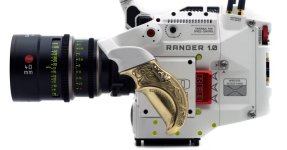
I really like the attachment points/rosettes for the handles on the Ranger "Platform". In other words without handles the Ranger Camera can/could /will be mounted in a more sophisticated and precise "Orientation" mounts. It's a frustration of mine that most "off the shelf" cameras only mount at one point or surface which is not good for rotating a camera through two or three axes of rotation as a single low point or surface for mounting far away from the center of gravity causes unwanted extra vibrations and small deflections/mechanical distortions. So for me the position of those attachment points (on the Ranger) means (theoretically) we can use such a camera in a far more precise and robust way. I think people forget that vibration (even very small angular vibration) can spell "death" to technical photography where every "pixel" counts especially for higher res/number of pixel shots. Having well placed large connection points really helps to iron things out. I really like the fact that these guys (GDU) are breaking out of the mold to enable more diverse and perhaps more meaningful applications outside of the "Biz"/entertainment industry.
https://en.wikipedia.org/wiki/Ranger_7#Spacecraft_design
[Interesting that this Wikki page discussing how Ranger 7 (in 1964) sent images back of the moon; discusses (first paragraph) how six VIDICON television cameras were used , wide angle and narrow angle set ups on different channels].