Welcome to our community

Be a part of something great, join today!

  • Hey all, just changed over the backend after 15 years I figured time to give it a bit of an update, its probably gonna be a bit weird for most of you and i am sure there is a few bugs to work out but it should kinda work the same as before... hopefully :)

The Gentleman's Underwater Bubble Blower Thread

Well naturally as things go again... Travel and the weather is just awful.. Try number 6 LOL...

Somebody please explain this?

Maybe will get to to film some sharks who knows?
 
Working with some European clients, does anyone out there have a reliable insurance policy for underwater gear from a European source?
 
Here's part 2 of the trailer for our 30 minute episode filmed at Ginnie Springs:


OCEAN PLANET 3D

OCEAN PLANET 3D

It's just bloody brilliant to see Ross, Markus and Cameron on location with DEEP ATOM.

Ocean Planet 3D on Location 1.jpg Ocean Planet 3D on Location 2.jpg Ocean Planet 3D on Location 3.jpg
 
I use Alan Chapman & James for all my gear. Never had to make a claim so I haven't experienced that side of them but they have always been helpful and patient. There are basically two companies that most people go with, that I know of at least - and I'd be interested to know of others - in the Nat His side of things in the UK - AC&J, and what was called Torribles but I think is now called Quartz.
 
Rudi, that is very dramatic stuff. I'm to film an upcoming championship free dive event shortly; moment-points, heart-breaks, and hard-won victory, duly noted. Thanks.
 
I use Alan Chapman & James for all my gear. Never had to make a claim so I haven't experienced that side of them but they have always been helpful and patient. There are basically two companies that most people go with, that I know of at least - and I'd be interested to know of others - in the Nat His side of things in the UK - AC&J, and what was called Torribles but I think is now called Quartz.

Cheers Hugh, will pass it on to the client, hopefully he can manage a policy. This gear is obscenely expensive to buy, not many of the small guys can do that twice, and still keep the house and wife.
 
Here's part 2 of the trailer for our 30 minute episode filmed at Ginnie Springs
WOW... I almost held my breath through the dive.... such a subtle suspense!
 
Hi Rudy you didn't mention how large a dome port you use your Tokina 11-16 and +2 diopter with. I assume at least 8" and would larger diameter be better for a rectalinear lens like this one?

- Use a diopter. Let me put it better: use a diopter. Perhaps a simpler explanation might work best: use a diopter! It baffles me how so many people using rectilinear lenses, the majority in fact, do not know or do not care, for the use of diopters. My Tokina 11-16 lives permanently mated to a B&W +2 diopter, and next week, I'll be testing with a +3. Diopters are misunderstood in that most people believe they only work to allow lenses to focus closer, which they do although most modern lenses like the 11-16 do not need that help, but more importantly, a diopter acts as a divergent element that counteracts the effects of the dome, which is a convergent element. Those who have dismissed rectilinear lenses while never using a diopter on them are doing themselves great disservice. If you plan on shooting a rectilinear behind a dome, then a diopter is a MUST. That is actually not open to interpretation as the use of color filters is, that is the law of the land, and if you don't believe me, go ahead and try it out. Conclusion: use a diopter!
 
Last edited:
Whale footage at 48fps shot with Tokina 10-17 in new Nauticam "NA Rossa" housing

Whale footage at 48fps shot with Tokina 10-17 in new Nauticam "NA Rossa" housing

Thought some of you would like to see some footage I shot a few weeks ago on the Silver Bank in the Dominican Republic for a feature film I am working on called "Johanna and the Whale" (yes she does get swallowed but not here). It was all shot on the new Nauticam "NA Rossa" housing on an Epic in 4K at 48fps. The visibility was only about 50 feet at best, but with a little Redcine magic it didn't look too murky.

I love the housing. I love the manual actuators for all the buttons on the side handle whose functions I reassigned for best underwater purposes. And as you can see from my new avatar picture, the whales let me get pretty close thanks to the expert assistance of Tom Conlin of Aquatic Adventures.

https://www.youtube.com/watch?feature=player_embedded&v=4ZZfJXzwXtE#!
 
Hi Rudy you didn't mention how large a dome port you use your Tokina 11-16 and +2 diopter with. I assume at least 8" and would larger diameter be better for a rectalinear lens like this one?

- Use a diopter. Let me put it better: use a diopter. Perhaps a simpler explanation might work best: use a diopter! It baffles me how so many people using rectilinear lenses, the majority in fact, do not know or do not care, for the use of diopters. My Tokina 11-16 lives permanently mated to a B&W +2 diopter, and next week, I'll be testing with a +3. Diopters are misunderstood in that most people believe they only work to allow lenses to focus closer, which they do although most modern lenses like the 11-16 do not need that help, but more importantly, a diopter acts as a divergent element that counteracts the effects of the dome, which is a convergent element. Those who have dismissed rectilinear lenses while never using a diopter on them are doing themselves great disservice. If you plan on shooting a rectilinear behind a dome, then a diopter is a MUST. That is actually not open to interpretation as the use of color filters is, that is the law of the land, and if you don't believe me, go ahead and try it out. Conclusion: use a diopter!

Wondered your opinion on whether to use one of the more expensive corrected diopters (that generally give a flatter field) or just use the standard diopters since as you say we are trying to offset the convergence of the dome, so the cheaper version might do this better?
 
Some nice humpback footage JR ...and a nursing sequence as well. Must have been a pretty relaxed cow and calf. Always nice to get those moments. Thanks for sharing.

Thought some of you would like to see some footage I shot a few weeks ago on the Silver Bank in the Dominican Republic for a feature film I am working on called "Johanna and the Whale" (yes she does get swallowed but not here). It was all shot on the new Nauticam "NA Rossa" housing on an Epic in 4K at 48fps. The visibility was only about 50 feet at best, but with a little Redcine magic it didn't look too murky.

I love the housing. I love the manual actuators for all the buttons on the side handle whose functions I reassigned for best underwater purposes. And as you can see from my new avatar picture, the whales let me get pretty close thanks to the expert assistance of Tom Conlin of Aquatic Adventures.

https://www.youtube.com/watch?feature=player_embedded&v=4ZZfJXzwXtE#!
 
Thanks for the compliments, appreciated.

Re: Diopters. I use a B&W + 2 diopter with the 11-16 Tokina with an 8" dome. A +3 almost eliminates all corner softness but renders the 11-16 unable to focus on the farther end of the focus plane so unless your backgrounds are no more than 5-6 ft from your foregrounds, then the deeper portions of the image will be out of focus. Even after changing back focus to compensate. So a + 2 is the best compromise. B&W makes the best diopters by far, with beautiful Schote glass, link here: http://www.bhphotovideo.com/c/product/10084-REG/B_W_65076085_77mm_Close_up_NL_2.html Attaches to the front of the lens on the filter thread. Reducess FOV slightly, I'd say a .18 decrease.

Having said that, the combination of this lens, as well as the Nikon 10-24 (which is slower than the Tokina but NOTICEABLY sharper from corner to corner) works well behind an 8" dome, but it needs something bigger to look its best, ideally a 9.25" (230mm) dome or even a 10" dome (240mm) I believe the Amphibico Rouge and the Nauticam Na Rossa are the only two housings that currently allow the use of 9.25" domes (the Nauticam via a Zen dome) and none allows the use of the 10"dome, which if I'm not mistaken, Sea & Sea is the only company to market one currently. As I use Gates, I'm limited to an 8", which again, looks better than without the diopter, but it is only a marginal improvement really.

I am happy to report that the first prototype of my corrected underwater optic is ready for testing, and this design should almost eliminate corner softness. I have received the first unit and I'm in the process of having it fitted to a housing for in-water testing. After much work, I decided to go the route of a corrected dome that fits several lenses, namely those in the 8-16 range, with its sweep spot being in the 8-12mm range. The unit is less than 6" in diameter but I'm confident that the final models will be at around 4.5". A +1 diopter may be needed with some lenses since MFD will shift significantly closer to the lens. I will share more info when I have it, but right now, I feel enthusiastic that we may have achieved something which may indeed be a SIGNIFICANT improvement in sharpness of rectilinear lenses underwater, and as it isn't a whole optic in its own but just a dome, it should be relatively inexpensive. More to come later as I have some precise data.

BTW, the lights you see used in that video are actually a good find. They are Mangrove Aditech VC-4L6, putting out about 4300 lumens for around 50 minutes on a full charge. They only cost $950 a piece, cheap compared to similar units, and though they are unrefined and rough on the edges (literally) they do the job well and are also small enough to be used hand held as you see my wife diving around with one of them. Their CR is not as accurate as a Gates VL24, but again, they are a smaller, cheaper alternative that works well. Their temperature is also noticeably warmer than any of the Sola lights, I'd say in the 5400K range. I've been using three of them spaced out on a long arm over my housing and I'm happy with the results, the ~ 13,000 lumen output more evenly spread out with three heads as opposed to two. I think ReefPhoto has them for sale, and if I'm not mistaken, Ryan, the owner, posts on this thread now and then.

Anyway, back to the drawing board.
 
I figured I would share bit of what I shot down in Australia it was pretty interesting. Vis was awful... I didn't get to do what I really wanted to do, weather was terrible, I left a regulator set at the damn dive shop LOL.. Its still there mind you...

But I made the best of what I could with the situation I had.


Rudi, I am pretty pleased with my keldan's they cost a bit more but thats what I use. Thats what I lit the sharks with in the video above.
 
Use a diopter. Let me put it better: use a diopter. Perhaps a simpler explanation might work best: use a diopter! It baffles me how so many people using rectilinear lenses, the majority in fact, do not know or do not care, for the use of diopters. My Tokina 11-16 lives permanently mated to a B&W +2 diopter, and next week, I'll be testing with a +3. Diopters are misunderstood in that most people believe they only work to allow lenses to focus closer, which they do although most modern lenses like the 11-16 do not need that help, but more importantly, a diopter acts as a divergent element that counteracts the effects of the dome, which is a convergent element. Those who have dismissed rectilinear lenses while never using a diopter on them are doing themselves great disservice. If you plan on shooting a rectilinear behind a dome, then a diopter is a MUST. That is actually not open to interpretation as the use of color filters is, that is the law of the land, and if you don't believe me, go ahead and try it out. Conclusion: use a diopter!

What do you mean by "the law of the land"? :confused5:

Are you able to achieve better than standard definition quality across the sensor?

The fact is that diopters do not correct image plane curvature or astigmatism introduced by the dome and generally introduce additional chromatic aberrations and astigmatism at such wide angles of view, further reducing contrast. The role of a diopter in a dome port system is to assist the lens with close focusing on a virtual plane that is projected just inches in front of the dome.

Can you elaborate how you are testing and what the actual results are?

Having said that, the combination of this lens, as well as the Nikon 10-24 (which is slower than the Tokina but NOTICEABLY sharper from corner to corner) works well behind an 8" dome, but it needs something bigger to look its best, ideally a 9.25" (230mm) dome or even a 10" dome (240mm) I believe the Amphibico Rouge and the Nauticam Na Rossa are the only two housings that currently allow the use of 9.25" domes (the Nauticam via a Zen dome) and none allows the use of the 10"dome, which if I'm not mistaken, Sea & Sea is the only company to market one currently. As I use Gates, I'm limited to an 8", which again, looks better than without the diopter, but it is only a marginal improvement really.

Rudi, We had and offered a 12" dome for five years now :)

I agree that a diopter would only make marginal improvement, if any. It largely depends on the close focus performace of the taking lens and can be easily tested without the actual dome in the system.

I am happy to report that the first prototype of my corrected underwater optic is ready for testing, and this design should almost eliminate corner softness. I have received the first unit and I'm in the process of having it fitted to a housing for in-water testing. After much work, I decided to go the route of a corrected dome that fits several lenses, namely those in the 8-16 range, with its sweep spot being in the 8-12mm range. The unit is less than 6" in diameter but I'm confident that the final models will be at around 4.5". A +1 diopter may be needed with some lenses since MFD will shift significantly closer to the lens. I will share more info when I have it, but right now, I feel enthusiastic that we may have achieved something which may indeed be a SIGNIFICANT improvement in sharpness of rectilinear lenses underwater, and as it isn't a whole optic in its own but just a dome, it should be relatively inexpensive. More to come later as I have some precise data.

That's great news. I look forward to see some MTF charts and CA measurements across the frame. I'm happy to help with running the test frames through Imatest (fully automated process).
 
Greg,

Keldans are great lights, the comparable model to this Mangrove retails for $2,200 instead of $900, big difference. I was suggesting them as a cheap, but still good quality, alternative to other better lights. Underwater lights are one of those things that feel astronomically priced to me, given how cheap LED and the new battery technologies are. People charge what they feel they must for their products, but I feel perspective was tied up to a heavy weight and dropped to the bottom a long time ago when it came to pricing some underwater things....

Pawel,

Yes, I will call upon you when I have some images ready. This is just our first prototype and I suspect that we will want to add extra elements to help improve contrast, this outer one should just help with the bending of the light that gets exaggerated at the corners, so some work will remain I'm sure. BUT we are on the right path. As I said, if Nikon could figure this out over 40 years ago, it is not impossible to do the same nowadays, and in fact, once we understood certain things, coming up with the right formulations of glass and what have you has not been that hard...
 
Very interesting Rudi, probably a little early in the game, but what are you thinking of retailing your new dome port for, and would you be able to configure the mount for a Rouge bayonet?

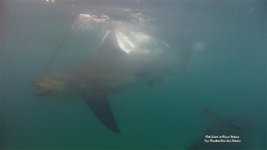
Attached pic found rifling through my files, dropped a piece of fish and a pole-mounted GoPro over the side at Bimini Marina, set upon by a huge Bull not ten seconds later. Scary place :-)
 

Attachments

  • Bull Shark lo.jpg
    Bull Shark lo.jpg
    17.9 KB · Views: 0
Back
Top