Welcome to our community

Be a part of something great, join today!

  • Hey all, just changed over the backend after 15 years I figured time to give it a bit of an update, its probably gonna be a bit weird for most of you and i am sure there is a few bugs to work out but it should kinda work the same as before... hopefully :)

Soderbergh is a wild man...

Status
Not open for further replies.
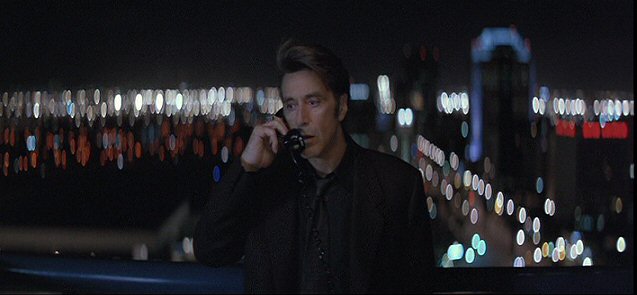
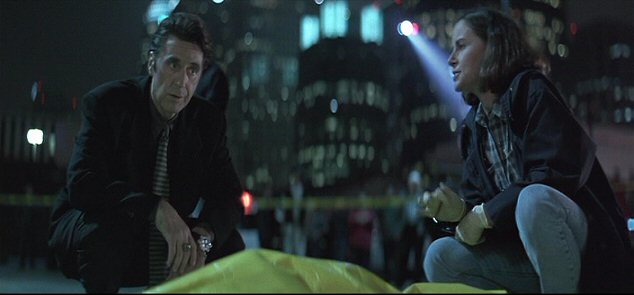
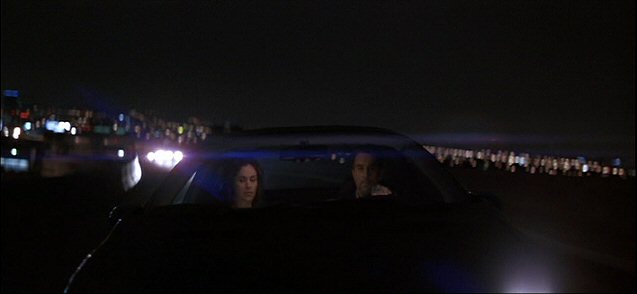
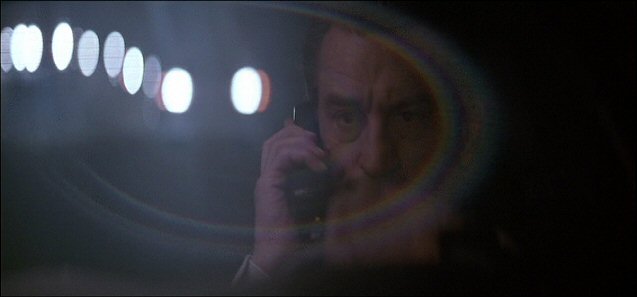
"Heat" is a good example of an anamorphic movie with a lot of low-light night exterior scenes; those interested should check it out:

heat2.jpg


heat3.jpg


heat4.jpg


heat5.jpg
 
Thank You David. A Pleasure As Always!
 
A couple other movies some might remember that just wouldn't have been the same without anamorphic lenses...

Sorry 'bout the crap quality. Where can you find good frame grabs anyway?
 
I'm not sure I understand the question -- when using 2X anamorphic lenses on the RED, you'd use the full height of the sensor, you just don't need the full width. I'm guessing the whole (enabled) portion of the sensor is being recorded but that it's being cropped on the sides to get back down to 2.39, probably in post, I'm not sure you can pick how much of the sensor to record.

I just caught the post I missed by Jim that Soderberg was using C-Series Panavision lenses -- so I guess he must have installed a PV lens mount on the RED?

Is the height of the sensor the same height as 35mm?
 
Out-of-focus backgrounds get more than the 2X compression so look skinny, stretched, and as you rack-focus, you can see the optical compression/squeeze change, creating "breathing."

Now I understand why in the movie 'Identity', the scene where Rhodes (Liotta) approaches Paris (Peet) by the vending machine, the CU rack-focus breathes substantially. This has been on my mind for a long time. It was by no means a bad choice of lens on a big budget movie.

Thanks for the education and examples David.
 
Not to hijack the thread, and I'm sure I've seen it asked before, but since we're on the subject...How hard/expensive/inconvenient would it be to cut the Mysterium in a full height 4:3 aspect ratio to make a version of the camera for use with 2x anamorphics?

I'm sure that there'd be some intrest for it, especially at rental houses that are buying multiple cameras.
 
Not to hijack the thread, and I'm sure I've seen it asked before, but since we're on the subject...How hard/expensive/inconvenient would it be to cut the Mysterium in a full height 4:3 aspect ratio to make a version of the camera for use with 2x anamorphics?

I'm sure that there'd be some intrest for it, especially at rental houses that are buying multiple cameras.

I've asked that question a bunch of times.


*crickets*


While big directors are using these lenses to shoot BIG movies (Transformers is about as big as it gets!) I think you'd be crazy to dismiss the idea.
 
His other anamorphically-lensed movie (as a DP/director) was "Solaris", which was some of his best work photographically.

Of course, I'd still love to see someone make a set of 1.33X anamorphic lenses for use on 16x9 sensor cameras...


He also did "Bubble" anamorphically. He shot that on an F-900... i'm not sure if he just cropped the image or what, but it looked pretty good.
 
The RED sensor should be similar in size to a 3-perf 35mm frame, which is also 16x9. What this means is that a 40mm anamorphic C-Series lens on the RED camera is slightly more telephoto than on a 4-perf 35mm camera, more like the view of a 50mm anamorphic lens once everything is cropped on the sides back to 2.39.

Truth is that the trend is away from 1.33 4-perf 35mm photography except for anamorphic photography, which maybe constitutes a quarter of all 2.39 movies made, and those constitute about half of the Hollywood product (and much less of the indie features.) Many features and most TV shows using 35mm are using 3-perf, which is native 16x9.

So building a 4x3 sensor camera just to accommodate anamorphic photography (and blow-ups to IMAX maybe) seems to be catering to a niche. As for 4x3 standard def TV, cropping the 4K sensor from 16x9 to 4x3 is more than enough resolution to work with. High-end commercials, for example, still shoot 4-perf 35mm but they don't need 4K resolution for the final end product if destined for NTSC/PAL (and if destined for theatrical and HD projection, they don't need 4x3).

4x3 sensors would be nice... but it makes more sense to start building 1.33X anamorphic lenses to cover those owners who want to fill a 16x9 sensor with a 2.39 image.

And even cropping the 4K 16x9 sensor to 4x3 just means that you're working with essentially a 3K Bayer-filtered camera, which some might not think is the end of the world.
 
I'd heard that Panavision bought something like 5 Red cameras, so perhaps Soderbergh is simply using some of the Panny cameras. though they will, on occasion, adapt a camera for a director or cameraman who has brought them much business over the years. david lynch owns a Mitchell Mark II which, when he does a Panavision movie, Panavision will change out the mount to accept their lenses. it only gets used for effects shots and some 2nd unit.

David, maybe you know more about this... some years back (12 or so?) i was working as an AC and a cameraman told me that several companies... i remember it being Panavision and Kodak but i could be wrong... had a screening of a test comparing anamorphic to super 35 for a large group of cameramen and directors. at that time almost everyone was shooting super 35, mostly i think because of the influence of vittorio storaro and tony scott. the test was to show the difference in quality between anamorphic and POST-OPTICAL super 35... the optical being necessary at the time in order to squeeze the film so as to be projected with anamorphic lenses. apparently the optical lessened the quality so much that it was extremely clear that anamorphic was the better format. that started a huge trend back to anamorphic, but panavision and other rental houses weren't ready for it. the lenses were old and poorly maintained, and there just weren't that many in existence. which is why, i think, that now that you can skip the optical and do a much higher-quality DI to squeeze the image, the trend is back to super 35.
 
The RED sensor should be similar in size to a 3-perf 35mm frame, which is also 16x9. What this means is that a 40mm anamorphic C-Series lens on the RED camera is slightly more telephoto than on a 4-perf 35mm camera, more like the view of a 50mm anamorphic lens once everything is cropped on the sides back to 2.39.

Truth is that the trend is away from 1.33 4-perf 35mm photography except for anamorphic photography, which maybe constitutes a quarter of all 2.39 movies made, and those constitute about half of the Hollywood product (and much less of the indie features.) Many features and most TV shows using 35mm are using 3-perf, which is native 16x9.

So building a 4x3 sensor camera just to accommodate anamorphic photography (and blow-ups to IMAX maybe) seems to be catering to a niche. As for 4x3 standard def TV, cropping the 4K sensor from 16x9 to 4x3 is more than enough resolution to work with. High-end commercials, for example, still shoot 4-perf 35mm but they don't need 4K resolution for the final end product if destined for NTSC/PAL (and if destined for theatrical and HD projection, they don't need 4x3).

4x3 sensors would be nice... but it makes more sense to start building 1.33X anamorphic lenses to cover those owners who want to fill a 16x9 sensor with a 2.39 image.

And even cropping the 4K 16x9 sensor to 4x3 just means that you're working with essentially a 3K Bayer-filtered camera, which some might not think is the end of the world.


Yeah, it's the struggle between asking for something that's technically archaic, and balancing that would the LOOK, which, flaws and all, is attractive enough to make it worth the extra grief for focusing etc.

You have any idea if a set of 1.33:1 anamorphic lenses can retain this look? (specifically the 2:1 vertical stretch in defocused bokeh...?)

Using scope lenses with Red seems pointless to me, if you can't use the full width of wide angle lenses.

R.
 
I'd heard that Panavision bought something like 5 Red cameras, so perhaps Soderbergh is simply using some of the Panny cameras. though they will, on occasion, adapt a camera for a director or cameraman who has brought them much business over the years. david lynch owns a Mitchell Mark II which, when he does a Panavision movie, Panavision will change out the mount to accept their lenses. it only gets used for effects shots and some 2nd unit.

David, maybe you know more about this... some years back (12 or so?) i was working as an AC and a cameraman told me that several companies... i remember it being Panavision and Kodak but i could be wrong... had a screening of a test comparing anamorphic to super 35 for a large group of cameramen and directors. at that time almost everyone was shooting super 35, mostly i think because of the influence of vittorio storaro and tony scott. the test was to show the difference in quality between anamorphic and POST-OPTICAL super 35... the optical being necessary at the time in order to squeeze the film so as to be projected with anamorphic lenses. apparently the optical lessened the quality so much that it was extremely clear that anamorphic was the better format. that started a huge trend back to anamorphic, but panavision and other rental houses weren't ready for it. the lenses were old and poorly maintained, and there just weren't that many in existence. which is why, i think, that now that you can skip the optical and do a much higher-quality DI to squeeze the image, the trend is back to super 35.


Michael Bay shot Bad Boys 2 in super35, and hated it so much, he's gone back to anamorphic lenses on every movie since.
 
And even cropping the 4K 16x9 sensor to 4x3 just means that you're working with essentially a 3K Bayer-filtered camera, which some might not think is the end of the world.

Also note that the surface area (or number of pixels) that is used is the same if you're ending up with 2.39 aspect ratio. Shooting anamorphic you give up about 25.2% of the sensor by not using the right and left edges of the sensor. Shooting standard you give up about 25.6% by not using the top and bottom of the sensor. Basically a wash.

Currently, because Red is capturing only a 2.0 aspect ratio (4K x 2K), shooting anamorphic to end at 2.39 means giving up a fair amount of resolution, but that will change once the camera allows recording to a 1.78 aspect ratio.

Edit addendum:

Quick correction after reading a little about anamorphic lenses: Since 2x squeeze is what these lenses typically do, the aspect ratio used on the sensor when shooting anamorphic would be 1.19 (not 1.33 as presumed above). Given that, shooting anamorphic on a Red will be giving up about 10% resolution as compared to non-anamorphic shooting (once 1.78 aspect ratio recording becomes available).
 
I've heard rumors that Panavision is building a set of 1.33X anamorphic lenses, but they are putting the anamorphic element in the back to keep the size of the lenses down -- unfortunately (for some), this eliminates the artifacts of front-element anamorphic prime lenses (the stretched background lights, the blue horizontal flare, etc.)

Dalsa is building a set of 1.22X anamorphic lenses for their cameras, with front anamorphic elements -- judging by the one lens they built so far (a 50mm I think) it exhibits classic anamorphic attributes but just a lot more subtle, less distorted.

Joe Dunton talked about building a set of front-element 1.33X anamorphic lenses (he thought Panavision's idea of putting the anamorphic element in the back was a mistake), but now that he's been bought by Panavision, I don't know what will happen to that plan.

So my guess is 1.33X front-element anamorphic lenses will be mildly less distorted than 2X anamorphic lenses, but also that shooting them more wide-open will probably get you enough of that distortion -- in other words, if you like the distortions of a 2X anamorphic lens at T/2.8 (which can already be pretty obvious) then I'm sure that using a 1.33X anamorphic lens at T/2.0 will be similar in distortions, just maybe not quite so skinny in the b.g. But in general with an anamorphic lens, the distortions keep increasing the more you open up the lens.

You have to understand that creating a front-element anamorphic prime lens basically doubles the size & weight of a spherical lens, which is why Primo anamorphics and the new V-Series Hawks are so large, and the Arriscopes. JDC keeps the size of their anamorphic lenses small by working with the old S2/3 Cookes as a starting point. Using a modern Zeiss Master Prime as a starting point would create a giant anamorphic prime lens if you put the anamorphic element in front, since the anamorphic elements therefore have to be bigger than the front spherical elements.

Hawk though has some design that involves putting the anamorphic element closer to the middle, though I don't know how that works.
 
Damn this thread is FASCINATING!

I absolutely adore the look of old-fashioned anamorphic photography. To me, the older lenses look the best even though they're technically the worst. Odd, isn't it?

I have to admit, though, that it would be hard giving up the ability to reframe the shot in the post. It certainly puts more pressure on the operator to get the shot right on set, doesn't it?
 
Unless you're doing an action movie where uncontrolled things happen in front of the camera, framing a shot properly at the time of shooting is not the hardest thing in the world to do... movies have managed to do that for over 100 years for the most part.

I've shot four features in anamorphic and never particularly had to reframe a shot, other than on one film where the editor added a few slow digital creep-ins that worked OK. If the mic dips in, you do another take.
 
Status
Not open for further replies.
Back
Top