Welcome to our community

Be a part of something great, join today!

  • Hey all, just changed over the backend after 15 years I figured time to give it a bit of an update, its probably gonna be a bit weird for most of you and i am sure there is a few bugs to work out but it should kinda work the same as before... hopefully :)

shut up and shoot that Scarlet

Looks good to me Donnie.

Impressive video too John. I like the image quality and camera work, and how you cut it all together with the music to tell the story of the 'warriors' fighting their way to victory. Maybe you should post it in the 'Shot On RED' section to get more views.
 
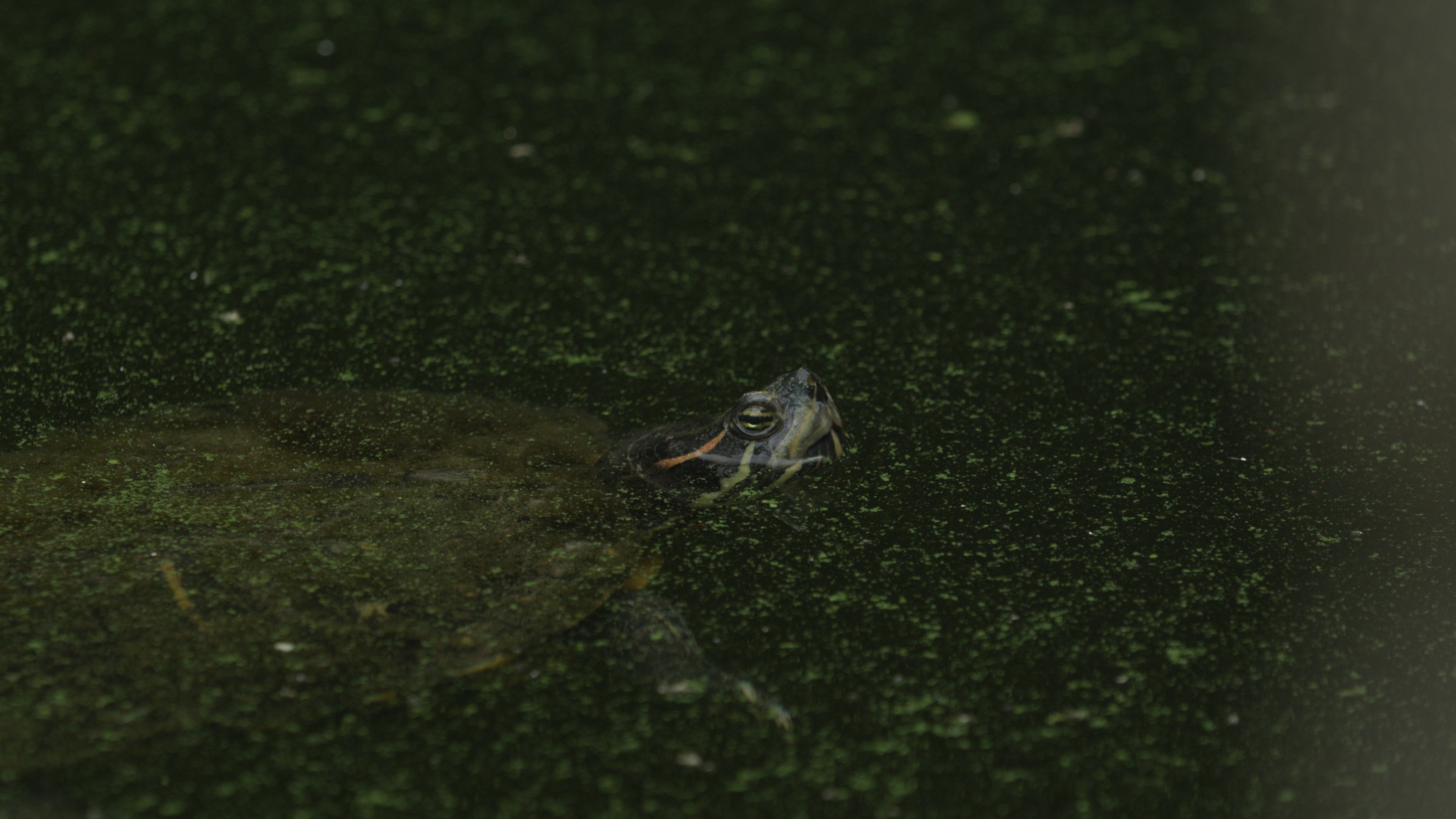
Scarlet at 3K + Canon 70-200 IS. Love the nature.

turtle.jpg
 
Thanks Donnie. Likewise, keep shooting and sharing.

Nice picture Samir. It's like a visual puzzle.
 
Great work. Did you run any any low light issues when using the 24-105 F4? I ask b/c I am currently shooting Scarlet X with 16-35 2.8, 50 1.4, and 70-200 1.8. I feel I need the 24-70 but was leaning towards the 2.8...after seeing your video, I'm thinking I can save a few bucks and go with the F4. Any thoughts?

Raymond, some of those f/4 shots are seriously at 2000 ISO and still look good. Yes there is noise, but I'm still pretty happy with the result. That being said, I would have preferred to have a 2.8 lens so I don't have to do that in those situations.
 
Scarlet-D
STH-OLPF
Leica 135mm Tele-Elmar - M
Schneider Cinelux ES 2xANA Projection Lens
FMLens Focus Module
.9ND
f/8
Adjusted with Redcine-X.


Last edited:
Scarlet-D
STH-OLPF
Leica 90mm Elmarit - M
Schneider Cinelux ES 2xANA Projection Lens
FMLens Focus Module


...
 
Last edited:
Some of the last Scarlet-X frames I shot -


In 3D, via the cross-eyed viewing technique -


Contrast, colour and cropping -


Last edited:
Nice pics Justin.


Some Scarlet-D variations.

Default ISO800/5600K settings -


Adjusted -


:smiley:
 
Last edited:
No worries Andrey. Pretty sure the 3d metal dog pic is the right way round though.


Some more variations on a simple setup using familiar objects...

Scarlet-D
STH-OLPF
Leica 90mm Elmarit - M
Schneider Cinelux ES 2xANA Projection Lens
FMLens Focus Module
RedCine-X
Irfanview


Last edited:
Beautiful pics Samir.

Here are some Scarlet-MX frames of my own from the archives -


I guess the flip-side of someone being crazy to sell their camera so cheap, is that it'd be crazy for someone else not to buy it.

Imo the Scarlet's were worth it at full price, so getting one for less than that is a bargain. Which also means, as you say, they're still worth holding onto if you can make use of them.
 
Last edited:
Hi Christopher.


The workflow for these pictures starts with a sharp lens, focused properly on a well-lit and exposed, adequately contrasty subject, with the image captured as a 4K or higher R3D.

The R3D's are then taken into REDCINE-X, where the still frames are selected and colour-corrected as close to final look as possible, then exported as highest quality TIFF's, with no other effects applied.

The TIFF's are then viewed in Irfanview (the freeware photo-viewer), where they're often further colour-corrected and/or cropped if need be, then bordered or letter-boxed (often just to provide a reference black-level that can be compared to the levels inside the frame).

At the last stage before being bordered or letter-boxed they're sharpened for the first and last time with Irfanview's crude-but-effective default sharpening effect (if it's too sharp, undo it, if it's not sharp enough, too bad, live with it or ditch it).

The finalized TIFF's are then saved, without re-sizing, as highest quality JPG images.

The JPG images are then uploaded to ImageShack, which converts the files to PNG images, with no re-sizing or alterations applied.

The ImageShack PNG files are then embedded full-size here on Reduser, where they get scaled down to an 800x??? resolution.


I should add, this isn't a foolproof workflow for getting decent quality images to show up here, as some images just don't survive the multiple adjustment and conversion processes without getting too degraded. In a similar way, it's not an ideal workflow for getting the highest quality images in general, as I'll also discard images if they need more corrections or adjustments than what can be done within the limits of REDCINE-X and IrfanView. It's just a fairly quick and easy way of getting from A (the camera) to B (the forums) without losing too much of the original detail, and while still leaving room to play around a bit with the images along the way.
 
Last edited:
Shot this while checking some stuff out the other day. Thought others might find it interesting, as there's been a bit of talk here recently about the RED low-light capabilities and noisiness.

Scarlet Dragon
STH OLPF

Voigtlander Nokton Classic 40mm f/1.4 S.C
Schneider Kreuznach ES Cinelux 2x MC f/2 Projection Lens
FMLens Focus Module

5K 6:5 2xANA R3D
RCX 3240x2700 TIFF Sequence (w/DEB & ADD)
PPro CS6 Nested Stills Sequence
AME Lagarith Lossless 3240x1350 AVI
MeGUI 100K kbps x264

Shot at f/1.4 with available light only.
No sharpening or noise reduction applied.
Just basic colour and contrast adjustments made in RedCine-X.

Left all the hand-held camera shaking and focus-searching in, as avoiding that wasn't the point of this test.

No sound.


https://youtu.be/pBCUiplzCh8
 
Last edited:
A Scarlet-D frame that stood out to me while I was having a look around with an old (but new to me) lens.

Am still amazed by the basic image-quality sometimes.


And some more random macro -


:smiley:
 
Last edited:
Back
Top