Welcome to our community

Be a part of something great, join today!

  • Hey all, just changed over the backend after 15 years I figured time to give it a bit of an update, its probably gonna be a bit weird for most of you and i am sure there is a few bugs to work out but it should kinda work the same as before... hopefully :)

Shooting in -20C

JanneJansson

Well-known member
Joined
Aug 14, 2008
Messages
1,070
Reaction score
0
Points
0
Location
Sweden
Website
www.sfe.se
Hi, I have just done a shoot in Sweden in -20C and all working perfect!
There are some you must do to make it work. I keept the harddrive at about +30C at all time. I had the drive in my pants when we where not shooting. I had the camera on 12V car battery and turned on at all times.

The camera was so cold, that the fans did not turn on for about 1h. But another surprise is that when all fans are off, the fan STARTS when record starts. Normal is that the fan go slower, but I guess bug testing in -20 is not normal :)

The changing in temp is dangerous. The gear must go slow from hot-cold-hot so you don't get condensations. ..and be very careful, all is very sensitive and fragile in cold temp.

But the R1 is a TANK!!

coold2.jpg


coold1.jpg
 
Janne,

thanks for a nice report because is good to know some things before you jump in to shoot at extreme cold weather ...
 
non-stabilized 12V car batt to lemo power in??

this sounds more dangerus than -20º
 
non-stabilized 12V car batt to lemo power in??

this sounds more dangerus than -20º

A car battery is pretty stable and as far as I know the voltage falls right in the safe zone of powering the camera. Have had the camera powered like that many times.

Maybe you are thinking of non-stabilised generator power, which is something completely different.
 
non-stabilized 12V car batt to lemo power in??

this sounds more dangerus than -20º


hehe, should be safe. 12v is stabilized and exact same as the power out from the AC-DC converter. Camera run 10h on a batt and I usually have 3 with me.

Have you have any problem with car batts?
 
Looks like you didn't use the EVF :)

Isn't it dangerous to switch the drive from cold to warm all the time? How can you take it out and put it in your pocket all the time without changing the temperature constantly?
 
Looks like you didn't use the EVF :)

He probably didn't want to put his face against it. He he he! :)

As far as I understand you don't want HDDs to get too cold, but I wouldn't worry too much about the rapid changes in temperature since the internals are what's important and the swing wouldn't be so rapid with the plastic casing and all. Just don't let it get cold through and through and then try to make it start spinning. There must be lubrication that could freeze and that could destroy the articulation of the arm or the mounting of the disc if you know what I am trying to say.

There are custom travel/packing pouches for Red accessories, posted by the manufactured on a thread somewhere. They are basically snug cloth pouches. I requested the design of one for Red Raids that can be un-zipped in a way that you can keep it mostly covered but also plug it in, and, possibly mount it as well. That could help slow down the cooling, and trap the heat from the HDDs and RAID controller. Coupled with keeping them in your internal jacket pocket while standing by should carry you through the coldest of days.

That said I am planning on using nothing but Red RAM and CFs to shoot in Fargo and Detroit Lakes, Minnesota, in the dead of winter.
 
How did the lens mechanics perform? Did you have and RPPs?

The lens (RED PRO 18-85) performed extremely good. No major difference in drag. I was very careful moving it in to the cold, letting it adjust to the temp slowly.

No, no EVF :) I was afraid the it would perform unpredictable, draw more power, get wrong colors, or just freeze and get damaged.

The LCD almost froze, and was pretty funny looking for a few minutes, but after it heated up it got normal again.


My biggest worry was the flash/HDD. I know freezing a drive is a sure way of destroying it. I did not want to use flash because I was afraid they would get slow in the cold and drop frames. So a HDD in my pants was the safest way I figured :)
 
I have not shot in -20, but I have shot at temps from 10 - 20 f. I was using batteries, and the biggest thing to be aware of is keeping the camera body and the batteries warm. If the camera is too cold before you start it up it will hang on boot up. And having cold batteries shortens their life. But once the camera is powered on and running, it runs like a tank with no issues at all. After the camera is on, there doesn't seem to be a problem with it being in the cold for hours.

Great idea on the car battery!
 
How can you take it out and put it in your pocket all the time without changing the temperature constantly?

It was tricky, but I used my hand and felt the temp of the drive constantly, and adjusted with some cloth around the drive when on camera.
 
Nobody has seemed to notice Janne is standing on ice.

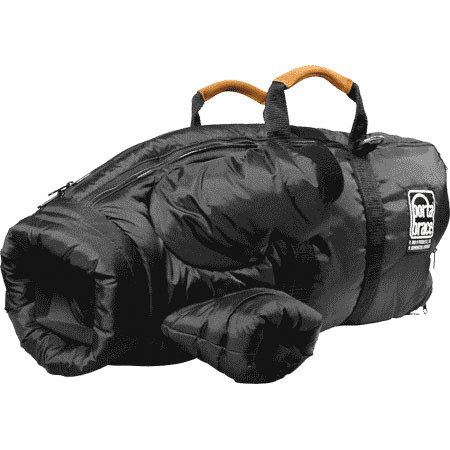
BTW -we have shot as far north as the Artic Ocean -yep, shot right on the ocean...standing on it, kind of like Janne above with a CDN icebreaker in the background (deliberately frozen into the ocean for science experiments). We've used a Porta Brace Polar Bear cover on Sony cams on this and two movies and it worked great. Just pop in the hand warmer pouches and everything's nice and toasty...I haven't checked to see if I can mod this to fit around my R1 yet, although I do need to shoot some winter stuff in Jan.

Alternatively, we have used hair dryers on set hanging off the dolly to give the Sony's and Panny's a little heat blast when there's night shooting. Unconventional? Absolutely.
 
Nobody has seemed to notice Janne is standing on ice.

hehe, that's why I have a floating survival suit on. it was no worry, the ice was at least 7 cm thick ;) If I have time, I probably make a heated/insulated bag for the HDD with just the drive cable sticking out, never exposing it to cold at all. It was a fun shoot and I enjoyed it aloot.
 
I recently was shooting outdoors in michigan, the temps ranged from the teens to the twentys Fahrenheit. I had the classic EVF freeze up so I used the sleve from the Camrade EVF cover that is designed to cover the EVF and put a hand warmer inside it and all problems ceased to exist. I use to tape hand warmers to batteries back in the day when you would light them, the new ones that are chemical based need to be in an enclosed area, like a pocket, to work.
 
Every electronic device has weather and temperature limitations... but you can extend those limitations quite a bit with some careful planning and common sense. Nice to see what smart people CAN make RED do. Great post. Thanks.

Jim
 
yeah the coldest we took it was -25... the talent could not handle it... RED was fine... only the EVF gave us some trouble. To my surprise both the LCD RED monitor and apple display worked fine the entire day
 
Nice to see what smart people CAN make RED do. Great post. Thanks.

Jim

Well put, Jim. With proper planning, there are very few limits to this camera system... or any other. Hell, almost three years later I've still never had one overheat and power down... ever. So many [read: almost all] of the problems that plague people's shoots can be eliminated with knowledge and proper planning. Camera problems, climate problems, accessory problems, power problems, data problems, color problems, consistency problems, workflow problems, apparent resolution problems, focus problems, startup time problems, firmware and hardware bug problems... all of it.

If you're properly prepared for the shoot and environment you're heading into and your DIT possesses the knowledge and experience to fix the hiccups that might pop up on the way ... there will be no problems. Period.

Can I quote you? Oh, you just did. :-) Well said.

Jim
 
Back
Top