- Moderator
- #1

- Joined
- Apr 19, 2007
- Messages
- 13,392
- Reaction score
- 796
- Points
- 113
- Location
- Los Angeles
- Website
- www.phfx.com
Hello all. I've been going through a few hundred test images the last few days and feel this post might be a useful one to share.
Upon taking delivery of Weapon I got straight into shooting. However, I was beginning to feel something was a bit different. Then after further digging and getting intimidate with the camera I discovered there indeed was a difference in the Total Captured Dynamic Range between RED Epic Dragon and Weapon. It seems that RED has found a way to get a bit more out of the sensor, the most obvious changes are a slightly lower noise floor and a bit more highlight detail retention. Which essentially equates to more Dynamic Range.
That got me curious enough to test this. First and foremost I'd like to thank Stacey Spears and SpectraCAL for the use of their DSC Labs Xyla-21 Chart. This allowed me to compare my normal "patch reading" method of measuring Dynamic Range and the Xyla-21 Chart's individual steps for additional confidence in the results. I did a great deal of work here. Reading individual patches, masking off sides of the chart to eliminate glare, composting results, OLPF noise comparisons, gamma experiments, etc.... But there's certain information that I feel is very important towards the practical and technical ways of shooting that I want to share. And I think this not only effects Weapon, but likely other upcoming DSMC[SUP]2[/SUP] style RED cameras. The results found here are accurate within a tenth of a stop btw.
Let's dig in.
What Can Weapon See?
Well that was my first question and I wanted to see exactly what I could dig out of a Weapon image and the Xyla-21. Which led to a rather ludicrous ISO 102400 pushed test using Frame Averaging.

Remember this is a stress test, but yes, Weapon can indeed "see" all 21 stops amazingly. Are those "Usable Stops"? No, not exactly, but it does tell a bit of the story.
Something to remember through all of this, when you see these Xyla-21 frame grabs and graphics all of the images are exposed to not clip in Red, Green, or Blue Channels. Meaning that first cube isn't thrown away and is a "counted stop".
Recommended ISO Range
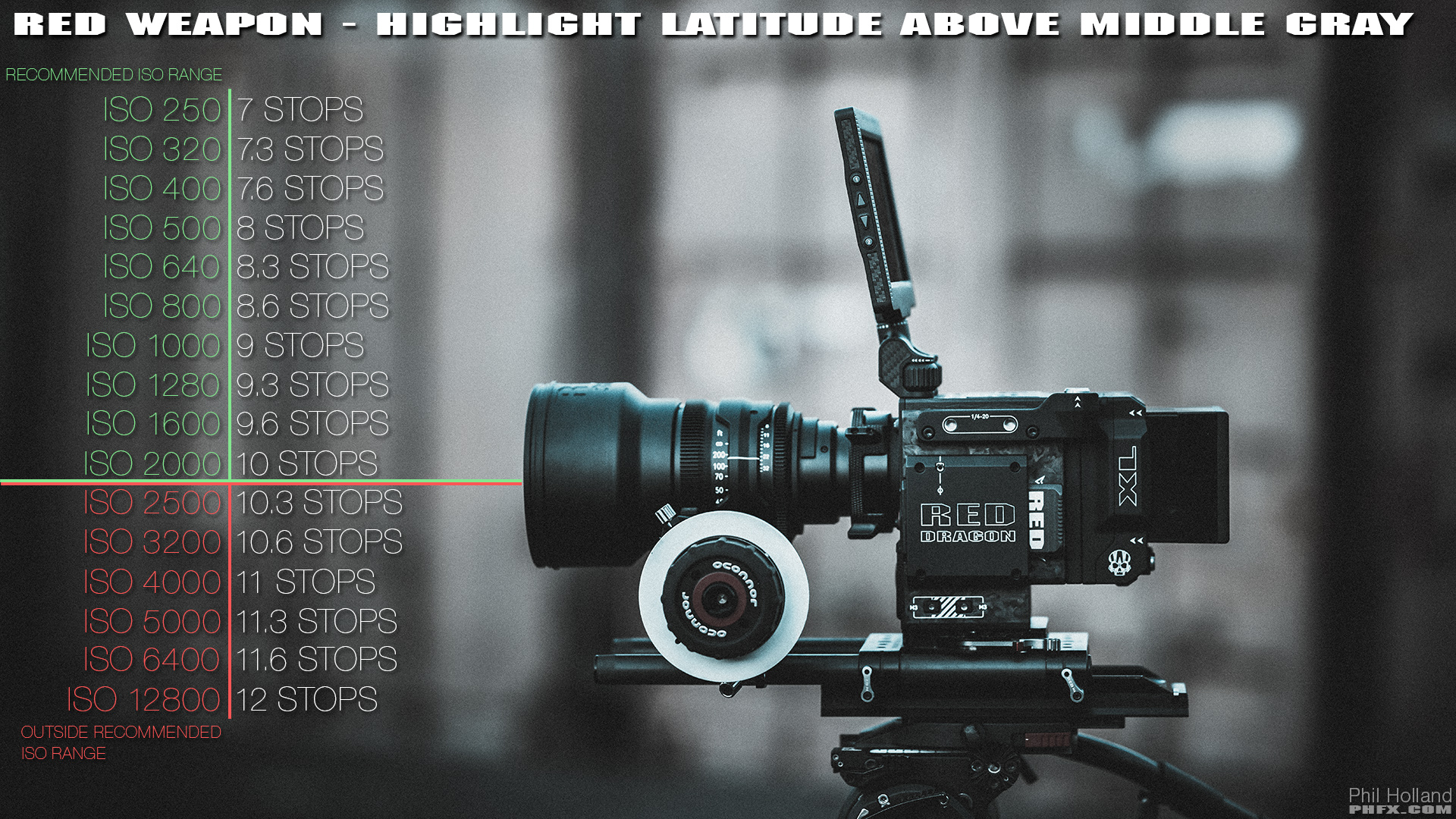
To date RED has recommended an ISO Range of 250-2000 on the Dragon sensor. Though the cameras do indeed go up to ISO 12800. While I personally wouldn't push it that far, after shooting this test footage (specifically the ISO Tests on the Color Chart at the end of the video), you can indeed go beyond the recommended ISO Range and get very usable results.
With Raven on the horizon I feel there's going to be a new audience who don't have a full grasp of how ISO and FLUT work on RED cameras. I don't want to re-tread too much here, but take a look at this graphic if this is new to you:
http://artbyphil.com/phfx/red/dragon/images/phfx_redDragon_ISOFlutBreakdown.jpg
Long and the short of it, RED cameras capture all the potential Dynamic Range possible for a given scene and exposure. RED doesn't apply any in camera noise reduction as they want to maintain the most possible Dynamic Range, Detail, and Color Information without losing it to aggressive lossy image processing techniques.
Total Captured Dynamic Range
RED has famously received a bit of criticism about the 16+ stops of Dynamic Range of the Dragon sensor, but it's something that I've been able to measure in the past:
http://www.reduser.net/forum/showthread.php?111400-Dragon-Flare&p=1322384&viewfull=1#post1322384
Stacey and Gavin also did the Xyla-21 test on Epic Dragon way back when:
http://www.reduser.net/forum/showthread.php?117540-Dragon-Dynamic-Range-Test-21-stop-chart
Weapon is stated to have 16.5+ stops of Dynamic Range.
Let's take a look at ISO 250, 800, 2000, and 6400 REDlogFilm Examples:

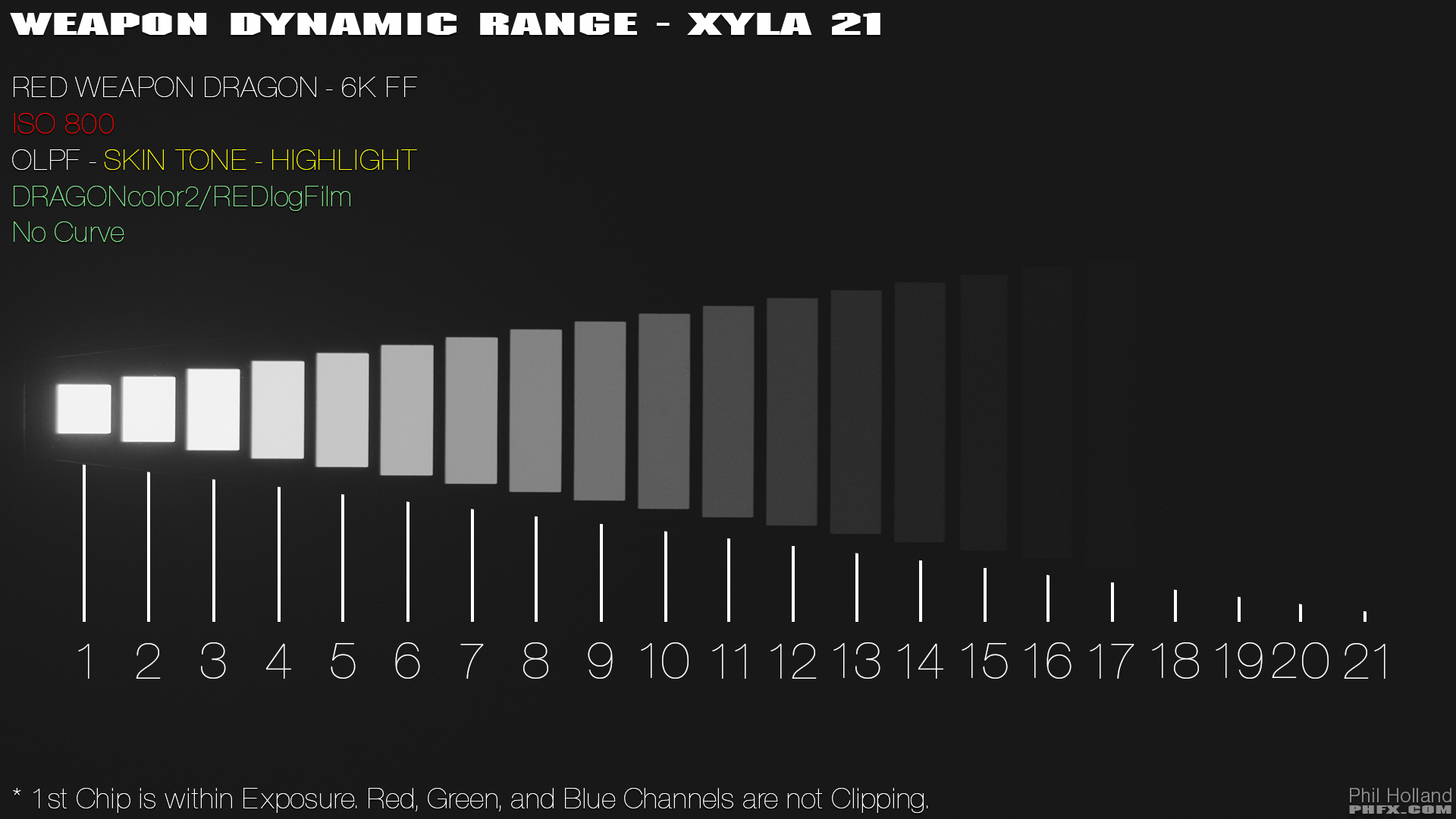


Remember that's REDlogFilm with No Curve applied. On the ISO 250 image on a calibrated display I can see separation down to 17th Captured Stop. ISO 800 down to the 18th, ISO 2000 down to the 20th, and ISO 6400 down to the 21st.
So how much Dynamic Range does Weapon have? For me if we are talking within the Recommended ISO Range of ISO 250-2000 up to 17-20 Captured Stops. Those stops nearing the noise floor aren't going to be the cleanest, but they are a part of the Shadow Roll-Off and reflect what's captured in camera. The safest "real answer" is indeed 16.5+ Stops of Total Captured Dynamic Range.
To show the effect of what happens once we toss a Gamma Curve on there I've also created samples for REDgamma4:
ISO 250
ISO 800
ISO 2000
ISO 6400
And to show the Dynamic Range properties more clearly, here's an image of the Xyla-21 with each ISO Rating shown in REDlogFilm:
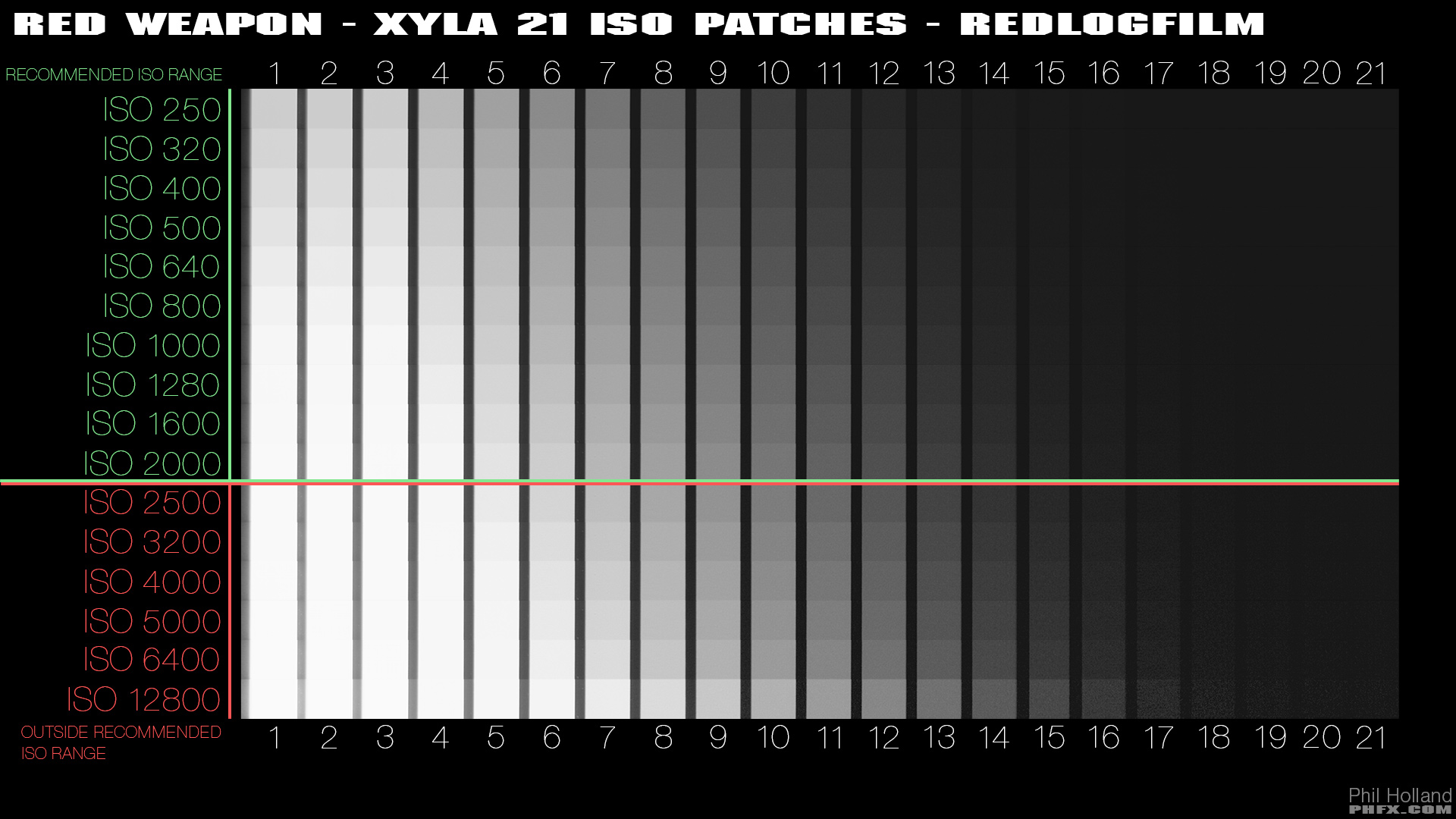
And if you'd like to see it, a link to the REDgamma4 result:
http://www.artbyphil.com/phfx/cinematography/2015_REDWeaponCameraTest/bigs/phfx_REDWeaponTest2015_xyla21_ISOPatches_RG4.jpg
Differences Between the OLPFs
We currently have 3 Optical Low Pass Filter options for standard shooting. Skin Tone - Highlight, Standard, and Low Light Optimized. These 3 OLPFs are tuned in camera to accurately produce a consistent middle gray and fairly close color response.
There are slight differences between the OLPFs however.
All 3 OLPFs "see" about the same into the dark. However, the Low Light Optimized OLPF for instance is cleaner in the shadows when compared to say the Skin Tone - Highlight OPLF or Standard OLPF. The other big difference is how each OLPF's properties effect the Highlight Roll-Off. Also, possible Optical Artifacts are reduced the most with the Skin Tone - Highlight OLPF at the cost of a slightly noisier image.
Here's a few images that show those differences a bit more clearly:

Looking at the brushed steel you can see each of the OLPFs are clipping. Within the circled area you can see the different properties of the Highlight Roll-Off for each OLPF.

To show off the image texture noise it's easiest to go to an extreme ISO like 6400 and look at these Middle Gray through shadow tones for each OLPF. Theses are 100% crops of 6K material. The square next to 3 is Middle Gray. You can see that the STH is noisiest, the LLO is cleanest, and the STD is in the middle between them - though closer to the LLO in my opinion in many ways.
Upon taking delivery of Weapon I got straight into shooting. However, I was beginning to feel something was a bit different. Then after further digging and getting intimidate with the camera I discovered there indeed was a difference in the Total Captured Dynamic Range between RED Epic Dragon and Weapon. It seems that RED has found a way to get a bit more out of the sensor, the most obvious changes are a slightly lower noise floor and a bit more highlight detail retention. Which essentially equates to more Dynamic Range.
That got me curious enough to test this. First and foremost I'd like to thank Stacey Spears and SpectraCAL for the use of their DSC Labs Xyla-21 Chart. This allowed me to compare my normal "patch reading" method of measuring Dynamic Range and the Xyla-21 Chart's individual steps for additional confidence in the results. I did a great deal of work here. Reading individual patches, masking off sides of the chart to eliminate glare, composting results, OLPF noise comparisons, gamma experiments, etc.... But there's certain information that I feel is very important towards the practical and technical ways of shooting that I want to share. And I think this not only effects Weapon, but likely other upcoming DSMC[SUP]2[/SUP] style RED cameras. The results found here are accurate within a tenth of a stop btw.
Let's dig in.
What Can Weapon See?
Well that was my first question and I wanted to see exactly what I could dig out of a Weapon image and the Xyla-21. Which led to a rather ludicrous ISO 102400 pushed test using Frame Averaging.
Remember this is a stress test, but yes, Weapon can indeed "see" all 21 stops amazingly. Are those "Usable Stops"? No, not exactly, but it does tell a bit of the story.
Something to remember through all of this, when you see these Xyla-21 frame grabs and graphics all of the images are exposed to not clip in Red, Green, or Blue Channels. Meaning that first cube isn't thrown away and is a "counted stop".
Recommended ISO Range
To date RED has recommended an ISO Range of 250-2000 on the Dragon sensor. Though the cameras do indeed go up to ISO 12800. While I personally wouldn't push it that far, after shooting this test footage (specifically the ISO Tests on the Color Chart at the end of the video), you can indeed go beyond the recommended ISO Range and get very usable results.
With Raven on the horizon I feel there's going to be a new audience who don't have a full grasp of how ISO and FLUT work on RED cameras. I don't want to re-tread too much here, but take a look at this graphic if this is new to you:
http://artbyphil.com/phfx/red/dragon/images/phfx_redDragon_ISOFlutBreakdown.jpg
Long and the short of it, RED cameras capture all the potential Dynamic Range possible for a given scene and exposure. RED doesn't apply any in camera noise reduction as they want to maintain the most possible Dynamic Range, Detail, and Color Information without losing it to aggressive lossy image processing techniques.
Total Captured Dynamic Range
RED has famously received a bit of criticism about the 16+ stops of Dynamic Range of the Dragon sensor, but it's something that I've been able to measure in the past:
http://www.reduser.net/forum/showthread.php?111400-Dragon-Flare&p=1322384&viewfull=1#post1322384
Stacey and Gavin also did the Xyla-21 test on Epic Dragon way back when:
http://www.reduser.net/forum/showthread.php?117540-Dragon-Dynamic-Range-Test-21-stop-chart
Weapon is stated to have 16.5+ stops of Dynamic Range.
Let's take a look at ISO 250, 800, 2000, and 6400 REDlogFilm Examples:
Remember that's REDlogFilm with No Curve applied. On the ISO 250 image on a calibrated display I can see separation down to 17th Captured Stop. ISO 800 down to the 18th, ISO 2000 down to the 20th, and ISO 6400 down to the 21st.
So how much Dynamic Range does Weapon have? For me if we are talking within the Recommended ISO Range of ISO 250-2000 up to 17-20 Captured Stops. Those stops nearing the noise floor aren't going to be the cleanest, but they are a part of the Shadow Roll-Off and reflect what's captured in camera. The safest "real answer" is indeed 16.5+ Stops of Total Captured Dynamic Range.
To show the effect of what happens once we toss a Gamma Curve on there I've also created samples for REDgamma4:
ISO 250
ISO 800
ISO 2000
ISO 6400
And to show the Dynamic Range properties more clearly, here's an image of the Xyla-21 with each ISO Rating shown in REDlogFilm:
And if you'd like to see it, a link to the REDgamma4 result:
http://www.artbyphil.com/phfx/cinematography/2015_REDWeaponCameraTest/bigs/phfx_REDWeaponTest2015_xyla21_ISOPatches_RG4.jpg
Differences Between the OLPFs
We currently have 3 Optical Low Pass Filter options for standard shooting. Skin Tone - Highlight, Standard, and Low Light Optimized. These 3 OLPFs are tuned in camera to accurately produce a consistent middle gray and fairly close color response.
There are slight differences between the OLPFs however.
All 3 OLPFs "see" about the same into the dark. However, the Low Light Optimized OLPF for instance is cleaner in the shadows when compared to say the Skin Tone - Highlight OPLF or Standard OLPF. The other big difference is how each OLPF's properties effect the Highlight Roll-Off. Also, possible Optical Artifacts are reduced the most with the Skin Tone - Highlight OLPF at the cost of a slightly noisier image.
Here's a few images that show those differences a bit more clearly:
Looking at the brushed steel you can see each of the OLPFs are clipping. Within the circled area you can see the different properties of the Highlight Roll-Off for each OLPF.
To show off the image texture noise it's easiest to go to an extreme ISO like 6400 and look at these Middle Gray through shadow tones for each OLPF. Theses are 100% crops of 6K material. The square next to 3 is Middle Gray. You can see that the STH is noisiest, the LLO is cleanest, and the STD is in the middle between them - though closer to the LLO in my opinion in many ways.
Last edited: