Welcome to our community

Be a part of something great, join today!

  • Hey all, just changed over the backend after 15 years I figured time to give it a bit of an update, its probably gonna be a bit weird for most of you and i am sure there is a few bugs to work out but it should kinda work the same as before... hopefully :)

Re-grade your footage...

REC709 curve, as is, has a limited DR, whereas REDGamma was designed to have an extended DR, and to look good, and to be a great grading starting point. However, every image is different and there can never be one perfect curve for everything.

Graeme, here's a test I made today to find out usable settings between REDGamma and REC709 gamma and also about FLUT™ control.

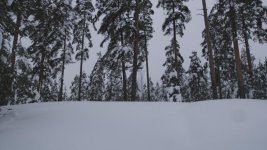
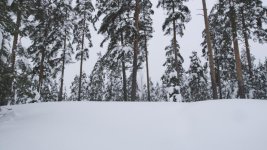
The first image is open with RedCine-X using camera metadata but with RedColor and RedGamma. The problem is that the snow in fron has no tones.

The second image: if I decrease the FLUT™ setting to -1.0, this brings no further tones to the snow.

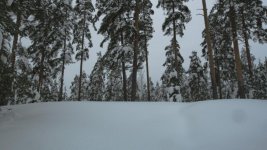
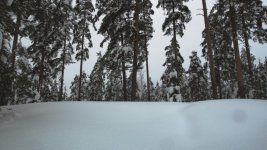
Third image: Keeping FLUT™ = 0.0 and by adjusting the gamma curve, start to get tones on the snow, and by tweaking slightly the other parameters end up with the fourth image. The difficulty here is that adjusting the gamme curve is very sensitive to small changes.

Fifth image: The same but this time gamma is set to REC709, otherwise the same parameters except the gamme curve setting, which is obviously different. The advantage is that setting the gamme curve is not as sensitive as in case of RedGamma. Futhermore, find it easier to make the dynamic range bit larger using REC709.

Conclusion, guess this kind of image is not ideal for RedGamma and FLUT™.
 

Attachments

  • REDcolor-gamma-MD.jpg
    REDcolor-gamma-MD.jpg
    100.9 KB · Views: 0
  • REDcolor-gamma-FLUT-1.jpg
    REDcolor-gamma-FLUT-1.jpg
    95.4 KB · Views: 0
  • REDcolor-gamma-gc.jpg
    REDcolor-gamma-gc.jpg
    90 KB · Views: 0
  • REDcolor-gamma-curve-graded.jpg
    REDcolor-gamma-curve-graded.jpg
    95.5 KB · Views: 0
  • REDcolor-rec709-curve-graded.jpg
    REDcolor-rec709-curve-graded.jpg
    99.4 KB · Views: 0
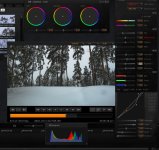
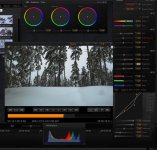
... and here's the RedCine-X settings of the fifth image of the previous post.
 

Attachments

  • REDcolor-REC709-gc.jpg
    REDcolor-REC709-gc.jpg
    89 KB · Views: 0
REDGamma is purposefully flat to allow it to be a grading starting point.

Graeme
 
REDGamma is purposefully flat to allow it to be a grading starting point.

Flat starting point is indeed very nice.

My point was, it seems REDGamma shifts the bright tones pretty high and has a compression kind of efffect as well. Thereafter pulling down the lifted mid-bright tones is bit painful and FLUT is of no help there.

I would not care unless we had almost half of the year this kind of conditions with snow. A proper professional level documentation would make it easier to rdecide which way to squeeze out the best of the camera.
 
Can we get some answers to Alex's question? Is there less NR in RCX or is the new color space more prone to chroma noise?

Your question pre-supposes that we know what Alex has done. Give us an R3D and then wait for us to have time to figure out what he did. I don't get the same results with any of my footage. Have you done similar testing with your footage?

Jim
 
Hello,

does anyone know, how the MX sensor improved over the Mysterium sensor technically? Obviously you can push the ISO way further without introducing that much noise. How is that accomplished by the sensor? New circuitry or new photodiodes on the sensor? I mean anything besides the new debayering algorithms and things that happen to the stream off the sensor. I'm just curious...
Any thoughts??

- Severin
 
Is there a manual for RedCine-X? I'm trying to grade a project that has a finished cut in FCP and was shot with the old CS (build 18 I think). I can see no realistic way of importing clips into RedCine-X and keeping the in and outs from FCP like the way you could import XMLs into the old RedCine with Crimson. Exactly what is the workflow of RedCine-X?

The ability to import sequences from editing software is essential to this program being useful for more than just checking footage. Add monitor out via a non-RedRocket video card and it would be exponentially more useful still.
 
Hello,

does anyone know, how the MX sensor improved over the Mysterium sensor technically? Obviously you can push the ISO way further without introducing that much noise. How is that accomplished by the sensor? New circuitry or new photodiodes on the sensor? I mean anything besides the new debayering algorithms and things that happen to the stream off the sensor. I'm just curious...
Any thoughts??

- Severin

Magic...

Jim
 
I'm quite sure, thanks.

My guess is that REDcineX is designed to work with the MX sensor and that it doesn't use channel mixing as REDcine 20 allegedly used to reduce noise in the blue channel.

Color is more real with REDcineX but for underexposed Mysterium footage it may be better to use REDcine 20.

Am I very off track with my assumptions? I'm just asking to take an educated decision.

I also see a lot more chroma noise.

http://www.reduser.net/forum/showthread.php?t=41980

Settings posted with the DPXs.

I'll be doing new tests where I'll post the RAW files with the DPXs and channelpeeks.
 
I was gonna say ghosts or aliens, but magic works for me.
 
Gunleik... what is the punchline here? I'm curious.

Jim

Jim. Glad you asked! -:)

I am just testing for 2 shorts, a feature and a TV series that will be graded in Color. Question is whether Color now holds up for developing the RAWS, which it didn't use to, and if I have to develop DPXs for online, which application/application-combo does that best.

@ hand is Clipfinder, Redcine-X, RocketCine-X, Monkey extract and of course Color.

What is yet not tested @ all is grading the image in Color with and without a LUT from DPX and RAW and check how the different signal chains hold up.

+ shooting a lot of tests with B-30 and put them through the same comparisons.

What I think I see - so far, has been a bit surprising, both good and bad surprises, compared to what I though I'd find.

Thus: Busting my own myths. That is good.

Color & RCX seems to pretty much render/debayer the same images, when rendering with the same settings - except for some (expected) levels issues.
The level difference between Redline and RCX was surprising, though... But not too important, as this is developing and not final grade...

I would have supposed Color to be largely inferiour, as it used to be that way. No more with 1.5.1 and the new plugin. That's great.

Both RCX and Color develop more noise and less details in all channels than B20 Redline. It is obviously most an issue of the blue channel.

Then I checked if that was a scaling, issue by developing @ 4k.
It wasn't.

B20-SDK/RedAlert through Clipfinder does repitedly generate the images with the least noise and best detail. (But not neccesarily the best color-startingpoint....)

I have posted my setup and developing settings alongside the developed DPXs to be open for critisism regarding methodology...

For all applications, adjustment of whiteballanse didn't introduce significant noise issues IMHO - like it used to in the old days.
That's great!

For the next tests, I'll post r3d's alongside my findings for others to fiddle and prove me wrong for whatever reason.
I like to be proven wrong. If I am wrong...

My punchline?

I just want to find out what is the best current solution for preparing for online.
I wanted to tests that others could re-do in their own setups, to see if they got similar results.
Seems like they did...

I know Color in itself is not the optimum solution, but it is a premise for the tests.

My hunch has all along been that the best way will be to develop DPXs with clipfinder/redrocket and grade from them.

That still looks like the best way to go, but the alternatives seems more tempting than they used to... (despite the noise issues)

Makes sense?

Cheers!

Gunleik
 
Gunleik... Graeme did a full comparative test today as you described and came away with a different conclusion. We will gather the notes and post the results when we can, hopefully tomorrow.

What is clear is that best result is with REDCINE-X and NR mode is fine. Graeme can step in here to add more clarity, but one thing we all know (and has been posted many times) is that if you don't do a new White Balance with the new color science, all bets are off. Old and new color science WB are different.

Jim
 
I took some noisy footage I shot specifically to exercise all brightness levels with an exposure ramp from over-exposure to 5 stops or so very under-exposed. I took the same frame through RedAlert!, my R&D app set to both B20 and B30 CS, and RC-X (NR on and NR off, and Rocket). Because of spanning old and new CS, I chose REC709, REC709 for a fair comparison, and used EV to brighten the shot. Again, because of change in CS, each app re-white balanced from the same grey sample in the shot.

Results are that RC-X with NR on looked best for this shot. I checked all colour channels. Especially noted were the colorimetry improvements in the new B30 CS that stops the blue channel on very saturated yellows going black and thus rectifying an noise there making it appear worse than it really should. The chroma NR in RC-X is working as it should, and the neutral grey areas on the test shot show less blotchy chroma noise than in the REDAlert! old CS Reference.

Graeme
 
Hello,

does anyone know, how the MX sensor improved over the Mysterium sensor technically? Obviously you can push the ISO way further without introducing that much noise. How is that accomplished by the sensor? New circuitry or new photodiodes on the sensor? I mean anything besides the new debayering algorithms and things that happen to the stream off the sensor. I'm just curious...
Any thoughts??

- Severin

There have been significant improvements in signal to noise ratios with new developments in chip design and fab processes over the last couple of years. This is showing up in all kinds of new gen chips, not just camera sensors.
 
To add, one of my goals all along was that the new colour science was to provide more accurate colours in a way that introduced less noise in the image processing. I think I could see that quite clearly in this progression of decodes.

Graeme
 
Back
Top