Phil Holland Just an absolute +100 to Phil for seeming to forego sleep and sanity to get all of us such detailed and useful info. Cheers brother!

Navigation
Install the app
How to install the app on iOS
Follow along with the video below to see how to install our site as a web app on your home screen.

Note: this_feature_currently_requires_accessing_site_using_safari
More options
Welcome to our community
Be a part of something great, join today!
You are using an out of date browser. It may not display this or other websites correctly.
You should upgrade or use an alternative browser.
You should upgrade or use an alternative browser.
Phil's Komodo-X Diaries
- Thread starter Phil Holland
- Start date
James Sielaff
Well-known member
- Joined
- Oct 23, 2009
- Messages
- 587
- Reaction score
- 48
- Points
- 28
Phil Holland Just an absolute +100 to Phil for seeming to forego sleep and sanity to get all of us such detailed and useful info. Cheers brother!
i'm pretty convinced he is superhuman.

Patrick Tresch
Well-known member
Dear Phil, is it so that to choose accessories for the Komodo-X the front part is like a Komodo and the back is like a Raptor?
Thanks
Thanks
- Thread starter
- Moderator
- #24

- Joined
- Apr 19, 2007
- Messages
- 13,392
- Reaction score
- 796
- Points
- 113
- Location
- Los Angeles
- Website
- www.phfx.com
Dear Phil, is it so that to choose accessories for the Komodo-X the front part is like a Komodo and the back is like a Raptor?
Thanks
Pretty much.
TL;DR on accessories now that I've spent a hot minute with Komodo-X.
Since the camera is the same height and width of OG Komodo 6K S35 all side plates and ribs work great.
Bottom of the camera is a slightly different hole pattern, but some baseplates that work with OG Komodo work fine with Komodo-X. Not all however.
Rear of the body has the same Micro-V Mount compatibility as Raptor class DSMC3 bodies, basically a 75mm width clearance and yes battery plates work great that work with V-Raptor as well.
Top of camera, Komodo-X obviously works with the pogo and RMI adapter, which is nice if you don't like to run more lines or batteries to top monitors.

andrewhake
Well-known member
- Joined
- Oct 4, 2009
- Messages
- 785
- Reaction score
- 55
- Points
- 28
Those little side mounts for the PL adapter look like the mimic the shape of the camera body somewhat, do you think with longer hardware it wold be possible to attach the red or GDU wing arms to them also?
https://www.red.com/komodo-wing-grip
https://www.red.com/komodo-wing-grip
Alexander.M
Well-known member
- Joined
- Dec 8, 2013
- Messages
- 166
- Reaction score
- 0
- Points
- 16
Hi Phil,
Which battery system do you prefer between REDVOLT Micro, CoreSWX NANO Micro and Anton Bauer Titon Micro?
Was thinking about going Bebob but they aren’t approved unfortunately.
Which battery system do you prefer between REDVOLT Micro, CoreSWX NANO Micro and Anton Bauer Titon Micro?
Was thinking about going Bebob but they aren’t approved unfortunately.
- Thread starter
- Moderator
- #27
- Joined
- Apr 19, 2007
- Messages
- 13,392
- Reaction score
- 796
- Points
- 113
- Location
- Los Angeles
- Website
- www.phfx.com
Hi Phil,
Which battery system do you prefer between REDVOLT Micro, CoreSWX NANO Micro and Anton Bauer Titon Micro?
Was thinking about going Bebob but they aren’t approved unfortunately.
REDVOLT Micros are CoreSWX rebranded/OEM and it states that on the store page and battery. I have about a 50/50 split on Anton Bauer and CoreSWX batteries now. AB are equally as solid.
The odd ducks I have are the GDU Micro-Vs and I only have a few. Those are rehoused Dynacore and work great too.
I've tested other batteries, but if you want camera communication with the Micro-V, go with what RED recommends and that will be the most compatible as they will have the chips and coms sorted.

Ryan Zimmer
Well-known member
Hey Phil, love following your first impressions of KX - do you think there is any chance RED could develop the same new style PL - RF adapter with E-ND but for EF - RF? Never really liked the Canon Variable ND option, and Kippertie is great, but the protruding design doesn’t work great for my use.
- Thread starter
- Moderator
- #29
- Joined
- Apr 19, 2007
- Messages
- 13,392
- Reaction score
- 796
- Points
- 113
- Location
- Los Angeles
- Website
- www.phfx.com
Hey Phil, love following your first impressions of KX - do you think there is any chance RED could develop the same new style PL - RF adapter with E-ND but for EF - RF? Never really liked the Canon Variable ND option, and Kippertie is great, but the protruding design doesn’t work great for my use.
Jarred popped into Scott's livestream yesterday and has said an RF>EF eND is a possibility. He also went into some detail on the cost, yield, and all that. I think it's one of those "the market is going to lead to demand and creation" sort of thing. More or less, more people that ask for it, the more likely it gets made. There is a lot of EF glass or adapted to EF glass out there. It would be cool to make one.
We're in a weird spot in terms of forward thinking on EF mount though. Canon isn't releasing new lenses for the mount anymore. But, as I mentioned there's a bunch of stuff you can adapt to it and the value of behind the lens filtration is certainly there for this mount in the DSMC3 world. In my case Leica-R, Olympus-OM, Nikon-F, and more via EF Adapters.
To jump on the EF train, I love my vintage EF cinema lenses. I also have two sets of lenses that are convertible from PL to EF and back…but it takes some time and fiddling. Atlas Orions and some other newer cinema lenses seem to be following a similar track.
For my work personally, especially having a Raptor and Komodo (meaning RF mounts of course) I feel some pressure now to go exclusive with either PL or EF in terms of cinema lenses as for each mount I will now need to have two adapters (currently have two Kippertie ND adapters for EF) and that is expensive. I don’t think spending another $5-10k (or more) on RF-PL adapters is in my future unless I just go all PL and sell the EF versions.
Moving forward it makes a lot of sense to me choose EF or PL for narrative work and use RF glass for corporate gigs. I honestly didn’t want to come to this conclusion, but native RF glass won me over…it is really nice and so convenient, especially the zooms, for smaller corporate packages. (With some pro mist of course because I am just compelled to! Haha)
I will say I do miss the absolute convenience of DSMC2 bodies with switchable mounts. I know the Raptor XL has that feature, but doesn’t outweigh the flexibility of the V Raptor so far. Although many is the time I have wished the V Raptor had kept the switchable mounts. But every choice has pros and cons. Changeable mounts make using a variety of glass easier in my opinion, but also removes behind the lens filtration options…so many choices now…it is an exciting time.
Patrick Tresch
Well-known member
I'm also waiting for the RF to EF E-ND version. The E-ND for RF mount makes a lot of sense as you easily can filter behind the lens when you use lowbudget/fast moving setup and in front when you have a matte box often used with bigger lenses/more crew like for PL lenses.
BTW it's true that DSMC2 has a lot of advantages for cinematographers like "custom" OLFP (I have Ir and Lowlight). Probably not enough people made use of it to drop that option?
BTW it's true that DSMC2 has a lot of advantages for cinematographers like "custom" OLFP (I have Ir and Lowlight). Probably not enough people made use of it to drop that option?
andrewhake
Well-known member
- Joined
- Oct 4, 2009
- Messages
- 785
- Reaction score
- 55
- Points
- 28
I would love an EF version also. I would buy one today if it was available. Breakthrough had a great design that incorporates their VND but it still hasn’t seen the light of day other than a few prototypes.
Red should consider selling a version that is less expensive that can just use fixed ND and VND cartridges as well as a lower cost option.
Red should consider selling a version that is less expensive that can just use fixed ND and VND cartridges as well as a lower cost option.
- Thread starter
- Moderator
- #33
- Joined
- Apr 19, 2007
- Messages
- 13,392
- Reaction score
- 796
- Points
- 113
- Location
- Los Angeles
- Website
- www.phfx.com
Red should consider selling a version that is less expensive that can just use fixed ND and VND cartridges as well as a lower cost option.
I don't know if they want to dance that dance as the eND solves some issues inherit with VNDs, particularly highlight ghosting. Also there's a few companies who cover that now are really affordable prices, but would very much lack the rigid/sturdiness of the actual RED mount.
Side note there. The RED RF>PL is sturdy as can be. Zero deflection even on longer;heavier zooms. But I'd still support things that extend a fair ways out to protect the lens itself from warping.
Though it's my strong opinion and likely not suitable for everybody, there are only two directions for RED to explore for behind the lens ND:
- Electronic ND (literally coming out like nowish in RF>PL and same tech inside the XL)
- Physical Glass ND Filtration. No stacking unless they really hit it out of the park. Just 2, 4, 6 would be great. Bonus for an 8 stop in there. A few mechanisms can be explored here to make this happen.
eND = Most Granularity and Flexibility, 1/4, 1/3, and currently Full Stop increments. Great color stability. Might even be able to do smooth exposure ramps via firmware later, which would be cool.
Glass ND = Highest Quality, no ramps, locked into 1 or 2 stop increments. Color stability greatly impacted by what filters and tech are used.
One way or another that takes up space whether it ends up in camera or a mount. Right now the CSF and OLPF are really, really good in DSMC3 and I wouldn't want to sacrifice that for internal ND in the body and I also see value in the RF mount, despite mostly filming with PL. But who knows.
There's another question regarding format compatibility and all that. Right now VV is the largest sensor RED manufacturers, but if they ever go larger, that will likely add some new considerations if these are even priorities in a camera like that.
andrewhake
Well-known member
- Joined
- Oct 4, 2009
- Messages
- 785
- Reaction score
- 55
- Points
- 28
The other big issue with behind the lens ND is dust and imperfections on anything behind the lens gets magnified and is much more apparent than front of glass. Dust on behind the lens NDs basically looks like dust on the sensor.
Obviously you can’t just be careless with front of glass setups but that is the first thing I noticed when trying out behind the glass VND.
Obviously you can’t just be careless with front of glass setups but that is the first thing I noticed when trying out behind the glass VND.

Micah A Brown
Member
- Joined
- Oct 1, 2018
- Messages
- 7
- Reaction score
- 0
- Points
- 1
Dear Phil, is it so that to choose accessories for the Komodo-X the front part is like a Komodo and the back is like a Raptor?
Thanks
Hey Patrick Tresch I made due for the time being with an OG Komodo Tilta top plate and adapted a SmallRig versa cage https://www.reduser.net/forum/red-ca...x-cage-options
I started that thread to see what other solutions KX owners discover as we await inevitable options from third parties.
andrewhake
Well-known member
- Joined
- Oct 4, 2009
- Messages
- 785
- Reaction score
- 55
- Points
- 28
Phil whenever you have some time I would love to get your thoughts on using Red Control App over wi-fi and USB-C with the Komodo-X and if that experience feels about the same as with Komodo or some noticeable improvements.
- 5Gbps NETWORK CONTROL AND OFFLOAD WITH CLOUD CONNECTIVITY
- APP-BASED MULTI-CAM CONTROL
- UPLOAD AND DOWNLOAD VIA FTPS
- 1080P LIVESTREAM CAPABILITY
- COMPATIBILITY WITH RED CONNECT
- COMPATIBILITY WITH RED CONTROL AND RED CONTROL PRO
Last edited:
- Thread starter
- Moderator
- #37
- Joined
- Apr 19, 2007
- Messages
- 13,392
- Reaction score
- 796
- Points
- 113
- Location
- Los Angeles
- Website
- www.phfx.com
For those tuned into my findings and looking for in depth thoughts on Komodo-X and where every damn thing lands.
I just completed over 24 hours worth (across a few days) of technical tests for the following cameras:
- Raptor 8K VV
- Raptor 8K S35
- Komodo-X
- Komodo 6K S35
These tests surrounded a lot of things, but the main ones were Dynamic Range and Color Response.
I'll make a nice graphically driven post at some point, but it's going to take more time than I have with Cine Gear this week and pressing prep as well as post work for the next few days as well.
Here's the summary of my findings.
Komodo-X - RED stated about .5 stops more Dynamic Range than the original Komodo 6K S35. I have found it's about 1 stop and there's more tied to that. It sees more into the dark and is notably cleaner in the noise floor as well as a superior color response at the lowest end as well. This was the biggest surprise on this new sensor because I think it's been moderately undersold. But as I mentioned before, if you are familiar shooting with original Komodo, you'll notice the difference pretty quickly. Komodo-X is more Raptor than Komodo in my mind when it comes to Color, Dynamic Range, and Texture. It's clear a few years of hardware improvements have had an impact here and it shows.
Raptor 8K S35 - This was also my first time chewing into the S35 and I feel it's relevant here. It's very, very close to the Dynamic Range of the Raptor 8K VV with a unique gain applied to the image data, which I can normalize or not in testing. The big difference between Raptor class bodies and Komodo-X is the Raptors have about 1 Stop more Dynamic Range, maybe a hair more than that. There are the gains in the frame rates and resolution as well. 8K VV remains on top, but both Raptors are currently very close.
In terms of RED's metrics of stated Dynamic Range, here's my take:
- Raptor 8K VV - 17+, I can see 18 stops pretty nicely, definition in motion between the 19th and 20th stop also there. Slightly lower Noise Floor than Raptor 8K S35.
- Raptor 8K S35 - 16.5+, Really similar performance to 8K VV, but those 19th and 20th stops are not there. Due to signal gain, clipping highlights land slightly elsewhere, more of a note there.
- Komodo-X - 16.5+, Not as clean as the 8K S35 Raptor, but fairly close in Dynamic Range, sees well into darkness and is visibly improved over the original Komodo.
- Komodo 6K S35 - 16+, the "toothiest" of the bunch. The Noise Floor really hits those bottom stops into pure crush.
The major takeaways here are seemingly the thing I need to remind even myself over. Both Komodo's have a Global Shutter and this is scary good performance out of this sort of sensor technology and there's plenty of Dynamic Range to work with. Broad performance notes, not really a shocker as 3 of these cameras have been out for a bit and I'm certainly getting great results. The real stunner is how much closer Komodo-X is to Raptor when it comes to shear image quality. I was expecting improvements over the original Komodo, but this is bigger than RED let on about honestly. I was told about a half stop better. It's more than that and cleaner plus better color. That's basically the one sentence comparison summary.
Likely offline until the 5/6th, but I can likely reply to a few things.
Jon Riley
Member
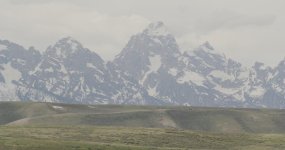
Thanks for all this info Phil. This is great timing and I'll be doing some testing today with a friend on Raptor VV, Raptor S35, and Komodo X. We have done loads of RED shooting and are both coming straight from years of Helium time. I have the Raptor S35 with a few days of testing integrated in a Gimbal with Canon and Fuji zooms.
I am curious about all three sensors and how Komodo X may deal with noise and clean images for shots with motion blur and stabilized movement due to the global shutter.
Have you seen any "noise" in either Raptor VV or S35 sensor shooting outdoors at a distance?
In our Raptor S35 tests there was some smoke and haze in the air on our first test and there seemed to be a lot of noise in the image. On a second test with some cloudier skies, but no obvious smoke or haze, I believe I am still seeing some noise in the image when the subject and focus are further away. There could be some motion blur, but it doesn't seem to be much of a factor. This seems more apparent to me for whatever reason than Helium, but it could be a combination of factors. The testing was all done in the gimbal with movement in most shots. Everything was shot at 8K 17:9, HQ, 48 fps and the sensor was calibrated.
Anyway I am just curious if you have seen any "noise" or some grain type quality in the image with distant landscapes and shooting outside where natural light and different atmosphere conditions may be present. Some of the effect also seems more apparent for parts of the image that aren't tact sharp but not necessarily out of focus. Maybe related to some motion blur? Could Komodo X have the upper hand here?
I uploaded a few stills, but the effect is way more obvious during playback of the clips.
Attachments



Mendes Nabil
Well-known member
- Joined
- Dec 14, 2012
- Messages
- 478
- Reaction score
- 2
- Points
- 18
- Location
- Paris, France
- Website
- www.nabilmendes.com
For those tuned into my findings and looking for in depth thoughts on Komodo-X and where every damn thing lands.
I just completed over 24 hours worth (across a few days) of technical tests for the following cameras:
- Raptor 8K VV
- Raptor 8K S35
- Komodo-X
- Komodo 6K S35
These tests surrounded a lot of things, but the main ones were Dynamic Range and Color Response.
I'll make a nice graphically driven post at some point, but it's going to take more time than I have with Cine Gear this week and pressing prep as well as post work for the next few days as well.
Here's the summary of my findings.
Komodo-X - RED stated about .5 stops more Dynamic Range than the original Komodo 6K S35. I have found it's about 1 stop and there's more tied to that. It sees more into the dark and is notably cleaner in the noise floor as well as a superior color response at the lowest end as well. This was the biggest surprise on this new sensor because I think it's been moderately undersold. But as I mentioned before, if you are familiar shooting with original Komodo, you'll notice the difference pretty quickly. Komodo-X is more Raptor than Komodo in my mind when it comes to Color, Dynamic Range, and Texture. It's clear a few years of hardware improvements have had an impact here and it shows.
Raptor 8K S35 - This was also my first time chewing into the S35 and I feel it's relevant here. It's very, very close to the Dynamic Range of the Raptor 8K VV with a unique gain applied to the image data, which I can normalize or not in testing. The big difference between Raptor class bodies and Komodo-X is the Raptors have about 1 Stop more Dynamic Range, maybe a hair more than that. There are the gains in the frame rates and resolution as well. 8K VV remains on top, but both Raptors are currently very close.
In terms of RED's metrics of stated Dynamic Range, here's my take:
- Raptor 8K VV - 17+, I can see 18 stops pretty nicely, definition in motion between the 19th and 20th stop also there. Slightly lower Noise Floor than Raptor 8K S35.
- Raptor 8K S35 - 16.5+, Really similar performance to 8K VV, but those 19th and 20th stops are not there. Due to signal gain, clipping highlights land slightly elsewhere, more of a note there.
- Komodo-X - 16.5+, Not as clean as the 8K S35 Raptor, but fairly close in Dynamic Range, sees well into darkness and is visibly improved over the original Komodo.
- Komodo 6K S35 - 16+, the "toothiest" of the bunch. The Noise Floor really hits those bottom stops into pure crush.
The major takeaways here are seemingly the thing I need to remind even myself over. Both Komodo's have a Global Shutter and this is scary good performance out of this sort of sensor technology and there's plenty of Dynamic Range to work with. Broad performance notes, not really a shocker as 3 of these cameras have been out for a bit and I'm certainly getting great results. The real stunner is how much closer Komodo-X is to Raptor when it comes to shear image quality. I was expecting improvements over the original Komodo, but this is bigger than RED let on about honestly. I was told about a half stop better. It's more than that and cleaner plus better color. That's basically the one sentence comparison summary.
Likely offline until the 5/6th, but I can likely reply to a few things.
That's exactly the feel i'm getting from all the footages i've seen, 2/3 stops in the shadow at the very least and a "rounder" image, smoother and a sort of 3d feel, something Og Komodo was lacking..
We are paying close attention to your tests Phil', even if we don't comment..
Thank you for your work,
