

- Moderator
- #21

- Joined
- Apr 19, 2007
- Messages
- 13,392
- Reaction score
- 795
- Points
- 113
- Location
- Los Angeles
- Website
- www.phfx.com
Thanks everybody, glad you're enjoying this one. And thank you Drew, more inbound 
A good question. The big difference between then and now is mainly computers and what we can do with them. Cinemama sort of paved the concept with their 3X 27mm lens setup for panoramic cinema, but there was not really easy way to correct things like geometric distortion via the 3X projectors or optics. In the 90s people were finding ways to utilize film camera arrays and manipulate them in post, though it was an extremely rare thing. When I started in 99 my first date with the whole panorama concept came in the form of stitching cameras for plates on features and developing HDRI camera solutions for VFX work. Which to remind everybody here, all started with film as the acquisition format, which provided additional challenges.
In the digital world things are a bit different if you are careful and attentive to setting up the cameras properly with a deep understanding on the post side of panoramic projection mapping and how to assemble it. You can transform the geometry, blend the overlaps, and come up with a final image. This is typically known as "stitching" in the pano world which I'm sure you know about. To achieve a good quality stitch you need to find the zero parallax point or nodal point, otherwise you won't be able to seamlessly stitch the images without extreme errors and possibly paint fixes, especially if you are getting close to the camera.
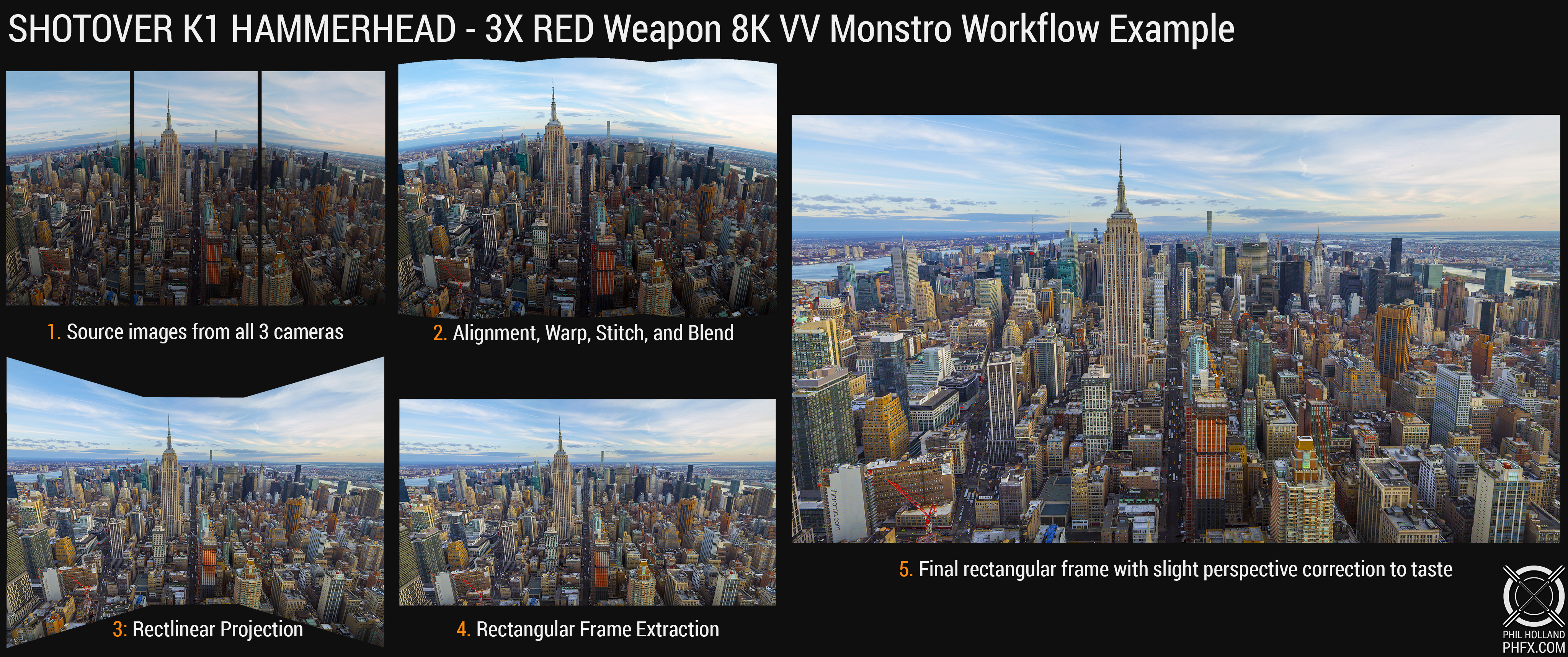
Here's a visual example of the workflow:
Heh, I appreciate the sentiment. David's encyclopedic knowledge is next to none. If it wasn't for various DPs and Directors being patient with me and actively or passively mentoring me on set of features for the first 10 or so years I'd be lost. Luckily mentoring and the sharing of knowledge is part of the ASC's mantra and I've certainly benefited from that.
Softness depends on the shot, these are stills from motion and what you are likely seeing is more motion blur related for the daytime stuff. I am operating the camera, specifically that last daytime shot around the Statue of Liberty we're doing an orbit with the camera tracked onto her, so everything else is a blur.
And yep, I do pull focus in the air, which is not exactly common. A lot of aerials are "set it at infinity and forget it", but I'm 100% not that guy. Focus is checked every shot, we're something very far or very close to subject matter and something I'll even induce a slow rack if the shot works for it. This is actually much more of a thing with the larger formats in the air.
Perhaps and that's certainly one way to do it. I've had native 8K material up on 8K displays and it also looks "screaming good", but this oversampling, much like oversampling for an 8K to 4K finish, works extremely well when doing any sort of reframing and transformation.
Oddly I haven't even finished building my new workstation Let me tell you, most software packages don't like uncompressed 12K and 16K material! These frames, depending on projection and aspect ratio land in the 400-600MB per frame range.
Posted an example in this post to show. The main purpose here is shoot higher than 8K resolution and also ultrawide, which is appealing for "giant screens". The focal length achieved is highly alluring for people who shoot for say IMAX. I've been shooting and finishing work in 8K for 2 years now and we're looking for interesting ways to bring even more rich imagery to life.
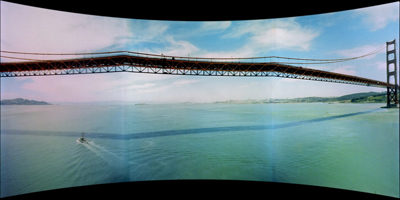
How are you avoiding the problem of a bent horizon when pointing three cameras at an angle, a problem that Cinerama had:
A good question. The big difference between then and now is mainly computers and what we can do with them. Cinemama sort of paved the concept with their 3X 27mm lens setup for panoramic cinema, but there was not really easy way to correct things like geometric distortion via the 3X projectors or optics. In the 90s people were finding ways to utilize film camera arrays and manipulate them in post, though it was an extremely rare thing. When I started in 99 my first date with the whole panorama concept came in the form of stitching cameras for plates on features and developing HDRI camera solutions for VFX work. Which to remind everybody here, all started with film as the acquisition format, which provided additional challenges.
In the digital world things are a bit different if you are careful and attentive to setting up the cameras properly with a deep understanding on the post side of panoramic projection mapping and how to assemble it. You can transform the geometry, blend the overlaps, and come up with a final image. This is typically known as "stitching" in the pano world which I'm sure you know about. To achieve a good quality stitch you need to find the zero parallax point or nodal point, otherwise you won't be able to seamlessly stitch the images without extreme errors and possibly paint fixes, especially if you are getting close to the camera.
Here's a visual example of the workflow:
Start a thread called 'ask Phil Holland anything'?Cool to see David stumped I don't think I've seen that on RU before
Heh, I appreciate the sentiment. David's encyclopedic knowledge is next to none. If it wasn't for various DPs and Directors being patient with me and actively or passively mentoring me on set of features for the first 10 or so years I'd be lost. Luckily mentoring and the sharing of knowledge is part of the ASC's mantra and I've certainly benefited from that.
First thing: holy shit, those shots are terrific. I don't like the soft edges of these lenses though, although you did say you had them wide open some of the time.
Are you actually pulling focus with these things, while filming? I wonder if that's worth the bother!
I suspect that correcting for the bent horizon is fairly simple geometry?
Softness depends on the shot, these are stills from motion and what you are likely seeing is more motion blur related for the daytime stuff. I am operating the camera, specifically that last daytime shot around the Statue of Liberty we're doing an orbit with the camera tracked onto her, so everything else is a blur.
And yep, I do pull focus in the air, which is not exactly common. A lot of aerials are "set it at infinity and forget it", but I'm 100% not that guy. Focus is checked every shot, we're something very far or very close to subject matter and something I'll even induce a slow rack if the shot works for it. This is actually much more of a thing with the larger formats in the air.
So I guess now we've reached the point where we can scale DOWN to 8K
Hahaha, nice !

Perhaps and that's certainly one way to do it. I've had native 8K material up on 8K displays and it also looks "screaming good", but this oversampling, much like oversampling for an 8K to 4K finish, works extremely well when doing any sort of reframing and transformation.
12K@48fps stitched from 3 VV cameras, down-sampled for 8K delivery. Amazing!
Phil, You da man!
What kind of computer horsepower are you using? Must be insane...
Oddly I haven't even finished building my new workstation
Let me tell you, most software packages don't like uncompressed 12K and 16K material! These frames, depending on projection and aspect ratio land in the 400-600MB per frame range.Would be interesting to see a frame from one of the cameras to se how much the gaining of stitching three cameras were. What was the main purpose? To get more fov without using a wider lens or getting details using more pixels?
Posted an example in this post to show. The main purpose here is shoot higher than 8K resolution and also ultrawide, which is appealing for "giant screens". The focal length achieved is highly alluring for people who shoot for say IMAX. I've been shooting and finishing work in 8K for 2 years now and we're looking for interesting ways to bring even more rich imagery to life.


