Welcome to our community

Be a part of something great, join today!

  • Hey all, just changed over the backend after 15 years I figured time to give it a bit of an update, its probably gonna be a bit weird for most of you and i am sure there is a few bugs to work out but it should kinda work the same as before... hopefully :)

New MacPro predictions? Hopes? Fears?

Very few... When it comes to desktop or workstation hardware that's a firm "no" unless you're talking about Apple. Recently the only computer on the market that really falls into the custom hardware category, or something that isn't a minimally-altered reference delight, is the Mac Pro [trashcan]. Most PC notebook companies seem to be using ref designs, even Apple to some degree. And when they do really customize, they tend to milk that design for several cycles. This latest MBP is minimally different than the previous models all the way back to the first MBP retina in 2012. I think the latest in their customized designs is the MacBook.

Some of the "mobile workstation" laptops are more customized at times, but they seem to adapt a lot of the ref designs out there for blades or for notebooks and shift and adjust components to fit different CPUs or chipsets. The real trick on these systems is to manage power consumption and thermal aspects. Something most of them struggle with. Pretty much every such laptop like this I have owned has melted itself under real use. I tend to shy away from them, but every now and then I see one with good reviews and I'll take the plunge. And then it melts itself after an hour or two of intense work.

Yes, except for these laptops, the good old days (except conostability) is gone on the PC side at least. Still the process you describe is good enough, as Nvidia and Open API's promotes further development.

We don't live in a fantasy works where the PC canbe pushed despite heat generation and is the best platform, or have Quantum Dot Cellular Automata extrene low powered alternatives with reverse processing. The reality is it, and alternatives, have to be developed and supported to achieve this. I keep telling people but they are lost in past/present delusions, rather than looking to future realities.

I think the laptop thing is a limitation. Look at the size/ volume of the trashcan an HP z1 (not ideal) and any laptop should be close to at least the size of these. This is why I was talking about new case designs in that hack thread. I am interested in transportable designs rather than laptops. That can double+, the volume to install stuff over the laptop at least, but still be handy on set and fold up. So 4 times the volume of these Raser keyboard units might be possible. But it does not stop there. Everything else apart from.the board components can be made lighter and smaller, carbon fibre even. Battery csnbe optional and silicon nanowire batteries with 10x life sort as soon as teluably and practicably possible. Honestly, it is kickstarter time to work with a known OEM manufacturer, Intel/arm/Imaginations technology etc and end manufacturer to develop a better platform.

Now, there is a way to get a laptop to do it.
 
Yes, except for these laptops, the good old days (except conostability) is gone on the PC side at least. Still the process you describe is good enough, as Nvidia and Open API's promotes further development.

We don't live in a fantasy works where the PC canbe pushed despite heat generation and is the best platform, or have Quantum Dot Cellular Automata extrene low powered alternatives with reverse processing. The reality is it, and alternatives, have to be developed and supported to achieve this. I keep telling people but they are lost in past/present delusions, rather than looking to future realities.

I've had some discussions here and there with my friends at HP and it seems that they and I don't usually agree. It's difficult to innovate and customize when the core hardware components are being updated every 12 to 16 months and completely replaced every other cycle. Look at the number of OEMs who get their products to market 3 to 5 months after a new CPU launches and then struggle to make the appropriate update within that time scale the next time it happens. For PC motherboards, the predominant efforts in customization are mostly focused on PCIe slot configurations, heat control and visual appeal. Most PC motherboard vendors lack the "courage" to do away with he legacy BIOS system or remove garbage PS/2 ports from their rear I/O panel, let alone to deviate from the ref designs that give us a single M.2 SSD connector.

Same goes for GPU makers. NVidia is doing a lot to innovate within their own space, but their hands are tied with PCIe interface designs and the gaming market being the predominant income source for pushing R&D. All the GPU OEMs selling GeForce cards are pretty much all using the same ref design. Makes no sense to go all crazy with any real customization when every GPU chipset is deprecated within a year. So what do we get? Companies like EVGA with a multitude of different offerings within the same chipset family, all the customization focused on thermal control and overclocking. Not that there's anything wrong with that, but there's a lot that could be done otherwise. ...And then again, if it takes them 4 months to develop something really cool and another 2 months to bring it to market, they have just wasted half a product cycle. As it is, the top tier gamer cards usually see huge price premiums and limited availability because they do waste 20% of a product cycle coming to market just by getting a customized heat pipe solution. And trying to squeeze a full product cycle worth of sales out of it does not work. All the fickle gamers willing to pay the top prices for the top GPU cards won't buy these cards as soon as the next GPU chipset is announced.

This is also why Apple's vertical approach leads to them often lagging behind in CPU offerings. Microsoft is attempting the same vertical platform approach with their Surface line of products. It's working for them, but we're seeing the exact same issues affecting their product line. The Surface Studio is stealing the show, but it won't actually ship to customers until January~February and it's using last year's CPU and GPU options. Looks like a really nice screen though.

For a time Apple was staying on the forefront of CPU offerings. They even managed to get exclusive early access to some of Intel's new CPUs and be first to market. This has not been the case now for the past 4 years and a direct indicator that professional power users are no longer an important demographic to them. Gone are the days of the 2008 Mac Pro that was not only the first big name vendor dual Xeon workstation to the market with that generation of Xeon platform, beating HP by nearly 2 full weeks. But Apple also secured exclusive rights to the 3.2GHz CPUs for that generation for a full 60 days. Could not even buy the chips on the open market and build your own, Apple owned all the stock for 60 days. Talk about a major shift in priorities in the past 8 years. Apple, HP, Microsoft, etc.. any one of them could absolutely rule the PC hardware market. If they wanted to. It seems none of them want to. Perhaps it's because the PC industry as a whole, especially the power desktop or workstation portion of it, has been in a fast and furious decline for the past 5+ years. I'm thinking these guys are not too willing to stand up and be captain of a sinking ship. As much flak as Apple is taking over their current situation and MBP announcement, I think it's funny that Microsoft is getting as much praise as it is. They're doing the exact same thing -- shifting to a vertical market "device" company. And as awesome as people think the new Surface Studio looks, it's still gimped by a max 32GB RAM for a design workstation, and no serious I/O in the way of Thunderbolt or PCIe expansion to connect performance peripherals or storage. Their event last week seemed to cater a bit more to "pro users" but in words only. And I think they were just pandering to the frustrated Apple user base. Because re-branding Windows 10 Pro for designers and giving us an upgraded version of MS Paint is a joke -- it's just as big of a slap in the face as showcasing emoji's on the MBP's Touch Bar. Just take a second and think about it. What pro CG artist is going to give a crap about MS Paint, even if it now has rudimentary 3D painting abilities -- which are mostly incompatible and inferior to all the industry standard tools they have been using for years.
 
There is a way to design a laptop to do the higher work load, and transportable and desktop even more.

Firstly, CPU and GPU's are not the most efficient in server or workstation tasks. They are just conventional and out there. But there are other platforms that could be included in a laptop within its limited thermal and space envelope. Many times speed up in processing, 8k $2k laptop. Not just some fancy FPGA. What is used is support for a system like Open CL for compatibility with newer hardware, and future.

The most cost effective and low powered solution that's been developed is memory array processors. They can be made cheap and lower powered and dense I think (can't remember). However, because these memory fabrication process have very few layers you can't fit substantial circuits, like conventional processors on them, however you can incorporate simple processing assistance functions to greatly speed up the processing. So incorporating as the conventional dram stick (or parasitic memory type), you could achieve many times speed up for little potentially modest extra power consumption compared to the GPU. Now you can incorporate an ARM, MIPS or RISC V core/s as controllers on the card/mb programmable as Linux controllers.

Now, in the system above, you could make a Linux system with linux x86 binary transliteration code, based on RISC V array or others, in place of the PC processor. Unfortunately the others do not have the same level of chipset technology as Arm. A board canbe made of an array of banks of vertical mounted ram processing chips (for cooling) and an array of conventional processors. So, both sides of a board could have vertical mounted ram with cooling hole arrays in the board. The processors could he spaced in between, but I'm not up to thinking about that at the moment. Certain parts would be packed together off the array to maximise cooling.

So, what we are talking about is maybe not terabytes instead of gigabytes due to power consumption, but that maybe possible depending on the memory type and clocking. Is it good for a transportable, maybe not, as cooling and power consumption issues still comes in. But for super resolution holographic filming, this maybe the type of technology to fill the gap until something more futuristic is sorted out. The cooling issue with a keyboard blocking is an issue. But for a thin transportable I could get around that.

So think of every stuck as an alternative to a GPU and see how many you can fit in along side a section for other laptop components, with a fibre optic backbone

Now, everybody, Jeff knows many of these principles. But because you are using customised processing functions tailored to your work flow you can archieve much less circuit wastage and a larger amount of processing compared to the GP-GPU. So maybe a few sticks could achieve what a top GPU and its memory does, along side the you section. I would have to know a lot more to fill in the likely spec details.
 
Yes, they need to standardise the connections between the components on board and provide a desired layout plan. This allows manufactures to innovate past the interface, whether on board discrete GPU or chipset, and know the same interface is viable due a number if years. Many functions are far slower than the interface itself being held back from an upgrade. The interfaces and desired layout gives them a chance to design many months ahead of time, and to adjust to minor finalised reference layout adjustments. So, if the the reference designer giving plans it possible, things can be done and companies can do things like put extra things into the reference design. Breaking things down to reference performance blocks is something that helps. For instance the connection between a GPU and memory is very important and that whole system could be put in a performance block with interfaces.

Now, the processor socket is the.enemy on the PC. Not constantly changing to new ones allows a design to lsdt, and new designs to be planned around it.

The method Ivwas planning a decade ago maybe, to get around the constant taps into the the pricesdirs, was to separate the power delivery from the mainbiard socket and into the chip packe, or in this case beneath it. Years ago intel did processing card sockets, and I think that is a good idea again professionally. As it is, I understand the current socket is getting bigger and longer to incorporate a future Phi product.
 
I wish everything was setup at my end. I could send you a design to send to your HP mates. So much can be done at profit, but so few are doing so little of it.
 
The Pro 17" was announced on Oct 20th. I believe orders are shipping mid-late Nov. Similar to the Macbook. The user reviews are a little spotty since they cover a large amount of models and variations dating back to 2013. They are a good baseline for the support and overall potential build quality going into the "Pro" though.

You're correct, there's only one TB3 port. USB 3.1 is supported there though. The question will be how these "desktop" laptops divvy up their PCIe Lanes. Considering the Razer comes stock with a PCIe SSD RAID arrangement, that means the M2 slots are using up lanes and we aren't sure if they'll be Samsung 950/960 or some other variant. Either way, if they're receiving proper lane management, then it's likely they'll actually be faster than what is in the MBP. We only have 16 PCIe Lanes to work with on these 4 Core CPU's.

We aren't sure about DCI P3 spec but it's likely a no, and I doubt it'll match the MBP's 500 nits. It does cover 100% Adobe RGB though.

ADK seems to have a good deal going with their desktop CPU driven laptops. I built out a 6700K, GTX 1080, 64TB, 512GB SSD, 17.3" 4K for $4K on the nose.
Regardless, I'm still on the MBP train with the Bizon Box 3 announcement. I keep stressing to people how clutch it is to have 4 TB3 ports. I guess you can daisy-chain but I wouldn't be surprised if the single TB3 port on any of these Windows machines is operating at sub 40Gb/s speeds.

Hmm... maybe it was a previous model that also said "Notify Me" that I looked at? I know I went to their website a month or so ago and it said "Notify Me" for the Pro model.

There's no mention of USB 3.1 on their website, and only mention of USB 3.0, so I don't think it can be assumed that it supports USB 3.1. At least you should be able to get USB 3.1 with a Thunderbolt 3 dock.

Has anyone actually used ADK here? I haven't heard of them before and the quality and reliability is a big question mark.
 
Reduser member Eric Bowen, who has put in a lot of input in the hardware discussion forums, is with ADK. Or he was. He has not been around here the past couple months. The solutions that ADK offers are cookie-cutter, off the shelf stuff, but Eric knows his stuff. He's the tech manager and hardware R&D guy at ADK. Their 17" mobile workstation system is a chunky beast. I don't recall who manufactures the bare bones setup for that particular notebook, but it has been used by a variety of OEMs out there. Most of the components are pretty standard on the OEM market right now -- Razer, Origin and others use the same keyboard RGB backlight, for example.

The TB3 port on the Blade Pro supports USB 3.1 @ 10Gbps. The other USB Type A connectors on the system are all v3.0 5Gbps. In fact, USB 3.1 10Gbps only comes as a Type C connector unless some manufacturer is violating the USB spec. And some have done so. USB moving forward with v3.1, v3.5 and 4.0 are all specified to be USB-C connections. Type A that we have known and loved for the last 22 years is now obsolete.

The Blade Pro page still says "Notify Me" They did take one round of pre-orders. Some dealers are taking orders too, but we know nothing in terms of delivery timing or benchmarks or other pertinent info.
 
The TB3 port on the Blade Pro supports USB 3.1 @ 10Gbps. The other USB Type A connectors on the system are all v3.0 5Gbps. In fact, USB 3.1 10Gbps only comes as a Type C connector unless some manufacturer is violating the USB spec. And some have done so. USB moving forward with v3.1, v3.5 and 4.0 are all specified to be USB-C connections. Type A that we have known and loved for the last 22 years is now obsolete..

Does Thunderbolt 3 over USB-C automatically have USB 3.1? Their website shows only Thunderbolt 3 for the USB-C port. I would think that if it was USB 3.1 also they would state that as it's a huge feature imo.
 
Does Thunderbolt 3 over USB-C automatically have USB 3.1? Their website shows only Thunderbolt 3 for the USB-C port. I would think that if it was USB 3.1 also they would state that as it's a huge feature imo.

Yes. 10Gbps USB 3.1 is officially part of the Thunderbolt 3 spec.
http://www.intel.com/content/www/us/en/io/thunderbolt/thunderbolt-technology-consumer.html

I think they don't state it because marketing people are not up to snuff on all this. Thunderbolt 3 implies USB 3.1 compatibility, as do non Thunderbolt USB-C ports. It's also not that big of a deal for their target audience anyway.
 
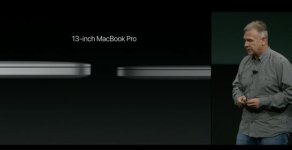
I doubt any of the executive staff at Apple use computers for anything, most only use ios for email and web stuff. They are a bunch of old rich guys that only think about stock price. Look at Phil at the keynote, you can tell someone told him at the last minute to untuck his shirt...... a bunch of posers.
 

Attachments

  • screen-shot-2016-10-27-at-1-33-48-pm.jpg
    screen-shot-2016-10-27-at-1-33-48-pm.jpg
    9.8 KB · Views: 0
Yes. 10Gbps USB 3.1 is officially part of the Thunderbolt 3 spec.
http://www.intel.com/content/www/us/en/io/thunderbolt/thunderbolt-technology-consumer.html

I think they don't state it because marketing people are not up to snuff on all this. Thunderbolt 3 implies USB 3.1 compatibility, as do non Thunderbolt USB-C ports. It's also not that big of a deal for their target audience anyway.


Desire for support of this arrangement was announced near the beginning. They wanted to.use the USB connector and replace USB back then. So I guess they are not big on promoting USB and diverting attention from TB. Howerver, bring on 100Gb/s TB as universal and male USB a daughter protocol, as it's simpler hardware arrangement can not produce top performance.
 
The mac wrap around upgrade.

The mac wrap around upgrade.

Jeff, I would like your opinion on the processing platforms proposed above, and the following. Everybody, its written for you to. Also, on the possibilities of actually developing this stuff through appropriate manufacturers.


Here's something I wanted to mention. If it was me, I would design a screen that wraps around the Mac Pro trashcan, you touch it to turn the Mac on, and it unfurls into a normal screen, even curved extended width auto 3D. I'm not saying invent the screen, you can use OLED like this. It is not just about cool styling, but about cool practical technology and functionality. This is what Apple has been lacking for years. I have sat down and worked on maybe hundreds of case designs for products, how you hold it, how it feels, how to work it. Functionality.

The issue is the Mac is short, limiting screen high unless it sticks above it. As I said before, you can have expansion blades below the unit, to maximise the screen height with good appearance, where it can even spread down the expansion blades. So, with a taller and slightly wider Mac Pro for looks and a second GPU card and better cpu's, you can have a much larger screen and the optical disks etc below screen level.

A second cool core GPU extension tube could go under an existing mac pro. They could design the Mac Pro to incorporate a connector underneath for a GPU/blade expansion tube unit. A music producer may get a tube with sound card functionality, hot swappable storage, connectors and controls and optical storage on the front. A lot of small local jobs people can take a backup copy. For us the expansion tube can include extra GPU and camera ingress. For home video studio both canbe included in one unit. For researchers, extra GPU and CPU and FPGA might be the emphasis. Whatever is the case Apple doesn't need to supply the extensions, they cannbe third party. It could be done with the present MacPro, except there is no extension interface under the Mac Pro (but one could be made via custom extension modification).

I've had a much cooler looking Mac Pro design in mind for a 4 GPU setup (not the previouse 2 GPU extra large Pro) or up to three and more CPU. This two can be an extension to the existing Mac Pro. Very cool.
 
I doubt any of the executive staff at Apple use computers for anything, most only use ios for email and web stuff. They are a bunch of old rich guys that only think about stock price. Look at Phil at the keynote, you can tell someone told him at the last minute to untuck his shirt...... a bunch of posers.

This Macintosh box with the graphical interface and that mouse thingy will never catch on. And who names their technology company after a fruit anyway??

Not sure how old you are but you might show at least some respect and appreciation for the people who invented the personal computer and launched the industry.

:nonod:

Thats my point, none of the people currently at Apple invented the PC industry. I knew Steve Jobs since the early 80s and he used a Mac everyday and not just for web/email but was a hardcore user of all things DTP like Quark, Pagemaker and Photoshop. I don't think Tim is going into a multi layer doc to personally tweak a double trucked ad 1 day before press like Steve often did. The people who create really powerful tools do so because they want them too.

Tim is a great manager but imagine a guy who's not into cameras trying to run Red, sure it's important to have the manager / day to day guy like Mike but without the visionaries like Jim and Jarred what's the point?
 
Seriously, Apple should host a weekend retreat and meet with various players in film and music industries and basically just ask them, "What kind of Mac would you like to see?"

I know there are other industries that would love a more powerful MacPro, but I think if Apple would make something to satisfy 8k production, I'm sure everyone else would be fine with the offering!
 
Thats my point, none of the people currently at Apple invented the PC industry. I knew Steve Jobs since the early 80s and he used a Mac everyday and not just for web/email but was a hardcore user of all things DTP like Quark, Pagemaker and Photoshop. I don't think Tim is going into a multi layer doc to personally tweak a double trucked ad 1 day before press like Steve often did. The people who create really powerful tools do so because they want them too.

Tim is a great manager but imagine a guy who's not into cameras trying to run Red, sure it's important to have the manager / day to day guy like Mike but without the visionaries like Jim and Jarred what's the point?

That's where people mistake things, you don't need cameramen, you need visionaries its their jobs. I can virtually garrantee that most of Steve's and Jim's success is built on the work of visionaries working for them. If you take the visionary out of the equation, people don't really know how to move forwards in deep ways and in great strides.
 
Here is a question for you guys. I am thinking about switching to the rumored Sony FS7 Mark ii that will be announced either Nov. 9 or 11th. I am doing a lot more run and gun these days so am interested in the Sony lineup for this (I know people will have opinions about this but thats not the point). Currently I don't have a red rocket card so anything I do really crushes my CPU. If I go sony and shoot their new raw which is reported to possibly be in camera.. or if I at the very least shoot in 12 bit.. Is it going to thrash my CPU like my RED 6K footage does? I ask this as I decide between a BIG clunky SAGER laptop or something much more sleek like the Razer Blade, RBP, XPS 15 MBP etc.

Also want to add that I primarily do color grading and try to use Resolve for all editing and color. Obviously resolve is a resource beast.

Thanks!
 
Last edited:
Seriously, Apple should host a weekend retreat and meet with various players in film and music industries and basically just ask them, "What kind of Mac would you like to see?"

I know there are other industries that would love a more powerful MacPro, but I think if Apple would make something to satisfy 8k production, I'm sure everyone else would be fine with the offering!

My original post would suggest they do just that. They just aren't inviting you. (Or me.)
 
But, you have to invite the right people. Making sure you don't invite vested interests that want to hobble what competing products to those interests do.
 
Back
Top