Welcome to our community

Be a part of something great, join today!

  • Hey all, just changed over the backend after 15 years I figured time to give it a bit of an update, its probably gonna be a bit weird for most of you and i am sure there is a few bugs to work out but it should kinda work the same as before... hopefully :)

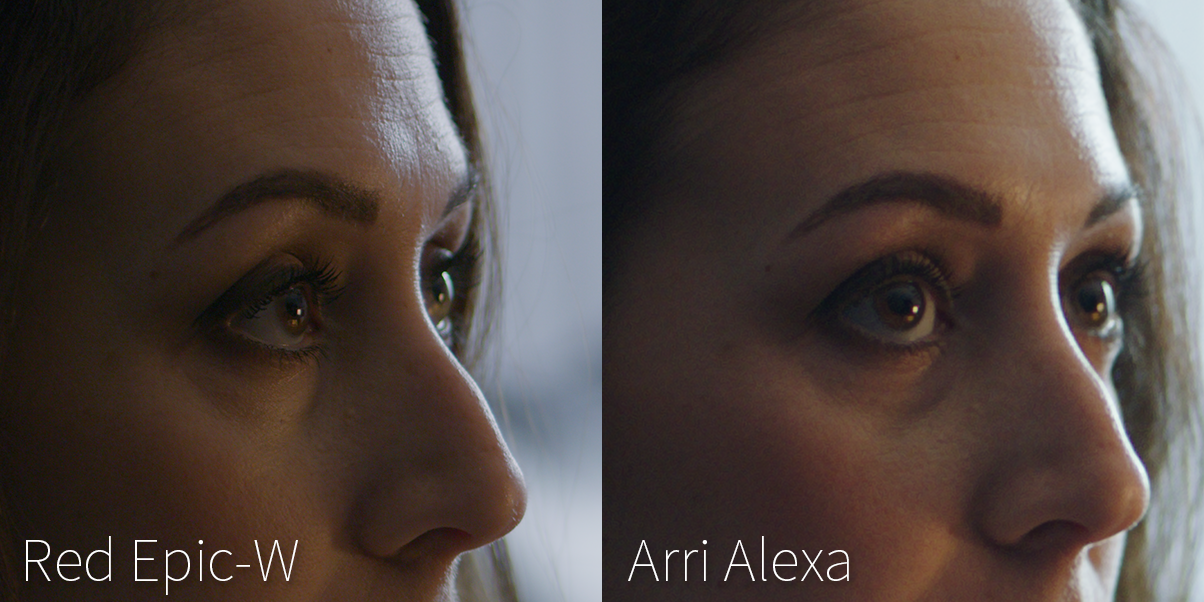
New Epic-W vs. Alexa Mini test

Again, I find it importsnt to point out. No cmos cameras have rolloff. they all fill up their photosites linerearly until they clip. All cameras from red behave this way and also all digital cameras from arri behave this way.

So saying on camera has more or smoother rolloff than the other does not make sense.

And yet clearly there are differences between various cameras in how overexposed areas burn out to white in terms of color, texture, etc. They are not all equal, at least not after they have been converted from raw to some viewable color image, so maybe this is a processing issue rather than a capture issue. With many digital cameras there is a yellow bias that creeps in just before things burn out to white.
 
Again, I find it importsnt to point out. No cmos cameras have rolloff. they all fill up their photosites linerearly until they clip. All cameras from red behave this way and also all digital cameras from arri behave this way. l

Alexas in highlights behave unlike any other digital cameras.

So saying on camera has more or smoother rolloff than the other does not make sense.
l

Sense depends not only on reasoning process but the premises as well.

Premises:

They
a) harvest huge pixel size with two readouts combined which enables them to
b) record more information in highlights
c) design in-camera smoother rolloff to overexposure
d) while also doing something else to minimize signal deviation as it approaches extremes. In SXT it is practically none.

So other cameras typically loose when pushed into highlight performance contests.

Luts and grading can create a dynamic roundning towards white cameras can not do this. Atleast not if shooting raw.

Currently, no cameras except Arri can do this. It is recorded that way in raw.

If you stick a ND.6 in front of your helium you will see it will have more highlight protection / possibility for rolloff than the alexas and still with the filter in place you will be able to dig out more detail in the shadows from helium compared to the alexa shoting same settings but without nd....

In which case you are underexposing the image and pushing it, relying on 16 bit quantization to compensate. Digging out data from shadows stretches the image and decreases image "juiciness". It is not the proper usage of the camera, it is just the latest "let's molest it until it falls apart because I can" trend.

ETTR is a creative decision, not technically correct exposure. Exposing for the healthy signal distribution which doesn't require drastic pushing is technically correct exposure. 2 stop push is a creative decision / post salvage job with a price, not a proper first light without penalties.

It is not the same outcome as this route.
You want to have highlights compressed earlier in the signal chain so the full signal doesn't suffer by underexposing + pushing route used to preserve highlighs.

That dpreview promoted DR interpretation has not helped this industry.
 
Again, I find it importsnt to point out. No cmos cameras have rolloff. they all fill up their photosites linerearly until they clip. All cameras from red behave this way and also all digital cameras from arri behave this way.

So with that in mind I find it easier to skip the whole iso discussion and instead try to messure cliping points and sensor floors as to me thats what matters the rest is just irelevant numbers, no?

Technically in the silicon you may be right, but there's no such thing as RAW really, it's a treated version of what the camera saw. I believe ArriRAW is in WideGamut space and not sensor RGB, so immediately you know there's been stuff-going-on in the hardware, so anything could happen at those highlights.

But for a proper shootout, you're right. That's how to test.

Maybe the Alexa has a bit more range, maybe not. I suspect in normal mode it's very close and in HDRx it could be quite a bit higher.

cheers
Paul
 
And yet clearly there are differences between various cameras in how overexposed areas burn out to white in terms of color, texture, etc.

Perhaps it has something to do with the ridiculous DR claims?

At one point it was resolution, now it's DR.

A camera manufacturer that looks only to their own ideals and is unimpressed with the "competition" can market more conservative numbers, while performing impressively in that range.

What Björn says is matter of fact. There's the physical nature of how sensors work and then there's the "color science" or what ever we want to call how manufacturers handle noise floor to well saturation with their gamma curves and whatnot.

What are the published SnR values for RED and ARRI? Are they objective, or also subject for "discussion"?
 
latest

How the testers might feel reading through reduser right about now.
 
While i'm tired of watching tests. It doesnt mean i dont think they are important. Any image can be had on RED, its up to the individual to figure out the exposure/iso/olpf/lenses.

By now many of us understand that with RED ISO is a variable number from which to aproximate a rating. I think the soft highlight clipping of the ALEV has something to do with their OLPF and the onboard electronics which have an effect as you change ISO on that camera.

RED don't do any of this onboard the ISO affects monitoring but is non destructive and not baked in. There have been many shoots where both those cameras were used and intercut without a single person noticing.

My overall point is that I do not think that there is a vast difference in these sensors (other than vastly more resolution on one of them). My other point is that each person should always test for themselves.

David
 
Perhaps there is something that RED could consider adding to the SDK for those that desire POST processing around CLIPPING point?

+) OFF = Leave exactly as they are now (for maximum flexibility and colour accuracy up until clip point)
+) CLIP_TO_WHITE = A knob that 'attacks' the colour at some point before clipping that takes all colours to white
+) CLIP_TO_NON-WHITE = A knob that algorithmically guesses what the color MIGHT be when only one or two of RGB pixels are clipping, and hue of LINE that encapsulates the CLIP area is used to extrapolate the color inside it; and use colour gradients immediately around the area as an extra input.

For those that want the Alexa look -> they could use the CLIP_TO_WHITE.
Those wanting a SDK 'Salvage' to brightest non-white-light source could take the CLIP_TO_NON-WHITE.
And those that want to deal with clipping with their own tools - leave this in the OFF position.

AJ
 
Ben : Very possibly.

I don't know what the IPP2 colour strategy just before, and after any of the RGB sensor pixels clip.

What I was suggesting is preferred type of guessing of colour - when the actual colour is non-determinate.

Arri's baked in adjustment is pleasing to a great many people, but destructive (i.e. Actual raw data is lost).
A RED post ( SDK ) processing to deal with clipping that is alogorhmic might (I don't have direct experience) be
beyond the flexibility of 'Artistic LUTs'.

AJ
 
I think maybe the Alexa sensor does something to clusters of blown pixels.

IE. Perhaps when pixels are blown to full signal, something happens to the pixels surrounding those blown pixels. Maybe the onboard tech is smart enough to read the areas around blown pixels and create the rolloff digitally. Or it uses the same rapid double exposure process it uses in lower light scenes.

I'm sure they merged a lot of their film scanner knowledge into developing this sensor and it has been great for them.

Still, it's not too complicated to get nice highlights out of RED cameras.

David
 
IIRC, one of the benefits of the new wider gamut IPP2 system is that it allows colours to get brighter without de-saturating like they had to before. This could result in the appearance of a smoother highlight roll-off now, as more saturated colour detail is retained in the areas leading up to actual clipping.
 
So saying on camera has more or smoother rolloff than the other does not make sense.

Something to bear in mind is the analogue to digital conversion varies between manufacturers.
It can be a 12, 14 or 16bit.
But there is more:)

I stand to be corrected on the following:
Analogue luminace values are assigned to bits, by a process termed "mapping".
Mapping can be altered via firmware.
The bits are not assigned linearly.
Mapping is very rarely discussed, despite it being non reversible and a powerful part of image processing that creates the core "look"
Puerhapsbif more bits are assigned to highlights their will be more gradation, aka "smoother roll off".

If I recall correctly, Sony once made an update to the f900 where they mentioned the AD mapping had been changed to create a more filmic look.

Perhaps Graeme can chime in to clarify?
Mike Brennan
 
Something to bear in mind is the analogue to digital conversion varies between manufacturers.
It can be a 12, 14 or 16bit.
But there is more:)

I stand to be corrected on the following:
Luminace values are assigned to bits, by a process termed mapping.
Mapping can be altered via firmware.
The bits are not assigned linearly.
Mapping is very rarely discussed, despite it being non reversible and a powerful part of image processing that creates the core "look"

If I recall correctly, Sony once made an update to the f900 where they mentioned the AD mapping had been changed to create a more filmic look.

Perhaps Graeme can chime in to clarify?
Mike Brennan

Such mapping happens post A to D, and does not effect raw data. It's part of the raw development process. One of the great things with modern digital cinema cameras (rather than video cameras of old) is that you can always get linear light data out.

Graeme
 
What about ISO inconsistencies, Graeme?
 
This ones not going away is it.

In this tests the Alexa just looks and feels better,period!:)

If I was being asked to choose for a project as a producer or director We would be shooting on the Alexa.
 
I stand to be corrected on the following:
Analogue luminace values are assigned to bits, by a process termed "mapping".
Mapping can be altered via firmware.
The bits are not assigned linearly.

But through S-Log, LogC, J-log, C-Log, V-Log, Log3G10 or RedLogFilm ?

:)
 
If we need to stand on one leg to get the best out of the hellium that info, colour science and work flow needs to be out yesterday because if clients Etc keep seeing these kinds of side by sides it's a no brainier, you are already on the back foot in most cases I would imagine justifying 8k. We know you can dig to make r3d's crazy good but digging costs money
 
Let's also not forget RED doesn't use in camera NR or low con and always was a bit of a camera for nerds. IMO these "testers" didn't seem curious enough to bother learning how helium is very different, and how to squeeze every bit of IQ possible from it as was done for Alev. That's what bugged me most I guess. A hastey ill informed and very public skewing of what really is a complex and nuanced subject / discussion as each camera maker approaches the magic of image acquisition very differently. Meh the truth, one hopes especially these days, will out. I don't think malice was intended even if some harm was done.
 
Last edited:
And yet clearly there are differences between various cameras in how overexposed areas burn out to white in terms of color, texture, etc. They are not all equal, at least not after they have been converted from raw to some viewable color image, so maybe this is a processing issue rather than a capture issue. With many digital cameras there is a yellow bias that creeps in just before things burn out to white.
I have seen similar kind of biases happen with negative film emulsions as well. Often, we'd have to build-in a correction so that a massive film overexposure would burn out to pure white (as intended) vs. a slightly yellow-white.

I would bet a lot of these camera issues would be minimal if they were carefully color-corrected and matched. I gotta say, my opinion in the past is that Red cameras tended to white clip earlier and more sharply than Alexa, but this has gotten better with time.
 
How come upscaled shitty 10 year old 3.4K Arri sensor seems almost same sharpness with 8K Helium? even left eye sharper little bit sharper.

I have no idea what that dude did. Here's 100% scale at UHD, meaning Helium at a 4:1 downscale, Alexa upscaled from 3.4k to UHD.

Helium-vs-Alexa-detail.png


(to view full scale: right click, open in new tab)
 
Last edited:
Back
Top