Welcome to our community

Be a part of something great, join today!

  • Hey all, just changed over the backend after 15 years I figured time to give it a bit of an update, its probably gonna be a bit weird for most of you and i am sure there is a few bugs to work out but it should kinda work the same as before... hopefully :)

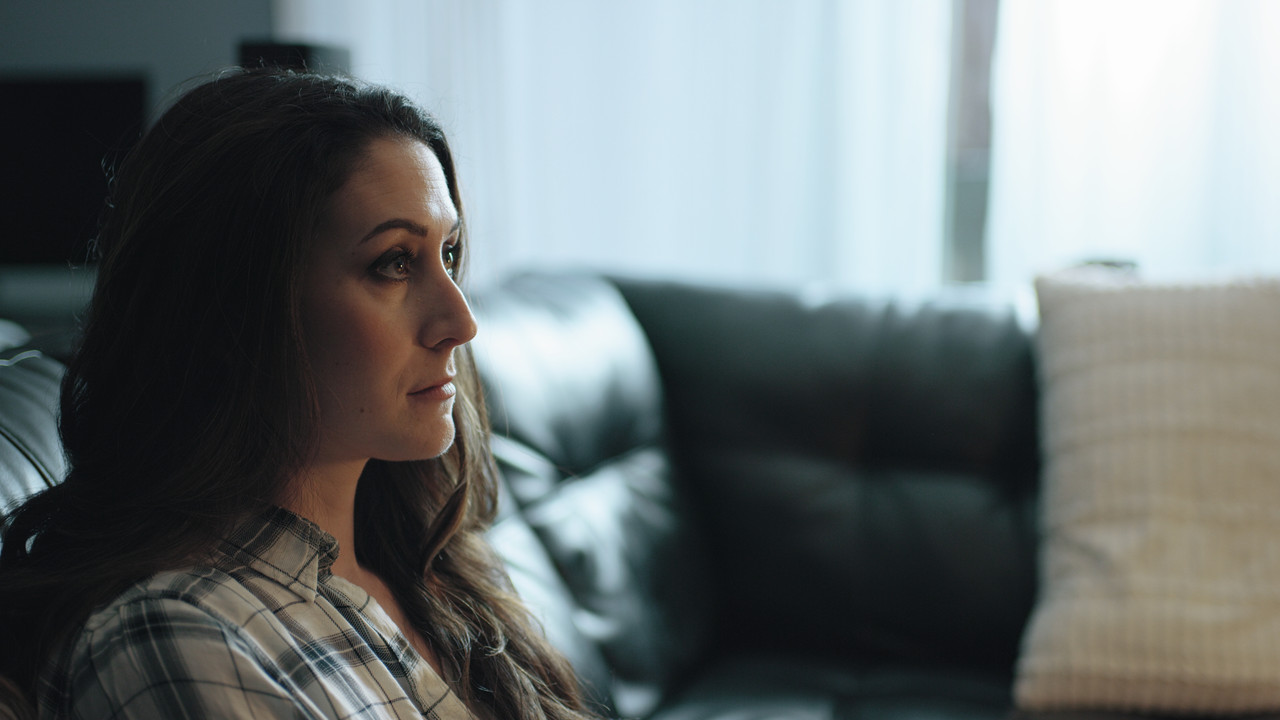
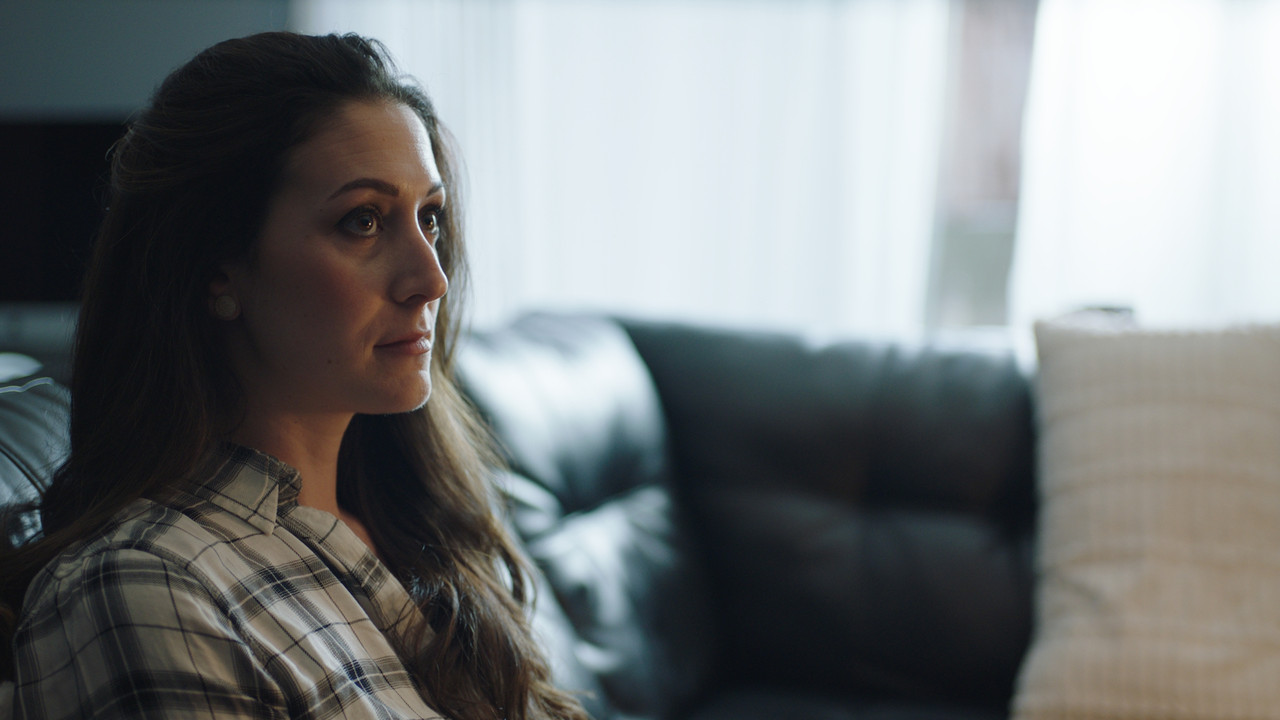
New Epic-W vs. Alexa Mini test

Such mapping happens post A to D, and does not effect raw data. It's part of the raw development process. One of the great things with modern digital cinema cameras (rather than video cameras of old) is that you can always get linear light data out.

Thank you for the clarification Graeme. Increased data issues to one side, do you think that there is much to be gained in controlling highlight roll off, by a higher than 16bit A/D for raw recordings?

Mike Brennan
 
Last edited:
Otherwise I did full debayer scaled to 4K in resolve.

Even at 100%, the image I posted is definitely sharper, with no sharpening added.

We need that new demosaic inside of Resolve, STAT.

Edit:

Just for shits and giggles:

test-1-2-5.jpg


alexa-test-1-1-1.jpg
 
Last edited:
Finally got to pop off a few shots with my new Weapon Helium today alongside a Mini with one of the DP's from the original test. Shot all STH, 8K FF 5:1, at 800-1600. Looking over the images now, and I have to say I'm feeling a bit better about what the camera can deliver. Really need to do a full test with all OLPFs rated at appropriate ISO against Alexa, and preferably also Weapon Dragon.


Few asides:

The exposure gap between Alexa & RED at same ISO values definitely seems even larger than on Dragon.

IPP2 Transform LUTS are great.

Is there an ADD equivalent for Helium? The button is greyed out in RCX for me.


And on a semi-related note and with a HUGE grain of salt, heard through the grapevine that Helium VV is a real thing....keeping my ear to the grindstone...
 
Last edited:
Turns out we have common ground... by getting all of what one DOES have with ETTR, one can then grade to one's preferred look. '-)

Unless of course you're grading a drama with many scenes and shots and having to rebalance every single shot because of ETTR is going to drive you nuts.
And in extreme cases difference of noise texture.

So it depends on the project.

But broadly speaking if anyone finds themselves pushing skin by 3 stops on an actual shot they ought to consider another career...

cheers
Paul
 
Interesting test and thread. No big fanboyism in sight - good!

The reason for the latter is that in this comparison test the Red camera has an obvious advantage: it's visibly better in resolution than the Arri if UHD is the taget. And since UHD is taking traction this is a very valid point.

The second plus, finally: a Red camera out-performs an Arri camera when it comes to noise/underexposure.

On the other hand, Red's colour science has some room left for improvement compared to the Alexa:

1. there are visible colour shifts when the sensor starts to starve on light; not as bad as BM (they are really bad at this) but still not convincing.

2. highlight roll-off is an Arri speciality. There is still a gap. I've got the feeling that Helium did not improve on that compared to Dragon, on the contrary.

3. colour rendition doesn't seem to be on par. Ok, this is a very subjective topic but still many very talented and experienced DOPs / directors chose Arri for this very reason.

4. ProRes / LogC Rec709 LUT workflow. Any way you slice it - and yes there are many advantages of a compressed RAW workflow - the industry loves it. In all areas and genres, even green screen applications.

Many of this issues can be solved in post. So one can argue that Red's approach, based on raw camera data, gives the user an optimal foundation of further processing and manipulation being resolution the obvious brand core. But for many, actually the vast majority out-of-the-box performance trumps technical nerdity, or to put it positively choices.

And if one looks at the test's pictures offered on the website the Arri's pictures look better. Perhaps just a tad, but they do (at least to me and I own an Epic Dragon).
 
Interesting test and thread. No big fanboyism in sight - good!
1. there are visible colour shifts when the sensor starts to starve on light; not as bad as BM (they are really bad at this) but still not convincing.
2. highlight roll-off is an Arri speciality. There is still a gap. I've got the feeling that Helium did not improve on that compared to Dragon, on the contrary.

There are two things here. One is mapping from cameras own wide gamut into a suitable display gamut - this is the foundation of IPP2. Arri do this internally before you see the RAW. They have their own approach which is set in stone but based on years of colour knowledge. And those guys *seriously* know their colour science.

Secondly Alexa, like film, desaturates as light increases, this is generally seen as a good thing but in my opinion it's just a certain look. Personally i'd prefer to start with everything and make a choice how the highlights should be. Easier to remove colour than adding it. There are cases where light coloured highlights are a good thing. Look at HDR, and what we're going to start seeing are displayable and very bright highlights - skies that a bright blue, not clipped white. The Alexa isn't going to perform as well here, it's not even going to be a choice because of the baked in way colour is dealt with. Alexa is very much a film look in a digital camera and as time marches on styles and looks change.

I've worked a lot under emulation LUTs recently and they produce a very nice broad brush stroke, but there are plenty of times where i think they don't work so well, in certain lighting situations and so on.

There are times in VFX where it is better to have more saturation in the upper tones, for qualifying, tracking - more to get hold of. I'd rather work with RWG natively and then take advantage of the IPP2 display transforms at the end. I just feel there is more image to get hold of in some tricky situations. (I've only played at this, not had any hardcore vfx work to do with the footage yet)

Alexa is an awesome camera, perhaps the most popular. It does have a very defined look, some of this is because of the workflow. The simple availability of the Arri 709A LUTs which give a very recognisable look on TV and film. It's a good look too. But i think it's a bit of a lazy look at times. Commercially makes sense though, not too much to do after shooting.

But then i look to series such as the crown, which IMHO has an incredibly subtle, beautiful look to it which i think is a factor of the Sony RAW and the custom post approach.

And if one looks at the test's pictures offered on the website the Arri's pictures look better. Perhaps just a tad, but they do (at least to me and I own an Epic Dragon).

They do, but then some of the images posted here i think look better still.

cheers
Paul
 
Secondly Alexa, like film, desaturates as light increases

Its highlight behavior is much more complicated than that and simple lum/sat compensation won't get you there, you will only screw up saturation response in upper signal range.

On the images I posted you can see saturated highlights with both cameras.

Look at HDR, and what we're going to start seeing are displayable and very bright highlights - skies that a bright blue, not clipped white. The Alexa isn't going to perform as well here, it's not even going to be a choice because of the baked in way colour is dealt with.

It doesn't do that exactly as you interpret it and its highlights are actually easier to use then those from other cameras. It keeps the signal, its saturation and hues where other cameras loose it.

Baked in part does have limitations though, and has to do with specific hue coverage and separation.
This is where Red can offer more.
 
Its highlight behavior is much more complicated than that and simple lum/sat compensation won't get you there, you will only screw up saturation response in upper signal range.

On the images I posted you can see saturated highlights with both cameras.


It doesn't to that exactly as you interpret it and its highlights are actually easier to use then those from other cameras. It keeps the signal, its saturation and hues where other cameras loose it.

Baked in part does have limitations though, and has to do with specific hue coverage and separation.
This is where Red can offer more.

No, i understand that's a gross oversimplification hence the comment about colour science. In your samples i do see differences in richness and saturation of the highlights though. Most peoples broad description of Alexa is about the desaturation/rolloff of the highlights. In fact i think there are adjustments much earlier than that. There are some good tests and analysis of that out there.

But sure, it is more complicated than i wrote.

I was really trying to promote the idea that Alexa's reason to be was a film replacement which is does perfectly. Red on the other hand appears to position a bit differently in that regard.

cheers
Paul
 
In your samples i do see differences in richness and saturation of the highlights though.

How do you know which is which ? :)

You are seeing and judging what I did there with the captured image, not just what the cameras and its base color sciences do.
That is often disregarded and people tend to valorize raw camera performance on fully developed image.

Had I invested more time they would match better in highs and especially with that light on the face, beyond the point of relevance for continuity. That was just a short pause from work for thread drama reduction, not full camera matching attempt.
 
How do you know which is which ? :)

You are seeing and judging what I did there with the captured image, not just what the cameras and its base color sciences do.
That is often disregarded and people tend to valorize raw camera performance on fully developed image.

Had I invested more time they would match better in highs and especially with that light on the face, beyond the point of relevance for continuity. That was just a short pause from work for thread drama reduction, not full camera matching attempt.

My point was that this is true, we're judging these results with your work which was better than the original samples. In the same way the original shootout is judging post choices made by the testers. I was suggesting a comparison with raw image data from the cameras if you're going to call it a shootout. I mean we're all looking at those images through a variety of mostly uncalibrated sRGB displays as well. We can't make critical judgements based on that.

Of course you could be playing a fine trick, but the one i perceived as being Helium had a deeper depth of field, in order to match exposure. Also the highlights remained slightly more saturated which was inline with expectations too. So if it looks like a duck and walks like a duck i assumed it was one. unless you've dressed something up as a duck :)

Yes the ArriLUTs contain a lot of desaturation and roll off but the original arri raw files don't have tinted highlights and channel clipping in the same way that other RAW formats can. Perhaps this is a factor of an Arri SDK treating the files. You never get to see the actual values into those files before debayering.

The arri is the finest filmic camera out there out of the box, no question.

But that original shootout was unfair to the Helium too and there's more to images than emulating film

cheers
Paul
 
As others have mentioned, the highlight "rolloff" is entirely based on the curves applied to the footage. Both the RED and Alexa initially capture linear data from the scene. Highlight rolloff occurs once you switch to a log format and apply a display transform (aka "s-curve").

Here’s a quick comparison of the Helium with different transforms, showing you can achieve closer results to the Alexa by using an alternative colorspace & luma curve (the image also showcases the resolution difference between the two cameras):

RED_Alexa_Comparison_2.jpg

Of course, highlight rolloff doesn’t work well when the camera's clipping point is visible, which is why Helium performs better at slightly higher ISO settings (it maps the image data higher on the scale, giving more room to rolloff the highlights).

I also want to touch on the misconception that ARRI's LogC2Rec709 LUT is doing something special to reduce saturation in the highlights. Actually, the phenomenon is a characteristic of a display’s colorspace itself. As you approach white or black, the maximum amount of saturation decreases. Here's a simulation of a colorspace in 3D space:

 
Suggested tests to compare clipping effect on colour science / and observe any saturation changes:

Test1:
+) Use a computer program to cycle through all colours at a Fixed brightness -> display on a P3 screen
+) Point and Alexa & Red at display. Setup Exposure so that White light is bright enough to clip RED

Test2:
+) Use a computer program to cycle through all colours at a Fixed brightness -> display on a P3 screen
+) Point and Alexa & Red at display. Setup Exposure so that White light is bright enough to clip GREEN

Test3:
+) Use a computer program to cycle through all colours at a Fixed brightness -> display on a P3 screen
+) Point and Alexa & Red at display. Setup Exposure so that White light is bright enough to clip BLUE


This might reveal if ARRI CS introduces other measures (eg max luma clamping), and more 'readily contrast Arri vs Red look.

AJ
 
Also studying the color channels you can see Arri does not keep its channels separate as well as helium does. In the colorful lighting test where the back of his head is red, Helium's blue channel even at the brightest exposure has no detail, while arri even at the highest exposure has some. And that makes sense, since arri renders the light somewhat magenta while helium is exactly on target. I imagine the same thing is happening with daylight looking a bit teal on arri. You can also see that helium is more starved for blue light in the tungsten lit tests which makes sense since Helium with Standard OLPF is excatly 5600k balanced, and arri maybe 4000k ish.

Helium's sensor has a bayer array with 4k red and blue channel, while arri's has less than 2k in each channel, and when you compare red channel vs red channel at 4k it really shows how soft the arri's color resolution is.
 
Last edited:
I also want to touch on the misconception that ARRI's LogC2Rec709 LUT is doing something special to reduce saturation in the highlights. Actually, the phenomenon is a characteristic of a display’s colorspace itself. As you approach white or black, the maximum amount of saturation decreases. Here's a simulation of a colorspace in 3D space:

I'm not a colour scientist nor do i play one on TV, but it's an area i'm deeply fascinated by when i have the time.

That statement is true up to a certain point but that's not what we're looking at here.

I did a side by side in Nuke to see the effect of the 709 Transform, this is a bit OT though so i apologise. It's much easier to visualise this in 3D because you can spin around and see the movement better but i've run off an image that shows an unbound RGB cube, going into a Log C transform (so you can clearly see how important bit depth is with log images) and then onto the normal Alexa 709. The side view illustrates the movement of source colours better, you can see the mid point has moved towards desaturation and the compression of that whole part of the image as well. Also the degree of desaturation is different across the channels.

alexa.jpg


It's interesting to visualise LUTs this way, from film emulation luts and transforms. You can see that the LUT is quite sparse in the shadows, so there would be quite a lot of interpolation for an application when it comes to subtle shadow transforms. I'm just using a 16 cube, the source LUT is twice that resolution but even so the interpolation of a given app could make a difference. This is why, i presume, Graeme is so keen to point out that the IPP2 is math based, not LUT based even though we can use LUT versions of it.

But your original point of just moving an image into a different colourspace can be a transform too, especially from a wide space to a narrow display space but there are an infinite number of ways to go from LogC to 709.

So below is a comparison of a technical 709 transform compared to that Alexa one, whilst you can see the same broad movement, the Alexa shows more desaturation in the mids and highlights. They are closely bunched together compared to a simple 709.

709.jpg


Apologies for going slightly OT, there are people here that know a lot more than me, so always keen to live and learn.

cheers
Paul
 
Paul, examining a LUT won't tell you much about the camera.

:)
 
Great that this thread is getting to the core of it all. Comparing cameras that shoot raw without separating the image processing from the discussion is like comparing lenses but shoot some of them netted and some with stacks of filters in front and then talk about their characters as lenses. Arri has some creative luts that is liked by a large group of people and they also do pretty good cameras. But when saying that one camera has more dynamic rounding then the other then the discussion is already in the ditch.
 
Comparing cameras that shoot raw without separating the image processing from the discussion is like comparing lenses but shoot some of them netted and some with stacks of filters in front and then talk about their characters as lenses.

I think this is why the vast number of camera tests generally bore me now. You have to take the whole pipeline into the equation. You can't just pull RAW camera's out of the box set the ISO to 800 and shoot a bunch of tests. Especially with RED because (i have come to learn) it just doesn't work that way and it is NOT how you are going to get the very best images out of the camera.

Histograms matter a bit more than ISO sensitivity.

If you want the real dirt on RED look at DXO mark scores. That is against every sensor you can imagine (or at least that they have tested). I would like to see where and how the ALEV rates on their scale, it would be interesting. But then again, the ALEV is not a sensor that people are professionally shooting still images on.

So Bjorn, Your point is EXCELLENT. In modern digital times (and even on film) every medium that recieves light through a lens, sensor or film, behaves differently. Somehow, the ALEV is the bar, but not everyone who receives RED footage, or shoots it for that matter, really understands how the F to expose or process it because they may have been weened on out of the box, WYSIWYG digital imagery, when it is not quite that way in RED's RAW workflow.

Trusting the monitor over the Histogram, not using the noise bar, goalposts, etc, are all ways errors begin at the shooting end. On the post end, not evey house has the complete knowledge of how to get the best out of the RAW.

David
 
Last edited:
Back
Top