Welcome to our community

Be a part of something great, join today!

  • Hey all, just changed over the backend after 15 years I figured time to give it a bit of an update, its probably gonna be a bit weird for most of you and i am sure there is a few bugs to work out but it should kinda work the same as before... hopefully :)

KOMODO....

Status
Not open for further replies.
For years now, people have been saying RED was going to get squeezed out by this and that budget cam. But, many of the cameras that people said would contribute to that scenario have fallen off the radar. It hasn't happened for the same reason the Alexa isn't getting squeezed out by these budget cameras for the higher end stuff.

RED and Arri aren't in competition with them.

There is more to this than the specs/performance of a camera vs its price. Red and Arri DNA as companies is based on service. When the chips are down and you have a serious problem they have your back. BMD treats their low end products like throwaways and their support philosophy reflects this . If you are a documentarian out on a remote shoot and something bricks the camera, good luck getting anything but thoughts and prayers out of BM, much less an advance overnight loaner or replacement to get your through.
Sony, Canon, Panasonic, are a tier down from Red and ARRI, but they do support their high end products well. Not the same for say a GH5, or low end Canon consumer DSLR though. They don't make enough profit from them to do it.
Intangibles like these have real market value for some, but not for others. They are part of what makes the reputation of a company and its products. It is part of what you pay for.

Even with the Hydrogen 1 phones, when Red couldn't deliver the titanium preorder versions in a timely fashion, they sent their customers a free phone.. to keep!
 
And still I don't understand why it uses CFExpress cards. Officially because their 5.9K RAW Lite @ 60fps has a bit rate of 2.5 Gb/sec but that's like 312.5 MB/sec which is still under what CFAST 2.0 can do. Am I missing something ? (like there's some kind of buffer in cards which forces your to have double your codec bitrate ?)

Look at the RED patent for recording compressed RAW.
 
Which is exactly my point. And fiddling with the released RAW footage from the Pocket 6K and comparing that to my 6K Dragon sensor footage just makes me stand by that point even further. (snip)

For many of us, the quote in Christoffer's signature is the biscuit - lightly compressed RAW ready for the digital dark room. Have no experience with BRAW, but even if it's a pale imitation of RedCode, it's still an opportunity to alter the captured values prior to constructing the RGB image. Beyond that, for many in the target market; the time and expertise for grading is not there anyway. I expect the Komodo will be more camera than the BMPCC6K with a "fatter" digital negative for post - but, again, what percentage of the price delineated market segment we are discussing will be willing to pay for that extra meat in the file?

Cheers - #19
 
And still I don't understand why it uses CFExpress cards. Officially because their 5.9K RAW Lite @ 60fps has a bit rate of 2.5 Gb/sec but that's like 312.5 MB/sec which is still under what CFAST 2.0 can do. Am I missing something ? (like there's some kind of buffer in cards which forces your to have double your codec bitrate ?)


I know you're stuck on the CFast card and can't foresee the advantages that CFExpress will give us going into the future, but I for one, really think the form factor of the Express card plus it's capabilities will future proof memory for a long time. We're on the cusp of a memory medium change and I think going CFExpress is a no brainer. I've always hated the form factor of Compact Flash/CFast for some reason. It's like CFast and SD got married and spit out the perfect child. Finally, now we can all be on the same memory card throughout the industry for the first time.
 
I could take issue with practically every sentence in your 3-post response. It's that far off base from what I was saying. But, I won't counter point-for-point and, instead, have condensed a lot of it below into something more manageable to address overall.

A few of your responses were so off base, you actually supported the point I was making without knowing it, thinking you were arguing the opposite viewpoint when you weren't. You've wasted a lot of words on things I never said or meant. At times it was by willfully ignoring things that I explicitly stressed in bold and italics.

Nevertheless, I will try again.

I said RED's primary target was the high end. Not their only target. This suggests they have a secondary market, and tertiary markets, they try to accommodate as best they can. You said it yourself: "Their aim is to deliver digital cinema at the highest quality..."

What camera company has that as a goal but primarily targets the lowest budgets? Nobody. Ever. Therefore, I think it's quite clear for whom that philosophy is meant.

The added benefit and value that RED knew existed from the start was, at the price points they could deliver that quality, a secondary market of cinema camera owner-operators, which they created, could emerge.

They'd get the same quality as the big productions at a previously unobtainable price point. After that, a very familiar pattern began to develop and the cinema camera market expanded and divided into tiers.

Like almost everything else you buy, low-medium-high, bottom-middle-top or good-better-best came to be for these as well. Sometimes there are tiers within these tiers.

It's the same when you buy a car, a toaster, a watch, etc. In retail, there's a name for what it's called (I forget) when they give low-med-high options but the goal is to push the middle product. It's clearly better than the low end and almost as good as the high end for a lot less.

Consumers are very comfortable with three choices. Too much choice is problematic, as is not enough. Most people go for the middle range. I know what you're thinking. The middle is clearly better than the bottom in my example, which won't be the case when BMD and others close the gap.

Here's the thing: BMD will also contribute to the tiered system (like RED eventually did) and, once things settle, will themselves have clearer distinctions among models.

Yes, RED sells more cameras to the middle - the owner-operator crowd makes up the bulk of their sales. However, given their business model, it's still congruent with the notion of primarily targeting the high end of digital cinema. They can and have done both successfully.

Despite owner-operators being their largest customer base, if they were the primary focus, RED probably would've put knobs, switches and buttons on their cameras, as those things are a big draw on the cameras that do primarily target owner-operators and solo shooters. But RED never has, because, well...I've already told you.

The middle is broad and I'd argue that RED caters more to the middle of the middle tier on up, leaving the bottom of the middle tier to other manufacturers, including BMD with the URSA Mini Pro.

So, since you think I'm committing a fundamental flaw by referencing the past, I'm going to tell you what's going to happen in the future. Pay close attention.

Prices will drop at some point; maybe considerably. RED and others will sell their camera lines for less than they do now. The increase in quality at the bottom will drive the price decreases across the board. You're right about that. But, here's where you're wrong.

Since we don't know what cameras will exist, what capabilities they'll have and how much they'll cost, let's use today's cameras (merely for a frame of reference - these might not be the cams in question) and capabilities and apply future, market disrupting prices.

So, the Pocket 4K costs $495. The Pocket 6K costs $795. URSA Mini Pro G2 costs $1995. Most of RED's cameras range from $5K - $10K, with Monstro costing $17.5K. Guess what? The market is still tiered. There's still a high-medium-low stratification. The price points have merely shifted. There won't be a one-size-fits-all price for cinema cameras.

If this happens two years from now, maybe these are the cameras in question. Let's say that's true. It's so close that many people considering and prepared to buy an URSA Mini Pro for $5K might now consider buying a RED for $5K.

Because like you said, "Their aim is to deliver digital cinema at the highest quality..." People value that. It's an intangible that's hard to quantify.

There's two things I can guarantee you:

1) Those low tier prices will bottom out at some point. BMD isn't going to lay people off so they can produce a Pocket Whatever K for $150. Diminishing returns, remember? In fact, once they hit bottom, you can probably expect a slight increase in the bottom tier over time. There will be no more room at the bottom to be priced disruptively.

2) There's no way in hell RED is going to jump in the fray of $495 cinema cameras. There's too much volatility and that segment is fickle. They'll do what they've always done by targeting the high end while simultaneously serving the middle-to-upper middle tier. Their business model scales with the market. I think they can exist there indefinitely.

If they can do that, there's no real need to treat BMD or Z CAM as direct competitors in a way that impacts their business any more than it does now. That doesn't mean RED is ignoring them.

How do I know this? By looking to the past. It happened with audio gear. It happened with video gear. It happened with graphics software. I've seen it all before. There's no reason to think it will be different for cinema cameras. The future, however inexpensive it may be, will be tiered.


The "when" is not a few years from now...The "when" is therefore just around the corner...I find it interesting that every time we have larger shifts in technology, people are always pointing out that "all of this high-end professional equipment will never be available for consumers"..."Some people" are a larger group than the other group. It's a statistical flaw to view only what you see as the bigger group. The largest group of Red users aren't filmmakers doing big productions, it's the smaller owner-operators companies, content creators and so on...You are talking about years ago, which is a fundamental flaw when talking about technology and how it develops...Is it really far fetched to assume that a shift in low-priced cameras to deliver the same quality as high-end Red's is about to happen? Because it will happen, it is happening right now...So, what about the MK II or MK III of the Pocket 6K, S1H, ZCam etc.? The price of technology comes from development costs, material costs but most important through what competition it has.

...disruption...diminishing returns...statistical flaw to only count the big productions...Brand loyalty...Komodo might be the most rational decision Red's taken in recent times...How far back are you looking?...By popular, what do you mean?...You base all your argument on the status quo...This is the whole reason for Komodo's existence, it's for THAT market, the market who are about to sell their Red to get something more rationally priced for their job without cutting back too much on the quality they deliver.

The disruption is not in that specific camera, it's in the idea that now such a camera can exist for $2500. Do you think these companies will stop delivering after they released something like that? Your argument relies on these companies not improving their cameras. How much more can Red improve their own lineup? Look back at the development from the big Red One MX to now, do you see what I see? A slow-down. The radical improvements Red has done over the years have been slowing down while other companies have caught up.

In your previous post you mentioned "Pocket 6K" every 57 words. You talked about it like it was the Messiah. Now, it's only "indicative" of the inevitable changes to come? Ok.

My argument relies on everyone improving their cameras, not just the low end. You're the one who seems shortsighted about what more advancements there are to be made in imaging technology. Did you not see the link Misha provided about Panasonic's sensor tech? That's only one of the things they're working on.


Red is no way near doomed, but there's a change in winds that the Komodo is the answer to, if it succeeds...Imagine if BMD beefed up the price and improved on that concept, imagine if they released a $10000 camera as a new iteration of the Pocket 6K. This is the wind I'm talking about, that the Pocket 6K is the breeze of.

If BMD releases a $10K camera, it justifies the price of middle tier cameras and users, in terms of price, that RED very much caters to. A $10K BMD cam seems to contradict everything you've said about $2,500 being disruptive to similarly priced RED and Canon cams, not to mention a $6.5K Komodo with similar specs to the Pocket 6K.


Only counting by the sensor. But a big heavy Epic Dragon is no match for a sub-2 lb Pocket 6K that could be used with a cheap gimbal to achieve results far beyond what you can do with that Epic Dragon. And good luck with getting side-gear to that Epic Dragon since Red doesn't sell that anymore. Buying an old Red is foolish for a business compared to alternatives today.

Anyone buying an old Red when the Pocket 6K is around, is a fool. Red One is not "more camera", not even close.

Huh? I mentioned Dragon-X, not Epic Dragon. I also said the Dragon-X was more camera than the R1. I told you, you've wasted a lot of words on things I never said. You're all over the place.
 
Last edited:
Komodo should rethink it's media to CFexpress, it's going to become the professional norm, it's not too late.
 
Komodo should rethink it's media to CFexpress, it's going to become the professional norm, it's not too late.

What is the current professional norm?

Just out of curiosity. I'd love for CFexpress too, but if the camera doesn't write faster than CFast the major benefit would mainly be faster offloads or "other recording features", which is a plus for sure! But also, if it adds price to the camera perhaps due to licensing, how much more are you willing to spend for CFexpress to be in there?

Sandisk has announced their new cards which are compatible with this camera, Sony had a series in development, which I expect them to announce this week or next week to compliment this and their own CFexpress cameras.


current norm? i'd say cfast, the future i see cfexpress.
and so that they are more future proof, for the next generation camera, you wont have useless cfast cards in the coming years when you upgrade cameras. my cards always out perform the camera im using. what if there is firmware upgrade that gives higher bitrates? anything can happen, not to mention if you had both cameras, the new canon and the komodo, they could play nicely together with sharing cards AND batteries, and even some lenses.

also same reason all those 120gb mini mags became useless when you upgraded to a gemini or monstro. your next camera,(or your other camera) thinking ahead.
 
I believe in technological inflection points, the law of diminishing returns and Kevin Costner's ego ;-)

Pocket sized point and shoot cameras were a robust market - until a few years ago when smartphone cameras got good enough to make them pointless.

Once RED hit their stride, they destroyed Sony's pricing structure and release schedule for their top models.

The coming wave of capable, low cost digital cinema "lite" cameras looks poised to suck up the space between smartphones and rental house level gear. To be clear, there will still be plenty of owner/ops with top tier cameras like RED/ARRI/etc - but the total number of units that cohort will purchase per year is still tiny compared to a commodity device that sells for a fraction of the price.

As long as RED doesn't need to sell Komodos in high volumes for it to be a success, it will make a certain group of shooters very happy and looks like a dream gimbal, remote PTZ, jib, cable-cam, etc device. All good. OTOH, if RED is counting on selling them by the truckload to make the numbers work, the current situation appears challenging.

Cheers - #19
 
Komodo should rethink it's media to CFexpress, it's going to become the professional norm, it's not too late.

It's nice for small camera's, for the big rigs I prefer U.2 (or both with a CFExpress to U.2 adapter, both are PCIe-3).
512 GB for $600 is a lot, 3,840 GB for $710 sounds a lot better to me.
 
current norm? i'd say cfast, the future i see cfexpress.
and so that they are more future proof, for the next generation camera, you wont have useless cfast cards in the coming years when you upgrade cameras. my cards always out perform the camera im using. what if there is firmware upgrade that gives higher bitrates? anything can happen, not to mention if you had both cameras, the new canon and the komodo, they could play nicely together with sharing cards AND batteries, and even some lenses.

also same reason all those 120gb mini mags became useless when you upgraded to a gemini or monstro. your next camera,(or your other camera) thinking ahead.

The same will happen to current released/announced CFExpress cards.
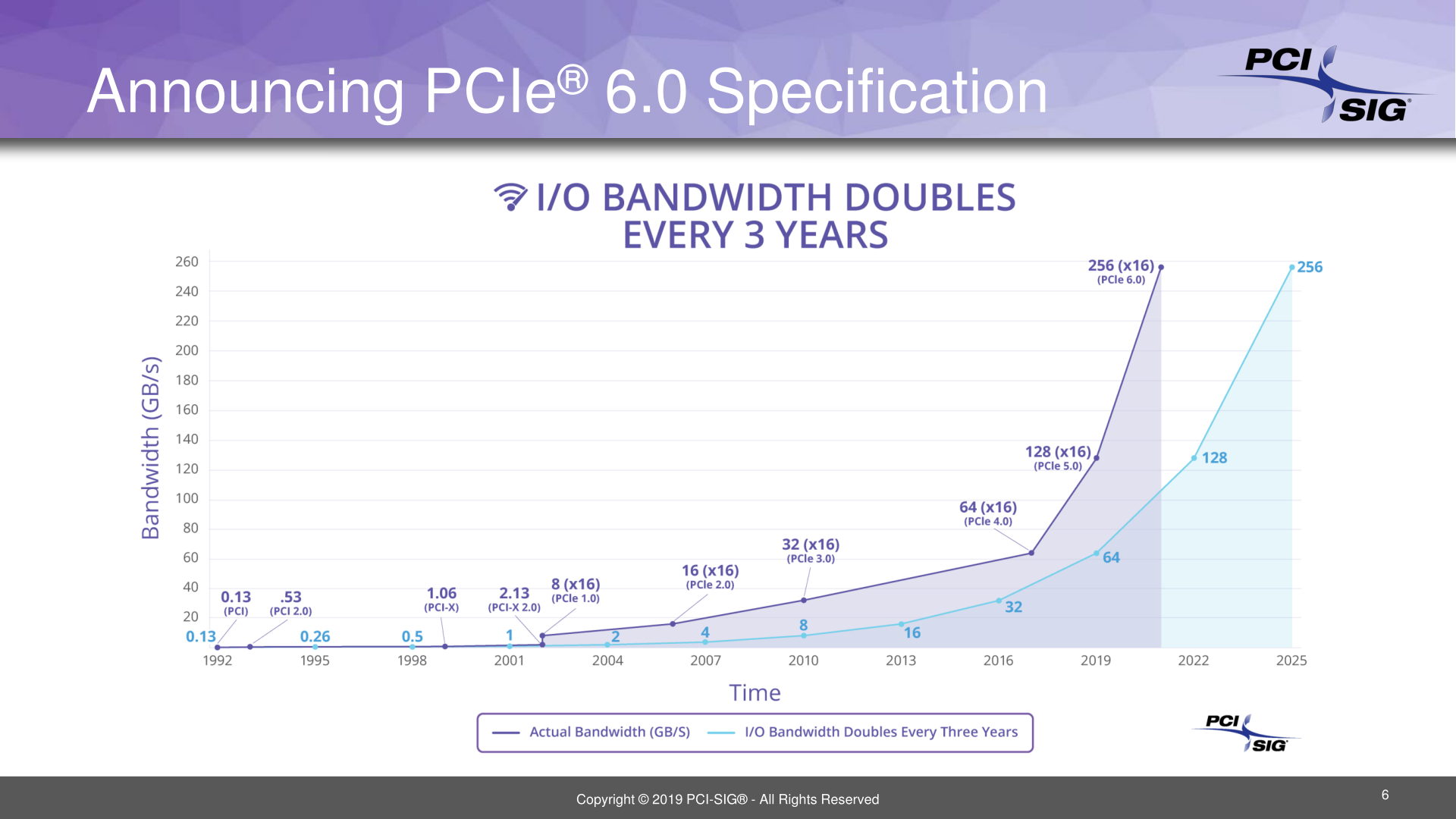
The B type is PCIe-3 with 2 lanes.
Just check this article https://www.anandtech.com/show/14559/pci-express-bandwidth-to-be-doubled-again-pcie-60-announced-spec-to-land-in-2021, it's 2010 technology.

PCI-SIG%20DevCon%202019_Briefing%20Presentation_final_06.png


https://images.anandtech.com/doci/14559/PCI-SIG%20DevCon%202019_Briefing%20Presentation_final_06.png

Future proofing is as good as impossible these days.
 
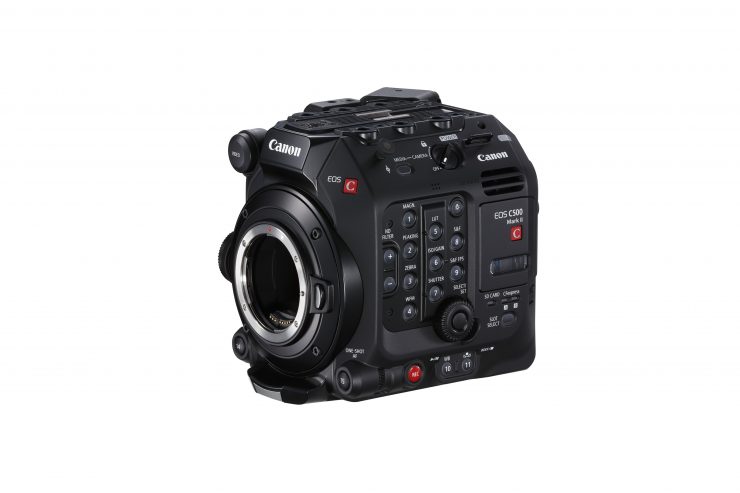
D206A_01_main-740x493.jpg


Talk about disruption...The Canon C500 mII has it all! A super feature rich camera for under $20k. I hope the Komodo can set RED in a similar path of disruption with what it offers.

Meh... I don't see the C500 unseating anything thats already on the market. You only get 120 at 2K on a serious crop as well. This camera is what you expect from Canon.
 
Once RED hit their stride, they destroyed Sony's pricing structure and release schedule for their top models.

Very much so. I think RED highlighted a specific want/interest/need back then with 4K, 4K+, and the Compressed Raw Workflow. I remember that early buzz and at the time Sony was feeling 2015-ish for 4K. Panasonic made some beloved cameras, I owned a few, but were a few miles off in terms of color performance. The growing popularity and acceptance of RED certainly had an effect on several manufacturers road maps. I think Canon is still finding their groove in this space and if they launched something like the C500 MK II in 2011, well the world would be a different place. I applaud their 1.9:1 unique sensor design with that 5.9K format. Other quirks aside really. Sony did a lot right early on and the F65 was one of my favorite efforts from them despite the horrific mismatched marketing of it being an 8K camera, though good, it was not extremely popular. The follow up F55 solved many of those hiccups and they were trying to scrape the Alexa paint with Venice. I think their next offering is as much to compete with Canon and RED, but also many will see it as competing against themselves as well. Panasonic has been trying to capture that lightning they had across the DVX and HVX series. Many enjoyed the Varicam 35, including myself, but it didn't light the world on fire. The fire burned nicely with want ARRI did so well and what RED became. At least that's how the industry in the US and abroad has panned out. Rental inventory at Panavision and major rental houses tell interesting stories over the years. But that's medium through big job territory, with a bit of indie in there. Prosumer/entry level professional is still very much the $15K-$20K territory as seen by recent announcements. As well all know though, camera technology has been advancing rapidly. It's tremendous what lower priced models can do these days, which really makes me wonder what the high end holds in the next year or two. You can make the argument that some of the entry level stuff is doing the job of Prosumer/entry level professional of yesteryear. In some cases even professional cameras of yesteryear. People were still comparing Sony F35 footage to a few modern digital cinema cameras a few years ago while most of us were well beyond that at that point.

Some of the early trends RED made popular certainly have had a ripple effect. Look at just how many cameras are now modular in nature and everybody seems to be above 4K resolution. Just 5 minutes ago we were all arguing about if you even need 4K. Look at the market now. I can't wait to call out for an "extension unit" on set, but we'll likely just say get me that XLR/V-Lock module or whatever.

I have pretty expansive thoughts on Komodo. It's actually a new form factor and a potential product line. If RED does move a lot of units, or finds a good amount of success, I would suspect more development along the lines of this form factor and we don't even know what it does yet. Thinking back, what was supposed to be Scarlet 3K 2/3"s was planned to be a unique camera platform compared to at the time DSMC. The body was narrower, I think used even different media if I recall correctly, and had a different rear end for sure. RED made the right call by keeping Scarlet 4K and around S35 however in the face of the actual cinema market's wants, though a small army wanted that 2/3"s love. But in many ways Komodo seems to be the first unique form factor off the main line actually coming to market. And from my perspective as a long time owner, it's a pretty radical shift in what you're actually getting out of the box.

It's apparent industry-wide right now that 6K-ish cams have become a comfortable concept across brands as of 2019. Heck, a lot of them are using the same sensor even. I think there's strength in being unique right now though. That's my personal opinion really.
 
Meh... I don't see the C500 unseating anything thats already on the market. You only get 120 at 2K on a serious crop as well. This camera is what you expect from Canon.

Some people only shoot 24 fps and rent a specialized camera when they have to go over 300 fps.
 
I hope Komodo really complements well all our other Red Cameras. The sweet spot for me is that it really does allow me to take it to places I normally don't with my Monstro: It allows me to use perfectly a Ronin S type of Gimbal, it allows me to use it on Wire cams , on sliders/ dollies and support systems that are lightweight, fast to configure and setup, and to be used in "guerrilla style" filmmaking/video shooting.

If it has a non crop 4K 120fps or more scenario, that would be absolutely killer.
 
At the risk of repeating myself, who besides image nerds is going to want more than 300MB/s of data footprint at capture? Maybe for over cranking, VFX plates or other corner cases - but for regular work in the digital cinema "lite" market segment... really? It seems to me like the definition of diminishing returns. YMMV.

Cheers - #19
 
Meh... I don't see the C500 unseating anything thats already on the market. You only get 120 at 2K on a serious crop as well. This camera is what you expect from Canon.

I see a very 'complete' camera in the C500 mkII. But I agree that when looking at the broader camera landscape, the C500 mkII's high FPS capabilities are what stands out as "not strong".

But for all practical intents and purposes, FF 5.9k at 60FPS will cover most bases (that aren't otherwise covered by specialty cameras).

I know that for me personally, the AF/ND system of the C500 mkII is a lot more valuable than less of a crop for 120fps would be (as a quasi Canon–RED comparison).

I also think that one of the least talked about features of this camera is the ability to shoot the FF 5.9k and generate (4K) 2K, 10bit XF-AVC. That's some really nice, efficient documentary footage right there, that will hold up to some light-to-standard post work.

It is a very complete camera indeed.
And I totally agree with you. The camera is marketed primarly as a Cinema Camera and 99% of the time that would require shooting at 23.98 or true 24 or 25 and maybe in some cases 29.97 and 30. Like you, I prefer a camera with options that shine in those framerates (and ok going up to 60fps is cool) and have strong codecs options than let's say a camera that shoots 960fps burst in 960p but only had h264 4:2:0 8 bits 100mbps as internal codec... ^_^
 
Status
Not open for further replies.
Back
Top