

- Moderator
- #1

- Joined
- Apr 19, 2007
- Messages
- 13,392
- Reaction score
- 796
- Points
- 113
- Location
- Los Angeles
- Website
- www.phfx.com
Whelp. It seems fitting that my first post on the new REDUSER is regarding a new feature. And warning, heavy image post incoming, because this is extremely important image quality related stuff.
This is in regards to the rather mysterious two words found in the September 18th, 2021 beta build of REDCINE-X PRO (build 54.0.51345).
Did you catch those two provocative words in there?
Enhanced Demosaic. I imagine it's difficult to name such things. Just two words shrouded in mystery. For the last 48+ hours I've been testing this out aggressively and exploring just what exactly this does. What is it? Based on my observations I can safely say it's an entirely new Demosaic. And it's as big as IPP2's release in my mind.
It's been a while since there was an image processing update; several new cameras, improved data rates, new features in RCX, and a whole bunch of new RED filmmakers out there. Won't go over the entire history along the way, but for long time RED shooters these sort of updates has been part of the beneficial journey in advancements of REDCODE RAW. In a moderate and hopefully not too hyperbolic way of explaining this, everybody just got a new camera with this update. This impacts all REDCODE RAW material old and new. Meaning this provides a visible and notable image quality improvements.
I've prepared some comparisons and examples while I was doing my testing, but if you want my scribbled notes version....
Enhanced Demosiac provides
- Improved Detail and Resolution
- Improved Edge Definition
- Improved Color Reproduction
- Improved Micro-Contrast
- More realistic rendering of captured material
If you want a simple and succinct term, Enhanced Demosiac gives you a truer and better "draw" out of the camera.
I've been running a lot of tests and darting between 4K and 8K displays. I've noticed a vast improvement on higher compression ratio material as well as frames filled with high frequency detail. On super clean images the improvements might be subtle, but they are still visible. And on other images you'll find some pretty amazing improvements.
Let's look at some images to see exactly what's going on. I've made all these comparisons UHD 4K in resolution, best viewed on a 4K monitor or opening in a new tab to digest 1:1. There are both 100% crops and 200% upsampled examples.
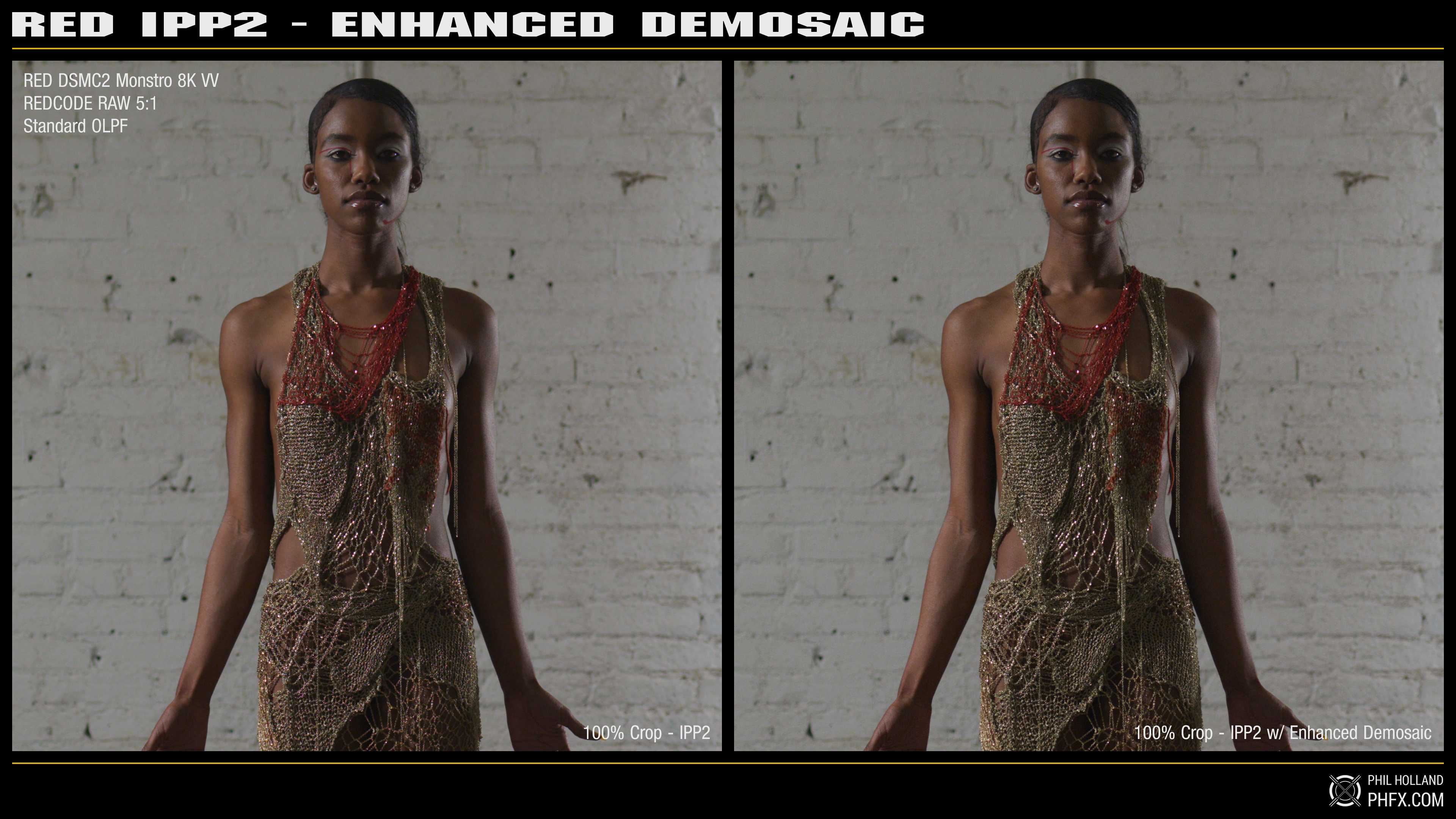
This is DSMC2 Monstro material. On the left take special notice to the magenta "bleed" that can be seen in her garment, but also can be seen in her skin and face. With the new Enhanced Demosaic we have a far more true to life representation. You can also see a subtle improvement in clarity giving the image a bit more 3D pop.
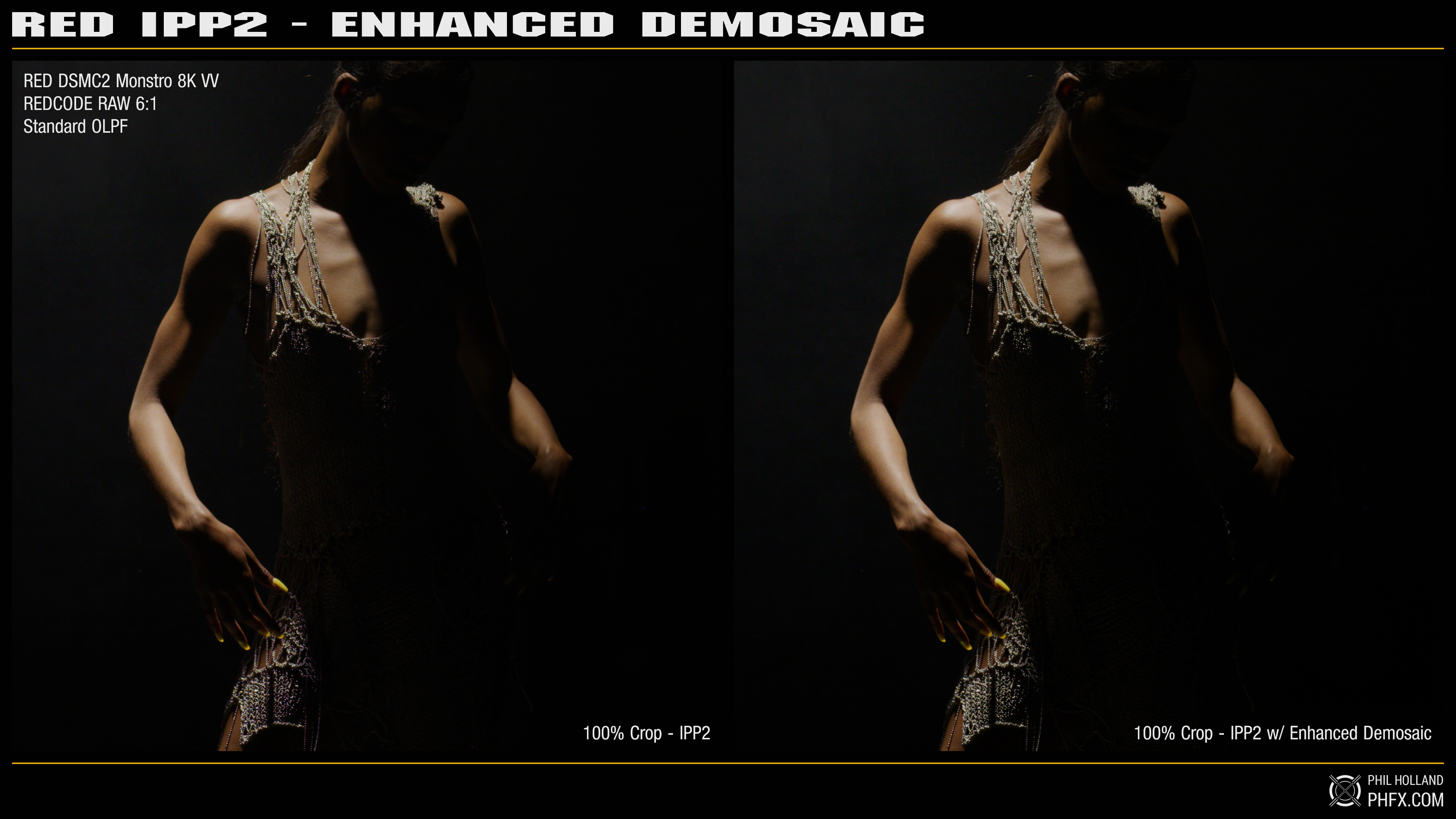
Same shoot, 6:1 REDCODE RAW, but this time was 4K 6:1 at 120fps. And this to me improves how things look at resolution and a 1:1 ratio.
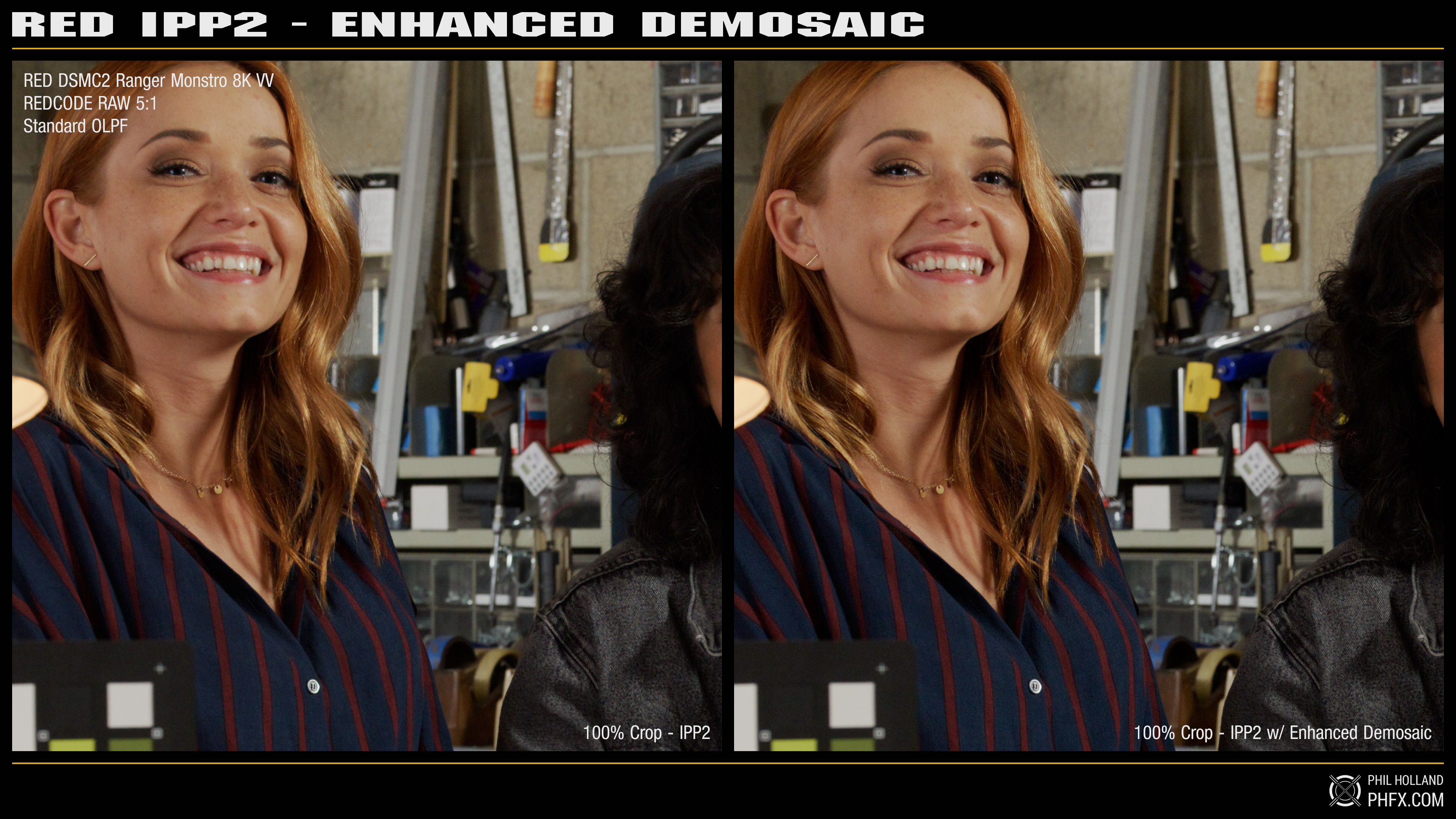
This shot is pretty clean as is, but you can see that subtle draw improvement and a bit more pop.
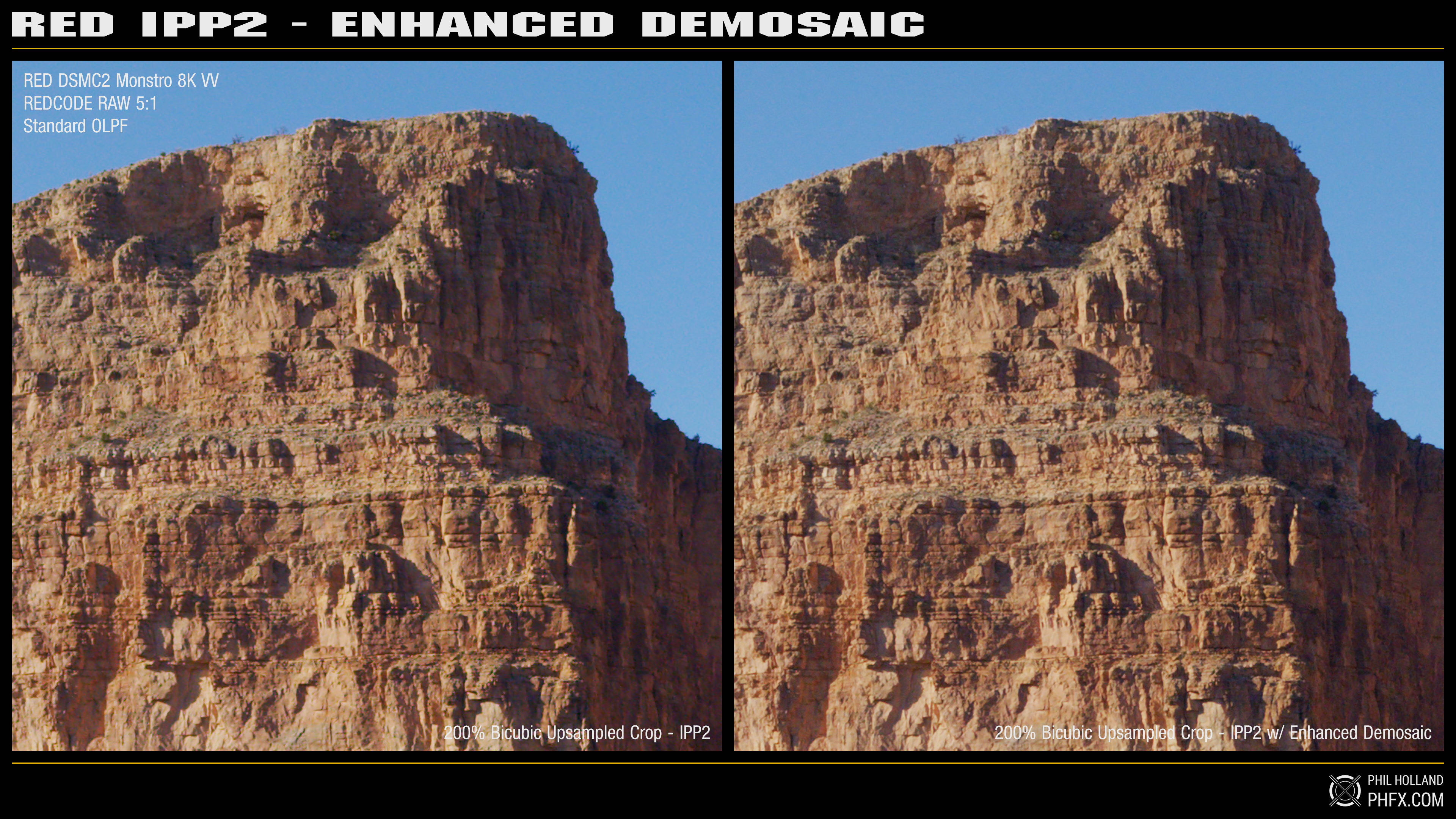
This is a 200% punched in crop from a very detailed image and this would be considered high frequency detail. We can see some areas where previously REDCODE RAW was having difficulty recreating the detail with magenta and green fringing. The new Enhanced Demosaic does a far better job. If you look closer there's better definition of the smallest details like the trees at the top of the canyon. I should also mention I do not have Chroma Noise Reduction enabled for these A/B comparisons. Enabling it does clean up that color noise if desired. I'll talk about that at the end.
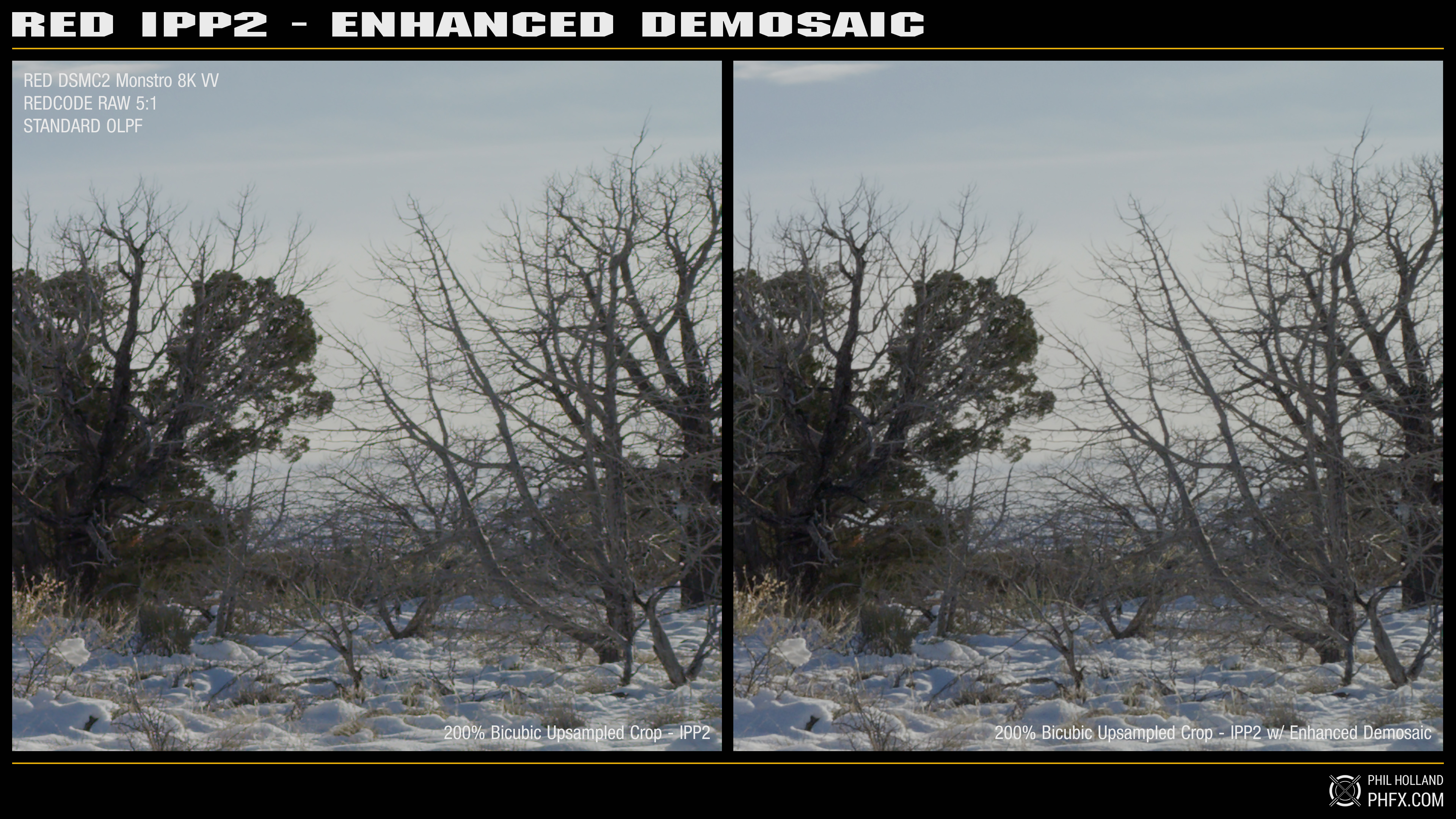
Another 200% punched in example, look closely at the branches and you'll see the improvements.
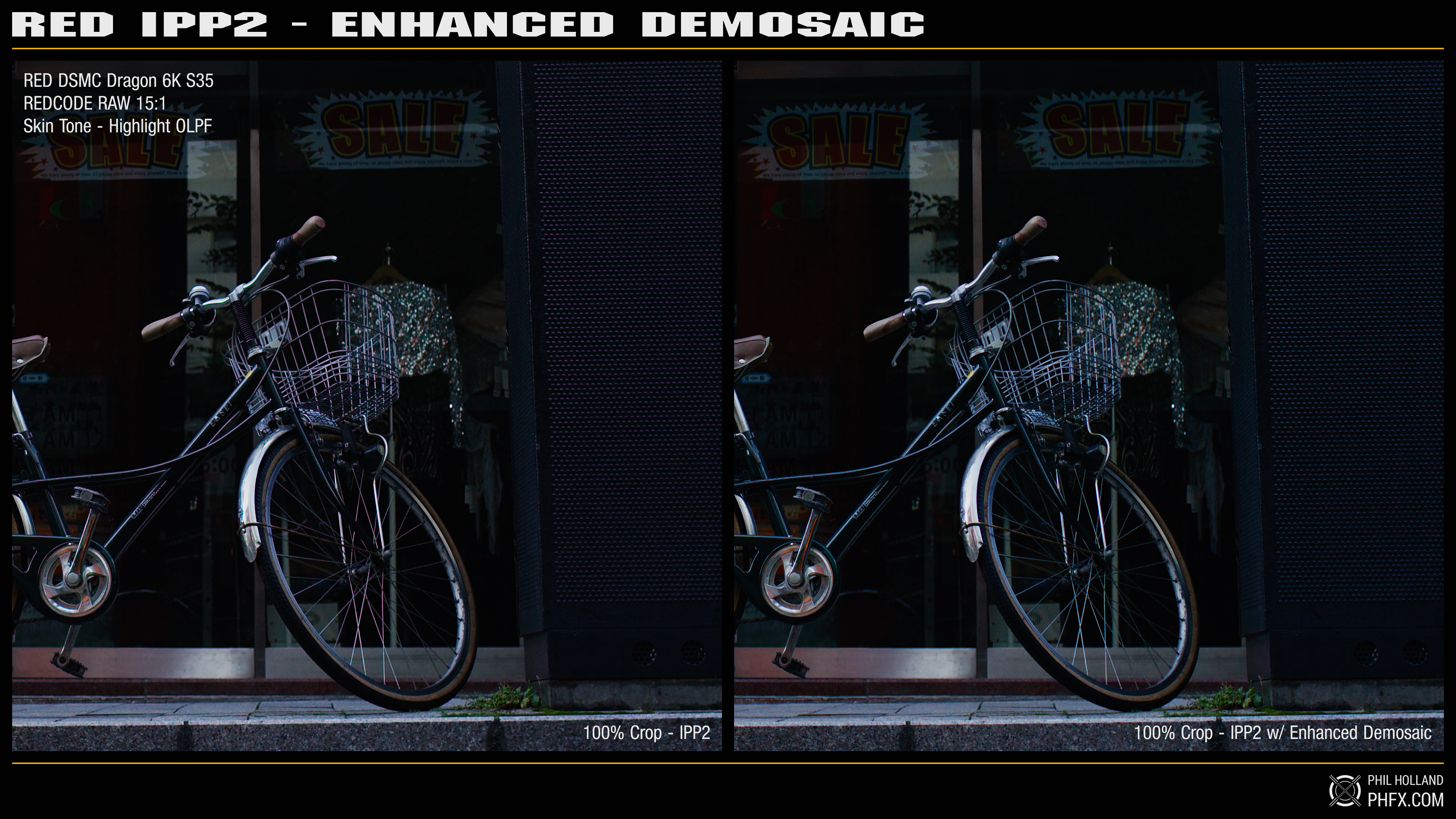
I dug deeper in my archives, this image from Japan from years back shot on DSMC Epic Dragon at 15:1 with the STH OLPF showed some rather extreme magenta bleed. The new Enhanced Demosaic cleans that up and provides a more faithful rendering.
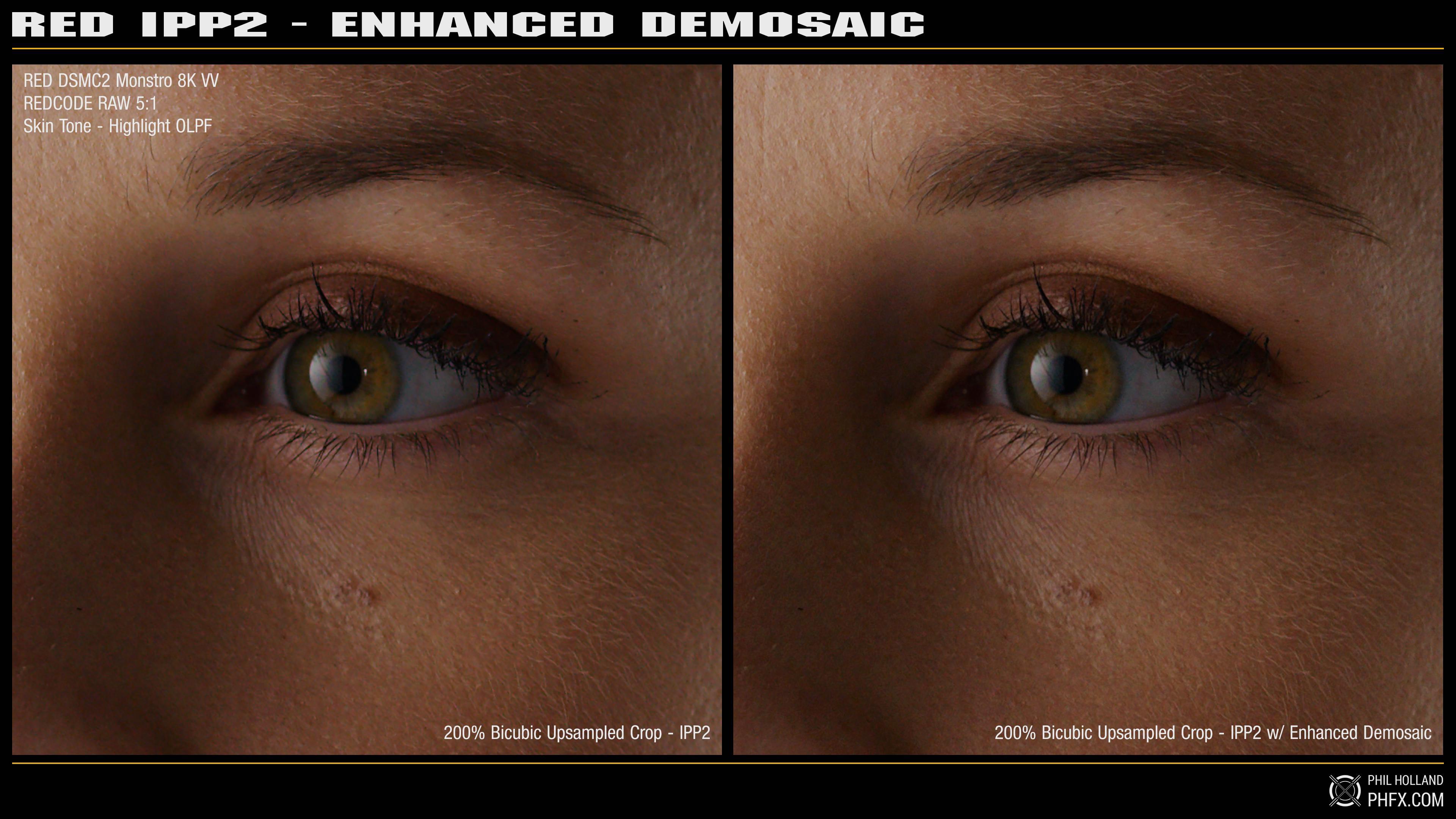
Here's an example of clean frame and at first glance you'd say this looks pretty good. But as you can see it can and does look better with this new demosaic.
So far I've shown DSMC and DSMC2 cameras, lets see some new DSMC3 material.
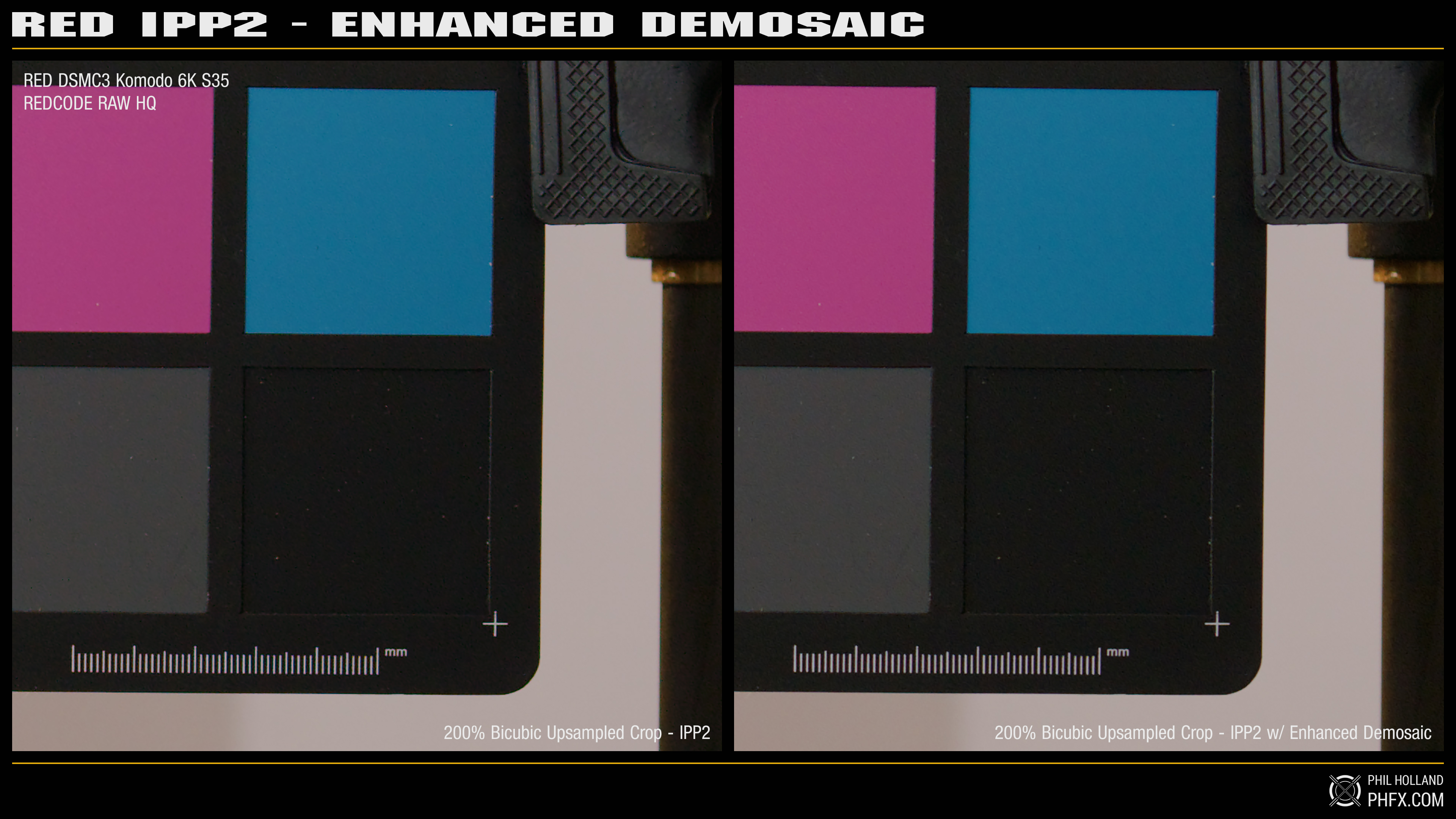
This is a crop from my first Komodo footage I uploaded and this is REDCODE RAW HQ. You can see on the millimeter scale as well as the fine textural details the improvements.
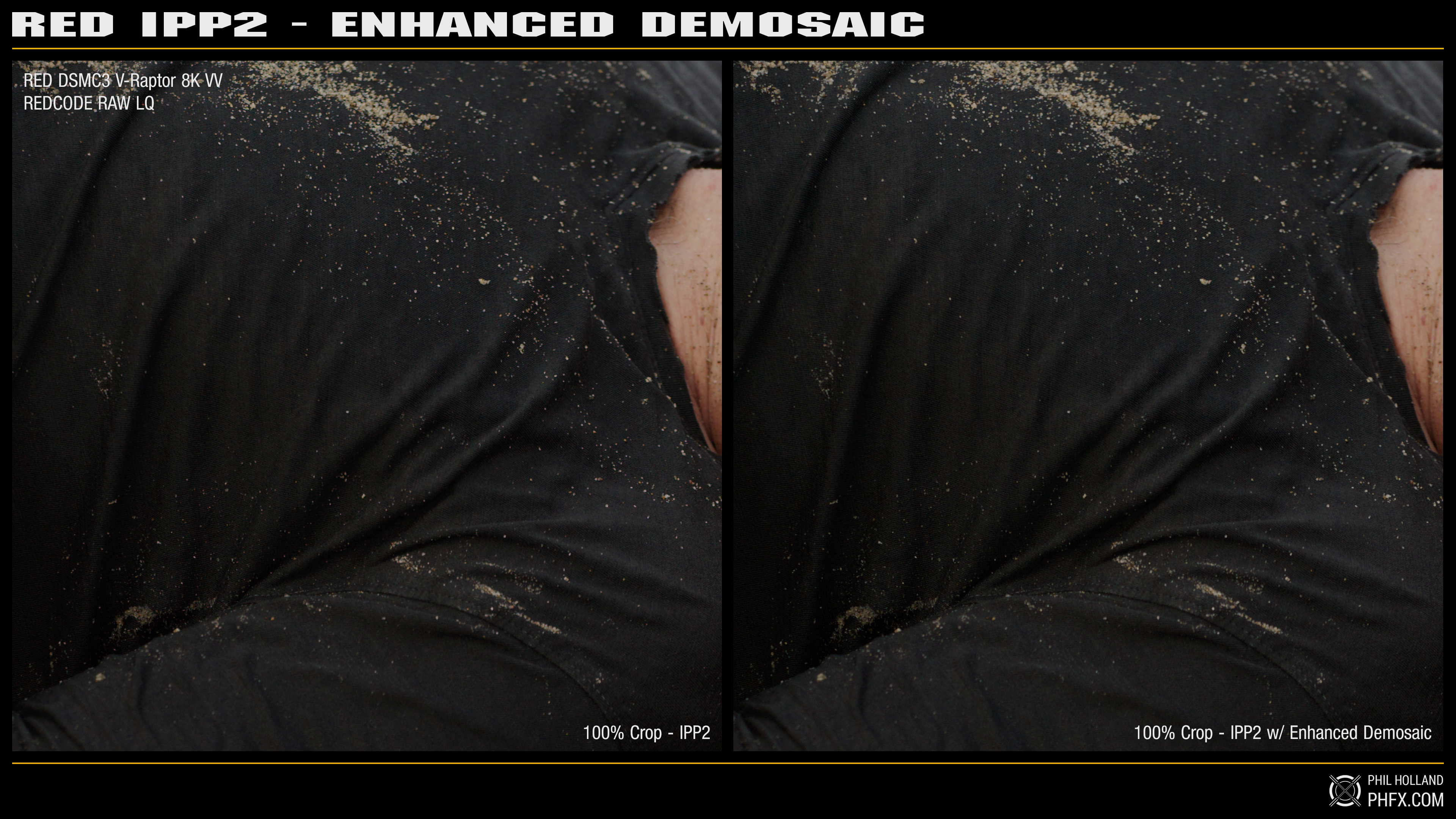
This REDCODE RAW LQ V-Raptor shot is perhaps my favorite as you can see the decolorization and bleed around the sand particles and in the texture of his shirt.
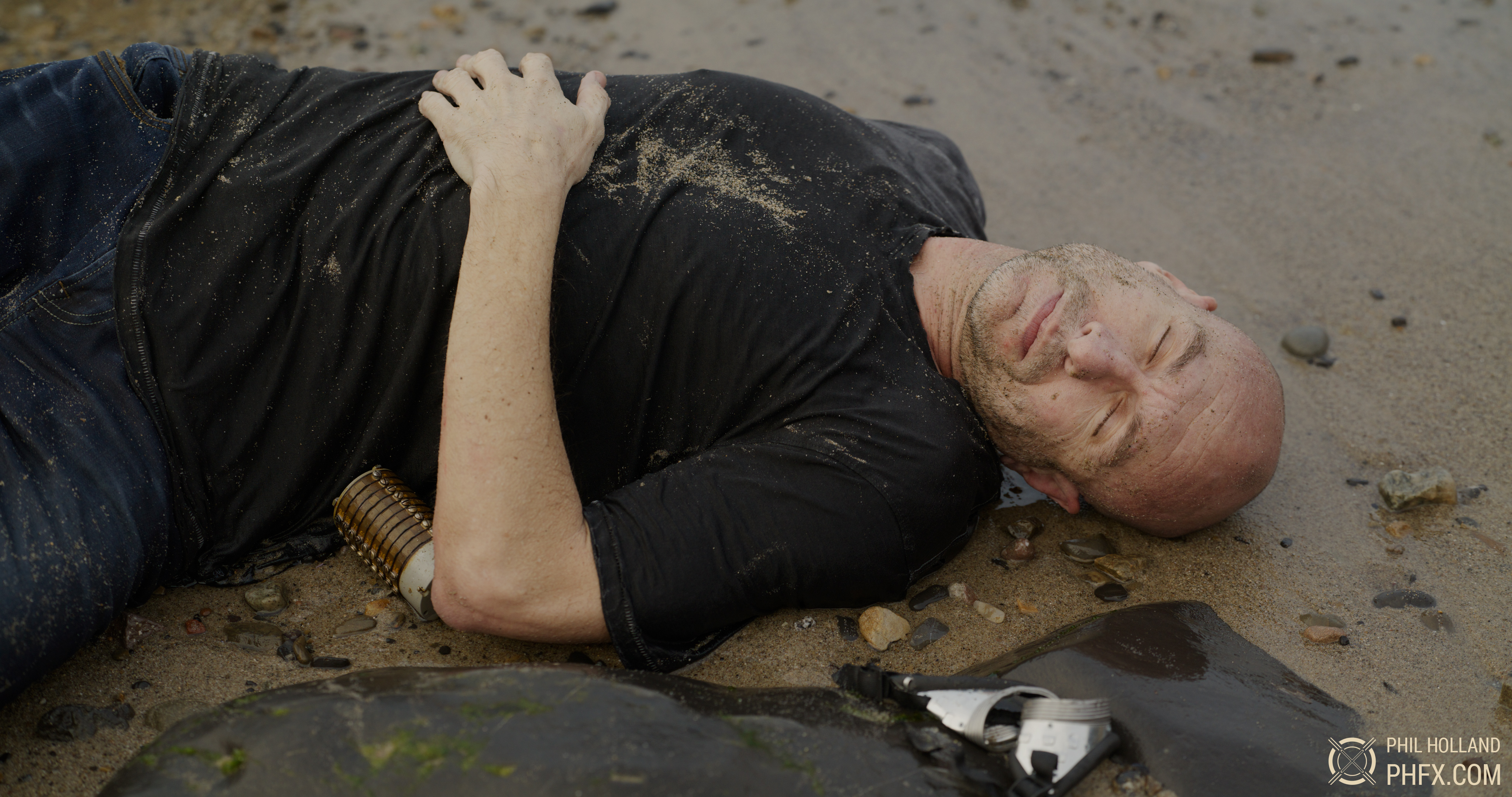
To take a pause from all the pixel peeping, here is the the above 8K medium shot scaled to 4K.
On cleaner images there's visible improvements, but I wanted to see exactly what's going on so I processed some diffs.
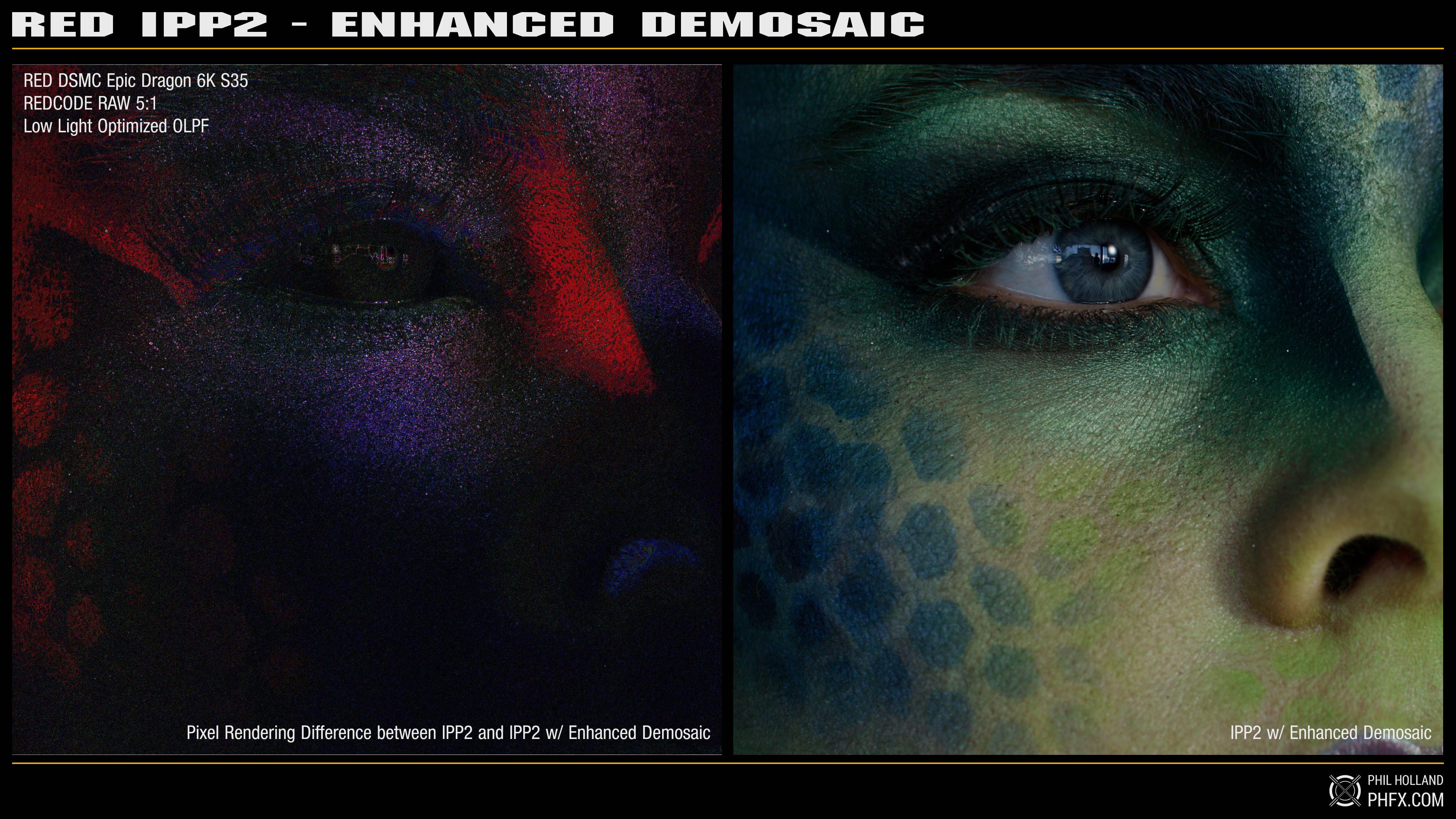
Again, from a DSMC camera from long ago, with the LLO OLPF. But what this new demosaic is doing is fascinating.
One more diff:
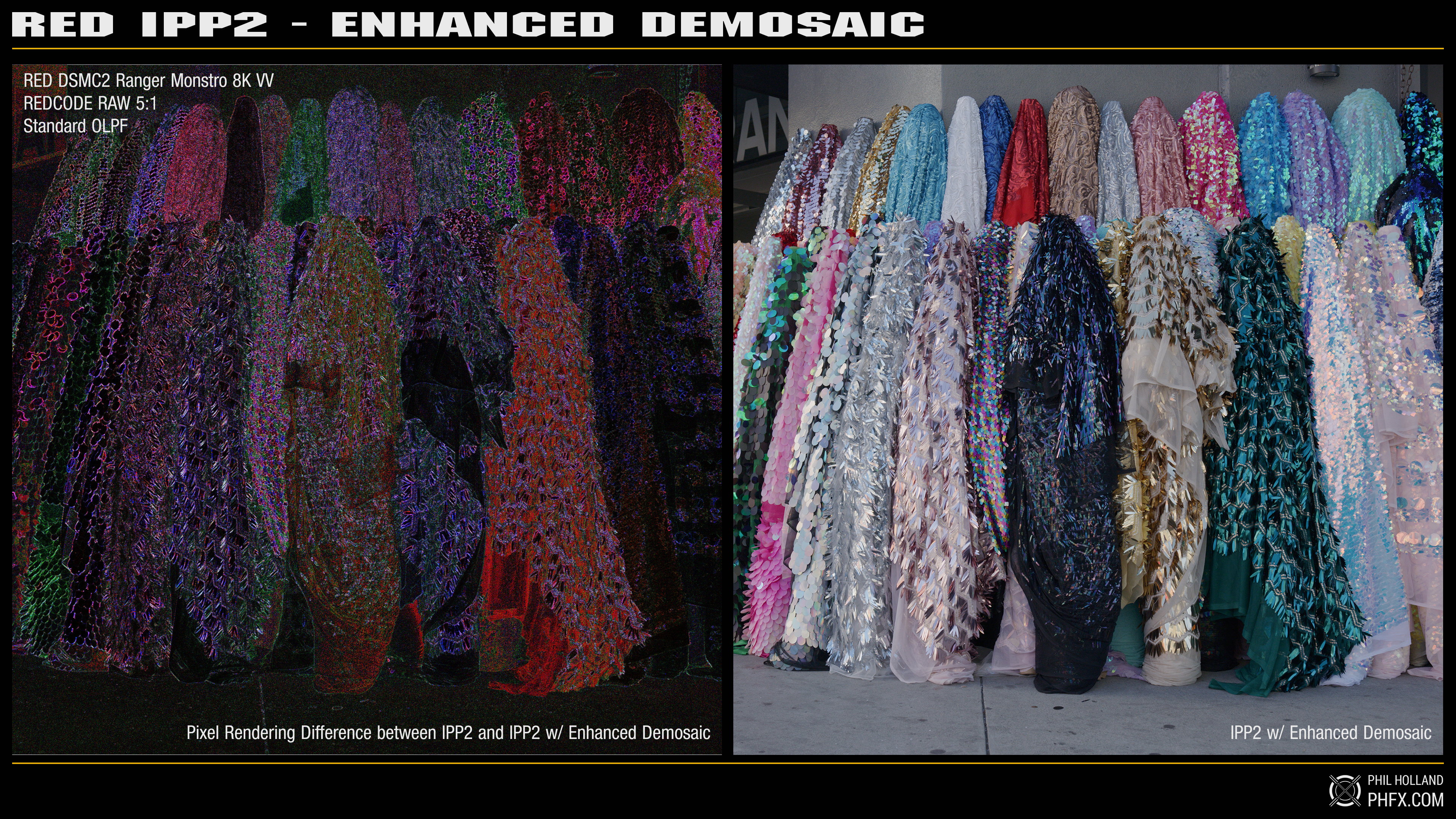
A RED Monstro 8K VV shot with the Standard OLPF and a frame riddled with high frequency detail. You can see it doing it's work across the entire image.
While I'm in the A/B side of things. I didn't talk about it much when it was released in RCX or the SDK, but RED now has a pretty snazzy Chroma Noise Reduction (CNR). Film has color noise, but some people don't like it. This particular algorithm is pretty amazing at reducing color noise without destroying detail. A couple of examples with the new Enhanced Demosaic.
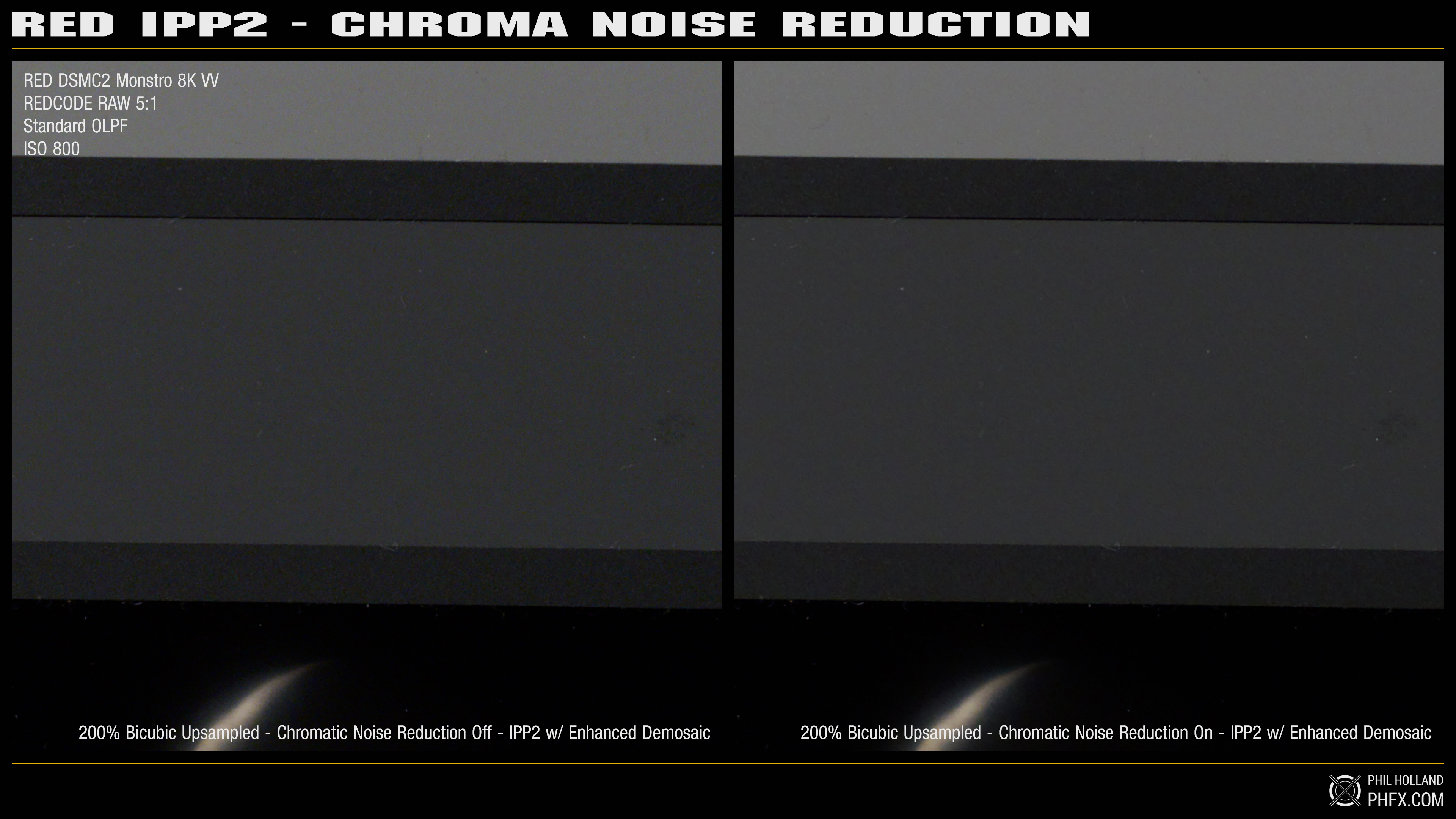
First a chart crop with some flat tones and texture. Pretty clear to see what's going on.
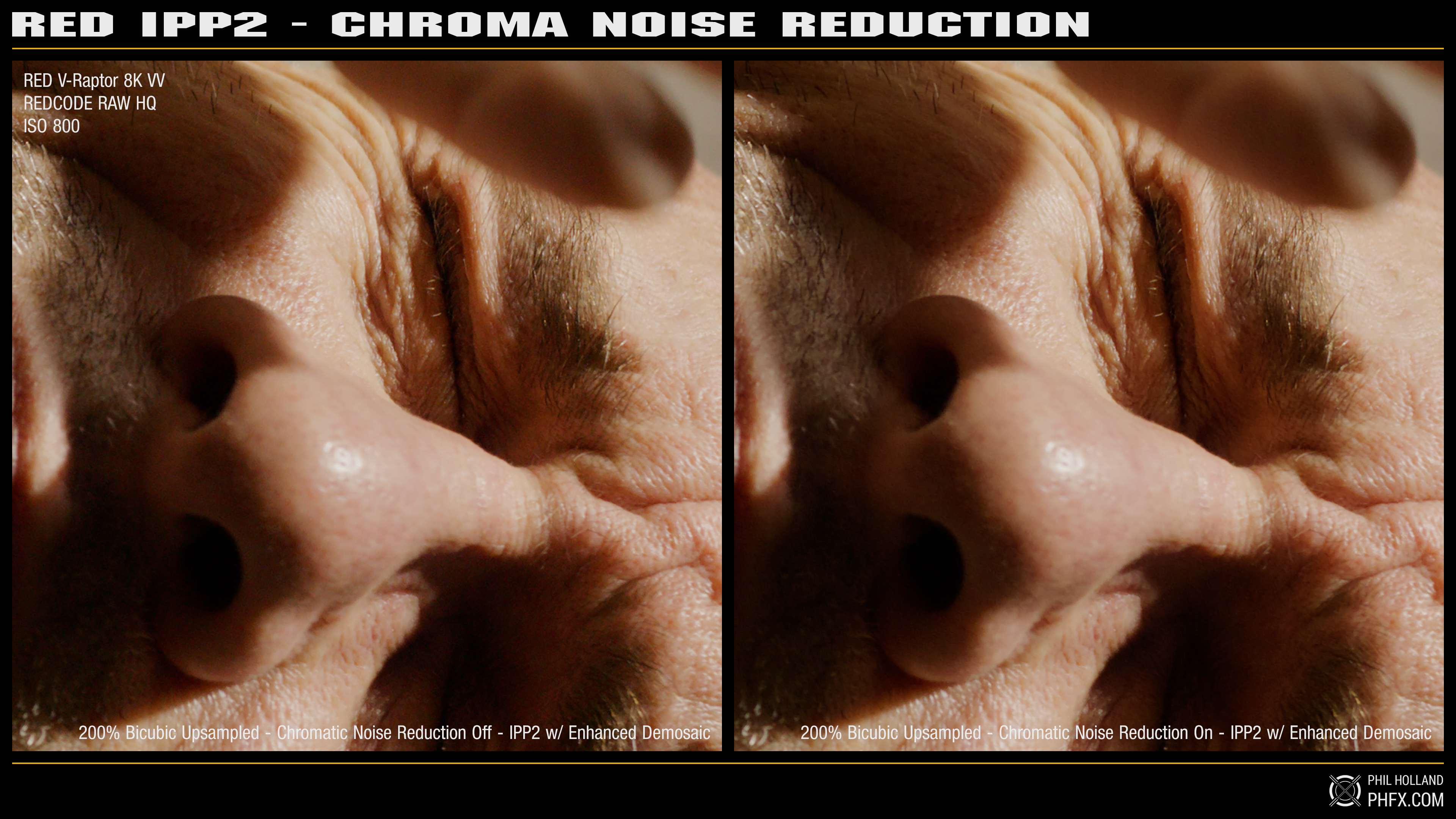
This is a more realistic example from V-Raptor 8K VV. Particularly you can see it in the shadow detail. Some people don't know about this feature, but it can be accessed in the RED Importer or RED Camera RAW settings depending on your grading application.
I've ran this on RED One material, Helium, and Gemini as well. Just don't have releases to share those projects/frames. Same concept across the board though. And actually really cool to see how this works with the older lower data rate cameras.
My general theory about what's going on with this new demosaic as well as even the new REDCODE RAW encoding is to maintain a consistent look across compression ratios. This has been something DPs have been after to maintain consistency when it comes to visual fidelity. For instance, Komodo and V-Raptor 8K VV all appear pretty damn similar using HQ, MQ, and LQ. I wouldn't have a problem filming a project with any of them really. Maybe save HQ or even MQ for VFX or whatever. People like me will likely always aim at the highest data rates/lowest compression. The big additional positive here is REDCODE RAW from previous cameras at pretty high compression ratios benefit as well.
In short, this is a pretty big deal actually, a little shocked it was so sneakily released in the beta without much chatter. At resolution filming and finishing as well as downsampling workflows benefit from this, upscaling too if you must do that. For people focused on giant screen, theatrical, and high resolution work it's a really nice improvement overall. Just pulling stills and experimenting with finishing techniques has become also a bit better overall.
I think it's safe to say, big thanks to Graeme Nattress for his continued efforts and certainly a thank you to RED programmers and engineers here. This looks like extremely time consuming work.
From here, assuming all the beta kinks are worked out, this new demosaic would be deployed via the SDK for 3rd parties to implement and I hope they do so rapidly once that happens. The Resolve team is usually very on top of that and first to the party.
This is in regards to the rather mysterious two words found in the September 18th, 2021 beta build of REDCINE-X PRO (build 54.0.51345).
Did you catch those two provocative words in there?
Enhanced Demosaic. I imagine it's difficult to name such things. Just two words shrouded in mystery. For the last 48+ hours I've been testing this out aggressively and exploring just what exactly this does. What is it? Based on my observations I can safely say it's an entirely new Demosaic. And it's as big as IPP2's release in my mind.
It's been a while since there was an image processing update; several new cameras, improved data rates, new features in RCX, and a whole bunch of new RED filmmakers out there. Won't go over the entire history along the way, but for long time RED shooters these sort of updates has been part of the beneficial journey in advancements of REDCODE RAW. In a moderate and hopefully not too hyperbolic way of explaining this, everybody just got a new camera with this update. This impacts all REDCODE RAW material old and new. Meaning this provides a visible and notable image quality improvements.
I've prepared some comparisons and examples while I was doing my testing, but if you want my scribbled notes version....
Enhanced Demosiac provides
- Improved Detail and Resolution
- Improved Edge Definition
- Improved Color Reproduction
- Improved Micro-Contrast
- More realistic rendering of captured material
If you want a simple and succinct term, Enhanced Demosiac gives you a truer and better "draw" out of the camera.
I've been running a lot of tests and darting between 4K and 8K displays. I've noticed a vast improvement on higher compression ratio material as well as frames filled with high frequency detail. On super clean images the improvements might be subtle, but they are still visible. And on other images you'll find some pretty amazing improvements.
Let's look at some images to see exactly what's going on. I've made all these comparisons UHD 4K in resolution, best viewed on a 4K monitor or opening in a new tab to digest 1:1. There are both 100% crops and 200% upsampled examples.
This is DSMC2 Monstro material. On the left take special notice to the magenta "bleed" that can be seen in her garment, but also can be seen in her skin and face. With the new Enhanced Demosaic we have a far more true to life representation. You can also see a subtle improvement in clarity giving the image a bit more 3D pop.
Same shoot, 6:1 REDCODE RAW, but this time was 4K 6:1 at 120fps. And this to me improves how things look at resolution and a 1:1 ratio.
This shot is pretty clean as is, but you can see that subtle draw improvement and a bit more pop.
This is a 200% punched in crop from a very detailed image and this would be considered high frequency detail. We can see some areas where previously REDCODE RAW was having difficulty recreating the detail with magenta and green fringing. The new Enhanced Demosaic does a far better job. If you look closer there's better definition of the smallest details like the trees at the top of the canyon. I should also mention I do not have Chroma Noise Reduction enabled for these A/B comparisons. Enabling it does clean up that color noise if desired. I'll talk about that at the end.
Another 200% punched in example, look closely at the branches and you'll see the improvements.
I dug deeper in my archives, this image from Japan from years back shot on DSMC Epic Dragon at 15:1 with the STH OLPF showed some rather extreme magenta bleed. The new Enhanced Demosaic cleans that up and provides a more faithful rendering.
Here's an example of clean frame and at first glance you'd say this looks pretty good. But as you can see it can and does look better with this new demosaic.
So far I've shown DSMC and DSMC2 cameras, lets see some new DSMC3 material.
This is a crop from my first Komodo footage I uploaded and this is REDCODE RAW HQ. You can see on the millimeter scale as well as the fine textural details the improvements.
This REDCODE RAW LQ V-Raptor shot is perhaps my favorite as you can see the decolorization and bleed around the sand particles and in the texture of his shirt.
To take a pause from all the pixel peeping, here is the the above 8K medium shot scaled to 4K.
On cleaner images there's visible improvements, but I wanted to see exactly what's going on so I processed some diffs.
Again, from a DSMC camera from long ago, with the LLO OLPF. But what this new demosaic is doing is fascinating.
One more diff:
A RED Monstro 8K VV shot with the Standard OLPF and a frame riddled with high frequency detail. You can see it doing it's work across the entire image.
While I'm in the A/B side of things. I didn't talk about it much when it was released in RCX or the SDK, but RED now has a pretty snazzy Chroma Noise Reduction (CNR). Film has color noise, but some people don't like it. This particular algorithm is pretty amazing at reducing color noise without destroying detail. A couple of examples with the new Enhanced Demosaic.
First a chart crop with some flat tones and texture. Pretty clear to see what's going on.
This is a more realistic example from V-Raptor 8K VV. Particularly you can see it in the shadow detail. Some people don't know about this feature, but it can be accessed in the RED Importer or RED Camera RAW settings depending on your grading application.
I've ran this on RED One material, Helium, and Gemini as well. Just don't have releases to share those projects/frames. Same concept across the board though. And actually really cool to see how this works with the older lower data rate cameras.
My general theory about what's going on with this new demosaic as well as even the new REDCODE RAW encoding is to maintain a consistent look across compression ratios. This has been something DPs have been after to maintain consistency when it comes to visual fidelity. For instance, Komodo and V-Raptor 8K VV all appear pretty damn similar using HQ, MQ, and LQ. I wouldn't have a problem filming a project with any of them really. Maybe save HQ or even MQ for VFX or whatever. People like me will likely always aim at the highest data rates/lowest compression. The big additional positive here is REDCODE RAW from previous cameras at pretty high compression ratios benefit as well.
In short, this is a pretty big deal actually, a little shocked it was so sneakily released in the beta without much chatter. At resolution filming and finishing as well as downsampling workflows benefit from this, upscaling too if you must do that. For people focused on giant screen, theatrical, and high resolution work it's a really nice improvement overall. Just pulling stills and experimenting with finishing techniques has become also a bit better overall.
I think it's safe to say, big thanks to Graeme Nattress for his continued efforts and certainly a thank you to RED programmers and engineers here. This looks like extremely time consuming work.
From here, assuming all the beta kinks are worked out, this new demosaic would be deployed via the SDK for 3rd parties to implement and I hope they do so rapidly once that happens. The Resolve team is usually very on top of that and first to the party.
Last edited:


