Welcome to our community

Be a part of something great, join today!

  • Hey all, just changed over the backend after 15 years I figured time to give it a bit of an update, its probably gonna be a bit weird for most of you and i am sure there is a few bugs to work out but it should kinda work the same as before... hopefully :)

DaVinci Resolve, how good?

Very interesting! Thanks for the elaboration!
 
In reality there is no such thing as "relighting the scene". It is just an industry term which is an euphemism for post salvage job.

Rec 2020 is currently irrelevant and unrelated to having a proper grading monitor today.

That is what I am talking about, using computational photography techniques it can become easier and the easier to salvage or post process in lighting. There is a long way to go in computer performance, it is just a bottleneck with present techniques.

Now Hrvoje, don't you think it will s an advantage to be able to present rec2020 material for when rec2020 is ready and used in the consumer space, or course it is, though it matters little for now. It means that rec2020 is important for projects coming out, and a consideration 3 years before the consumer side comes out. Going along.these lines of reasoning, the more fuller the full view sual teils you can do is a consideration, if you can do it conveniently before a special comes out. The spec requirement you have to consider is the human visual system. If you can conveniently do now and use a range cut out technique, your footage can be who n in.the next 10 years on whatever display system. But what we are really cinveninetly talking.about here is to record enough range that a product can be rerendered what n a highe spec comes out. But for me, I want to keep the same equipment for ten years after, so yes most of that time will be a post rec2020 future let alone the post DCI future we are currently in. If there was a Rec 2020 basically being met with today's techniques, but just dci, I would not worry so much. I expect we will maybe see rec2020 being met or exceeded this year with the basf filter, which is hlgrest news for the television set manufactures, as that is a sales pitch. The Samsung Qled productnI expect will exceed it, and maybe come closer to full vision, however the 30nm spread of QD light would stop it from reaching full vision spectrum (which probably matters little more except for light show like effects I want to render. I expect tje cinema industry might lile to prepare a post rec2020 version of DCI to yake advantage of this for cinema use, mote tiwatds full human vision. That woyld be a good thing. So rec2020, might look small by 2020 Hrvoje.
 
Most colorists take the approach of coming up with a base grade for the scene, then separating out areas of the shot that need separate treatment, using either keys, area isolations, or both. Steve takes more of a compositing approach, where his first tendency is to separate the areas he wants to treat individually, then grade those, then match them into the background. In other words, he decides on his isolations first, then goes about putting all of those separate pieces together. You need a great artistic eye to succeed with such an approach, and Steve has that. You also need a team of rotoscope artists to get all of those isolations done in the time allowed, something Steve also has. Finally, you need a software platform that allows for a collaborative workflow with simple information and timeline exchange, which Lustre/Flame Premium provides. So while it's an interesting approach, and one that allows for a lot of control, it is not for everyone.

Also I could add, that for example, instead of just increasing the brightness of a certain area, instead, Steve addresses the brightness of the source of light for that area. In a way, it's an obvious solution, but it requires an entirely different way of seeing and manipulating an image. The resulting image with such technique is more natural in it's appearance vs traditional way of just brightening a certain area of the image.
 
Maybe someday there will be a universal file format in which color transformations performed by LUT's, and color adjustments travel internally or sidecar with the file all the way thru post. Which would allow easy gamma and resolution interpretations on the fly.
 
Also I could add, that for example, instead of just increasing the brightness of a certain area, instead, Steve addresses the brightness of the source of light for that area. In a way, it's an obvious solution, but it requires an entirely different way of seeing and manipulating an image. The resulting image with such technique is more natural in it's appearance vs traditional way of just brightening a certain area of the image.

Is his style of color grading/compositing what makes something like The Revannant possible? By which I mean the fact that it is so heavily worked on in post but still retains an entirely natural aesthetic.
 
Maybe someday there will be a universal file format in which color transformations performed by LUT's, and color adjustments travel internally or sidecar with the file all the way thru post. Which would allow easy gamma and resolution interpretations on the fly.
LUTs are on the way out. Most of the latest versions of color grading software now utilizes ACES system or it's variation, which uses transforms instead. Transforms allow for gamma transformations on a fly, while allowing one grade- multiple deliverables scheme.
 
Is his style of color grading/compositing what makes something like The Revannant possible? By which I mean the fact that it is so heavily worked on in post but still retains an entirely natural aesthetic.

No. His talent, and the talent of others on his team, as well as the talent and guidance of Emanuel Lubezki, are what make that possible. His style is simply the technical path he chooses to channel that talent.
 
... Things are getting way complex on the working side I see.
 
In reality there is no such thing as "relighting the scene". It is just an industry term which is an euphemism for post salvage job.
Oh, I dunno. They did it on The Hobbit and a bunch of other Peter Jackson films. I can think of some major A-list films (including one currently nominated for an Oscar) that were at least 50% lit in post.

Most colorists take the approach of coming up with a base grade for the scene, then separating out areas of the shot that need separate treatment, using either keys, area isolations, or both. Steve takes more of a compositing approach, where his first tendency is to separate the areas he wants to treat individually, then grade those, then match them into the background. In other words, he decides on his isolations first, then goes about putting all of those separate pieces together. You need a great artistic eye to succeed with such an approach, and Steve has that. You also need a team of rotoscope artists to get all of those isolations done in the time allowed, something Steve also has. Finally, you need a software platform that allows for a collaborative workflow with simple information and timeline exchange, which Lustre/Flame Premium provides. So while it's an interesting approach, and one that allows for a lot of control, it is not for everyone.
I would say you need three more things: 1) a lot of time; 2) a fairly large post budget; and 3) a very fast pipeline, all of which are at Mr. Scott's disposal. I fear a lot of users here making relatively low-budget films -- say, in the $2M and lower budget range -- are not going to have 200+ hours and four or five colorists to work around the clock on a project over a period of a month or two.

It is very interesting to look at an image and break it down to the component elements there -- characters, backgrounds, props, skies -- and treat them all separately. I think sometimes this can work, but there are very real limitations if the talent on the other side of the camera (the lighting) is not there. So the potential risk is for people with smaller projects to have grossly unrealistic expectations as to what actually can be done in post.
 
LUTs are on the way out. Most of the latest versions of color grading software now utilizes ACES system or it's variation, which uses transforms instead. Transforms allow for gamma transformations on a fly, while allowing one grade- multiple deliverables scheme.

Agreed. I know that there is technology coming/partly already there that allows for automated "intelligent" colour transforms and "equalizes" footage from various formats and colour spaces, e.g. log vs. Rec709 vs linear, to one common dominator automatically.

Colour spaces like Rec 2020, together with scene-linear and the viewing space linear PhotoMapLC are much, much wider and fit cameras like the Dragon or Alexa much better in terms of flexibility and gamut than Rec709 and corresponding gamma encoded footage.


So no, things will get easier and less complex. Less tech more art.

... Things are getting way complex on the working side I see.


Hans
 
Oh, I dunno. They did it on The Hobbit and a bunch of other Peter Jackson films. I can think of some major A-list films (including one currently nominated for an Oscar) that were at least 50% lit in post.

Its also done quite often in TVC land. Within Flame's 3D compositor Action there are new tools called Lightbox that make colour grading in 3D space possible. Although these technologies are typically developed for compositing tasks we see them more and more drifting into the grading world. As Jake mentioned, there is a trend to create great grading with a compositing approach. And technology is moving on. The freshly introduced G-Maks Tracer node in Flame is a 3D capable roto tool that is a big step into a new world of rotoscoping.

But, of course, all this does not make good lighting obsolete. But it makes the job of a colourist more challenging. Good times for talented people.


Hans
 
It is very interesting to look at an image and break it down to the component elements there -- characters, backgrounds, props, skies -- and treat them all separately. I think sometimes this can work, but there are very real limitations if the talent on the other side of the camera (the lighting) is not there. So the potential risk is for people with smaller projects to have grossly unrealistic expectations as to what actually can be done in post.

I've found that it's about half stop that you can pull/push shadows or highlights on a face with masks, more than that and you start seeing the masks.
 
Most of what is being described here is voodoo to me. Sure if you have $100 million.. But best to absolutely set the base look on set then push as needed, as was said before, until you have very low noise high latitude and it depth camera and a 3D system as seems to be finally coming. I figured out tech on this years back, but the tech it was part of got stalled. I'm 100% aware of what it can do and how to do it, more so than virtually any developer of such tech, since I first started on it nearly two decades ago. The future coming is going to be most interesting and deliverable o today's base technologies. As usual, I'm not saying much about it. Just a shame I couldn't bring it to market.
 
Dodging around the image and taking it one haystack of an image too far each time. Life should be simpler, not simpleton, but simpler. We need computational photography solutions for some of these things. Unless it involved a lot of money, I would feel bad even asking somebody to do so much for so little, then they'll probably turn around and tell me they clear a quarter a million a year doing this (and have six condos), and then I would probably walk away and leave them to it.
 
LUTs are on the way out. Most of the latest versions of color grading software now utilizes ACES system or it's variation, which uses transforms instead. Transforms allow for gamma transformations on a fly, while allowing one grade- multiple deliverables scheme.


With ACES unfortunately we are learning one size doesn’t fit all. We’ve encountered gaps in the ACES workflow on our VFX pass when the debayer is baked in forcing us to eyeball the gamma going forward. The Resolve built-in color management still seems to lean toward LUTs, not being able to define a user IDT in Resolve as a shader is a challenge. So we end up approximating the transform with a 3D LUT, not mathematically precise, but close enough. And Im kinda curious how ACES will handle HDR workflow as the current IDT definition/conversion equation doesn't accurately convert or represent discreet values below zero '0'.
 
LUTs are on the way out.

Depends for what.

Oh, I dunno. They did it on The Hobbit and a bunch of other Peter Jackson films. I can think of some major A-list films (including one currently nominated for an Oscar) that were at least 50% lit in post.

Nothing was lit in post. No light entered the material. Digital values were manipulated which appear to the viewer as if the scene was re-lit. I am aware of the processes, the comment was addressing the terminology which is likely to be misleading to many. Which is why this comment as well.

Phrases like these, which leave room for overly optimistic expectations, can - and often do - lead to young shooters', lazy directors' and fund squeezing producers' fantasy world, with painful bubble bursting.

l
But, of course, all this does not make good lighting obsolete. But it makes the job of a colourist more challenging.

It also throws over a chunk of cinematographer's job to the shoulders of a guy in post, while sterilizing the image of natural light properties.
 
Depends for what.
It doesn't. It just is...
For example, the latest versions of Baselight are designed to be used without any use of LUTs. They still can be used, if so desired, but the point is you don't have to, because the LUTs ARE ON THE WAY OUT!
 
With ACES unfortunately we are learning one size doesn’t fit all. We’ve encountered gaps in the ACES workflow on our VFX pass when the debayer is baked in forcing us to eyeball the gamma going forward. The Resolve built-in color management still seems to lean toward LUTs, not being able to define a user IDT in Resolve as a shader is a challenge. So we end up approximating the transform with a 3D LUT, not mathematically precise, but close enough. And Im kinda curious how ACES will handle HDR workflow as the current IDT definition/conversion equation doesn't accurately convert or represent discreet values below zero '0'.

Luckily, Resolve is not the only game in town. If you want a better mousetrap, try Baselight/ Baselight Editions combo for Nuke VFX workflow. The workflow is based on ACES transforms, no LUTs and nothing gets baked in until the very end... Resolve's RCS is a failed attempt at copying Baselight implementation of Color Spaces. And Baselight allows you to chose your preferred IDT.
 
I've found that it's about half stop that you can pull/push shadows or highlights on a face with masks, more than that and you start seeing the masks.
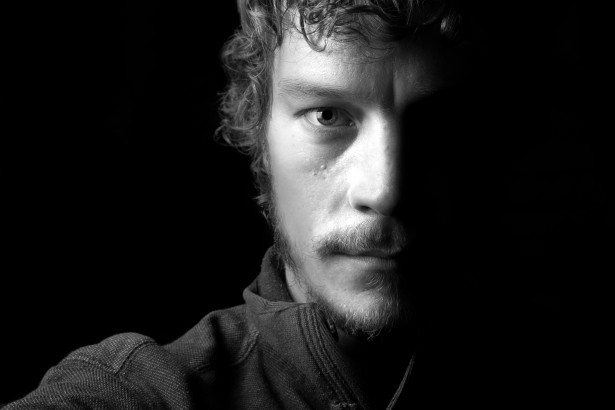
Exactly. I do run into inexperienced producers and directors from time to time who will have a shot like this:

man-with-half-face-on-shadow.jpg


and then say, "hey, can we throw a power window on the right side of this guy's face so that the lit side and the unlit side match, so I can see both of the actor's eyes?" And I tell them no, it cannot be done.

They don't get that you can only relight in post to a point. We can't add a backlight, we can't add an eye light, and we can't add fill that isn't there. We can place shadows, and we can enhance the original lighting on the set to a point. It is true that if you spent massive amounts of money on VFX, you might be able to go further, but there are limitations on what can be done in color vs. VFX (and vice versa), particularly at modest budget levels. Heck, I've worked on $30M-$40M pictures where we were lucky to have 3 weeks total to ingest and conform all the material, color correct everything a couple of times, review the material 2-3 times and make trims, and then render it all. That was it. And that was without tons and tons of power windows and relighting. If we had done that, it'd be more like 3 months instead of 3 weeks, and the time just wasn't there. There are often release dates that can't be moved, and contracts that have to be met.
 
Back
Top