Welcome to our community

Be a part of something great, join today!

  • Hey all, just changed over the backend after 15 years I figured time to give it a bit of an update, its probably gonna be a bit weird for most of you and i am sure there is a few bugs to work out but it should kinda work the same as before... hopefully :)

Canon Lenses ok for documentary or RPP?

AndreasOberg

Well-known member
Joined
Oct 30, 2011
Messages
1,674
Reaction score
31
Points
48
Location
Leicestershire, United Kingdom
Website
www.obergwildlife.com
Hi all
I'm writing from the jungle of Costa Rica. I have a toucan sitting to my left, tons of brig macaw parrots and a whole family of sloth living here.

Now currently I have used Red Primes for my shooting, but I want to know. Will the quality be good enough if I use some canon lenses?
Reason for me to use Canon lenses:
- they are much lighter and the weight is tough. We are at one site so we dont need to carry them much but just moving the camera 200meters when it's 25kg is hard.
- I only have primes, so no zoom. This means it takes a lot of time to switch lenses

I will use the shooting mainly for television so 2k. There is a little chance it may be for independent cinemas but unlikely.
Any thoughts are welcome.
Back to the jungles
/Andreas
 
The Canon's resolve incredibly nicely, even in 4/5k. I've used CP2's as well as the RPP's, and I have to say, the Canon's compare very nicely, and give you more flexibility in the field. RPP's are the sharpest of them all, but you'd have a real tough time deciphering the difference at a 2k deliverable.
 
Question is, What canon lenses?
The L series is probably on par with the RPPS or above.
Most fast canon primes hold up very well and should not leave any picture issue. Only a bit hard to pull focus with, but on the other hand you got snappy auto focus which is probably more of use if shooting in the jungle.
Cheap slow canon zoom lenses are not likely to look as good as the RPPs but better zooms hold up quite well.
I would not be worried at all to swap between RPP's and any good canon glass as lon as it's not intercut within the same scene etc. Color temperature and such, I would not care much for as it's easily match in post if there is any issues.

Look for toias canon test thread here someware. Remember he did some asian production where he cut between different glass with no problem.
 
Just sharing
Canon_masterprime.jpg
 
Youll be more than happy...
Just focusing can me annoying, but other than that.. the are as sharp as MP's....

Have fun.

OOoooohhh... hang on.
Here is a very expensive TVC we shot using simple Canon stills glass. Which I did just for fun, to show people you can do big things with cheap lenses, without any compromise to image quality.

http://www.zoomfilmtv.com.au/ftp/Toia_latest/99years_1280_H264_2500.mov
 

Attachments

  • optitron.jpg
    optitron.jpg
    36.7 KB · Views: 0
Are these the same ledges? The fields of view are different, is it the same camera sensor, or different cameras? The shooting location also appears to be different.

Looks like same location but one is from one floor up, looks like about the same FOV. As I remember Toia shot both with his epic. It looks quite similar as my own findings with canon FD's, they are definitely sharper than most cineglass and for sure more rectilinear as the epic only uses the center of the image circle of the still lenses they are very far from braking up towards the edges.

The only bad thing I could think of about shooting trough still glass (except for difficulties making nice focus pulls while rolling) is the fact that they actually looks a bit boring, sharp as F#€" all the way to the corners, no vinjeting, no chromatic adoration etc. But if thats wanted it's of course very easy to apply in post.

Film lenses are made bulky for a lot of different reasons. Some of these reasons do not apply well to modern way of shooting. One reason for their being sturdy was because they should be able take the beating from focus gear. One was to make the markings bigger, one was to make the focus throw longer. Another reason was to be able to use clamp on matt boxes. Also they need to be exact so the picture does not "move" when touching the lens, and avoid breathing was taking into consideration. As the video taps where shit poor on film cameras the markings where deadly important as the assistant camera man had nothing else to go by.

However a fast film stock actually did not hold up so much resolution at academy projection so the need for super sharp cine lenses was not the highest priority in comparison for still lenses that for a long time been built for vista sized image circles and the resolution has been much more important than for moving imagery.

So today with bigger sensors, and new ways of shooting, possibilities to digitally interact with the lens and even pull focus from looking at large high definition screens etc. The stll lenses, at least to me makes more sense in more cases than they don't.
 
There are a number of sites that publish fairly comprehensive lens tests, so you can get a better idea of which Canon lenses will meet your needs. Here are a couple:
http://www.dxomark.com/index.php/Lenses/Camera-Lens-Database/Canon
http://www.dpreview.com/lensreviews

As others have said, vignetting, distortion and chromatic aberration are less of an issue on a crop sensor (and the first two aren't much of an issue on the L-series lenses to begin with) so sharpness is probably your foremost concern (as I'm sure you know, it makes a big difference when you want to crop in on a tiny or distant animal). My partner in a wildlife documentary shoot recently got a Canon 70-200 IS II to mount on his Sclarlet, and it handily outperforms my Red Pro Zoom and nearly all the other lenses in my hodgepodge of still and cinevised still glass in terms of resolution.

Enjoy Costa Rica! It's an amazing treasure trove of wildlife, and I look forward to seeing your work.
 
Hi all and thanks for the replies. I forgot to mention the lenses.
I have
35 1.4 L
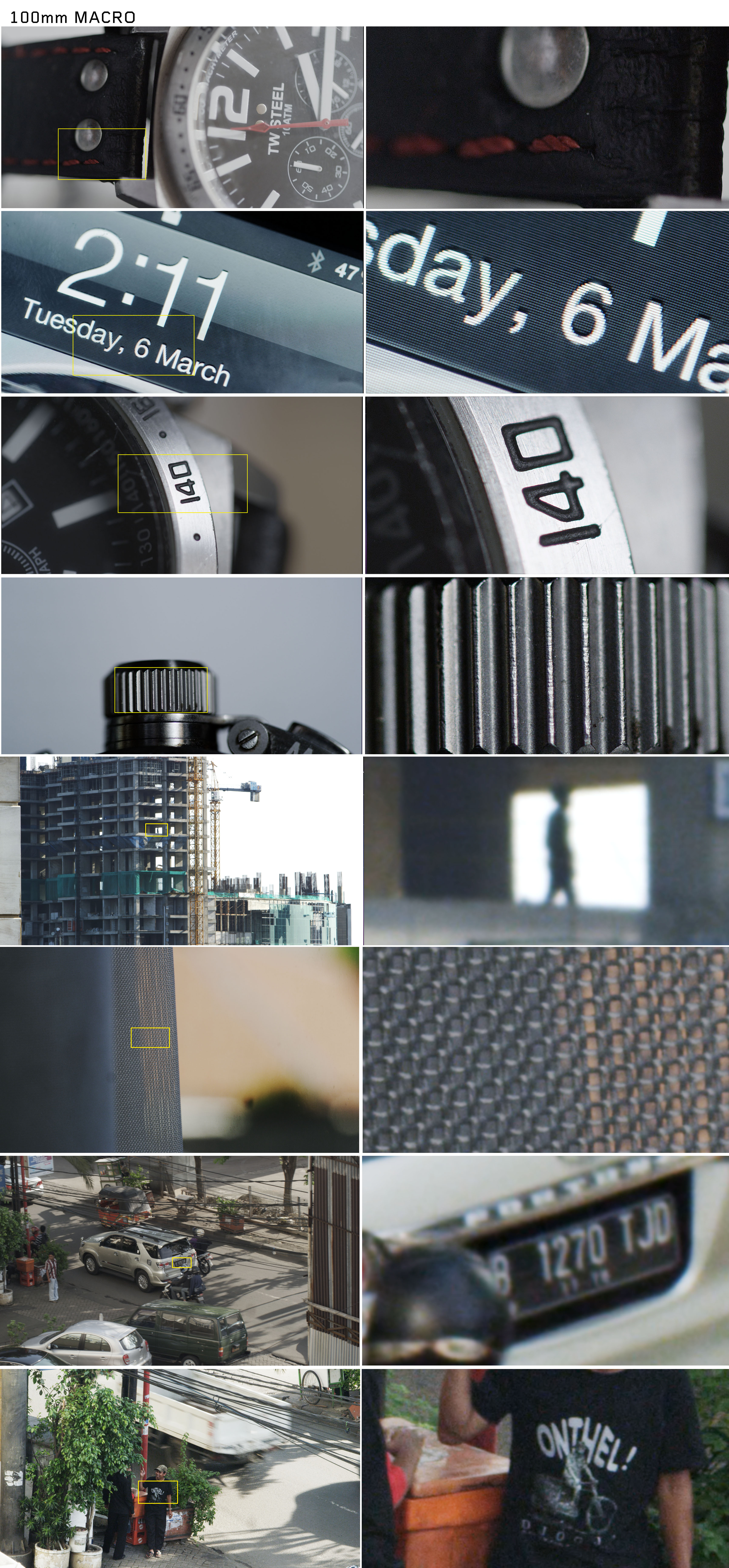
100 2.8 is macro
70 200 f4 is
24 105 f4 is.
85 f1.2

Macro is the best. The 24 105 would be nice since it is a zoom but Im not very happy with it.

So far Im using almost exclusively the 300mm RPP and the quality is Very good.
Any more thoughts are welcome always.
We are at a place where they save baby sloth. cutest little one in the world.
Andreas
 
I recommend a 600mm or 800mm prime and a 2X extender if you plan on shooting birds extensively. New ones are very expensive, but older ones can perform quite nicely. Any of the Canon EOS or Nikon G super-telephotos are superb and even the earliest L or ED super-telephotos are solid performers if they have been maintained well (although in my experience the coatings on Canon FD lenses flare more and have lower contrast than contemporary lenses and Nikon's multicoated lenses). I don't have much experience with Sigma and Tamron lenses, but they're considerably cheaper than their big-brand counterparts - maybe someone else here can fill you in on how they compare to Canon and Nikon.
 
Why don't you get Zeiss ZE. They have much better long throw for focusing and optically they are excellent. They have new 55mm f1.4 this year and 135mm f2.0. Their MAKRO do circles around Canon and 15mm and 21mm rocks. Their colour is not as hot as Canon's.
 
Are these the same ledges? The fields of view are different, is it the same camera sensor, or different cameras? The shooting location also appears to be different.

Two RED EPICS... one with canon mount and canon lens.. the other with a PL mount and a Master prime attached.
10 - 20 feet apart..
Same building...
Shot probably 1 minute apart from one each other ... (because I walked to the next camera and focused the next lens and shot)
 
Anybody got the Canon L 14mm? I wonder if this prime is sharper than the 16-35 zoom. I find this zoom very soft.
 
I have heard that the Canon 24-70 II is as sharp as the L primes even wide open. The problem is, and I think maybe it was Toia that mentioned it, if you can you should try out a few and purchase the best/sharpest one. Apparently the consistency of quality can be iffy (although I might be confusing Canon Ls with Rokinon/Samyang lenses....) I seem to recall someone saying they buy three of the same lens, and return the two "weaker/softer" ones.

Anyway, it's all hearsay as I haven't actually used the 24-70II, but it's worth checking out, since you're looking for a zoom and already have the 70-200.
 
Back
Top