Welcome to our community

Be a part of something great, join today!

  • Hey all, just changed over the backend after 15 years I figured time to give it a bit of an update, its probably gonna be a bit weird for most of you and i am sure there is a few bugs to work out but it should kinda work the same as before... hopefully :)

Best lenses for hand held?

AndreasOberg

Well-known member
Joined
Oct 30, 2011
Messages
1,674
Reaction score
31
Points
48
Location
Leicestershire, United Kingdom
Website
www.obergwildlife.com
Any tips on lenses for hand held?

I normally use EF 24-70 or sometimes EF16-35.
Wonder how well the RF 24-70 image stabilizer works? The image circle is quite a bit less than EF 24-70 so not overly eager to "upgrade", but the image stabilization is always useful.
Another candinate is RF15-35 but also smaller image circle.
 
With what setup or camera?

OIS certainly can be helpful if your camera supports it. Otherwise, I think about mechanics and ergonomics and balance.

Are you also using autofocus?
 
I think the most interesting aspect of this question is that you're not actually asking the question. Best lenses for handheld is one concept. The best way to get more stable shots when operating handheld is another thing all together IMO.

Though IS is useful on the lens, you're real answer will be steadicam and/or gimbal if you are aiming for very smooth. Tools that will lead to more stable shots with a general gliding or constant correction cadence.

Something like a EasyRig will take the load off areas that are weakened during longer operation with the gains in adjusting the cameras position.

Lots of other shoulder setup through 2 or 3 point support options via handles, straps, or vests also can drastically improve your shots. Sort of a combination between tools and technique refinement.

Without the hammer straight on the nail, most of the most memorable handheld shots you've seen in cinema weren't done with lenses with IS. Not saying IS isn't useful, but the answers you're likely looking for aren't found in the lens having that particular feature.
 
Also, if you’re shooting true handheld and want that look without the micro-jitters, weight will be your best friend in terms of stability. It’s a give and take, since more weight will require more strength to hold the cam for longer durations (and if you get tired, then your muscles start shaking, forget it). A heavy Alexa will always look more stable handheld than a tiny Komodo with a pancake lens, but you’ll get tired very quickly. That’s why Phil suggested alternate forms of support like an EasyRig or ErgoVest, or taking it a step further, stabilization tools like a steadicam or gimbal.
 
I totally hear you Phil.
We have a modified Movi Pro Gimbal for gimbal work that of course is fantastic. But I also found myself brining the camera with me just on small hikes and so and I often find interesting things to film. And a gimbal would just be a bit much then. We brought 250kg to Falkland before when filming penguins, gimbal, drone, heavy duty tripods etc. Gimbal was super useful for running after penguins. Tricky though because they were close to the ground so you had to hold the gimbal very low which was heavy for the back.
I see the RF lenses has smaller lens circle. Has anyone tried coverage on VV? I check on your page Phil, but could not see any, I guess you focus more on cinema lenses which makes sense.

Cheers,
Andreas
 
I see the RF lenses has smaller lens circle. Has anyone tried coverage on VV? I check on your page Phil, but could not see any, I guess you focus more on cinema lenses which makes sense.

At the mercy of what I own and use, and I'm still early in my RF glass journey, as is Canon. I hear the 15-30 f/2.8L is tight, but I'll investigate that. The 24-70 f/2.8L works great and I have personally used that on camera. I also heard the 28-70 f/2 doesn't fully cover, but again, I'll need to test that. L primes so far cover.
 
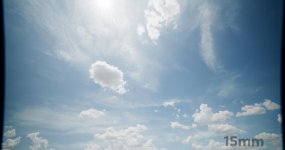
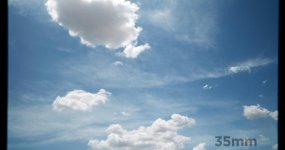
The RF 15-35 does not cover the entire width, but cleans up quickly with a 16:9 crop. Here's a frame at 15mm and 35mm with that lens.

I agree the RF 24-70 works great - it covers edge to edge, with some noticeable vignetting from the corners, but cropping 17:9 to 16:9 also completely cleans it up.

For run and gun, Canon's glass is pretty flexible. The 3rd multifunction ring works great to adjust aperture on the fly, and they're lightweight and sharp. Just don't count on autofocus to perform consistently.
 

Attachments

  • 15mm.jpg
    15mm.jpg
    54 KB · Views: 0
  • 35mm.jpg
    35mm.jpg
    43 KB · Views: 0
So prior to being immersed as a cinematographer for a living, I was fascinated by movies. And the camera rigs were always so interesting, and we would always see film rigs either on massive tripods and industrial-grade support gear, or on the shoulder. I always thought there was something 'magical' about on the shoulder..like thats the way it is suppose to be. Only later did i realize its about weight..and the distribution of weight. Personally i loath shoulder mounts because i want to use a monitor and it would have to be like 12" in from of me to be in sharp focus. Stabilized lenses are great (been in Sony and Canon world all my life) but in the RED world i wanted to use Cinema Prime lenses. So a trick to help distribute weight I have loved is a monopod with tech. The ifootage Cobra Strike A150S is remarkable in that with a simple twist the monpod extends BOTH directions quickly and is ready to go. I only need it to 'rest' some of the weight of a RED rig..not carry it all. It allows me to use a Cinema Prime perfectly..having a slight hand-held feel (not as static as a tripod) yet without shaking or tremble as you hold a heavier rig for a long time, and WITHOUT a big complicated vert/pulley or complicated stabilizer system. In shooting a homeless doc...I have my RED and the Cobra monopod...and it attaches with a snap via a Kessler Quik lock plate system. I can walk along and area..see what I want..snap the monopod on..quick twist of one grip, it extends..and I can shoot forever resting 80% of the weight this way
 
The ifootage Cobra Strike A150S is remarkable in that with a simple twist the monopod extends BOTH directions quickly and is ready to go.

Same here, using the iFootage Cobra C180 when shooting in the alps. It's used instead of my usual 180 cm carbon trekking pole (a little bit heavier though) and even fully extended holds my weight while performing a pole vault over rocks and creeks where the now commonly used walking sticks aren't long enough or just fold up. Good support for a shoulder rig as well stand-alone.
 
Same here, using the iFootage Cobra C180 when shooting in the alps. It's used instead of my usual 180 cm carbon trekking pole (a little bit heavier though) and even fully extended holds my weight while performing a pole vault over rocks and creeks where the now commonly used walking sticks aren't long enough or just fold up. Good support for a shoulder rig as well stand-alone.

That is an interesting solution. I mean we have very heavy duty solutions but I found myself not using them that much so lighter solutions are welcome as well.
Cheers,
Andreas
 
Back
Top