Welcome to our community

Be a part of something great, join today!

  • Hey all, just changed over the backend after 15 years I figured time to give it a bit of an update, its probably gonna be a bit weird for most of you and i am sure there is a few bugs to work out but it should kinda work the same as before... hopefully :)

Atom...

You mean like this :coolgleamA:? Our Neutron with Scarlets, not to take away from Atom with EPICs ;)
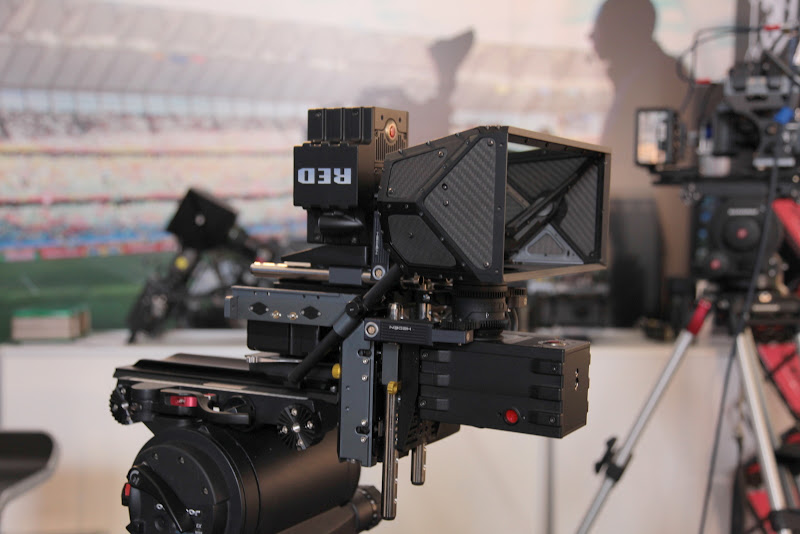
IMG_0960.JPG

Damn. :shocked:

The tripod head is nearly bigger than the 3D rig....

Damn.
 
The next day. I DREAMT about shooting this rig last night... aliens (saw "Monsters" last nuight, and highly recommend that film!) anyway I think we are going to see a lot of 120EX heads for sale soon... :) Time to prepare another funding round.
 
A work of art. This is the ONLY thing as cool as the EPIC.

My two favorite companies - a dream come true for me.

Somebody is gonna need a few dozen more CNC machines ... counting the seconds to rock this gear -

Congrats to everyone involved on this - really stunning.


yep, agree with Mark, can't wait to continue to shrink the size of rigs and push the 3D industry. Wait to go ET
 
I don't understand the ones that are upset that at the price of the smallest, lightest cleanest integrated 3d rig ever made and specifically made for a camera system. Price out a preston and then come back and look at the price of the integrated 6 axis unit.

This rig is a milestone.

This camera with this rig will change so much.
 
That ET mount is sickening! Can't wait to start working on a 3D project.

BTW, quick question: What is the longest focal length lens I could use on this Atom rig, for example, with Epics? Say I wanted to film a bird 100 feet away, or even 200 feet away. At some point, you start to lose the 3D effect as the focal length gets longer, is that correct? Could I use dual 135mm Ultra Prime lenses, for example?

Will these rigs work with Canon lens, or only cinema lenses? Seems like there could be trouble trying to focus two still lenses at the same time, equally?
 
That ET mount is sickening! Can't wait to start working on a 3D project.

BTW, quick question: What is the longest focal length lens I could use on this Atom rig, for example, with Epics? Say I wanted to film a bird 100 feet away, or even 200 feet away. At some point, you start to lose the 3D effect as the focal length gets longer, is that correct?

Just like in real life... how much do you think the distance between your eyeballs makes when looking at an object 200 feet away? Of course, any foreground elements would still create a strong 3D effect, though whenever I've seen more telephoto stuff shot in 3D, the blurry foreground elements can be distracting. And of course, you could always increase the interocular should you want to exaggerate the 3D effect for distant objects...

I suspect that, just as in dramatic narrative 3D production, the most effective and exciting 3D wildlife work is going to happen when the filmmaker manages to get close to the action -- the telephoto shots are going to feel more "relaxing" and distanced, as they are in real life. Which is fine, you don't want to always be in your face, immersive, at every moment in a movie.

Not that 135mm is particularly a long lens.
 
As much as I have been on the forefront with adopting RED technology early, I have to admit I have not been as quick on the uptake when it comes to 3D. There have been a lot of challenges both in production and post, one of those has certainly been the size of the rigs. In the past, the rigs have been limiting. I hear 3D and I think, oh God, what a nightmare.

Fast forward to 2011 and 2 things may change my perception of 3D production and perhaps jump into the pool.

1. Epic/Scarlet. The form factor of these cameras is bringing the weight way down. Add in the 5K res on the Epic and some of the 3D-centric features of the camera and it really does shape up to be the advancement that is needed to make 3D more attractive to shoot.

2. The rigs themselves have trimmed down quite a bit and are far more streamlined. Looking at this rig from ET, a company that has been an amazing complementary piece of the RED world, we see a lot of progress. Combining it with Epics/Scarlets finally makes me want to pick one up and shoot something in 3D. The R&D on this one looks impressive. The price is not absurd. If you are in the business of shooting 3D on a regular basis, I would think this rig will pay for itself in short order. For a smaller company that does mostly 2D, sure it's more of a rental item. Nothing wrong with that approach though.

So, I am officially intrigued and certainly ready to dig into learning all about these rigs to know what's possible, and perhaps to use one on a production at some point. Perhaps the NAB 2010 experience of getting overstimulated with so much 3D marketing will give way to an open mind towards 3D content. I do believe that as the rigs become far less limiting and the technology improves both in production and distribution, that we will see more talent enter this realm to produce better and better stories and events in 3D.

As I said, I fully realize that I am one of the last ones to the party. I have been quietly studying, and it's probably time to take a proactive approach. Ultimately this will probably end up in an area I had a lot of interest in during college which is immersive cinema. Right now, that is still in its infancy.
 
That ET mount is sickening! Can't wait to start working on a 3D project.

BTW, quick question: What is the longest focal length lens I could use on this Atom rig, for example, with Epics? Say I wanted to film a bird 100 feet away, or even 200 feet away. At some point, you start to lose the 3D effect as the focal length gets longer, is that correct? Could I use dual 135mm Ultra Prime lenses, for example?

Will these rigs work with Canon lens, or only cinema lenses? Seems like there could be trouble trying to focus two still lenses at the same time, equally?

If you were that far away you wouldn't need a beamsplitter. You be shooting with the cameras side by side. Which all the element technica rigs do by the way....

In general 3D likes wide lenses.....I'd say in the 3 3D features I've worked in the last 2 years the longest lens we have used is a 85mm.

For 3D Broadcast (sports, concerts) we have gone longer using side by side rigs.

Long lenses compress volume and at a certain point start making everything look like a cardboard cutout. Like a pop up book. Thus "cardboarding" term often used in 3D to describe this.

Also certain combination of IO and focal lengths can result in "miniaturization" or on the other end "giantism".... this can of course can be used creatively for effect.

3D might sound simple at first glance.....but is far from it. I suggest working with a talented Stereographer. Also there are some good workshops now.
 
That ET mount is sickening! Can't wait to start working on a 3D project.

BTW, quick question: What is the longest focal length lens I could use on this Atom rig, for example, with Epics? Say I wanted to film a bird 100 feet away, or even 200 feet away. At some point, you start to lose the 3D effect as the focal length gets longer, is that correct? Could I use dual 135mm Ultra Prime lenses, for example?

Will these rigs work with Canon lens, or only cinema lenses? Seems like there could be trouble trying to focus two still lenses at the same time, equally?

Birger has software for stereo lens control, so I would think Red will have it eventually. Did Element ever make their Canon smart mount?
 
Just like in real life... how much do you think the distance between your eyeballs makes when looking at an object 200 feet away? Of course, any foreground elements would still create a strong 3D effect, though whenever I've seen more telephoto stuff shot in 3D, the blurry foreground elements can be distracting. And of course, you could always increase the interocular should you want to exaggerate the 3D effect for distant objects...

I suspect that, just as in dramatic narrative 3D production, the most effective and exciting 3D wildlife work is going to happen when the filmmaker manages to get close to the action -- the telephoto shots are going to feel more "relaxing" and distanced, as they are in real life. Which is fine, you don't want to always be in your face, immersive, at every moment in a movie.

Not that 135mm is particularly a long lens.

So I guess my question is, how to handle extremely long-lens shots in the middle of a 3D film? Some shots could be 300mm or even 600mm. I guess I could shoot them flat, and maybe have them dimensionalized in post. With this Atom rig, for example, at what focal length do you just ditch the 3D rig and shoot it flat? Guess it depends on the size of the lenses.
 
Personally, I'd say it's more a question of subject distance as to when you ditch the mirror rig and shoot it side-by-side.


very right answer.

But one big thing to take into consideration with 3D, is the effect of 3D itself. You're gaining the effect, by seeing two different perspectives of a shot. So, you're seeing it from two slightly different vantage points, and your brain is merging them.

Now, when something is hundreds of feet away, or not quite, say just under 100 ft away. Even having two lenses a few inches apart, the two perspectives you're seeing is almost impossible to tell. This is when you switch to a Side By Side configuration and as someone mentioned, exaggerate the effect a little bit, to give you seperation you can see.

The other thing to consider, isn't necessarily the focal length choice, as much as the subject's distance from you. 3D loves depth cues. A nice full 3D scene has several depth cues that can really pull you into a scene.

When you're shooting a landscape, there is often a struggle to create more than two depth cues, since a cougar could be 50 feet away, and a tree line can be 200 ft away, and a mountain 400 ft away. Now, you could potentially have each of those cues nicely seperated, but to do so, you'd need a pretty extreme IO (there are tolerances for different clients to safeguard against too extreme IO's). So, if you want to shoot that cougar AND maintain a safe IO, chances are those back two depth cues (tree line and mountain) will become one layer. Much like, when using focus for depth. If you have an extremely soft background behind your actor, it really flattens out the background because you no longer have that information to find depth (obviously lighting helps).

Long winded, and sort of off topic, but there ya go.
 
The mirror boxes on ET rigs look like something Batman would wear. It's like a miniature Tumbler.

I'd calling it the Tie-fighter mirror box.

tie_fighter_1.jpg


.....but seriously, I like me some carbon fiber....kudos, the rigs look sexy guys.
 
very right answer.
Now, when something is hundreds of feet away, or not quite, say just under 100 ft away. Even having two lenses a few inches apart, the two perspectives you're seeing is almost impossible to tell. This is when you switch to a Side By Side configuration and as someone mentioned, exaggerate the effect a little bit, to give you seperation you can see.

For example, this (not mine) was shot with a baseline separation on the order of the diameter of the Earth.

http://lh4.ggpht.com/_v8ldUTSpWsA/TI9UFDQk42I/AAAAAAAACDE/q6grfG0WlMk/s800/2007 3D Lunar Eclipse.jpg
 
That is simply amazing. Is there footage?
And where can I see this "in 3D"?

It's called "freeviewing". Remember those magic eye books? Just like that.

threre are 2 ways you can do it.

first you can just let your eyes relax until you see 3 images. The middle one is 3D. The other way is "crossviewing" put the left image on the right and the right on the left and cross your eyes....3D!

tutorial link?:
http://www.angelfire.com/ca/erker/freeview.html

With this technique the trained eye can see 3D by placing 2 red monitors side by side!


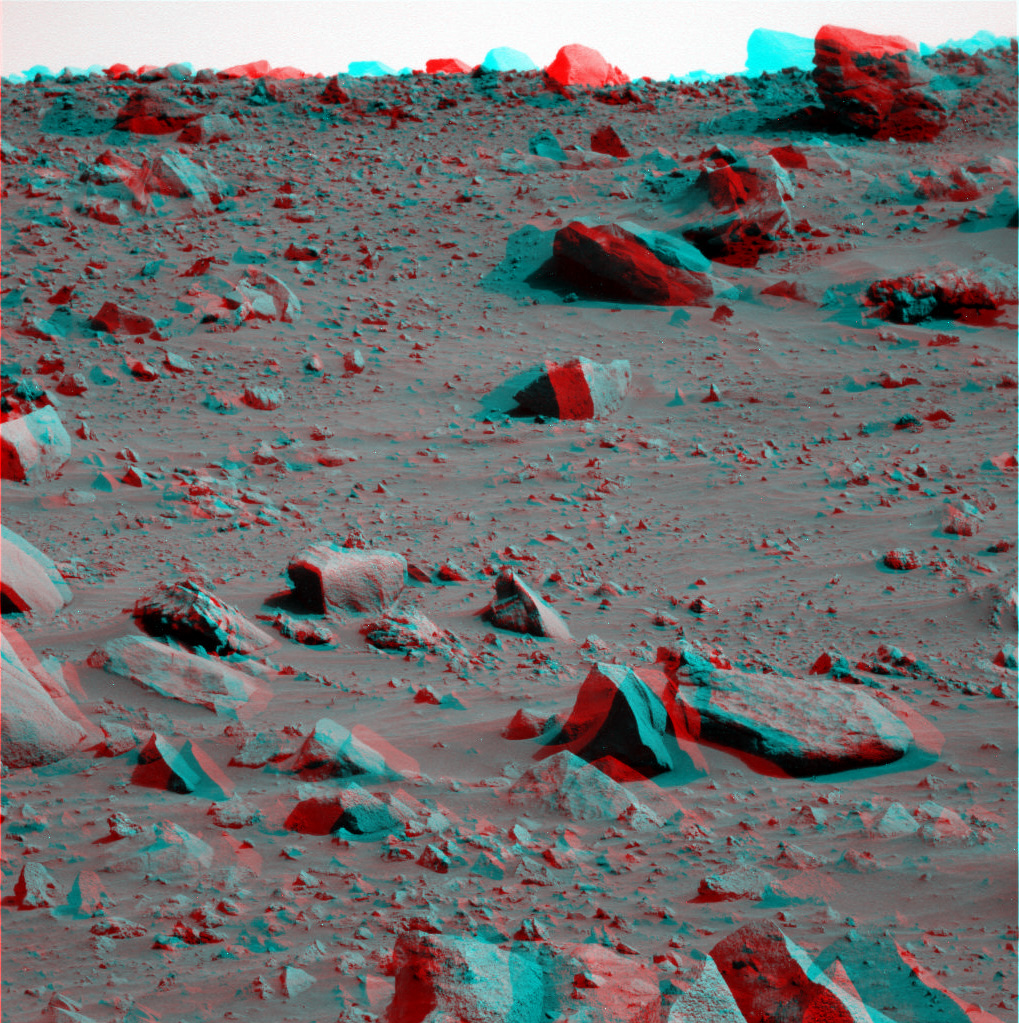
NASA has been doing this since they started documenting.....did you know most of the photographs on the moon are 3D? Mars landers camera are stereo. They can be incredibly useful for scientists.

you can view them all for free on course on NASA's website....here's a few famous 3D Nasa stereo photographs.

Here some RED & BLUE anaglyphs
Most of pictures taken in space has been stereoscopic.

a17anaglyph_vanMeijgaarden_c800.jpg


JosephTannerAstronaut_pava_c74.jpg


Moon_Apollo15_LunarRover_3D.GIF


Moon_Apollo17_LEM_color3D.GIF


Moon_Apollo17_CernanRover_3D.GIF


as12stereo_c2.jpg


2P160904592EFFA2LHP2365L7M13D.jpg


Moon_Apollo17_4_3D.GIF
 
Red, when are you going to invent a 3D camera that doesn't require two systems & a pair of lame goggles?

RED HOLOGRAM... The new 10k modular system coming 2012
 
That rig makes me so excited to shoot stereo!
 
Back
Top