Welcome to our community

Be a part of something great, join today!

  • Hey all, just changed over the backend after 15 years I figured time to give it a bit of an update, its probably gonna be a bit weird for most of you and i am sure there is a few bugs to work out but it should kinda work the same as before... hopefully :)

Ask David Mullen ANYTHING

Hey David, sorry to ask you another gear question, but do you know what ringlight this is?
 
Looks homemade, like a ring of MR16's.

No, I don't have a reservation. I'm not an equipment owner type... hasn't been necessary as a DP in my case.

If I ever go back into personal filmmaking, or have a huge windfall of money, I'd consider it.
 
Optica Elite S35 lenses

Optica Elite S35 lenses

Hi David I am interested in buying a set of prime S35mm lenses from Optica-Elite. The prices are reasonable and they look like a good solution for the red. I was wondering if you have ever tested these lenses or know someone else who did so. Any reviews...
Thank you
Panos
 
Hey David. This question might have been covered earlier in this thread, but do you consider it important for for over-all look and continuity of a feature (or a scene) to stay at the same focal length and f-stop, especially for cutting between master shots and close-ups so that DOF doesnt change too much. According to an interview with Darius Khondji, for each film he has shot, he has a main lens, say 27mm, that is used for most of that film. Do you think this important to a consistent perspective or do you think it is better to choose a specific lens and/or f-stop according to what the shot require?
Thanks
 
There are no "rules" per se -- some people like the dynamic quality from jumping from extreme wide-angles to telephotos, for example. Commercials and music videos tend to do more of that. Michael Bay or James Cameron action movies.

Sticking to a limited focal length range and f-stop gives the footage a consistent tonal quality, ala "The Godfather" or other movies shot by Gordon Willis. Or look at Ozu's movies, all shot on a 50mm. It's a more restrained, elegant style.

The advantage of sticking to the same f-stop within a sequence is not just for visual consistency in depth of field (which will vary anyway by how close the subject is to the lens) but it also makes lighting continuity easier because you aren't relighting every set-up with wildly different levels. For example, if you lit a wide shot to f/2.8, you could change the key light on a close-up, but keep the f/2.8 level, and probably not have to change many of the background lights or the general fill level. However, if you lit the close-up to f/5.6, you'd have to relight the background as well, plus raise the fill light level to maintain the same contrast ratio.
 
Hi David I am interested in buying a set of prime S35mm lenses from Optica-Elite. The prices are reasonable and they look like a good solution for the red. I was wondering if you have ever tested these lenses or know someone else who did so. Any reviews...
Thank you
Panos

I haven't used them so I can't give you any first-hand accounts, but I've heard good things about Elites generally in terms of sharpness.
 
Sorry if this has been asked before, but what single shot of yours are you most proud of?
 
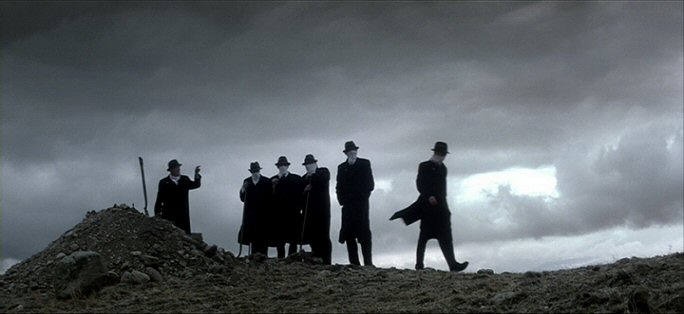
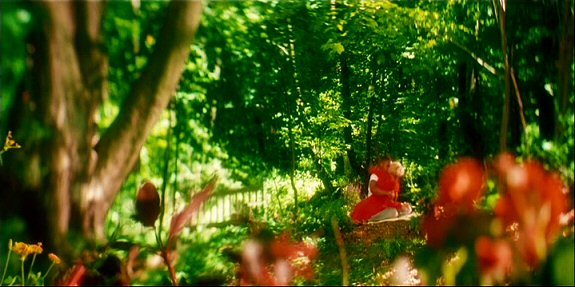
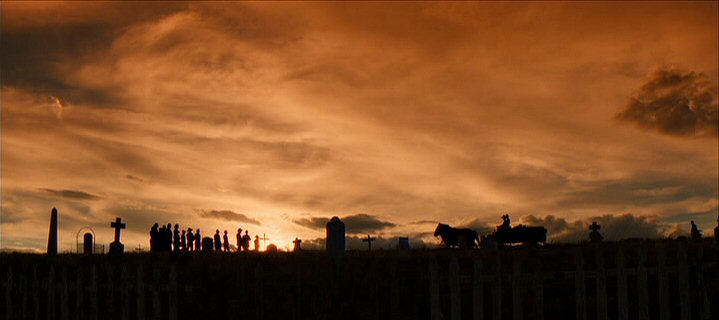
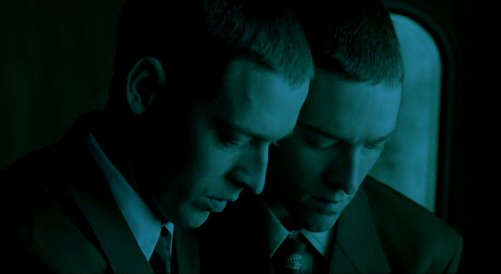
I don't have any single shot. Many of my favorite shots have little to do with my skills, but the luck of capturing some great sky or something. Here are a few:

af11.jpg


tfi2.jpg


northfork31.jpg


shadowboxerDVD8.jpg
 
The advantage of sticking to the same f-stop within a sequence is not just for visual consistency in depth of field (which will vary anyway by how close the subject is to the lens) but it also makes lighting continuity easier because you aren't relighting every set-up with wildly different levels. For example, if you lit a wide shot to f/2.8, you could change the key light on a close-up, but keep the f/2.8 level, and probably not have to change many of the background lights or the general fill level. However, if you lit the close-up to f/5.6, you'd have to relight the background as well, plus raise the fill light level to maintain the same contrast ratio.

Yes, it really makes things easier and that's what I normally do when filming indoors. I guess there's little reason not to do it that way in an internal shot. With externals I can understand that playing with the iris may make thing easier sometimes, but inside I can't really think of a reason not to film in a constant T-stop.
 
David,
I could stick with some technical issues e.g. How Did you Achive that Mood/Shot/Scene in The Astronaut Farmer, Northfork ...
But if i get this chance to "ask anything" i'd ask:
WHAT'S YOUR INSPIRATION FOR FRAMING, YOUR LIGHTING, YOUR CAMERA MOVES, YOUR WORK IN GENERAL?
Do you see pictures when listening to Music and/or vice versa?
What's your inspiration when it comes to "writing with motion"?
What's the nutrition of your imagination, your intuition?
I remember an interview with M.Ballhaus and Chris Doyle talking about the cultural influences of American vs. European cinematographers.
two people will perceive the same sunrise differently-what's your opinion on that?
 
David,

Finally got to see the Astronaut Farmer on DVD. The encoding is terrible, some parts of look like the very first attempts at encoding MPG2 on the hardware assisted home computer of ten years ago. Disservice to your hard work and everybody else who labored to make the film as good as it could be. BUT, have to say that it is the first time I feel the photography elevate an otherwise average film to a higher level. The low (by American standards) budget of the film shows, and the premise, though original, never climbs above just being a cool idea, and the story and characters, though likeable, progress with the predictability of a soap opera. But I loved the warmth and intimacy and coziness the lighting gives all the family scenes at the dinner table, the hangar, etc, and the rich glow and expansive palette of the exterior shots. It's easy to see Storaro's genius on something like the Last Emperor, or Doyle's uniqueness on Hero, but to make Astronaut look so big and rich, that's also the work of an accomplished craftman. Congratulations!
 
The DVD encoding on "Akeelah and the Bee" is really horrible too.

--

I'm an American, culturally, but also being half-Japanese, raised around Japanese art in the household, there is a little of that influence there.

I was also raised mainly out in the Mojave desert, so I suppose there is an aesthetic that develops from growing up in a wide-open space like that - maybe that's why I like CinemaScope so much...

I'm also a big fan of John Ford and David Lean movies, and I think that love of landscapes creeps into my work.

I've always liked expressiveness in color and contrast, which is perhaps one reason I'm drawn to the work of Storaro or Doyle, or old 3-strip Technicolor movies, like those shot by Jack Cardiff or Leon Shamroy. But I love b&w movies too. Maybe what interests me is non-real ways color can be manipulated, either pulled out or increased.

But for me, it has to be justified by the material, and some material really needs a delicate hand, an honest and natural presentation of the story.

Straight-up Realism though, in general, bores me a bit. Though some stories need it.

--

In terms of specific inspiration, that varies per movie. I wanted "Astronaut Farmer" to be reminiscent of Norman Rockwell paintings and Mercury-era NASA, sort of 50's retro meets the Old West. For "Northfork", it was the winter landscape paintings of Andrew Wyeth. For "Twin Falls Idaho", it was the color symbolism of Munch meeting the light and framing of Hopper.
 
Hello David. Let's say a TV producer is deciding among three cameras for his new TV show and is meeting with three camera owners.

Camera owner one says "My camera is 4K, so it's going to produce a better image than the other two".

Camera owner two says "My camera is only 2K, but for output to TV, it won't make any difference vs. 4K".

Camera owner three says "My camera is 1920 x 1080p full raster HD -- that means it's 1.92K. 1.92K is virtually the same as 2K, and for TV it wouldn't make a difference anyway".

I know there are many other factors/specs for consideration in choosing a camera for TV, but based strictly on resolution, would camera owner three be correct?

If the question were for blow up to 35 mm film instead of TV, would it be a completely different answer?

Hi,

I would ask what lenses you & the other cameras owners were going to use. Good lenses will cost way more than the camera body, that applies to a Red or a Viper for that matter.

Stephen
 
Hi,

I would ask what lenses you & the other cameras owners were going to use. Good lenses will cost way more than the camera body, that applies to a Red or a Viper for that matter.

Stephen

Hello Stephen. Of course you're right, and there are other factors too, I'm sure, but simplifying everything down to 4K vs. 2K vs 1.92K, I wonder what the answer is?

Your point does lead to other interesting questions though, like RED with their 18-50 mm zoom versus the Panasonic HPX3000 with a CAC enabled Canon zoom (virtually equal to good quality primes according to the Panasonic brochure), but I figured I wouldn't make the question too specific.
 
Well, that's the thing, I don't believe in reducing things down to a level that has no practical value. I'm sure it would be possible to design a really crappy 4K camera and a really fantastic HD camera, so pixel resolution of the camera alone would not be enough information to make a decision.

And in truth, not all 1920 x 1080 cameras are the same, resolution-wise. A Sony F23 and a Sony HVR-V1U can both do 1080i recordings, but that doesn't put them in the same ballpark, image quality-wise.

I think for HD broadcast, the resolution differences between a 4K, 2K, and pro HD camera are not going to be the deciding factor, assuming that all three cameras are of decent quality with good optics and minimal artifact problems, etc. At that point, since they all may seem similar in resolution in an HD broadcast, the deciding factors may be things like 35mm-style depth of field, dynamic range closer to that of film, color, workflow, ability to do chroma-keying, etc. And cost, of course.

If I were a smart producer faced with such options, I'd probably insist on seeing some comparison tests before I made up my mind.
 
David, and community, I apologize if this has already been asked and answered but I thought I'd ask again anyway:

David, which equipment/gear do you own and bring to nearly every shoot other than your wits and skills? There any items you do not rent and prefer to own instead?

I notice some cinematographers own a lot of their equipment for example while others do not. Just wondering what you considered essential.

Thanks for such an invaluable thread!
 
Hey David. I talked to a director today who wants me to shoot a movie for him in HD. As he started talking about low-key, noir, lots of shadows, night exteriors, etc, the word “nightmare” started forming in my mind. I’m glad we were talking on the phone and he couldn’t see my face. The thing is noir, low-key, lots of shadows in HD is suicide in my opinion unless you like noise. I have done it once and I wasn’t happy with the results. But judging by his enthusiasm I would say he’s pretty bent on that style. I’m meeting him tomorrow to discuss the project and it would be great to come already with a semi-formed opinion about the matter. Based on my prior experience I would just try to convince him to shoot film, even if S16 or abandon the low-key idea. But I thought I would ask your opinion on the subject before talking to him. What would be your approach to shoot a project like this in terms of avoiding noise and other problems related to HD in this case scenario?
As of now I have no idea of budget yet.
Thanks.

Uh...why not just recommend to shoot on Red? It's deeper into the blacks than even 35mm from most anecdotal reports.
 
Back
Top