Welcome to our community

Be a part of something great, join today!

  • Hey all, just changed over the backend after 15 years I figured time to give it a bit of an update, its probably gonna be a bit weird for most of you and i am sure there is a few bugs to work out but it should kinda work the same as before... hopefully :)

Ask David Mullen ANYTHING

Hi David,
In today's digital shoots, 'film look' and 'film latitude' are often referred. Does this mean that 'film' is superior to 'digital' in these 2 aspects? What are the maximum 'film latitude' and 'digital latitude' today?

Well, you have to separate an issue of taste and/or aesthetics versus any real scientific differences. When someone says they prefer the "film look" they aren't generally talking about specific technical qualities but an overall look and feeling to the image, and preferring it isn't necessarily the same as saying it is superior. I prefer a good hamburger over a steak but that doesn't mean I think hamburgers are superior to steak.

"Film latitude" is a vague term, sort of pseudo-scientific... "latitude" generally refers to the ability to alter, adjust, color-correct, fix, etc. an image. It often gets confused or tied up with dynamic range, which is the range of exposure values that can be captured. Film negative still has a wider dynamic range than any digital camera (other than the Epic in HDRx mode), but not by much anymore -- you could say that film negative captures about 15-stops of exposure, versus 14-stops with an ARRI Alexa for example. I also find that film still has more flexibility in color-correcting skintones when shot under off-colored light.

But "latitude" could also refer to ability to fix an underexposed image or a misfocused image, or the ability to crop and enlarge an image, and in those cases, generally a digital image has more latitude than a film image.
 
I am still in the dark. When you mention dynamic range to capture 15 stops on film negative, does it mean 7 stops below and 7 stops above the effective stop? This will cover the entire range of stops marked on any lens. Any stop used should be able to be compensated in the post. Likewise the cinematographer does not have to put much effort in deciding the f stop used. Please help me David.
 
I am still in the dark. When you mention dynamic range to capture 15 stops on film negative, does it mean 7 stops below and 7 stops above the effective stop? This will cover the entire range of stops marked on any lens. Any stop used should be able to be compensated in the post. Likewise the cinematographer does not have to put much effort in deciding the f stop used. Please help me David.

You're confusing dynamic range and latitude. Just because your image contains 14 stops of exposure information doesn't mean you can mis-expose the image by 14-stops, or even 7-stops. If you severely underexpose the image, then you've captured less shadow detail and bringing the image back up to normal brightness will make that obvious -- milky undetailed shadows, plus a lot of noise or grain. And if you severely overexpose the image, then you've lost bright highlight detail that can't be recovered even if you can bring your midtones back down to look normal in brightness.

Think of it this way, if your midtones occupy the middle range of stops recorded, then your bright detail will be in the upper stops recorded and your dark shadow detail in the lower stops recorded -- all this to create an image with a pleasing wide range of detail from dark to bright. But if you expose your midtone in the upper range, let's say it is 3-stops overexposed, then you've pushed the brightest parts of your image beyond the point where it can be recorded even if your midtone detail is still captured.

So due to issues like noise or grain, or clipping, or getting deep blacks, etc. your latitude range is smaller than your dynamic range -- if you can capture 14-stops of detail, you probably have about 3-stops of latitude to shift the exposure, if that, before the image starts looking odd (once corrected in post to normal brightness) because of loss of detail in the whites or blacks or due to an increase in noise or grain.

For example, if your "correct" exposure is an f/2.8 and you shoot at f/8, then your subject will look 3-stops too dark and once corrected back up in post, will display some artifacts. So just because you have 14-stops of exposure detail doesn't mean you can place your subject anywhere on that 14-stop range because the final image has to be at the brightness level that you think looks correct or normal.
 
Last edited:
You're confusing dynamic range and latitude. Just because your image contains 14 stops of exposure information doesn't mean you can mis-expose the image by 14-stops, or even 7-stops. If you severely underexpose the image, then you've captured less shadow detail and bringing the image back up to normal brightness will make that obvious -- milky undetailed shadows, plus a lot of noise or grain. And if you severely overexpose the image, then you've lost bright highlight detail that can't be recovered even if you can bring your midtones back down to look normal in brightness.

Think of it this way, if your midtones occupy the middle range of stops recorded, then your bright detail will be in the upper stops recorded and your dark shadow detail in the lower stops recorded -- all this to create an image with a pleasing wide range of detail from dark to bright. But if you expose your midtone in the upper range, let's say it is 3-stops overexposed, then you've pushed the brightest parts of your image beyond the point where it can be recorded even if your midtone detail is still captured.

So due to issues like noise or grain, or clipping, or getting deep blacks, etc. your latitude range is smaller than your dynamic range -- if you can capture 14-stops of detail, you probably have about 3-stops of latitude to shift the exposure, if that, before the image starts looking odd (once corrected in post to normal brightness) because of loss of detail in the whites or blacks or due to an increase in noise or grain.

For example, if your "correct" exposure is an f/2.8 and you shoot at f/8, then your subject will look 3-stops too dark and once corrected back up in post, will display some artifacts. So just because you have 14-stops of exposure detail doesn't mean you can place your subject anywhere on that 14-stop range because the final image has to be at the brightness level that you think looks correct or normal.

Do you mean the 3-stops shift of exposure applies to both under and over-exposed readings? Example, the meter reads f/4, then I can afford to overexposed by 1.5 stops (i.e. f/2.2) and underexpose by 1.5 stops (f/6.3).
 
This is a Google image search for this thread only if you are looking for something specific, frame captures retc. Quicker than going though all the posts.

Ask David Mullen anything image search.
 
Do you mean the 3-stops shift of exposure applies to both under and over-exposed readings? Example, the meter reads f/4, then I can afford to overexposed by 1.5 stops (i.e. f/2.2) and underexpose by 1.5 stops (f/6.3).

Depends on the particular film stock or digital camera, etc. That's why you have to test. And it depends on the look you want. Film negative, for example, is more tolerant of overexposure than underexposure because of grain issues, but digital tends to be the opposite due to clipping issues. But that's not always true.
 
Thank you very much David. It has been a very clear explanation. Appreciate it. BTW, what are the conditions required to shoot an effective Day for Night outdoor?
 
Depends on the look you want, soft moonlight or hard moonlight -- in truth, the moon is like the sun, just dimmer, so it's a hard source, unless there are some light clouds in the way.

In general, you want to avoid the sky unless you plan on replacing it in post. On a clear day at a right angle to the sun, a Pola filter will darken the sky a bit and when combined with an ND grad may make the sky dark enough, but then you'd probably still want to add stars in post.

You want to use a lot of ND in order to shoot with shallow focus.

You want to avoid a scene with light sources in the frame, like flashlights, car headlamps, fires, etc. because none of them will expose brightly enough in daytime. Or plan on adding them in post.

So Day-For-Night tend to make more sense in remote rural locations away from any electrical light sources, where the moon would be the brightest source of light in reality.

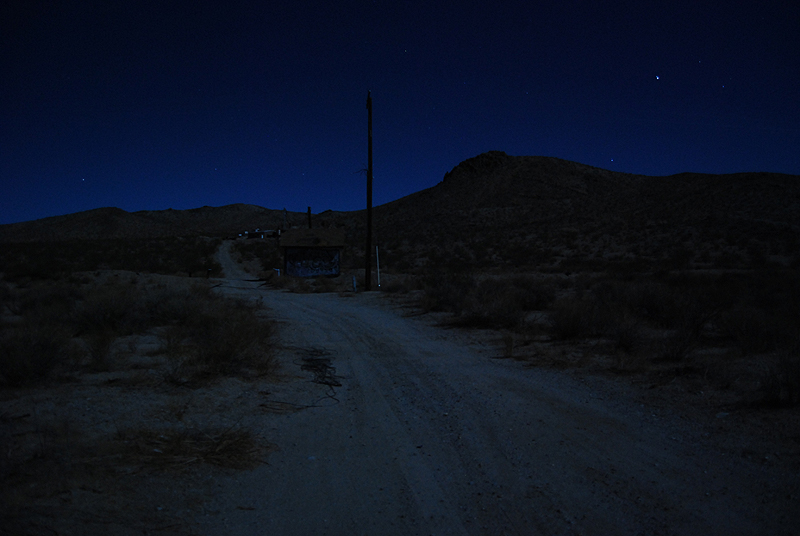
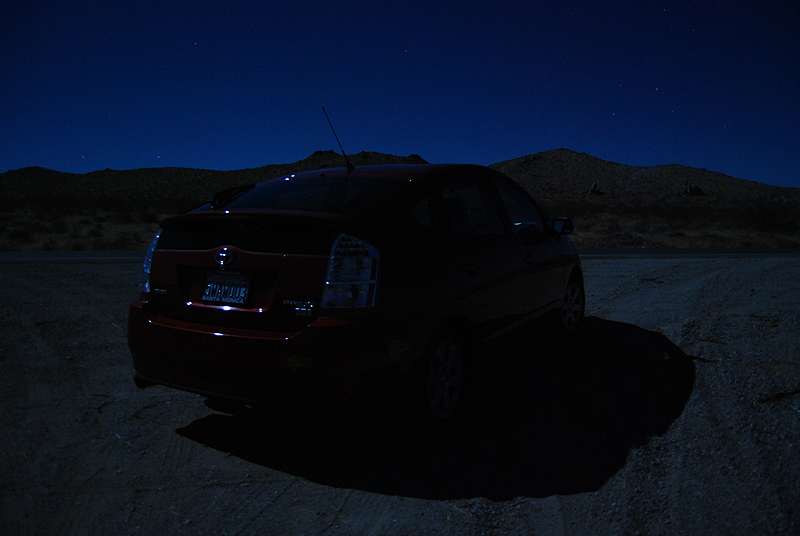
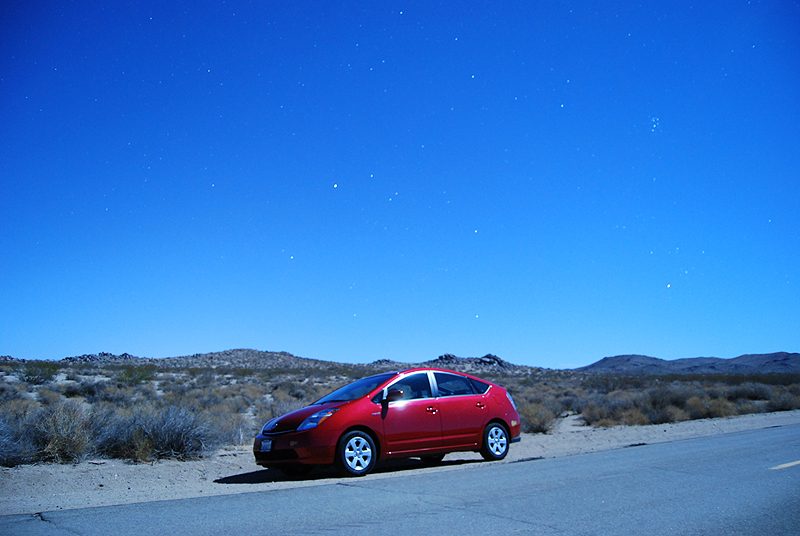
I took these photos of my car by real moonlight that gives you an idea of how similar moonlight is to sunlight.

Underexposed:
moonlit1.jpg


moonlit2.jpg


Longer exposure:
moonlit3.jpg
 
That's really interesting, I've never looked at moonlight from this perspective before, thanks David.
 
Interesting request from director, I wonder if you can help me a) check my maths and B ) come up with options...

Shot is a typical beach scene, looking slightly down on the beach and edge of the sea. Girl walks/dances on beach amongst 20 or so China Balls.

We're shooting Kodak 5207 (250D).

We're shooting during the day time, in a warm sunny part of the world.


The director wants to know if we can get the china balls to show (as lit).


My answer
- No.

My maths
- Sunny 16 rule suggests at 250ASA and 1/250th, middle grey is around F/16
We're shooting at 25fps, so 1/50th, therefore stop down by 2 stops to compensate = f/32. Key is f/32

So assuming the sand is middle grey, I figure the china balls would need to expose at least 1 stop over key, so f/64. (or more?)

I have a 12" china ball here with a 200W bulb in it. At 20ft it gives a spot meter reading of f/32 (ie - at key). So with a 400w bulb, it would probably get to around f/64.

However, I very much doubt that sand will be middle grey. I imagine it will be light orange, if not white, and therefore at least 1 if not 2 or more stops over key, in which case the china balls would need to also be an extra 1 or 2 or more stops brighter - 800, 1600, or 3200W bulbs.....


Does this sound like sensible rationale?
I guess the basic question is, how bright does a light source need to be to be visibly bright in daylight?
 
I don't need to do the math, common sense tells me that sunlight hitting a white paper lantern is going to make it a lot brighter than any light bulb inside it could during the daytime. You'd really have to shoot at twilight to get any interesting effect from the balls, including their glow lighting the dancer.

How bright does a light have to be? Well, what competes with sunlight? You're talking about strong HMI's at that point, or reflectors/mirrors.
 
David,
Do you light differently between film and digital shoots? Does digital give better look on soft and filtered lights?
 
David,
Do you light differently between film and digital shoots? Does digital give better look on soft and filtered lights?

I don't light differently from a stylistic standpoint, the story drives the style. I light by monitor mostly when shooting digital, something I can't do with film, so that's a different process but the results are similar. I find that digital tends to hold sharpness better in softer, flatter light (like on an overcast day) and conversely, it sometimes looks too sharp in harder light, so sometimes I either soften the light a bit more or I use more lens diffusion. But in general, it's not a big difference.
 
What is the best f stop to use in the shoot? Do you maintain the same f stop through out the same production?
 
David,
I was shooting yesterday outdoors with my Epic and it was a gorgeous moody foggy day when suddenly the sun comes out. No big deal, we break out the Half Soft Frost and it does a great job on the talent. But then the sun became sort of half diffused, enough so I still really needed a silk over the actors but frankly HSF was too much. I checked and they dont seem to make a quarter soft frost. What do you do when you want to lightly diffuse the sun but something like a HSF is too much?
 
I generally haven't used anything lighter than Half Soft Frost but you may find a Quarter Silk or Quarter Grid Cloth to be something more like what you want, but you do reach a point where it's not worth the effort if it is too subtle. At some point, you might as well just use a scrim instead.
 
What is the best f stop to use in the shoot? Do you maintain the same f stop through out the same production?

No, I don't keep to one f-stop for a whole show, for one thing, the same f-stop may look too deep-focus on one type of shot but too shallow-focus on another type of shot. I tend to pick the f-stop by the depth of field effect I want, if I have an option. For lighting interiors, I generally aim for an f/2.8 or a bit more just because that's manageable for the focus-pullers, plus I can switch to zoom lenses when needed. But day interiors may be lit to a higher level so I can balance with the windows without needing ND gel on them.
 
No, I don't keep to one f-stop for a whole show, for one thing, the same f-stop may look too deep-focus on one type of shot but too shallow-focus on another type of shot. I tend to pick the f-stop by the depth of field effect I want, if I have an option. For lighting interiors, I generally aim for an f/2.8 or a bit more just because that's manageable for the focus-pullers, plus I can switch to zoom lenses when needed. But day interiors may be lit to a higher level so I can balance with the windows without needing ND gel on them.
How many stops difference do you usually set for the windows and day interior? I guess there is a different treatment in digital and film.
 
To some degree, I balance by eye... besides, when faced with a hot window that you can't ND gel and want to balance to, you basically light the room as brightly as you can while still maintaining some naturalism to the look, not just blasting everything with light.
 
Hello David

Did you try xenon with high speed photography? I am planning a slow motion scene and want to use a 5k xenon bounced instead of an 18k hmi. It is cheaper and will let me use it for sun rays on other scenes.
I am concerned about flicker though. What do you think? (I will test it of course once I get my Epic)
Thanks a lot
 
Back
Top