Welcome to our community

Be a part of something great, join today!

  • Hey all, just changed over the backend after 15 years I figured time to give it a bit of an update, its probably gonna be a bit weird for most of you and i am sure there is a few bugs to work out but it should kinda work the same as before... hopefully :)

Ask David Mullen ANYTHING

I'm not sure I'd call a Rembrandt lighting style a standard "base" in a list of bases, but it certainly is a style. What is Rembrandt style exactly anyway? Soft, single-source, and warmish, with dark backgrounds? That would be my description, though Rembrandt would often employ some theatrical spotlighting effect in a wide scene to direct the eye.

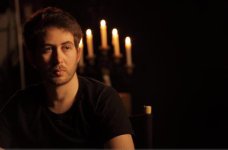
This is what they called Rembrandt ( attached ). Basic 3 point ... key 70-90 degrees out, fill next to the camera, and back/rim light. The distinct triangle under the left eye is the "style" giveaway. After this exercise, I see it everywhere. Im sure a lot of it has to do with how light wraps around faces.

Thanks for your time!
~Dean
 

Attachments
  • Picture-121.jpg
    Picture-121.jpg
    8.6 KB · Views: 0
Last edited:
David, one more question about these day blues...are you only using them outside to bounce the sun or do you also bounce tungsten fixtures off of them to warm them up a bit, or is there no real point in that (just as well put a 1/4 ctb on it prior to bouncing into white)? I also dont know if it's safe to bounce tungsten into a day blue muslin or not.

Thanks Shwan...
That was the question I had in mind and thanks David for answering
 
David,

I've just started reading this thread. And must thank you for sharing such great info. I'm sure I'll be asking some questions once we get into production.

So thanks in advance!

Max
 
On one side of the building is a white school house, 10 feet from the church which would provide the bounce/motivating key. On the other side of the church is a tree, which acts as negative fill (but I'll supplement it with douvateen or netting should I need to). With my power restrictions and small crew, I was going to try and get away with using high powered Kinos all keying from the same side as the white school house: 2 vistabeams through the shades, 1 vistabeam in the back of the room for more frontal fill, 3 parabeams attached to a steel bar on combo stands running above the windows key side windows, + a few smaller 4 banks as moving fill lights. My hope was to keep some detail in the windows (shadows of rain droplets, crosswork windows -- but not reveal the lack of rain and park outside the church). Given these factors, my plan was to cover the windows (3 on each side of the building) with tracing paper, use cream colored curtains for further detail retention, and wet down the outside of the windows prior to each take. I'm trying as much as possible to light the scene and keep setups quick given the amount of material we're shooting in the space. I will further push the coolness of the shot in post.

With my restrictions is there an easier/more cost effective way to achieve this?

I'm not sure I'd paper the windows -- it may make the windows look too hot to feel like it's overcast outside. You could consider putting something like Hampshire Frost on the windows, which would blur the view but not soften the light too much (you'd still need diffusion on the lights themselves). The Vistabeams and Kinos are a good idea. You could try an ND grad on the lens in static shots to darken the window side of the frame a bit. A frame of Double Net scrim material outside a window, backed away a bit to not cut the light coming in, could also help darken / blur the view out the windows.
 
If I may chime in...
There are a few more basic portait lighting styles then Rembrand. There is Butterfly and Split, etc.
I made a quick search and found a link that explains the different styles if you want to take a look:
http://www.portraitlighting.net/patternsb.htm
Regards
KIM

Seems more like old-fashioned still photography terminology. We may throw around terms similar to that on a movie shoot but rarely, partly because close-up lighting tends to be motivated by sources established in the wide shot, it doesn't happen in a vacuum. We tend to talk more about sources that establish direction, angle, color, and then how much we want to tweak things in terms of softness, fill, etc.
 
David ...Thanks so much for all the time you put into passing on your skills.
I have a question about the Red Primes . I know they are a great deal but I don't see them being used by professionals like yourself. Why is this? Is it just a name thing....where they are considered "unprofessional" or is there something inherently bad with the glass?

Thanks
 
Hi David
Sorry I have another question. I am working with a girl who insists on using these really old (80s) Russian Lomo lenses she says they are really soft so you don't have to use any soft EX with them. Have you used these lenses? Is there much difference in using a neutral lens and adding a desired amount of softening than shooting with a soft lens? Is it better to rent a set of sharp primes so you can add the amount of softening you want either in post or with filters or is it best to shoot with soft primes and have that look burned in?

Thanks Again
Richard
 
David ...Thanks so much for all the time you put into passing on your skills.
I have a question about the Red Primes . I know they are a great deal but I don't see them being used by professionals like yourself. Why is this? Is it just a name thing....where they are considered "unprofessional" or is there something inherently bad with the glass?
Thanks

They are great lenses optically-speaking but if you have the budget to rent something more expensive like Master Primes, you are likely to rent that (and not a lot of rental houses carry Red primes anyway if they are already heavily stocked in Cooke and Zeiss lenses.) In other words, RPP's are competitive with more expensive pro lenses but if you can afford to rent the non-Red pro lenses, there isn't a lot of incentive in rent the Red Pro Primes unless that allows you to rent more lenses total or more camera accessories. I think the RPP's are more of an enticement to camera owner-operators because of value-for-cost as opposed to renters like me.
 
Hi David
Sorry I have another question. I am working with a girl who insists on using these really old (80s) Russian Lomo lenses she says they are really soft so you don't have to use any soft EX with them. Have you used these lenses? Is there much difference in using a neutral lens and adding a desired amount of softening than shooting with a soft lens? Is it better to rent a set of sharp primes so you can add the amount of softening you want either in post or with filters or is it best to shoot with soft primes and have that look burned in?

There's no right or wrong answer - some people do beautiful work with old optics, look at what Darius Khondi did on the movie "Cheri", adapting some pretty old lenses to anamorphic. I'm more of the school of using sharp lenses and adding diffusion because then I can control the degree of softening better, but I also think the main problem with older lenses is mostly in the widest shots, so another possibility is to just carry a few better lenses for your wide shots then go with the old optics for everything else. So I don't see a problem with the idea of using the Lomos as long as you have a few better lenses for the times you need that extra sharpness (or speed, etc.) Carrying a few Zeiss Super-Speeds, for example, may not be a bad idea to complement the Lomos.
 
Seems more like old-fashioned still photography terminology. We may throw around terms similar to that on a movie shoot but rarely, partly because close-up lighting tends to be motivated by sources established in the wide shot, it doesn't happen in a vacuum. We tend to talk more about sources that establish direction, angle, color, and then how much we want to tweak things in terms of softness, fill, etc.


For sure, thats the way I work aswell. Don't get me wrong, I was referring to the Question of the original Post.
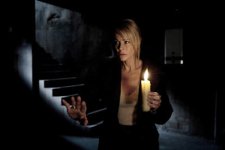
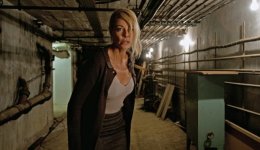
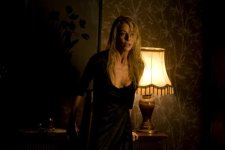
But recently I saw a movie called JULIAS EYES directed by Guillem Morales and shot by Óscar Faura and it was impressive to see how often he accomplished to light the face of Belén Rueda the same way, in very different scenes. I had the feeling that more than 50% of her shots were lit this way. I think this must be very hard to accomplish. I post some pictures I found in the WEB and hope this is okay. If not feel free to delete them.
I'm sure you're doing tests with your actors aswell to see how different styles work with there faces. But to realise the favorite style in so many shots must be a hard thing to do. And if you want the sources to be motivated, the staging or do you call it blocking, must work with this in mind. Could you share yor experiences on this?
 

Attachments

  • JuliasEyes01.jpg
    JuliasEyes01.jpg
    22.8 KB · Views: 0
  • Julias-Eyes-4.jpg
    Julias-Eyes-4.jpg
    53.7 KB · Views: 0
  • Julias-Eyes.jpg
    Julias-Eyes.jpg
    20 KB · Views: 0
Hey David, I was wondering if I could ask you about your experience at CalArts. I'm 24 years old, graduated from UCI with a BFA in film in 2009 and have been working as a cinematographer for a production company that produces web content for the most widely viewed YouTubers and their channels for the past year and a half. While it's great to be able to explore my creativity by shooting a new project every day and to work with my friends, I fear two things: not meeting people who have the same aspirations I do (working on feature films) and not being able to learn to light for motion pictures. I feel as if my lighting technique and creative choices are good for web projects, but are only mediocre for feature films or television. Unfortunately I am by a long shot the most experienced DP at my company, so there's not really anyone around me who can help me hone my craft except myself. And while I've done a good job doing that on my own so far, I worry that I'm not good enough for the big screen.

So, I am considering going back to school to pursue my MFA. I notice that CalArts doesn't specifically offer an MFA in cinematography - was it difficult to pursue cinematography while at that institution? Did you find yourself burdened with work for other specializations like production design or screenwriting while you were there? Would you recommend that institution to a young cinematographer? Is it a step backwards to go back to school when I've already held a DP job at a production company for a while, or is that a misconception?
 
I'm only up to page 47 (Nov 2007) so far, and taking great notes of your advice. I'm very interested in getting into Anamorphic. Panavision or Hawke are not in my budget. I'll probably seek out some Lomos. Are there any tips or special tweaks you'd do when lighting for Anamorphic over non-anamorphic?

Thanks

Max
 
So, I am considering going back to school to pursue my MFA. I notice that CalArts doesn't specifically offer an MFA in cinematography - was it difficult to pursue cinematography while at that institution? Did you find yourself burdened with work for other specializations like production design or screenwriting while you were there? Would you recommend that institution to a young cinematographer? Is it a step backwards to go back to school when I've already held a DP job at a production company for a while, or is that a misconception?

As an MFA, you don't need to take non-filmmaking courses, but you do need to make a thesis film. The advantage of CalArts is that, being somewhat informal, you can shoot as many projects as you want for yourself and for others. But it does not have a cinematography program per se, if you really want advanced training in that field, a school like AFI would be better, or maybe USC, Chapman, UCLA, etc.

I went to CalArts when I was 26 mainly because I didn't know where to go next -- I already knew how to shoot, how to light, but I didn't know how to break into the industry. At least at CalArts I expanded my range of contacts enough to lead to work after graduation. But today I'm not so sure that the high tuition costs of a private university make sense in terms of getting an art degree; if you are burdened by debt, then you don't have the freedom to work for free for various filmmakers while building a career (on the other hand, I guess it is a bit of a gun to the head in terms of spurring you to find work.) Today I'd probably try to find an affordable school in a major production city in order to make contacts with fellow strugglers and emerging artists, then get out as fast as I could out into the market.

Once you have an elementary education in the technical basics of cinematography, a lot of advancement comes from actual shooting -- practice, practice, practice. Meanwhile you can also research your artform and its history on your own to advance yourself aesthetically.
 
I'm only up to page 47 (Nov 2007) so far, and taking great notes of your advice. I'm very interested in getting into Anamorphic. Panavision or Hawke are not in my budget. I'll probably seek out some Lomos. Are there any tips or special tweaks you'd do when lighting for Anamorphic over non-anamorphic?

Thanks

Max

There are minor quirks to watch out for -- for example, anamorphic lenses breathe a lot so it affects how and when you rack focus during a scene, you can't get away with ping-ponging the focus. You don't aways see the blue horizontal line in the viewfinder on a film camera (though in digital you would) so be careful that a potential horizontal flare doesn't line up in frame with your actor's eyes.

Sharpness can be a problem on the edges of frame; stopping down helps.
 
Hey David,

I'm shooting a music video in the next month or so and am going for a glamour look. The video is going to be shot entirely on green screen and the artist himself is the only talent I'll be shooting. Recently I've heard a lot about Breise lights and the super soft and unique quality that they have. Have you ever used them before? If so what makes them so great? Are there any other alternatives that you might recommend or any other approaches one could take to light the video in a very flattering way. Such as shooting a few Maxi 9lights through an 8x8 of 1/4 grid. I do want to have SOME bit of contrast on the talent.


Thanks in advance for your help!
 
Hey David..

I thought I'd sit for a while and read all your advice posts to everyone, been reading for hours now...

Mate... Wonderful. Your a very very giving man. My hat off to you.

Your an amazing asset to any young (and older) person looking for free and best of all, correct cinematography advice.


Thank you David, your an amazing man.
 
Back
Top