Navigation
Install the app
How to install the app on iOS
Follow along with the video below to see how to install our site as a web app on your home screen.

Note: this_feature_currently_requires_accessing_site_using_safari
More options
Welcome to our community
Be a part of something great, join today!
You are using an out of date browser. It may not display this or other websites correctly.
You should upgrade or use an alternative browser.
You should upgrade or use an alternative browser.
Ask David Mullen ANYTHING
- Thread starter Tom Lowe
- Start date


Chris S. Alexander
Active member
Thanks for the tip David! That's a great problem solver for a shoot I have coming up!
- Banned
- #3,543

David Mullen ASC
Moderator
It's all about the lighting... bright against dark against bright against dark, etc. You create depth through tones, highlights and shadows, and you direct the eye with light and composition. It would help to capture some frames from those movies and study them for lighting.
If you are planning on adding a lot of contrast in post to the image, you have to be careful about shadow detail, when you want it. Unlike in color, where a bunch of soft light is enough to build up ambience in the shadows, you may want a mix of semi-hard and soft fill, the soft fill creating the ambient level you want (very low) and selective use of flagged or snooted light to etch out areas in the shadows that you want to see more of, sort of spotlighted shadow detail so to speak. You can do this all sorts of ways, I use blackwrap a lot around barndoors to create snoots that I can shape. For small areas close to the camera, Dedolights are good for this.
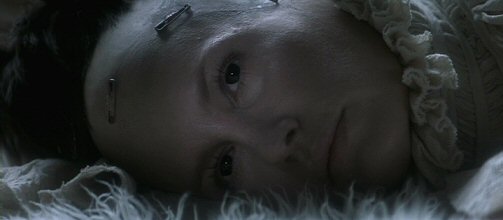
I used a Dedolight to create the spot on the eyes in this shot in "Northfork" for example:
This is another thing, less important, but I find that the "ring" flares that Classic Soft diffusion filters create around points of light to remind me of the halation around lights that the old b&w stocks created due to the type of anti-halation backing they used.
If you are planning on adding a lot of contrast in post to the image, you have to be careful about shadow detail, when you want it. Unlike in color, where a bunch of soft light is enough to build up ambience in the shadows, you may want a mix of semi-hard and soft fill, the soft fill creating the ambient level you want (very low) and selective use of flagged or snooted light to etch out areas in the shadows that you want to see more of, sort of spotlighted shadow detail so to speak. You can do this all sorts of ways, I use blackwrap a lot around barndoors to create snoots that I can shape. For small areas close to the camera, Dedolights are good for this.
I used a Dedolight to create the spot on the eyes in this shot in "Northfork" for example:
This is another thing, less important, but I find that the "ring" flares that Classic Soft diffusion filters create around points of light to remind me of the halation around lights that the old b&w stocks created due to the type of anti-halation backing they used.
scott william
Well-known member
- Joined
- Mar 27, 2009
- Messages
- 747
- Reaction score
- 0
- Points
- 0
I think the actors are just spritzed with water to look sweaty, though I've also heard of baby oil being used. Unless you are just talking about the use of make-up with less powder.
thanks david, ive done some tests with baby oil. seems to work great as long as you keep reapplying it


Craig Ryan
Well-known member
Hi David,
Do you feel it is important for a DP to do gaffing to learn lighting techniques? You seem to know quite a lot about lighting tools and techniques that normally a gaffer might know. Have you done a lot of gaffing yourself, or have you simply picked up a lot of tips from gaffers over the years?
Do you feel it is important for a DP to do gaffing to learn lighting techniques? You seem to know quite a lot about lighting tools and techniques that normally a gaffer might know. Have you done a lot of gaffing yourself, or have you simply picked up a lot of tips from gaffers over the years?
David Mullen ASC
Moderator
I come out of low-budget filmmaking where I've had to work with a lot of different gaffers of different skill levels, so I've pretty much learned to light on my own, picking things up from various people, including the gaffers I've worked with. But I've always been very specific about my lighting set-ups (sometimes too specific for my gaffer's taste), except for perhaps a night exterior where I want dozens of small lights scattered around picking things out, I don't necessarily pick every instrument, I let the gaffer work it out. And of course with a big lighting job, like pre-lighting a stage, it's really a collaborative effort.
But when lighting a small scene or a close-up like above, I pretty much call every instrument. That's the only way to learn what size units work best, etc. I believe in that close-up in "Northfork", I backlit with a 10-tube daylight Kino Wall-O-Lite, used a Dedolight with full blue for the eyelight slash, and probably a 4' 4-bank Kino for the general fill.
Not all DP's are as specific as that when sketching out the set-up to the gaffer, but for me, it makes a big difference what unit you use to create a soft light effect, because you often start out with the wide master and then move into the close-ups, so even if you plan on swapping out units once you move in closer, you want a similar feeling to the light, and you want the swap to go quickly, for example, on the wide shot, I may rig a Woodylight from the ceiling (like a Lowell Rifa with a medium quartz-bank Chimera) but on the close-ups, switch to a larger Barger Baglite on a stand, so the light is now closer to eye level and softer/larger, but is still a tungsten light through a Chimera, so the feeling of light, and color, stays the same -- as opposed to rigging a tungsten 4-bank Kino in the ceiling for the wide shot but then switching to tungsten for the close-ups, though I'll do that if that's the only way to get the shot.
My weakness, perhaps, is that I love lighting and gripping, so on smaller set-ups, like to adjust and aim lights myself, flag them, etc. It's party a tactile feeling issue with lighting, playing around with the units until the effect is right, but it annoys my crew at times, seeing me tweak all of the lights, drop scrims, spot or flood a bit, and raise and lower flags myself. Probably not efficient either, but it's a habit that came from doing so many small movies with inexperienced crew members... plus, it's fun to light a set!
I learned filmmaking (and lighting) on my own shooting Super-8 movies for a decade, then 16mm, and then shooting for other people later in film school.
Ultimately, lighting is one of the primary jobs that a DP has to do, so it's important to learn it -- maybe not at the level of a gaffer, but you have to know what effect you are trying to achieve, and you have to be fast and efficient.
Last edited:
Craig Ryan
Well-known member
Thanks; I've always enjoyed reading articles about DP's describing in detail how they achieved a certain look or shot and what tools they used. I find it fascinating how you can remember all the fine details even after many years.
I've worked on a lot of projects where the DP was less specific about lighting, and that was kind of a wake up call. Stephen Goldblatt mentioned in a masterclass that he will visually describe the mood and the lighting he wants to see, then cuts the gaffer loose. I attended another masterclass by Krishna Rao who sort of echoed that, but takes it further by even delegating shot framing to his operators; he feels that the more creativity you delegate to your crew, the harder they'll work, and in many cases, they're do what you had in mind, OR come up with something better, but in the chance it's not as good, he swoops in. Since he works in TV, that made sense for that kind of atmosphere. The light bulb went off for me and I realized that there are many ways you can go about utilizing your crew.
I definitely have a passion for lighting and have done more gaffing than anything lately actually. It's comforting to know that my gaffing experience won't be completely useless in the future when I DP even when I have a good gaffer on hand.
David Mullen ASC
Moderator
I've worked on a lot of projects where the DP was less specific about lighting, and that was kind of a wake up call. Stephen Goldblatt mentioned in a masterclass that he will visually describe the mood and the lighting he wants to see, then cuts the gaffer loose. I attended another masterclass by Krishna Rao who sort of echoed that, but takes it further by even delegating shot framing to his operators; he feels that the more creativity you delegate to your crew, the harder they'll work, and in many cases, they're do what you had in mind, OR come up with something better, but in the chance it's not as good, he swoops in. Since he works in TV, that made sense for that kind of atmosphere. The light bulb went off for me and I realized that there are many ways you can go about utilizing your crew.
There is definitely some truth to that, people give more, work harder, when they can contribute creatively. It's just that lighting is something very personal for me, I don't think of it as a communal art. But I'm not dictatorial about it, if I call for one unit and the gaffer suggests another unit, I know enough about lighting to know that the gaffer may be right. Now it does irk me when I call for something specific and they bring me something else, like if I call for a baby c-stand with an 18x24 solid and they bring me a regular c-stand with a 24x36 solid... there's a practical reason why I asked for what I asked for. Of course, I really should be leaving those decisions to the Key Grip, but it's just the way my brain works, it sees the set as a puzzle to be solved, with every piece of equipment surrounding the action in a certain arrangement that makes sense. Now when it comes to areas outside my area of expertise, obviously I defer to the experts... like "I need a cutter on that light in the ceiling, about three feet out, not sure how to rig it... we could try a teaser skirt taped to the ceiling or maybe rig a head and an arm and get a flag out in front, etc." My Key Grip will figure it out after talking to me. Same goes for specialized crane equipment, or electrical issues... I'm still not completely up on phase issues, load balances, etc. But I care a lot about whether a hot spot is done with a fresnel spotted in or a PAR, etc.
I've been working with the same gaffer and key grip lately, so it gets easier to be more generalized because we use the same equipment over and over again. On the other hand, unlike some DP's, I don't like to repeat myself too often, I like to try new solutions to old problems, to find better ways of achieving an effect, so one day I may want to cool off the shadows on a set by bouncing into dayblue cards, the next day I may be trying daylight Kinos with partial correction to tungsten, etc. So it can be hard for a gaffer to second-guess me all the time because I'm thinking up new ways of trying stuff.
There isn't much time on a film set to be wrong, so my fear would be that I'd say something vague, walk off the set, and come back 20 minutes later and find that the units are the wrong size or that a ceiling rig is in the wrong place, etc. and have to redo things. On the other hand, the problem with being overly specific is that crew people stopping thinking as hard because I'm doing the thinking. That can be a problem too, they don't learn their jobs because I'm doing half the work for them. So there are arguments for letting go, for letting others make more creative decisions.
On the other hand, that's not the nature of art, there has to be some sort of cohesive and coherent vision around everything, it can't just be a free-for-all of different people's creative outputs tossed together.
Now when dealing with multiple cameras, then yes, sometimes you have to rely on operators "finding" a good composition on the zoom lens, especially when doing "busy" scenes with crowds or action, etc. You tend to quickly find out which operators are good at that.

dean merrill
Well-known member
- Joined
- Nov 15, 2009
- Messages
- 163
- Reaction score
- 0
- Points
- 0
- Location
- Portland, Maine
- Website
- www.swallowtailmedia.com
This has all been very enlightening. Thanks David! (pun not intended)
marasco ivan
Well-known member
- Joined
- Apr 20, 2007
- Messages
- 69
- Reaction score
- 0
- Points
- 0
hi david,
there is an offer in a shop for harrison&harrison lowcontrast filter but i never read about it.do you think that is a good brand?
125$ for 4 lowcontrast 4.5" round filter
thanks
there is an offer in a shop for harrison&harrison lowcontrast filter but i never read about it.do you think that is a good brand?
125$ for 4 lowcontrast 4.5" round filter
thanks
David Mullen ASC
Moderator
That's a pretty good price for four Harrison filters. They were a mainstay in the 1970's, "Barry Lyndon" was shot mostly with a #3 Harrison Low-Con filter for example, and a lot of "Bound for Glory" was shot with either Low-Cons or Fogs.
Geoffrey Unsworth shot a lot of movies with a #2 Harrison Fog, such as "Superman", "Bridge Too Far", and William Fraker used that filter on "1941".
Vilmos Zsigmond used Harrison Double-Fogs on movies such as "McCabe and Mrs. Miller".
Harrison Low-Cons have a certain look, perhaps a bit old-fashioned now but good for period movies and whatnot. Very light ones (#1 and lower) would still be useful today for a bit of halation around lights and some contrast lowering. Peter Hyams used them all the time, such as on "2010", and for all I know, he (perhaps) used some for his Red movie "Beyond a Reasonable Doubt".
Last edited:

Kemalettin Sert
Well-known member
- Joined
- May 5, 2009
- Messages
- 3,513
- Reaction score
- 22
- Points
- 48
- Location
- Los Angeles CA
- Website
- www.kemalettinsert.com
Speaking of about filters i should recommend Cameraman The Life and Work of Jack Cardiff documentary.Must seen !!!
David Mullen ASC
Moderator
Yes, I bought the Region 2 (PAL) DVD and watched it. Very inspirational. I also recommend the Criterion blu-rays of "Red Shoes" and "Black Narcissus."

Jesper Sichlau
Well-known member
Is it possible to thank you enough for this wonderful thread and all the expensive time and effort you put into it? If so, I would like to wish you and your family a very merry Christmas, and hopefully a exciting new year!
David Mullen ASC
Moderator
You're welcome!

Keith_D
Well-known member
Is it possible to thank you enough for this wonderful thread and all the expensive time and effort you put into it? If so, I would like to wish you and your family a very merry Christmas, and hopefully a exciting new year!
I too, second Jesper's sentiments. Thank you!
Ariel Weiss
Well-known member
Kinoflo parabeam/Imara s6
Kinoflo parabeam/Imara s6
Hello David and Happy merry Christmas.
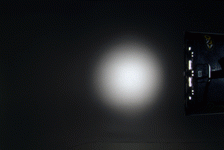
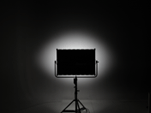
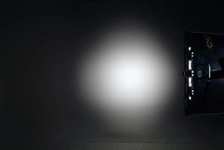
I have to choose between kino's Parabeam 400 or the upcoming Imara s6. I know It's not out yet (march 2011) but can you make some observation based on the shape of the beams? they have very close output so it's all about the shape and quality of the lightbeam. I understand from kino that the Imara has more hard edges versus softer from the parabeam.
The picture on the left is parabeam with 45 deg. louver. the middle one is Imara s10 (I assume It's the same as s6 shape-wise) with 60 deg. louver. and on the left is parabeam with 60. louver.
If you can't answer this just ignor it, I know it's a bit speculative about something not out yet.
Thanks a lot