Welcome to our community

Be a part of something great, join today!

  • Hey all, just changed over the backend after 15 years I figured time to give it a bit of an update, its probably gonna be a bit weird for most of you and i am sure there is a few bugs to work out but it should kinda work the same as before... hopefully :)

Ask David Mullen ANYTHING

I've done about 35 features, 1 in Super-16, 24 in 35mm, 8 on the 2/3" Sony F900, and 2 on the Red One.

I've also shot some TV, one season of "Big Love" in 35mm, three seasons of "United States of Tara" on the Genesis, and "The Good Wife" pilot on the Genesis and "The Chicago Code" (to premiere in February) on the M-X Red One.

There are so many factors that go into the format discussion, clearly budget is one of them, logistics of shooting and of post, delivery requirements, odds of getting a theatrical distribution and the need for 35mm release prints. Some projects come to me with the format fairly pre-decided before I came along, others were waiting until I got hired to have that discussion. Obviously as budgets go up, there is more flexibility in choice.

But in terms of depth of field, if I were going to do a Sergio Leone style western and wanted a lot of extremely deep-focus widescreen shots, I'd consider a 2/3" camera if I felt that the other image quality aspects were up to par. Sure make life easier on the set.

On the police drama I did on the M-X Red One, I ended up rating the camera at 1000 ASA often because we shot so much on zoom lenses out in the 200mm to 290mm range, for close-ups, and we were rushed and shooting nearly doc style, so I wanted as much stop as possible, often f/5.6 inside and f/11 outside in daytime, just to make focusing easier. So in that case, a 2/3" camera would have almost made more sense, except that the director likes 35mm depth of field, though he didn't like all the focus mistakes. But to me, working in that telephoto range, I wanted more depth of field, not only to hold focus but to actually still see something in the background, since we were on location in Chicago and I didn't want the city to disappear as a backdrop even on the long lenses.

But on "United States of Tara", which is mostly set inside a suburban home, there was talk about the F23 at first (the F35 wasn't out yet, they didn't want to deal with the new Red One three years ago) and I had to accept that Showtime has a digital origination mandate for all their shows, so film wasn't an option, even though the pilot had been shot on 35mm. I pushed for the Genesis and in the end, was glad because we shoot so much on a 27mm and 35mm lens in medium shot, so the shallower depth of field of a 35mm sensor allows me to get a little softness in the backgrounds -- we don't do a lot of close-ups on the show.

But in general, I try to light to an f/2.8-4 split because I feel that the focus gets too swimmy at f/2.8 and below. On occasion, I will -- I had a backyard scene at night the other week with Christmas tree lights in the background and lit it to an f/2.0 in order for the lights to expose well. At first, I used a 270 degree shutter and 1/2-stop gain boost to get back to an f/2.8 because I was worried about swimmy focus in the tighter shots but then I decided to stick to 180 degrees and zero gain, and shoot at f/2.0 because the Christmas lights looked bigger because they were more out of focus, and thus prettier. Luckily the actors were just sitting in chairs not moving much, so the focus in the tighter shots was fine.

David, if you don't mind I took the liberty of quoting a message you posted on Scarletuser and decided to ask the questions here because people usually come to this topic to read about these subjects. Here's the message:

David sorry to go off topic a bit... But you're not involved in 'The Good Wife' anymore? My mom loves this show.

I was also amazed by how well written it is! Some basic emotional scenes makes me really care for the characters.

Going back to topic, are they still shooting 'The Good Wife' on the Genesis, IMDb says it's F35, I thought F35 weren't out already, guess I was wrong.

About the police drama, f5.6 inside and f11 outside sounds like a weird choice to me... Why so?
Lighting for f5.6 inside also sounds a bit odd. Were there any challenges?

Always great to hear your feedback.
 
Solstice

Solstice

David,
Thank you for being so generous with your time and knowledge, you are really doing a great service to the creative community here.

I visited your site, and I found this image from Solstice.

page11_3.jpg


Its absolutely, and classically beautiful. What setup did you use, such as filtration and lens? This is a look that I would love to work with soon.

Thanks again!
~Dean

I'm curious about this as well...I'd suspect a soft key possibly bounced 2k or leko? Then a dedolight or 250 as the kicker?
 
Much softer, but it was also a bit farther away because of the wider shot... I put a Mini 9-Light through an 8'x8' frame of Lt. Grid Cloth, with probably a 4'x4' intermediate frame of 216 or something. Don't remember what the backlight was, maybe a 2K through a small frame (I seem to recall mounting it in a tree across the street for the wider shot). I like putting Mini 9-Lights through large frames because I can easily adjust the level by killing a couple of globes, plus it's a pretty lightweight lamp compared to a 5K or something.

If I were only lighting a close-up that evening, of course I could have used smaller units to get the same effect, maybe a 2K behind a 6'x6' frame.

On the day itself, I used a 1/8 ProMist filter I believe, but in post, since this became a flashback image, I did a sort of Gaussian Blur overlay pass to further soften it.

Thanks for sharing your insight. Would you say that larger lights thru diffusion are generally softer? Also, how were you able to control the shadow on the actresses face? Seems as if you shot a 9 light thru an 8x8 you'd have spill on her whole face.
 
It seems that any source through the right diffusion would be softer. Looking at the 9-light, you can turn off the lamps, so that would be a way of controlling the shadows. Correct?

I like the idea of a Gaussian pass in post, but it must be tricky to keep the sharpness. Perhaps the transfer mode as an overlay retains some of the detail.

Thanks for the info!
~Dean
 
How does one effectively light someone walking in or out of a door (and opening and closing it)? Seems like the door always gets overexposed and there's the possibility for ugly shadows. I know there is a trick for this but I don't know what it is... Or just lighting someone in a door frame...
 
Going back to topic, are they still shooting 'The Good Wife' on the Genesis, IMDb says it's F35, I thought F35 weren't out already, guess I was wrong.

About the police drama, f5.6 inside and f11 outside sounds like a weird choice to me... Why so?
Lighting for f5.6 inside also sounds a bit odd. Were there any challenges?

Always great to hear your feedback.

I shot the pilot on the Genesis in Vancouver (for Chicago), the series is shot in New York (for Chicago.) I think they switched to F35's in NYC just because it was easier to get them there, otherwise, it's not a big change, the two cameras are very similar.

A lot of locations in Chicago for "Chicago Code" (formerly "Ride Along") are lit with fluorescents, like the police stations, so at 1000 ASA on the M-X Red One, I got an f/5.6 on my meter, I didn't light the location to f/5.6 from scratch. I picked 1000 ASA because it seemed fine on the M-X Red One and with a lot of shots being done at 200mm and longer, it just gave the focus-pullers a fighting chance. Outside, I based the ND amount on the focal length to some degree, we started off at normal focal lengths and I probably had enough ND for an f/5.6 or so, but once we started zooming into 250mm and longer for the coverage, I'd reduce the ND to get closer to f/11 or f/16 -- even then, the backgrounds were pretty soft, but again, it helped keep the actors in focus since they were moving around a crime scene without marks, etc. sort of doc style. Plus even on the longer lenses, I wanted some of the city to be a character in the background, not have it disappear into a bunch of out-of-focus shapes and blobs. I figured that with TV, they'd be using a lot of the tight shots so they had to be interesting to look at.

Now at night, of course, I'd end up at f/2.8... even some interiors at night, I'd only light to an f/2.8 because I wanted some of the ambience outside of the windows to expose.
 
It seems that any source through the right diffusion would be softer. Looking at the 9-light, you can turn off the lamps, so that would be a way of controlling the shadows. Correct?
~Dean

Mainly it's a simple way of adjusting the intensity, by turning off a globe here and there, you can really fine-tune the brightness. Since it went through two layers of diffusion, it didn't really affect the shadow patterns and sharpness too much. I like multi-bank lights through diffusion because they are flat-shaped units, don't stick out too much, but they have some spread so can fill a frame without being backed-up too far.
 
Thanks for sharing your insight. Would you say that larger lights thru diffusion are generally softer? Also, how were you able to control the shadow on the actresses face? Seems as if you shot a 9 light thru an 8x8 you'd have spill on her whole face.

You place the large soft light at an angle to keep some contrast and fall-off on the face, "spill" is sort of a different concept, it refers to the light from the key going places you don't want, like the surrounding background, foreground, etc. In this case, a close-up of a person on a sidewalk at night, there wasn't much surrounding her other than the ground she was standing on in the wide shot, in which case I had to use black flags and teaser to reduce the spill on the ground. You're probably thinking of something other than spill, that the light would be too flat, and that's mainly an issue of direction, it can't be too frontal.

The softness of a light is mainly dependent on one thing, it's SIZE relative to the subject. When you shine a light through a diffusion frame, you have to think of the frame as the light source for the subject, not the lamp hitting the frame. The size of the source will determine the softness of the shadows it creates on the subject, and that size is relative, meaning that if you compared a 4'x4' frame of diffusion to a 20'x20' frame, but the 20'x20' frame was backed away so that, from the subject's perspective, both frames were the same size in their view of vision, then softness of the source would be the same.

The difference then would be one of fall-off intensity, the soft source much closer to the subject would fall-off faster, a small movement towards or away from the light would create a visible change in brightness.
 
David, how do you go about attractively lighting talent so that it looks good on both a RED and DSLR? I was shooting with both recently and had an issue with skin tones looking "cartoony" on the Canon 7D I was using.

"Cartoony" can be due to a number of things, probably the lack of fine detail combined with exaggerated colors and contrast is the main culprit. Flattening out the contrast in the camera settings will help, perhaps lighting a bit flatter too, but ultimately it's hard to make a perfect match because the Red One image is going to have a lot more dynamic range and fine detail in it.
 
How does one effectively light someone walking in or out of a door (and opening and closing it)? Seems like the door always gets overexposed and there's the possibility for ugly shadows. I know there is a trick for this but I don't know what it is... Or just lighting someone in a door frame...

Ahh, doorframes... A real challenge, especially if the door is white. It makes a big difference if the actor is slightly behind or ahead of the doorframe. If slightly behind, like when you see an actor peeking through a cracked door, sometimes the simplest solution is to backlight the actor and put white card on the backside of the wall and door so that the bounceback fills in their face.
 
"Cartoony" can be due to a number of things, probably the lack of fine detail combined with exaggerated colors and contrast is the main culprit. Flattening out the contrast in the camera settings will help, perhaps lighting a bit flatter too, but ultimately it's hard to make a perfect match because the Red One image is going to have a lot more dynamic range and fine detail in it.

Thanks David. Very helpful.
 
Hey David,

Do you know how to achieve the greasy skin tone look?

I believe it was used in Cloverfield and maybe Transformers.
 
Hey David,

Do you know how to achieve the greasy skin tone look?

I believe it was used in Cloverfield and maybe Transformers.

I think the actors are just spritzed with water to look sweaty, though I've also heard of baby oil being used. Unless you are just talking about the use of make-up with less powder.
 
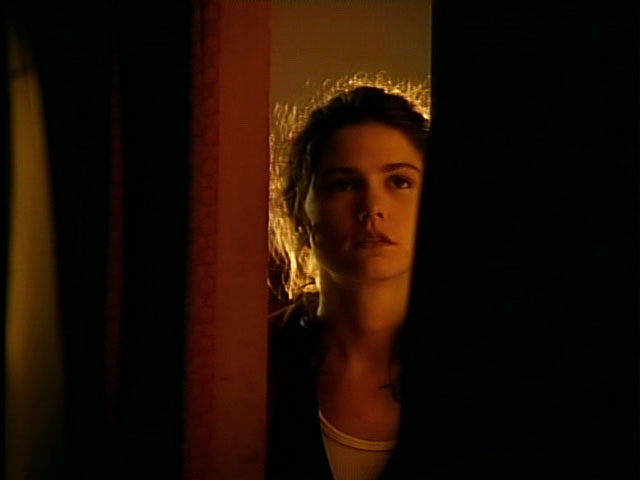
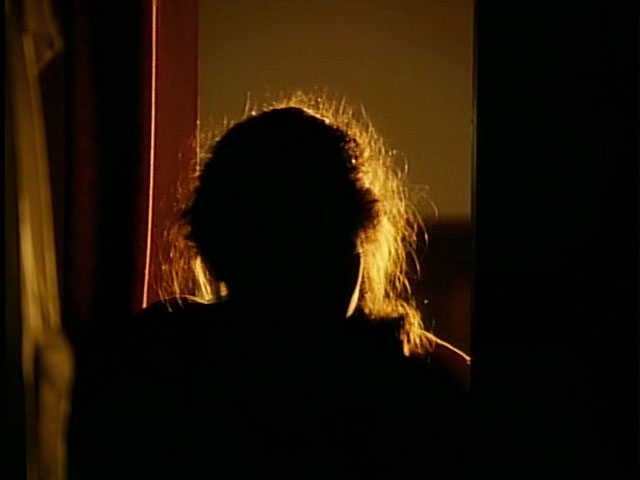
Here's how I learned how to deal with people in doorjams... I was doing my second movie, a low-budget thriller called "Lipstick Camera" and had to shoot from inside a closet as someone opens the door to look inside, then closes the door again over the lens. I wanted to see her face, but I couldn't figure out how I could have a light shining from the camera direction that wouldn't light-up the inside of the closet door before it opened. I considered dimming up a key from inside, but that seemed risky. I ended up just putting white card on the outside of the closet door and backlighting her, so her face was lit by the door itself bouncing light back-up. As she leaned her head in, she did go silhouette however, which was fine for that scene, but I perhaps could have faded up a bit of fill / eyelight, or perhaps raked her from one side. But it seemed safer to not have a light on inside the closet.

lipstickcamera1.jpg


lipstickcamera2.jpg


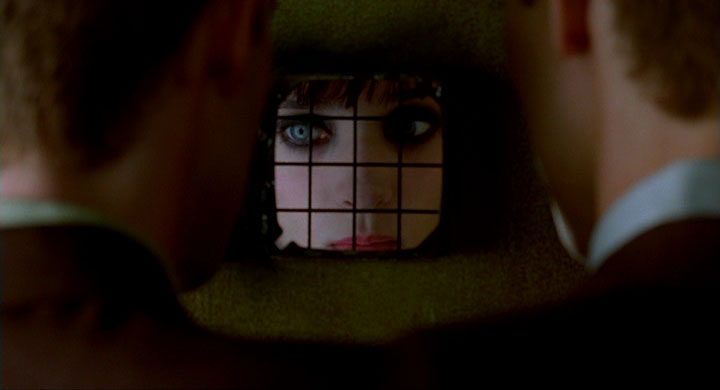
A few years later, I had a shot in "Twin Falls Idaho" where the actress is seen through a small window in a door, so to get light on her eyes, I used the same trick as I did before, I put some white card around the window so a backlight bounced back into her eyes from the door direction:

tfi8.jpg
 
This is gold, thanks very much for those tips and the accompanying photos David.
 
Back
Top