Welcome to our community

Be a part of something great, join today!

  • Hey all, just changed over the backend after 15 years I figured time to give it a bit of an update, its probably gonna be a bit weird for most of you and i am sure there is a few bugs to work out but it should kinda work the same as before... hopefully :)

Ask David Mullen ANYTHING

I'd let the outer perimeter be lit with floor practicals and live with the hot shades, or use clever blocking hide a bright lamp to camera, or use ND gel on one side of the shade, etc. That leaves the center of the room where a soft top light would be useful. If the ceiling is low, you could try kino tubes or LED strips or ribbons, or an LED blanket light, if you can figure out how to mount that to the ceiling and where to run the power to them. A bit of help from the art department can help hide a cable running down a wall.

Or use a Source-4 Leko to bounce into the ceiling, if you have an off-camera spot to put the Leko.

You can use black nylon/plastic table cloth material, sort of a lightweight ripstock, for teasers, since it is light enough to be attached to the ceiling with paper tape.
 
thanks for the tips! i am intrigued by the (potential) simplicity of a leko and teasers for a top light. if you don't mind answering a more general (and perhaps too vague) question:

when it comes to using practicals to contribute light to a scene (say for example a lamp with a shade), do you prefer to use them "as-is" and let them blow out, in order to provide enough useable output? or do you prefer to dim/gel them and supplement their output with a cleverly hidden source? or is this purely a stylistic choice dictated by the particular scene or project?

would love to hear your thoughts!

thanks,
mike
 
thanks for the tips! i am intrigued by the (potential) simplicity of a leko and teasers for a top light. if you don't mind answering a more general (and perhaps too vague) question:

when it comes to using practicals to contribute light to a scene (say for example a lamp with a shade), do you prefer to use them "as-is" and let them blow out, in order to provide enough useable output? or do you prefer to dim/gel them and supplement their output with a cleverly hidden source? or is this purely a stylistic choice dictated by the particular scene or project?

would love to hear your thoughts!

thanks,
mike
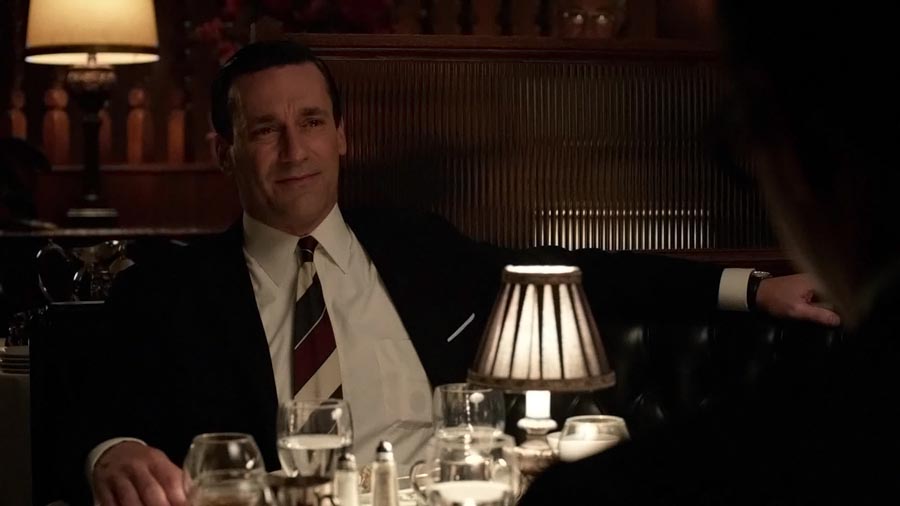
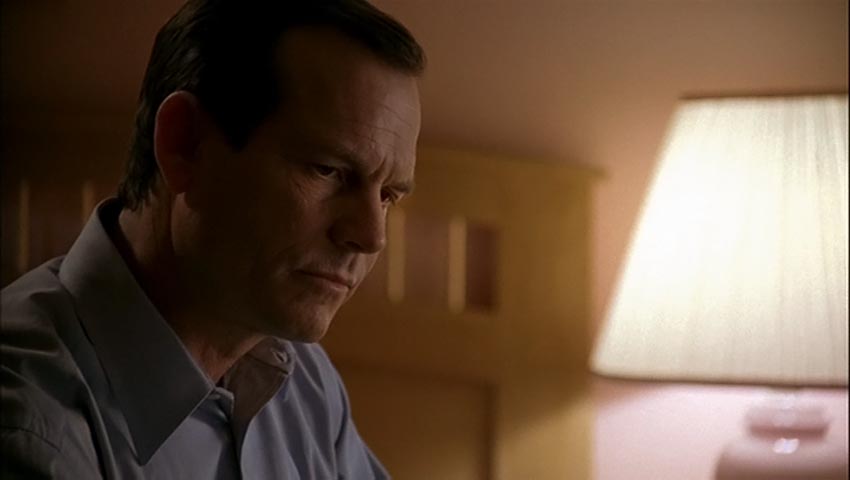
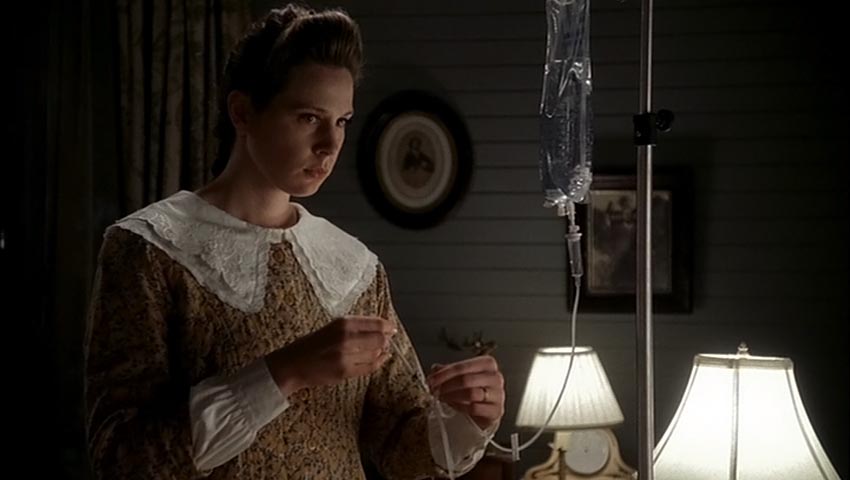
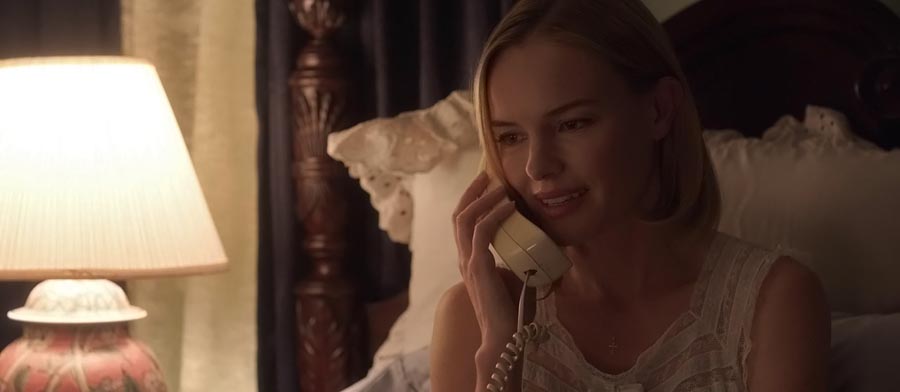
I don't mind hot lampshades if they help reinforce the feeling of the light coming from the lamp. However, I don't like unnaturally clipped shades. If the shade is smooth with no texture, it would be hard to tell the difference from being unclipped white versus clipped, but if the lampshade has folds, rough texture, etc. I would prefer to hold on to some of that. In that case, sometimes I'll put ND gel on the side of the shade facing camera. Sure, I'll add a secondary soft light to reinforce the effect of the lamp when possible.

Some examples from things I've shot:

Here there is a secondary soft light but a lot of the exposure is coming from the lamp as well, so it is pretty bright and the face is a little down:
lampshade1.jpg


Here I've dimmed the background lamp, since it wasn't lighting anyone, but the foreground lamp is as bright as I could get it, and the bounce it creates off of the white tablecloth is providing the fill under the eyes - the key is an overhead paper lantern:
lampshade2.jpg


Here I've got a Kinoflo providing the key on the face but the lamp is played bright:
lampshade3.jpg


Same here, some sort of bounce off of the wall above the lamp to augment the lampshade light hitting the face:
lampshade4.jpg


I remember years ago talking the Roger Deakins about how he managed to shoot so many scenes of Barton Fink sitting next to the lamp next to his hotel bed and make it feel like the light was coming from the lamp, and he said he usually augmented the light from the lamp with a tweenie bounced off of something above the shade on the wall (I don't recall if it was Gold Roscoflex or a piece of unbleached muslin).
 
David,

I'm a huge fan of wide angle lenses and movies that have successfully used it. I was wondering if you had any suggestions on other films that were mainly shot with wide lenses. Thanks

tree-of-life-wideshots.jpg


So far I've got..
Birdman
Gravity
Me, Earl, and the Dying Girl
The New World
Tree of Life
To The Wonder
Knight of Cups
The Revenant
 
The 18mm lens dates back to the mid-1950's and was used for a number of shots in "Touch of Evil". By the 1960's, you see the occasional use of the 9.8mm Kinoptik and other super wide-angles for some "nightmare" shots (even in some "Star Trek" episodes) and Kubrick used the 9.8mm a few times in "A Clockwork Orange", and you see wide-angle lenses in general (of the more typical 18mm to 25mm range) in many of his films.

Polanski was known for shooting most of his movies on shorter lenses -- ''Repulsion" is good example. "Rosemary's Baby".

Frankenheimer as well, he used the 18mm quite often in movies like "Seven Days in May" or "Seconds" (which has a few distorted super wide-angle shots in it.)

And of course there is Terry Gilliam, "Brazil", "Fear and Loathing in Las Vegas", etc.
 
The Coen brothers' first two films make use of a lot of wide angle lens shots: "Blood Simple." and especially "Raising Arizona".
 
Hi David, i have an outdoor shoot with a car over grass and trees surrounding. behind the car there will be a blue screen for chroma key. we'll have two scenes: one DAY and another NIGHT. for the day one, i'll have a 20x20 solid black hanging 13 feet above the car to cut the reflections from the sky and shadows. The chroma will be outside the reach of this solid black and lit by a row of 6 4'kinoflo tegra banks (for the night shoot). lighting for the car and talent with be from a 12x12 bouncing 1.8k HMI just to ensure ambience and lots of poly boards reflecting the natural light. At night, the setup is the same. 1.8k him bouncing light from the 12x12. What do you think of this setup? Any recommendations? Should i just leave the blue screen lit by natural light during the day? thank you very much.
 
It's hard to know if your blue screen will be too bright or too dark relative to the interior in the daytime so you should be prepared to adjust it. I'd back it with a solid black so it isn't transparent when backlit, you possibly could tilt it down a little to shadow it further.
 
In negative, I've only shot Plus-X and Double-X and Kodak doesn't make Plus-X negative anymore... I liked both but liked Plus-X a little more. In reversal, I've shot Plus-X and Tri-X (and 4-X when it existed for Super-8) and again, I liked all of them but liked Plus-X the most.
 
Back
Top