Welcome to our community

Be a part of something great, join today!

  • Hey all, just changed over the backend after 15 years I figured time to give it a bit of an update, its probably gonna be a bit weird for most of you and i am sure there is a few bugs to work out but it should kinda work the same as before... hopefully :)

Aces - Resolve - RED

Really the main benefit of ACES is interoperability between multiple people, shops, software, etc. Most common being a clean linear VFX roundtrip.

Yeah that's what all intermediate COLOR SPACES are for. Plus ACES is the STANDARD and it is future proof in APO/ LINEAR
 
I'm trying out JPLOG2 in my ACES WORKFLOW designed by JOSH PINES and used with COLOURLAB Ai.

That was worthwhile.

“Ever since liftgammagain got hijacked by that lunatic, psychopath guy who sells calibration software, most smart people that know anything about color science or color have been out of it, nobody really wants to even write anything, because there's always somebody trying to outsmart you and put links to their product, using it as a marketing tool, so the the quality of that forum has just gone down the drain.” - Dado Valentic.
 
Is the R3D output tone map and highlight roll off disabled now in Resolve? Or do you have to have the color management setup in a certain way to have control over that?
 
You mean in a RED IPP2 Color Managed Workflow or just a Node Based Workflow with an IPP2 Output Transform Lut placed at the end of the Node Tree? Or do you mean in the Camera Raw section on the Color Page?
 
Camera Raw section of Color page in a color managed project yeah.
 
I believe back a while ago in the SDK that the default now in MEDIUM SOFT and you can't change that unless you are using a NODE Based workflow with an OUTPUT TRANSFORM LUT on in a RED COLOR MANAGED WORKFLOW But you have to set both for the entire Project.
 
I'm trying out JPLOG2 in my ACES WORKFLOW designed by JOSH PINES and used with COLOURLAB Ai.

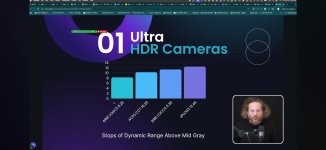
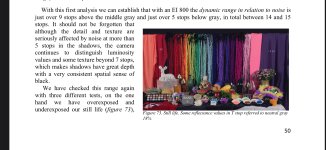
In Dado Valentic's presentation of Josh Pines' JPLOG2, he claims that using ACES CCT, highlights are clipped in DaVinci Resolve when grading footage shot with high dynamic range cameras like the Alexa 35. I'm having difficulty wrapping my head around that, since the Alexa's 'only' got 9 stops of DR above middle gray (Alfonso Parra). Can anyone help me out here?

IMG_1691.jpeg
IMG_1692.jpeg
IMG_1693.jpeg
 
I'll need to do a deep dive on JPLOG2 and I don't generally use ACES. I'm not exactly experiencing any issues in SDR or HDR at various ISOs at max dynamic range on any current cameras. And I design my "stuff" to be ready for other things further down the line generally.

Really need to understand where and what 18% gray is that is being referenced here. You can certainly make a log that goes deeper and even higher than most, but there "might" be reasons not to as well.
 
In Dado Valentic's presentation of Josh Pines' JPLOG2, he claims that using ACES CCT, highlights are clipped in DaVinci Resolve when grading footage shot with high dynamic range cameras like the Alexa 35. I'm having difficulty wrapping my head around that, since the Alexa's 'only' got 9 stops of DR above middle gray (Alfonso Parra). Can anyone help me out here?

I think it's just that Arri LogC4 log range exceeds ACEScct, not that the camera actually captures it, not likely to ever see any imagery from that camera where this becomes an issue. I have done plenty of VFX comps with much more range than any camera can capture, brought into Resolve under ACEScct and it behaves totally fine.

It does beg the question though why grading isn't just done in linear like VFX has been doing for the past 15 years or so. It really just comes down to people still wanting to be able to use a gamma control and have it behave in a way they understand, but that really only makes sense in display referred workflows.
 
Last edited:
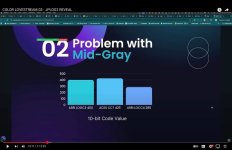
The Mid Grey of Jplog2 is I believe 400 / 401. Jon the purpose of Jplog2 is to have a larger number of Stops above Mid Grey than any other camera so that no Camera can exceed it in the realm of highlights.
 
I think I remember it being said that Log is more similar to the way Film responds than Linear. Also I think exposure especially tools like the EL- Zones works to measure Stops in Log and Not in Linear. Plus I think most Colorist have a muscle memory with the way the grading tools work in Log and not so much in Linear.
 
Jon I think Dado was comparing Arri Log C3 or Acescct and DWG's Number of Stops Above Mid Grey to each other.
 
Phil a thread on Lift Gamma Gain also brings up rather or not there is a reason for it or not also.

 
More info on Jplog2 and were you can download the JPLOG2 DCTLS and Luts and White paper.

 
The Mid Grey of Jplog2 is I believe 400 / 401. Jon the purpose of Jplog2 is to have a larger number of Stops above Mid Grey than any other camera so that no Camera can exceed it in the realm of highlights.
Dado said highlights will clip when handling footage from high dynamic range cameras. I shared a screen shot from part 1 of Dado’s presentation. In that section, he says nothing about increasing the dynamic range capability of the color space in order to accommodate raising middle gray to 400. You’ve worked with lots of footage in ACES yourself. Can you verify what he says? Are your highlights unaccountably clipping?
 
Last edited:
Jon I think Dado was comparing Arri Log C3 or Acescct and DWG's Number of Stops Above Mid Grey to each other.
I’m afraid you’re mistaken. The screen grab shows the color spaces he compared, and DWG is not one of them.

IMG_1696.jpeg
 
Last edited:
Dado said highlights will clip when handling footage from high dynamic range cameras. I shared a screen shot from part 1 of Dado’s presentation. In that section, he says nothing about increasing the dynamic range capability of the color space in order to accommodate raising middle gray to 400. You’ve worked with lots of footage in ACES yourself. Can you verify what he says? Are your highlights unaccountably clipping?
Jon I'm using the ACES 2.0 CANDIDATE ODTs so my Highlight are more rolled off than with the Normal ACES Workflow so No I haven't really noticed. However if you are not using the ACES 2.0 CANDIDATE ODTS, I think you would see a difference. I don't know what kind of tests he has done But I know he has done some extensive testing in ACES since JPLOG2 has the same ACES AP1 Primaries. he onlyhas so much time in the presentations so he probably mention everything.
 
Last edited:
I might have misquoted what he said however In the presentation, he did say that he wanted to include DWG in the chart but felt it had about the same amount of Dynamic range as one of the others on the chart, I can't remember which one it was I watched the video a few days ago, so he didn't include it. Josh Pines and or Dado can probably do a better job of explaining the technical details better than I can. The best way to see what it does is just to use it.
 
I had a look at the white paper. It says ARRI LOGC4 is able to encode over 11 stops of dynamic range above middle gray, yet the Alexa 35 is only capable of capturing 9 stops above middle gray, well below the 10.25 stops of ACES CCT. Accordingly, there should be no clipping of highlights.

Pines also writes that legacy lift, gamma and gain controls don’t work for HDR, but (a) we’ve known that for forever and (b) that’s why FilmLight (Baselight 5.0), Blackmagic (DaVinci Resolve 17), et. al. came up with new controls that are suited to HDR grading. Strange how Pines overlooks that.

“Due to LogC4's lower mid-gray value, precision in shadow regions is significantly reduced. As a result, even minor adjustments in Lift values introduce substantial variations in black levels.”

“For instance, a slight 0.3 increase in Lift amplifies black level shifts by 102 code values, making ARRI LogC4 impractical for precise grading operations. This lack of fine control over shadow regions disrupts the predictability of color adjustments and compromises artistic intent, particularly in HDR mastering and film emulation applications.”

"It is also worth bearing in mind that the traditional lift, gamma, and gain operators are particularly unsuitable for acting on ST 2084 image data, where 0-1 represent zero to 10 000 cd/m2. Highlights, in particular, can swing uncontrollably into extreme values as a result of small changes. Modern grading systems offer alternate grading operators tailored to the needs of HDR grading." - Nick Shaw

Pines asserts there are issues with on set monitoring and in post production but I’m having trouble finding any evidence to back up those claims. The Alexa 35 appears to be crazy popular so if there were instances of anyone struggling with the workflow, I think I’d have heard about them by now.
 
Last edited:
Back
Top