Welcome to our community

Be a part of something great, join today!

  • Hey all, just changed over the backend after 15 years I figured time to give it a bit of an update, its probably gonna be a bit weird for most of you and i am sure there is a few bugs to work out but it should kinda work the same as before... hopefully :)

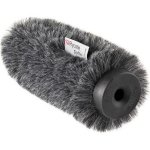
What's a top of the line wind screen for mics?

Luis Ortiz

Well-known member
Joined
Nov 30, 2007
Messages
274
Reaction score
0
Points
0
Location
NJ-Serial#1321

Attachments

  • 207238.jpg
    207238.jpg
    22.5 KB · Views: 0
Rycote are certainly amongst the top of the line.

The one in your picture is called a "softie" and is OK for light breezes or gusts. Certainly better than foam or nothing. Make sure your softie is long enough to cover all the slots on the side of your mic, or it will not work!

The blimps, high wind covers, and windjammers from Rycote, Sennheiser and others significantly improve on the softie for reducing wind roar.

From Rycote's website FAQ:
http://www.rycote.com/products/faq/

Q: What is the difference between a Windshield and a Softie?
A: Windshields allow the entire microphone to be suspended in a protected environment. This gives the ultimate in windnoise suppression. Softies are a simpler, push-on design which, though still very effective, are primarily aimed at those for whom robustness is a priority.

Q: Can I use a Hi Wind Cover in conjunction (ie, underneath) with a Windjammer?
A: Yes. However, as you add more covers – even Rycote ones – you must expect some reduction of sound quality (mostly HF), but this may well be quite acceptable compared to wind roar.

Q: At what wind speeds are Softies and Windshields effective?
A: Wind speed figures are averages over a certain time; whereas, what ruins a recording is the momentary peak that causes a “blast”- and wind can be a fairly steady blow from one direction, or turbulent gusts from everywhere. The criteria for “noise” also vary with use. For music one “putter” of wind could be very annoying, but for a gritty news report in a storm, one only cares if it is intelligible. So, correlating effectiveness with wind speed is all but impossible – but with the right mic, the right user, and the right Rycote successful recordings have been made in full gales.
 
Can the Rode NTG-3 be used indoors for a drama type film?

If not, do you have a good recommendation for a non-shotgun condenser?

For indoor shots, do pros or serious hobbyists use blimps or do they just attach the mic to a boom.

Any good boom recommendations? I wish this forum had a buyers guide for small-medium budgets for all the supporting equipments to film making... audio, dollies and steadicams, lighting, etc.
 
You Need a Rycote suspension and basket. Over the basket use a windjammer. The windjammer needs to be unmatted and in good condition to work properly, if its lost its long hair it wont work properly.

I've used a basket cover for the basket before now with Windjammer over the top and also had a foam pop shield on a mic also. It worked OK in a gale 8 set up like this. Bear in mind the more layers the less top end you get. The idea about using a wind jammer is it presents a soft layer over which the air flows. They are really great devices.
 
Can the Rode NTG-3 be used indoors for a drama type film?

If not, do you have a good recommendation for a non-shotgun condenser?

For indoor shots, do pros or serious hobbyists use blimps or do they just attach the mic to a boom.

Any good boom recommendations? I wish this forum had a buyers guide for small-medium budgets for all the supporting equipments to film making... audio, dollies and steadicams, lighting, etc.

The NTG-3 has very similar characteristics to a Sennheiser 416, so it can be used for drama type film recording. If used near ceilings, the rear facing sensitivity lobe can pick up reflections from the rear which colours the sound, and so traditionally recordists have not been keen to use 416 indoors especially with low ceilings.

I hear good things about the Sanken CS3e but that's as expensive as the 416!

You only need a blimp where there's wind, so unless you're shooting indoors with strong draughts, you can just use the mic in a suspension on a boom without the blimp - saves weight and bulk.

Buy booms secondhand off Ebay - not much to go wrong with them.
 
Boy, speaking from experience here, I will never again use any boom microphone indoors without a zeppelin on it. We ran into way too many times when an unexpected wind current hit it out of nowhere and ruined a take. I'd rather lose a touch of high frequencies all of the time than ruin a great take even once.

Stephen
 
Boy, speaking from experience here, I will never again use any boom microphone indoors without a zeppelin on it. We ran into way too many times when an unexpected wind current hit it out of nowhere and ruined a take. I'd rather lose a touch of high frequencies all of the time than ruin a great take even once.

Stephen

Indoors really shouldn't need a blimp. Were the windows are open or the aircon blowing?
 
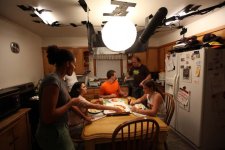
Rode Blimp with a Deadcat works great. I took advantage of the $1 Rode blimp special when I bought my Rode NTG-3. I used it on a windy night and it worked really good. B


I used the same setup in a short film a few months ago. Works very well. Indoors and out.
 

Attachments

  • Kitchen pizza sm.jpg
    Kitchen pizza sm.jpg
    74.5 KB · Views: 0
  • Travis kitchen sm.jpg
    Travis kitchen sm.jpg
    66.9 KB · Views: 0
Although some will leave the blimp on indoors, its much more common to just use the foam windshield. There shouldn't be that much wind inside, but you can pick up wind noise from moving the mic around.
 
Boy, speaking from experience here, I will never again use any boom microphone indoors without a zeppelin on it. We ran into way too many times when an unexpected wind current hit it out of nowhere and ruined a take.
Stephen, you shouldn't need a full zeppelin indoors unless there's wind machines or some other significant problem. A zeppelin (with or without a furry windscreen) should only be necessary outdoors, in my experience.

I always use at least a foam cover to guard against rapid changes in direction by the boom op, or maybe a stray air current. It's also a small safety against bashing the actor's head, particularly when they miss a cue and stand up early. Many news crews routinely leave a furry cover on (but no zepplin) 100% of the time, just so they don't have to worry when they go inside and outside during a fast-moving story.

HVAC is your enemy -- kill the air conditioners and fans while sound is rolling, and all you should need indoors is just a foam shield. Having a good, experienced boom op is essential.
 
For wind, IMO in order of succession it goes ..

Foam windsock .. indoors for voice pops and slow boom swings .. useless outdoors in any wind.

Rode WS6 and 7. Indoors or out .. surprisingly good. I've seen their dealer demo with a 12" fan full blast 2 feet in front and you can't hear the wind.
But I have to say outdoors one time we heard strong wind break through when it suddenly changed direction and the hairs were a tad flat.

Blimp. Outdoors only. If you've got to use a Blimp, pull its Wombat (wind screen) over it first to get full protection. If the wind gets stronger it'll be too late otherwise.

With a shotgun outdoors, if you get caught with limited protection .. if at all possible try and aim it at 90degrees to the direction the wind's coming from.

Cheers.
 
My friend's who's a extremely good sound guy said about blimps/zeppelin, actually just having a blimp/zeppelin changes the mic's pickup pattern slightly and also the tone because it traps a packet of air in it. Which is why he uses them indoors and outdoors.
 
John, anything you put in front of a mic will alter the sound it picks up, but in the case of a Blimp it's much better than wind which can destroy the audio :)

Cheers.
 
Back
Top