

- Moderator
- #1

Evin Grant
Moderator
- Joined
- Dec 28, 2006
- Messages
- 4,433
- Reaction score
- 0
- Points
- 36
- Location
- SoCal
- Website
- www.evingrantdp.com
This is a personal & creative choice but I think for the less experienced here it might be a good idea to give you guys a little primer.
First off are ND filters...
ND filters are neutral density, they allow you to shoot in bright light without stopping down to diffraction limiting apertures like f11 or greater. Basically a set of sunglasses for your camera. The Red has a native sensitivity of ISO 500 which means that if you were to shoot in basic daylight (Sunny 16) conditions a proper exposure would require you to set your lens to f86!
Most lenses don't even go to that aperture but you probably wouldn't want to shoot there anyway becasue of diffraction which can Limit your resolution on digital imaging sensors. ND filters come in stregths from .1 to 1.2, each .1 correspond to 1/3 of an f stop so an ND filter of .9 is a three stop attenuation.
Here is one from Schneider in 4x4".

Here is a list of common ND filter and aperture combinations at 1/48th of a second shutter speed which is equivelent to a 180º shutter in a film camera.
1/48 @ f14 +1.2
1/48 @ f10 +1.2 & .3
1/48 @ f7.2 +1.2 & .6 (Or Pola)
1/48 @ f5 +1.2 & .9
As you can see a minimum of an ND 1.2 and .6 (Or Pola.) is necessary for a reasonable aperture (f7.2) in direct sunlight.
Next would be a Polarizer...
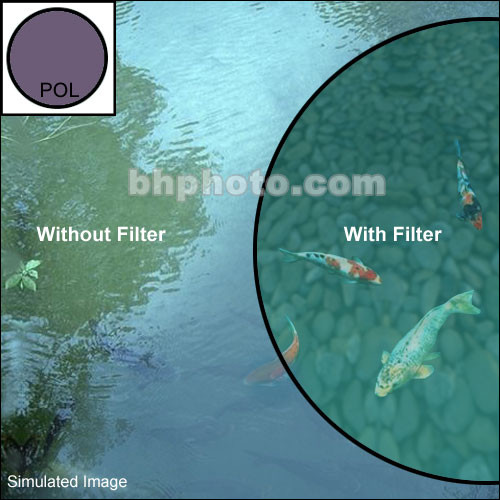
This filter is very useful for a variety of applications. For more technical details about how it works click the Wiki link above. Basically a polarizer allows you to eliminate haze, deepen blue skys and control certian reflections on water, metal and glass. It also acts as a .6 (2 stops) ND filter.
Example:
Graduated Neutral density filters can be usefull as well...
They are basically the same as regular ND filters but only cover half the filter and incorperate either a soft or hard edge transition to clear. By doing this they can help even out the exposure of certain wide landscape type shots that typically have very great differences in exposure from the top to the bottom of the frame.

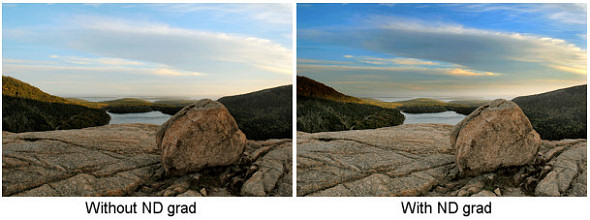
There are many color versions of the ND grads but they have mostly fallen out of favor these days with the advent of the digital intermediate.
First off are ND filters...
ND filters are neutral density, they allow you to shoot in bright light without stopping down to diffraction limiting apertures like f11 or greater. Basically a set of sunglasses for your camera. The Red has a native sensitivity of ISO 500 which means that if you were to shoot in basic daylight (Sunny 16) conditions a proper exposure would require you to set your lens to f86!
Most lenses don't even go to that aperture but you probably wouldn't want to shoot there anyway becasue of diffraction which can Limit your resolution on digital imaging sensors. ND filters come in stregths from .1 to 1.2, each .1 correspond to 1/3 of an f stop so an ND filter of .9 is a three stop attenuation.
Here is one from Schneider in 4x4".
Here is a list of common ND filter and aperture combinations at 1/48th of a second shutter speed which is equivelent to a 180º shutter in a film camera.
1/48 @ f14 +1.2
1/48 @ f10 +1.2 & .3
1/48 @ f7.2 +1.2 & .6 (Or Pola)
1/48 @ f5 +1.2 & .9
As you can see a minimum of an ND 1.2 and .6 (Or Pola.) is necessary for a reasonable aperture (f7.2) in direct sunlight.
Next would be a Polarizer...
This filter is very useful for a variety of applications. For more technical details about how it works click the Wiki link above. Basically a polarizer allows you to eliminate haze, deepen blue skys and control certian reflections on water, metal and glass. It also acts as a .6 (2 stops) ND filter.
Example:
Graduated Neutral density filters can be usefull as well...
They are basically the same as regular ND filters but only cover half the filter and incorperate either a soft or hard edge transition to clear. By doing this they can help even out the exposure of certain wide landscape type shots that typically have very great differences in exposure from the top to the bottom of the frame.
There are many color versions of the ND grads but they have mostly fallen out of favor these days with the advent of the digital intermediate.


