Welcome to our community

Be a part of something great, join today!

  • Hey all, just changed over the backend after 15 years I figured time to give it a bit of an update, its probably gonna be a bit weird for most of you and i am sure there is a few bugs to work out but it should kinda work the same as before... hopefully :)

What does HDR video look like?

Erich Ocean

Well-known member
Joined
Dec 5, 2008
Messages
764
Reaction score
0
Points
0
Wow, just wow! HDRx can't get here soon enough!!! http://vimeo.com/14821961

UPDATE: I'm not suggesting the footage looks good (it doesn't), I'm excited about the dynamic range. As always, grade wisely.

This video highlights several clips we've made using our new High Dynamic Range (HDR) process. Video is captured on two Canon 5D mark II DSLRs, each capturing the exact same subject via a beam splitter. The cameras are configured so that they record different exposure values, e.g., one camera is overexposed, the other underexposed. After the footage has been recorded, we use a variety of HDR processing tools to combine the video from the two cameras, yielding the clips you see above.

HDR Video provides filmmakers with many exciting new opportunities. Not only can HDR video create interesting effects, it can also allow for even exposure where artificial lighting is unavailable or impractical. For example, when a subject is backlit, one camera could be set to properly expose the subject, the other the sky, resulting in video with perfect exposure throughout.

We will continue to develop and improve the HDR video process for better results and efficiency. For more information, check out our website sovietmontage.com.

Music
Pyotr Ilyich Tchaikovsky
Opus 40, Number 9
Performed by Kevin MacLeod
Licensed Under Creative Commons "Attribution 3.0"
 
Gavin, without tonemapping, how are they going to show us what was captured? No one is suggesting *using* the tonemapped image. It's just cool to see the range!
 
Tonemapping doesn't have to look ugly and bad as most people do it.

Proper tonemapping doesn't have halos or make things look somewhat solarized.
 
Tonemapping doesn't have to look ugly and bad as most people do it.

Proper tonemapping doesn't have halos or make things look somewhat solarized.

Are there any examples of `good` tonemapping that you can point to ?

As Gavin said `an example of HDR imagery that doesn't look terrible`
 
Last edited:
AughhhhH! The tonemapping!

Why can't someone show off an example of HDR imagery that doesn't look terrible?

I agree, it looks terrible. The first shot looks pretty nice once they soften they effect but could be achieved better and more naturalistically with a two-stop soft ND grad; the other shots look like bad tone mapping (poor contrast range, awful tonality, sharpening halos all over the place, maxed-out artificial micro-contrast to make a soft image "pop"), which is how most bad hdr looks. The fact that the halos move around and the image flickers and aliases makes the effect go from bad to literally headache-inducing.

The funny thing is that the last couple shots (well, more the very last one) have contrast ranges not that far removed from what the Canon sensors can capture normally. And a low contrast curve, workflow of simple noise reduction, "shadows/highlights" in After Effects, and multiple variable-radius passes of unsharp mask would create virtually the same terrible look with less trouble. There's not much "high dynamic range" there--mostly just overaggressive tone-mapping, especially in the last image (which, again, would look far better with a simple grad filter). The second shot? Fixed with a $10 reflector, made "good" with a $150 rental of a Joker and a softbox.

That said, I get it: it's a really cool technology; it works; and they have to show it off so you notice it. But if this look shows up on my movie screen any time soon I'm honestly losing my shit.

(Just my opinion! I think what they're doing is very cool and look forward to more in-camera hdr; I just dread this particular look.)
 
The first shot didn't look too weird, but when they exposed or tonemapped for the person, it looked absolutely dreadful.
 
This video is...not encouraging - that aside, it brings the whole thing to a simple question for me -

How would HDR on a high end D-Cinema cam practically work? In theory? Hilarious question, but I mean it - nuts and bolts, what might we get?

What a lot of us - me included - want I think, its more latitude, pure and simple. But how does that translate - if I'm post-ing my MX footage now, what I saw on monitor/EVF in the field already is quite a bit narrower that what I find I have available in post - cool. I already have to change my post process thinking to get the latitude out of it.

So, if we have 18 stops - in theory - ideally, I just want MORE of what I've got. Of course, it aint gonna be easy to THINK that way when shooting after decades of 7 stops - but hey, fine. 18 stops lets say. How would that WORK as a user (not HOW would it work technically, how would it work for us)?

The digital viewfinders cannot begin to display that - or am I missing something? - so visualizing during shooting can be tricky, but one assumes the exposure tools will reflect whats happening at least. I just shot a short with MX all exterior daylight and man you've gotta apply a mean LUT to get the monitor to show what you might really have in the shadows (I avoided this, but am considering it for future similar situations)...one imagines in HDR mode it applies some fancy map, curve magic to the output to the monitor/viewfinder if desired? Sure, my EYE can see 30 stops...but I'm not looking through an optical viewfinder.

And then in post - what do we see? Just less noise in blacks? Again, one assumes there is magic sauce mode and controls as with FLUT to come, but we just want latitude, not wacky ass tone maps that look like bad 80's velvet poster art. So....

Does this result in the sensor actually clipping at a higher energy level? Not likely, right, so...we end up rating higher, pulling deeper....? Do we end up rating at 2 million to get 18 stops (ok, joking, but i've been rating MX at 800 outside as have many others with great results)

Many questions have we (yoda voice).
 
How would HDR on a high end D-Cinema cam practically work? In theory? Hilarious question, but I mean it - nuts and bolts, what might we get?

Same as film. But more so. i.e. Testing and experimentation using HDR capture in various different lighting conditions with various different post processes would lead to best/most interesting/most experimental results, just like a new film stock.

What it also means is that people will continue to have more imagination, and more experience, to generate something truly new - but they may be able to do so without waiting around for new technology like we are currently doing.

Hopefully this will move us away from stylistic reinterpretation/mimicry of existing looks ad nauseum, like we currently see, and towards a true digital age of experimentation because the depth of the capture medium exceeds our ability to process it (which was the case for film for most if not all of it's life to date.)
 
AughhhhH! The tonemapping!

Why can't someone show off an example of HDR imagery that doesn't look terrible?

Because most people don't know the difference between tone mapping and HDR. This video looks like ass, especially the shot with the guy. I almost didn't notice that the two cameras were mismatched and not equally in focus for the shot because I was too busy gagging on the cartoon bronze tone mapping job.

True HDR is about capturing more usable range than your post and delivery pipeline can effectively display. It's about being able to dig into shadows and highlights and be able to pull your details back and bring desired portions of the image back into proper exposure. But I'm sure we're going to see tons of hideously tone mapped images like this over the coming months / years. I don't know what most people think, but I'm not a huge fan of acquiring 16+ stops of usable DR across 2 images and then trying to combine them by compressing all that exposure range into 4:2:0 8bit crap image space.

I have a link around here somewhere that has a bunch of HDR imagery done right... Trying to find it... Hmmm.....
 
I have a link around here somewhere that has a bunch of HDR imagery done right... Trying to find it... Hmmm.....

Yes, that link would be hard to find.

However, "good hdr" does exist and has been around since the zone system and extensive dodging and burning.

It's like how Coppola said film wouldn't be a true art form until an 8-year-old could pick up a camera and shoot a movie with no crew. Well, now he can, and it's called youtube.
 
Tons of examples of quality HDR images, you just can't tell they're HDR. Films are chalk full of sky replacements. Usually those skies are blown out in the original film plates. The problem with "HDR" tone-mapping is that it's almost always unsupervised.

For the most part people don't demo footage with "auto-levels" but somehow people see the word HDR and it's "Auto-Fix to the max!"

Correct use of tone-mapping will probably involve at least rough rotoscoping and localized direction on the part of the artist. The goal of an HDR image in my opinion is for the viewer to be blissfully unaware of how many shots it took to achieve.
 

Attachments

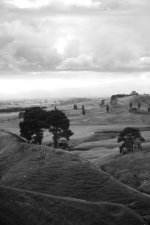
  • IMG_1526_Hobbiton-1.jpg
    IMG_1526_Hobbiton-1.jpg
    41.9 KB · Views: 0
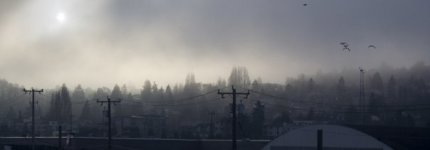
  • n93000002_30002984_1217.jpg
    n93000002_30002984_1217.jpg
    12.6 KB · Views: 0
Yeah, that video looks just awful. Not an example of HDR that should be shown to anyone who actually knows what those initials stand for.
The tonemapping on that shot of the guy was practically vomit inducing, IMHO.

The examples posted here by Gavin are proper HDR, and are examples of what I hope HDRx will bring us closer to being able to achieve without multiple passes.

Actually, the same beam splitter method, using two RED One cameras yielded infinitely superior results: http://vimeo.com/12828140
 
Yeah, that video looks just awful. Not an example of HDR that should be shown to anyone who actually knows what those initials stand for.
The tonemapping on that shot of the guy was practically vomit inducing, IMHO.
Yeah but it would look pretty cool in a Frank Miller adaptation .

Yes you get a different set of pictures if you google hdri as opposed to hdr
 
Last edited:
For me, HDR is not just about capturing detail in highlights and shadows it's just as much about color. As you approach the extreme ends of the histogram chroma is the first thing to go. HDR helps preserve color in highlights in shadows.

Here are some examples of HDR I am happy with. They were shot with a Canon 40D, even, 2 f-stops over, and 2 f-stops under. I don't like the halo/solarized look either. So here, only the last example uses "tonemapping" otherwise known as Detail Enhance in Photomatix. Granted, these are high contrast scenes, but that is where HDR really shines.

Single Exposure:
IMG_0079%20700.jpg


HDR:
IMG_0079_80_81_tonemapped700.jpg


Single Exposure:
IMG_0166%20700.jpg


HDR:
IMG_0166_7_8_tonemapped%20700.jpg


Single Exposure:
IMG_0539%20700.jpg


HDR:
IMG_0539_40_41_tonemapped%20700.jpg


Phil
 
Thanks Phil!

Somehow this thread got derailed by the evils of poorly done tonemapping. There are real benefits to HDR capture, and your examples demonstrate that. Well done. If HDRx works as advertised, it's going to be awesome.
 
Such exaggerated tone-mapping could well prove to be a valid aesthetic device. When used appropriately of course. As Christian said, it could do wonders for a Frank Miller adaptation, for example.
 
Back
Top