Welcome to our community

Be a part of something great, join today!

  • Hey all, just changed over the backend after 15 years I figured time to give it a bit of an update, its probably gonna be a bit weird for most of you and i am sure there is a few bugs to work out but it should kinda work the same as before... hopefully :)

Underwater Bubble Blowers User Group Thread NEW

Status
Not open for further replies.
New footage of Green Turtle in Little Cayman. RED Epic, Gates Deep Epic, Tokina 10-17.


Thanks for watching!

Nice shot Ron.

I know it's only vimeo HD, but those corals on the left of the frame in the opening shot seem awfully damn sharp - maybe offsetting some of the FUD about dome ports.
 
That's a fisheye lens. For most underwater stuff, a very good choice, as long as there are no straight lines that should be straight. For some work, barrel distortion is unacceptable.

I'd like to see a rectilinear lens of at least 11mm perform like that underwater, the corrected optic looks like the way forward.

Great stuff Ron.
 
Nice shot Ron.

I know it's only vimeo HD, but those corals on the left of the frame in the opening shot seem awfully damn sharp - maybe offsetting some of the FUD about dome ports.

well, certainly using the fisheye vs rectilinear lens makes for shaper corner resolution. Might not be as sharp in corners as the Nikonos 15 but rarely is this a point that the audience dwells upon let alone even notices....
 
That's a fisheye lens. For most underwater stuff, a very good choice, as long as there are no straight lines that should be straight. For some work, barrel distortion is unacceptable.

I'd like to see a rectilinear lens of at least 11mm perform like that underwater, the corrected optic looks like the way forward.

Great stuff Ron.

If you were to shoot that using the tokina 11-16, you would see drastically softer corner resolution. That said, i merely take the 4k image and center crop at 16:9 and I'd say 75% outer softness is gone.
 
well, certainly using the fisheye vs rectilinear lens makes for shaper corner resolution. Might not be as sharp in corners as the Nikonos 15 but rarely is this a point that the audience dwells upon let alone even notices....


I've hesitated to make the audience point because it might seem self serving but I think it is well taken.

I've been very impressed with the shots I have seen here with the Tokina fisheye and have been looking to shoot more fisheye stuff - probably with the Canon 8-15 L-series fisheye since it easily adjusts for the different sensor sizes: APS-C, APS-H (Epic and Scarlet) and full frame.

I tended to steer clear of fisheye's for most of my career - corner resolution issues weren't much of a problem with the lower resolution and high F-stops, combined with the smaller sensors on the video cameras, but the larger sensor cams dictate that we consider it more.

I doubt if many normal people could tell that Ron's shots were with a fisheye.
 
That's a fisheye lens. For most underwater stuff, a very good choice, as long as there are no straight lines that should be straight. For some work, barrel distortion is unacceptable.

I'd like to see a rectilinear lens of at least 11mm perform like that underwater, the corrected optic looks like the way forward.

Great stuff Ron.

stupid question from a post guy:

With 5k resolution, it's very much possible to post process the material so that it becomes rectilinear without killing to much resolution. Is that not an option that in many ways would work better than using a rectlinear lens? or the correct term should be "more rectlinear lens" since there are no lenses at 8mm focal lengths that show even close to "straight lines" at epic sized sensors.

As a test you could send me a R3D frame snap shot with your best fisheye, shooting a grid or such and I will send you back the corrected source perfectly / mathematically corrected and I think you will find more resolved resolution than shooting with a much more expansive "trying to be rectilinear lens", as math is easer to control than glass... you will have less vinjeting, less chromatic aboration and a overall sharper image, especially after a HD or 2k down sample.
 
Yes, fact of the matter is that our audience (whether we like it or not) dictate just about every decision in camera decisions to post work. Proof is in what we see every day on TV.....docs/reality etc.....At least in the feature world this concern is more of a concern and more dollars are thrown at it.....hence dictating further R&D and purchases.....
 
That's a fisheye lens. For most underwater stuff, a very good choice, as long as there are no straight lines that should be straight. For some work, barrel distortion is unacceptable.

I'd like to see a rectilinear lens of at least 11mm perform like that underwater, the corrected optic looks like the way forward.

Great stuff Ron.

The Tokina 11 16mm is a rectilinear lens. Id say for over 80% of our work on Deep Epic the 11 16mm lens is used. if e want Wider then Ultraprime 8R but there sing much in it for practical terms.

I have to say the Nikonos lens is a fine 15mm lens but I'm not sure its wide enough.
 
So, here's what I can say about my observations after just two trips with the Deep Epic. Yes, the 10-17 really works well with the Gates dome port (and, yes, I was trying to illustrate that point). I also used the Tokina 11-16 using a 2.0 diopter. Tack sharp in the center, falls off at the edges. Also, doesn't allow full wide as there is some cut-off at the corners. BTW - the 10-17 cuts off the sides at full wide, so either way you're losing something. I agree with Johnny that cropping to 4k works very well, but so does shooting at the narrow end at 5K. I also will say that there is very little in the underwater realm that is rectilinear, so I'm happy to stick with fish-eyes.

Next post on Vimeo is something shot with the Canon 8-15. Again, can't get wider than 10, but it's a bit wider than the Tokina would be. I had some wierd things happening with the camera once I put the Canon Ti mount on, in particular, the frequent randomly switching into zoom focus mode and back. Another thing that happens to me regularly is that when switching from zoom to full view the viewfinder/monitor does this spilt image where the left half of the image is on the right side and the right half on the left. It is not always equally split, but the only way to correct it is to power off the camera and back on. (while keeping fingers crossed that your subject will still be there). This happened much more often with the Canon mount and after rebooting the focus would be way off, so it was: zoom, focus, unzoom, and hope the monitor doesn't geek out again...

Need more time with the Canon, but first impression is that it is more difficult to find focus than with the Nikon mount lenses (not sure why that would be) and the electronic issues are a pain. Great piece of glass though and it will definitely be part of my kit.

One additional point, I find the depth of field to be considerably shallower using the Epic or Scarlet and the same lenses I would use on my DSLRs, either Nikon or Canon. I also had the opportunity on this trip to shoot with the Canon C300 topside. Other observations aside, the same DOF issues were noticed (shallower on the MX sensor). This makes it all the more important to watch focus carefully. (You can actually see me rack focus one one of the turtle shots)

Here's something from the Canon 8-15...

 
Rectilinear lenses are required for CGI, green screen and 3D use.

In 2D they also create a more expansive/immersive feel when watched on a big screen. They help to get an impression of "being there" rather than "being outside" of the scene. Artistically, there is no rule and fish-eye shots can look quite good.

Fish eye lenses do not suffer from distortions or significant loss of corner sharpness when placed (correctly) behind an underwater dome. However, rectilinear lenses, irrespective how good, inevitably are subject to the laws of physics and suffer from image curvature and loss of corner sharpness when placed behind a dome port. No point testing...the sharpness fall-off of a perfectly aligned lens can be computed. It depends on the dome and angle of view, not the lens itself. Although short focussing performance of the lens may degrade the image further.

This degradation grows exponentially with sensor size, but also increases with the angle of view. Smaller domes cause more field curvature than larger domes do.

There is a lot of footage that looks very good on computer screen, but usually falls short when projected in 4k on a large, cinema-sized screen. For critical evaluation 4k or 5k is really needed.

I'm pleased to say that RED has requested us to provide our 5k R3D underwater footage shot with DeepX in order to evaluate it on their 4k projector in controlled conditions.
 
stupid question from a post guy:

With 5k resolution, it's very much possible to post process the material so that it becomes rectilinear without killing to much resolution. Is that not an option that in many ways would work better than using a rectlinear lens? or the correct term should be "more rectlinear lens" since there are no lenses at 8mm focal lengths that show even close to "straight lines" at epic sized sensors.

As a test you could send me a R3D frame snap shot with your best fisheye, shooting a grid or such and I will send you back the corrected source perfectly / mathematically corrected and I think you will find more resolved resolution than shooting with a much more expansive "trying to be rectilinear lens", as math is easer to control than glass... you will have less vinjeting, less chromatic aboration and a overall sharper image, especially after a HD or 2k down sample.

The simple answer is: NO.
Fish-eye lenses map the focus plane as sphere and the plane of sharp focus can not be changed in post. Also, the stretch required to correct the geometrical distortions will degrade the edge sharpness that would be significantly less than HD quality.

Currently, the only way to get undistorted and sharp rectilinear images underwater is to use lenses specifically designed for underwater use that do not require underwater ports, such as Nikonos lenses. DeepX is the first and only housing for RED Epic that does exactly that. These lenses are the only underwater optics that out-resolve the Epic sensor across the entire frame. I'm not aware of any housed lens solution that would achieve this.
 
Great opening shot Ron. What frame rates did you shoot, and then post?

Thanks so much, John. I shot at 36fps, 180 deg shutter. All post is done at 24 fps. First grade in Red Cine X Pro 14, export to ProRes 422HQ, import, edit and finish in Premier Pro (CS6). All done on my MacBook Pro in field. Now that I'm back I'll look at the footage on the Mac Pro / Red Rocket card and start putting my stuff together in earnest...
 
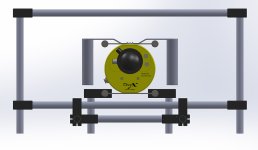
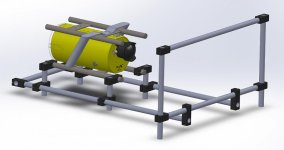
Titanium Frame Set

​
Camera support, macro/closeup framing, mounting lights, mounting external monitors and accessories, optical bench, 3D lens calibration, shooting charts, joining two DeepX housings for two camera angles...or 3D......one rig, dozens of uses and hundreds of configurations.

Mounts to top or bottom rails on DeepX and 3Deep housings. It can be used with other housings with suitable adapters.

Titanium tubes are hollow and sealed. Joiners are made of aluminium alloy and hard anodised for marine use.
 

Attachments

  • Frame1.small.jpg
    Frame1.small.jpg
    93.5 KB · Views: 0
  • Frame2.small.jpg
    Frame2.small.jpg
    39.7 KB · Views: 0
Water Corrected Optics

Water Corrected Optics

Ok, so here it goes...

I've decided to give a try to the production of water corrected optics (WCO) for high end digital cinema and photography cameras. I keep thinking how truly shameful it is, no other word to describe it really, that the best optical quality we have today is based on 40 year old optics, and whereas UW lights keep getting more powerful and smaller, and housings more fully featured and sturdier, the most important part of the whole equation, the optics, keeps lagging behind. So, here is my idea.

I will work on creating WCO based on photography lenses, but not as a single, unified element like a Nikonos lens, but as a dome port that fits over the lens itself, just like regular ports do, but with corrected optics and several elements instead of just a glass or acrylic sphere. The advantages of going with photography lenses are various:

- high optical quality, yet small in size and very inexpensive.
- these lenses can fit several mounts (Nikon, Canon) as well as cinema (Gates, Aquavideo) and photography (Aquatica, Subal, Nexus) systems. I don't have to tell you this won't be a cheap project, so catering to as many users as possible is the only way for non-Jannard enthusiasts like myself to make it happen.
- The chosen lenses are designed for the Nikon DX and Canon 1.6 sensor format (~ 23.7 x 15.6 mm), which very closely matches the dimensions of the RED MX sensor (27.7 x 13.8 mm) still producing slight vignetting on the corners of the MX sensor but being by far the best match from the photography field.

I have sort of settled on two lenses to start off, the Tokina 11-16 rectilinear and the Tokina 10-17 fisheye, both well known among underwater shooters. After carefully considering many other lenses, the reasons for these choices are thus:

- Tokina 11-16 rectilinear. This is a great lens, very sharp, plenty wide, yielding still a tad under 100 deg FOV on the Epic camera and a constant 2.8 aperture through the zoom range. I know the lens yields soft corners behind generic dome ports, but that's what we aim to fix. The goal would be for our optics to yield corner to center sharpness differential of no more than 3%, maybe in the low 2% if we get lucky. Our optics will also bring the lens minimum focus distance (MFD) to under 9" from the lens's regular 12", while improving on corner distortion AND allowing full zoom through capability. The dome assembly would be well under 9" diameter and under 5" total depth, and we're aiming for something even smaller on both ends, though this will depend on how feasible it is to machine the glass elements that would yield the same results in a smaller size. Smaller always means costlier, SPECIALLY in optical design. Still, 9" x 5" is not too bad for 98-99 deg rectilinear FOV with super sharp corners, no corner curvature and close focusing capabilities.

- Tokina 10-17 fisheye. The de-facto lens in UW photography nowadays, it is not as widely used for cinema applications, but hopefully we can help change that notion. First off, the great thing about a fisheye is that it requires far less correction on the corners than a rectilinear, making for a much smaller dome. In fact, I foresee the dome for this lens will be under 4" in diameter and depth, putting it in the Nikonos territory in terms of size. We can't eliminate the typical curvature of fisheyes, but in truth, that's where the strength of this lens lies, as it allows extremely close focus wide angle macro (CFWAM) shots, specially with a teleconverter attached. At 17 mm, you could shoot a subject at almost 1:1 magnification with the subject only 3" from the dome! All the while keeping a much wider FOV than a typical macro lens in the 50 to 105 mm range. This versatility means the lens can be used on the same dive for macro and super wide angle vistas, and with a little practice, a shooter will learn to use this lens so that its obvious deformities do not become a distraction. In fact, when I showed a comparison between Epic images with both this lens and the Nikon 14-24 rectilinear, to several studio people and post experts, most agreed the 10-17 fisheye looked "more underwatery" based on the fact that, just as 24 fps cadence is intrinsically associated with cinematic images, so are curved fields associated with underwater vistas, since for a very long time, this has been the only way in which photographers have been able to show the underwater world to viewers. Point being, unless you're shooting for cinematic production (in which case you'd use the rectilinear lens) you can get away with a lot more you'd think possible with this lens if using it judiciously and framing your subjects following a few basic rules.

These would be the two lenses/dome ports we would start with, and I would welcome any suggestions for any other lenses in the future. Many other lenses that offered even greater performance than these tokinas were eliminated. Noticeably, the famed Nikon 14-24 and its successor, the even sharper Nikon 16-35 VR, did not make the cut because, first and foremost, the FOV on a DX or Epic sensor is not wide enough, around 72 deg for the 14-24 and a ridiculous 60 deg for the 16-35, without even considering their monstrous size. So, right now, Tokina holds the key for practicality and affordability, and we'll take care of correcting their problems.

Other than that, it is my goal to build a bulkhead/front mount assembly for the domes that would allow the use of two filter wheels. On one side an ND wheel, and on the other side, a color filter wheel. Each would be overlap so we can use both an ND and a color filter at the same time, though for practical reasons, we cannot have more than two filters on each wheel, but that should be plenty I'd say. this bulkhead would be standard, and from there, conversion mounts to most brand of housings could be machined. One problem I envision is the fact that our domes will take the front element of the lens as their "starting point" if you will, and since most housings are designed based on the dome port into which the lens already protrudes, we may need to find a way to build a stepping ring between housing and dome, which hopefully will not present a serious problem.

Anyway, this is where we stand at this point. The project will take several months and I don't envision having a prototype any earlier than December at best. I am in the process now of talking to several optical designers and engineers with a view to choosing an engineering partner for the project. I am very hopeful that we will be able to replicate, and even improve upon, the results that I've seen with the WCO I've used with the Nikon 14-24.

Again, suggestions in terms of lenses worthy of consideration or any other comments, ideas will be more than welcome. Also, is this a product you might find yourselves interested in? If so, can I put you down for one, or better yet, two of these units?
 
Status
Not open for further replies.
Back
Top