Welcome to our community

Be a part of something great, join today!

  • Hey all, just changed over the backend after 15 years I figured time to give it a bit of an update, its probably gonna be a bit weird for most of you and i am sure there is a few bugs to work out but it should kinda work the same as before... hopefully :)

The Social Network Cinematography (Need Advice)

Aaron Rash

Member
Joined
Sep 2, 2017
Messages
13
Reaction score
1
Points
1
Hi guys,


I'm fairly new to owning a Red, I picked up a R1MX back in September and have been loving every second of this camera. Even if it's considered an old in the cinema world I actually prefer the look of the R1 over some of the newer sensors.

I'm a huge fan of Jeff Cronenweth and David Fincher. I'm about to invest in some Quasar tubes and I need a little help. The Quasars are offered in tungsten or daylight... Just like Kino's

I need a little help on weather to pick the tungsten's or daylights. I will mostly be shooting interior night style scenes. If I went with daylight Quasars I could of course CTO them but at the cost of losing a stop or 2 and visa versa the other way around if I picked up the tungsten's I could gel them with CTB.

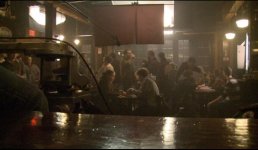
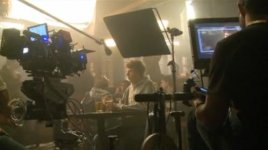
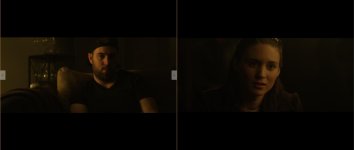
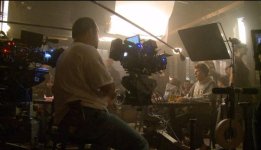
I not sure if anybody here that has worked on the set of TSN could maybe give a little insight on what was used? I attached a few pictures of some BTS and also a few shot's I tried myself to try to match the look using basic tungsten par cans and bouncing light on my R1MX

What do you guys think... these look like tungsten or daylight kinos?
 

Attachments

  • a4e1800a2a5a75e007f28286da04c39a.jpg
    a4e1800a2a5a75e007f28286da04c39a.jpg
    85.1 KB · Views: 0
  • ac1010_SN_18.jpg
    ac1010_SN_18.jpg
    17.1 KB · Views: 0
  • dda8633c0239d981d13921bc80e95d4e.jpg
    dda8633c0239d981d13921bc80e95d4e.jpg
    85.9 KB · Views: 0
  • screenshot20101104at735.jpg
    screenshot20101104at735.jpg
    15.7 KB · Views: 0
  • social network.jpg
    social network.jpg
    24.8 KB · Views: 0
I would buy the Switch or Crossfade Quasars if I was gonna invest. I have a couple of 4’ switch tubes from Quasar Science and love them. They cost a bit more than the T8 or whatevere they are called, but they also have more output i belive i have read somewhere.
 
Not sure if you read these already.

From ASC: https://theasc.com/ac_magazine/October2010/TheSocialNetwork/page1.html

“Much of it was practicals and simple lights, basic Fresnel and Kino Flo fixtures,” says gaffer Harold Skinner. “We also used Lightcraft 4-foot 2Ks and soft-light rigs I call ‘covered wagons,’ which are basically lamps in a 4-foot cylinder with protective grids approximately 12 inches in diameter. Inside each are common globes, 75-watt PH211s, 250-watt ECAs, 500-watt ECTs, and so on. We also used little clip-on lights that we called ‘budget busters.’”

From Variety: http://variety.com/2011/film/awards/jeff-cronenweth-on-the-social-network-1118031675/

” The film, he says, set out to capture “the dark claustrophobia and isolation of old college dormitories, which in turn reined in the color palette. We wanted to get a dark look, and when it was possible and unforced, we used as much contrast and sense of mystery as we could in key scenes. So dark wood, dark brick buildings, small, dark dorm rooms — all these elements informed the look and feel David and I went for, a sort of hyper-reality that heightens normal tones and perceptions.”

From BSC: https://britishcinematographer.co.uk/jeff-cronenweth-asc-the-social-network/

“The moral compass of the story is murky and grey, and the ethics don't play out with any sense of certainty about the right answers,” says Cronenweth, “so we needed to match this with the visual tones and still have something exciting to look at. We decided to mute the colour pallete quite heavily in the college scenes, and keep a limited depth-of-field to make the place feel claustrophobic in contrast to San Francisco.”
 
That's a bunch of great information. It's what I really love about this forum and the people on here, Thank you!

@Jørgen I too read about the crossfades but unfortunately they're out of my budget right now. $275 is a great price for one tube but I can get almost 4 fixed tungsten or daylight tubes for the same price as one crossfade. I'll eventually go that route, but for now I think I'll be able to get more done with the cheaper tubes.

That just leads me to my toughest choice on weather to buy the 3200k tubes or the 5600k.

I'm guessing they were using tungsten balanced kinos for TSN mostly if they also had practicals in the mix with PH211's etc...
 
That just leads me to my toughest choice on weather to buy the 3200k tubes or the 5600k.

If you don't know exactly what you will be shooting, it's impossible to limit yourself by one single color temp. Sometimes you need one, sometimes the other and sometimes a mix. The beauty of Quasars is the option of changing the color temp without having to switch out the tubes, like you had to on Kinos. In your case, you are better of buying Kino fixtures and both color temp lamps, since the Kino bulbs are much cheaper and used kino fixtures can be had for a song these days...
 
On a technical note, the sensor in your R1 craves blue light. So fi you go tungsten, know that you need to ensure that there is enough light to keep you out of the noise floor. The lack of blue light will tend to make the image noisier, all things being equal (which, of course, they never are.).
 
Hi Daniel,

Thanks for the input! I agree on being limited to a specific color temp. That's why I was going to use CTB or CTO for the time being until I can afford more tubes and other lights for my kit... I was just thinking in terms of what would be the best to start with just so I can start playing with some light. I really do love the Quasar's because they're lightweight and can be mounted pretty much anywhere. Also for the most part prefer soft light. I'm mainly going to be doing night interior type lighting.
 
On a technical note, the sensor in your R1 craves blue light. So fi you go tungsten, know that you need to ensure that there is enough light to keep you out of the noise floor. The lack of blue light will tend to make the image noisier, all things being equal (which, of course, they never are.).


Oddly enough I usually see more noise in the blue sky and dark green areas like under exposed trees etc... I have never had any issues with tungsten lighting, even in very very low light. I did a test last week under a sodium vapor light at night and there was no noise. The MX sensor is still a mighty good looking chip, even in extreme conditions. I have read a lot about it needing blue light though.
 
The whole blue light thing is mostly a myth. I shot more than one feature on red one with all tungsten lighting. This was back when the pixel nerds were screaming that you needed to shoot daylight only or you would burst into flames, speak in tongues, and school buses full of children would die if you shot tungsten. Crock of shit.

Nick
 
Well, the MX is happy with >5000 kelvin but you can shoot 3200 kelvin without noise if you don't white balance at that temp (keep it orange).
BUT if you white balance 3200 light you'll push your blue channel by about 1 1/3 stops and therefore pump up the noise in that channel. So for example 800 iso will give you about 2000 iso noise in the blue channel after color balancing.
Therefore it wasn't advised to light blue screen with tungsten or 3200 kelvin light.

Pat
 
the pixel nerds

He he. I like that phrase.

Ignoring the pixel nerds is one of the hardest things when you are starting out as a cinematographer.
 
He he. I like that phrase.

Ignoring the pixel nerds is one of the hardest things when you are starting out as a cinematographer.

While I agree with some of the sentiment, it's also important to understand the tool's strengths and limitations.

For general shooting you won't "need" a blue filter when shooting tungsten, but if you're hired to do any sort of green screen shoot be prepared to understand why it's a good idea.

Also, far more important than a blue filter is using the correct ND filtration to protect against IR contamination with Mysterium-X.

Totally okay being a pixel nerd. I literally make a living selling my pixels :)
 
Well, the MX is happy with >5000 kelvin but you can shoot 3200 kelvin without noise if you don't white balance at that temp (keep it orange).
BUT if you white balance 3200 light you'll push your blue channel by about 1 1/3 stops and therefore pump up the noise in that channel. So for example 800 iso will give you about 2000 iso noise in the blue channel after color balancing.
Therefore it wasn't advised to light blue screen with tungsten or 3200 kelvin light.

Fascinating. Thanks for sharing!
 
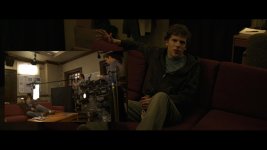
Hey everyone thanks for the great advice. I'm going for this type of look... I included a screencap. Does this look more like tungsten or daylight lighting? In my experiance I feel like I've usually been able to get better skin tones out of daylight kinos, even when used in night interior situations like this shot from TSN
 

Attachments

  • Untitled-6.jpg
    Untitled-6.jpg
    55.8 KB · Views: 0
  • 90638_bl.jpg
    90638_bl.jpg
    56 KB · Views: 0
Daylight generally looks better on digital sensors. Most have it's best image and color separation at K5000. However, if you're only using kinos, those should be used to enhance practical light sources. Fincher generally works with practicals and enhances them with lights. This means that if you shoot interiors and use a normal light bulb as a light in frame, you might want tungsten lights to enhance that look. However, if you shoot interior with a window and natural light you would want to put a kino, maybe even just one tube over that window to enhance the daylight feeling.

But I would say that it's rather impossible to just choose one color temp. If I were you and wanted to keep everything down in price but be practical on set I would go for the Alladin flexilights instead combined with soft boxes for them. They are so frickin modular you can use them for pretty much anything. Some say that they drop balance over their lifetime, but the flexibility (it's in the name ho ho) of them is hard to beat. They also come as bi-color so you can change to any range of color temp throughout the spectrum. If you're to buy one set of lights for small productions I would definetely go with them.
 
For general shooting you won't "need" a blue filter when shooting tungsten, but if you're hired to do any sort of green screen shoot be prepared to understand why it's a good idea.

If you're using tungsten to daylight filters, those would block a lot of the light and for greenscreen you need a lot of light in order for a low ISO, high shutter and maybe even a deeper focus. I did a greenscreen shoot recently with tungsten, but we had like 12 blondies, 7 at a white ultrabounce covering the roof and the rest lighting the actor. ISO320, 90 degrees shutter, compression at 4 and 35mm at t4.0. Demanded a lot of light, but at least I didn't have to struggle with the key in post.
 
Hey everyone thanks for the great advice. I'm going for this type of look... I included a screencap. Does this look more like tungsten or daylight lighting? In my experiance I feel like I've usually been able to get better skin tones out of daylight kinos, even when used in night interior situations like this shot from TSN

Thanks for posting those shots - I got a little lesson in lighting just by looking at the setup! Anyway, the first one looks like it has a hint of tobacco (or something). The second makes the actors look sickly and anaemic - which is no doubt the intention. The monitor looks like it's daylight balanced.

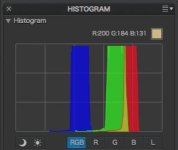
The attached histogram is taken from the piece of paper under the table lamp behind the actor in the first shot. I'm not sure how to describe the colour. Perhaps camel, or something like that.
 

Attachments

  • sample_from_Social_Network_frame.jpg
    sample_from_Social_Network_frame.jpg
    9.6 KB · Views: 0
The images you've posted show primarily tungsten lights (look at the monitor on the camera, which is daylight balanced, and observe how blue it is), but the images are also graded quite warm, so the actual white balance may have been between daylight and tungsten. The ASC article confirms that they're tungsten-balanced.

Remember that CTB costs nearly 2 stops, while CTO costs less than one. This, to me, is a big advantage of daylight sources. Contrary to Nick's experiences, I found the Red sensor dreadful, essentially unusable, under tungsten light until about 2010, after which it improved with revised color science and processing in the new software, but still the M and MX were substantially noisier under tunsgten light... even up until the Dragon (I stopped shooting around then, haven't tried Helium, perhaps it's at parity now). This is why, I believe, the Informant is orange in many scenes... and why most DPs shoot Red with daylight balanced sources even now. So like most "myths" there's some truth to it, but the idea that you can't shoot tungsten balanced scenes on Red is based on FUD form the earliest camera's flaws.... I still believe you can't underexpose as much if you're shooting tungsten, at least without noise reduction (which was used heavily on Social Network and all recent Fincher films). But you can totally use either color temperature just fine if you expose well.

I'm big into daylight sources, but I'm not even a DP just a guy who goes on camera forums. ;) You can buy little daylight LED bulbs to replace practicals, too, or just gel your daylight sources. And the efficiency is great, too.

Fwiw, I do think tungsten sources are really gorgeous, particularly on 35mm film, where the combination has this great warmth and rich tonality on skin tones. I'm very sympathetic to DPs who only shoot 35mm film and tungsten. On digital I think daylight usually looks better, including on the Alexa and especially on the Canons.

I agree that there's no way you'll get by with just those lights (I also think kinos are a bit clumsy compared with high end LEDs), but as a start, nowadays, I would err toward daylight balanced sources.

I just got an Aputure 120d, and despite the awful fresnel attachment, I like the light. I think LEDs are coming into their own in a big way, especially now that viable hard light HMI alternatives are popping up and are affordable. On the flip side, standard kino flos and tungsten kits are dirt cheap now and they're still great.
 
Last edited:
I still believe you can't underexpose as much if you're shooting tungsten, at least without noise reduction (which was used heavily on Social Network and all recent Fincher films). But you can totally use either color temperature just fine if you expose well.

That is, I suspect, exactly the point. When people said, "don't shoot RED under tungsten", they were actually saying, "don't shoot RED under tungsten unless you're close to base ISO, and/or you are using a correction filter." Phil Holland posted a simple graph about how Dragon was more forgiving than MX in this regard. Timur Civan also posted a thread about it.
 
That is, I suspect, exactly the point. When people said, "don't shoot RED under tungsten", they were actually saying, "don't shoot RED under tungsten unless you're close to base ISO, and/or you are using a correction filter." Phil Holland posted a simple graph about how Dragon was more forgiving than MX in this regard. Timur Civan also posted a thread about it.

The Dragon is weird because there are many different OLPFs. People I trust who shot with it and the MX at first found it noisier in the shadows, but I think that's changed for sure. That's the double edged sword with Red advancing technology quickly–things change and a lot of the stigmas associated with the camera are from older builds or because people are using old workflows or whatever. I think this is one reason why Arri moves so slowly. People stick with what's familiar, why change it? (I say this as someone who likes the Alexa.)
 
Back
Top