Welcome to our community

Be a part of something great, join today!

  • Hey all, just changed over the backend after 15 years I figured time to give it a bit of an update, its probably gonna be a bit weird for most of you and i am sure there is a few bugs to work out but it should kinda work the same as before... hopefully :)

The Hobbit : one art direction decision that I don't understand

The Hobbit : one art direction decision that I don't understand

  • I like the glowy skies

    Votes: 14 46.7%
  • I don't like them

    Votes: 8 26.7%
  • I don't care

    Votes: 8 26.7%

  • Total voters
    30
you're saying they did a completely new grade for the 2013 bluray?
Film negative was re-scanned in 4K and graded by the dude who was preparing for The Hobbit 123 at that time.


Also, isn't it possible that video games do the glow pass to emulate feature film effects, not the other way around?

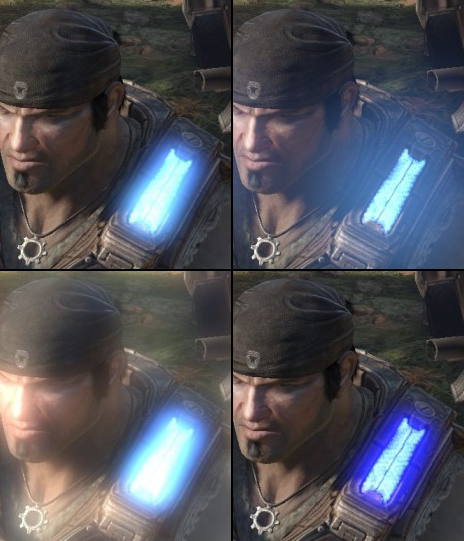
Video games usually have HDR and they use blooming effect to cut DR and make it more filmic & realistic as possible. In some games users can limit dynamic range by turning off HDR, blooming effect and etc...

HDR-4.jpg


HDR-3.jpg


HDR-1.jpg


HDR-2.jpg


BloomSamples.png


I think Phil H or Gavin G should answer better...
 
I did read that PJ went in and "softened" the second film as there was audience complaints about the first one being overly sharp. Something which probably stems from the high shutter speed, massive CG and deeper focus. I have not seen the new one yet but what you are describing may be a digital diffusion added to attempt to make it more "filmic" since it's shot with TV'esque frame rates, videogame'esque action/CG backdrops and Themepark'esque 3D ;)
 
yeah, i agree with david that this glowing diffusion is a staple of modern fantasy-art in general...

i think the dream-like light is probably supposed to convey the unrealness of the atmosphere (i.e. environment/world) or the diffusion of memory (dream is always only remembered in the telling, as are legends - and everybody knows human memory is probably the least 'accurate' record-keeper by modern standards) - and as such is further on the spectrum towards fantasy than magical realism, per se. but these are just classification terms, there are only artists and artwork in reality (or fantasy). personally, i think this goes back to the spirituality of the hebrews (and others) who talk about this invisible spirit (wind, literally) in the air with visible (i.e. manifest, real) power... quite fantastic. most fantastical stories these days use the same basic idea (i.e. the force in star wars and magic in potter/oz/greenmile/hobbit/lotr). and again, this sorta light-glow effect is a way in visual-media to suggest some invisible power that lingers in the air.

"every good story deserves to be embellished"

-gandalf

https://www.google.com/search?q=fantasy+art+landscapes&tbm=isch

Star-Wars-Poster.jpg


Oz-The-Great-and-Powerful-poster.jpg


harry-potter-deathly-hallows-part-2-poster-daniel-radcliffe-01.jpg


the-green-mile-original.jpg


Ringstrilogyposter.jpg


The-Hobbit-1024x1024.jpg
 
The 24 fps version isn't going to look video-ish due to the frame rate, and since these movies are shot with 3D mirror rigs, all of the diffusion is done in post -- and there are plenty of scenes in the first "Hobbit" that are diffused to some degree or another.

In the original trilogy, the second film was sharper than the first, mainly for story reasons, there weren't as many magic & fantasy elements in the second one ("The Two Towers").
 
While I can agree, sharp skies look cool, Jackson and the team obviously wanted something different. In the production diaries PJ also talks about replacing "boring" skies in some shots of the original photography on location with different, cloudy, dramatic plates. Yes, The Hobbit looks more colorful and saturated than LOTR films. I've found at least two reasons for that look, one is pure technical, another is likely creative one. First, most of the current 3D projection in theatres cut off light and color, that's just the way it is right now. I remember watching An Unexpected Journey in IMAX, once I put glasses on, everything looked as dark or darker and less saturated than probably even some parts of the original trilogy. Second of all, remember that Peter Jackson's version of The Hobbit exists as direct prequel to Lord of the Rings, not just a separate children's tale in the same fantasy universe. Therefore it must look brighter, joyful and fun in the beginning and get progressively darker and more grim as the evil forces of darkness are creeping back into the living world. Third and final movie "There and Back Again" most likely connected even stronger to the Fellowship in the tone. Take the Battle of Five Armies for example, there's no room for jokes at that point anymore, as certain characters losing their lives and others are left forever wounded.
 
Have to agree that this film (Hobbit 2) felt a bit over the place in visuals. Not a big fan of the excessive diffusion, the "ring" effect was probably too strong, and the "dreamy" fantasy diffusion was too obvious, too imposing. Also have to say I was let down by the animation- agree that the Dragon was well done, as well as the "leader ogre", but in certain scenes, like battles, or the barrel scene, the cgi characters, including the lead actors cgi doubles movement looked really mechanical.

Also, saw it in 24fps, and it was a much, much better experience than when I watched Hobbit 1 in HFR. 24fps is the way to go. However, I did still feel that most interior locations looked fake. I am talking about the non cgi moments like walking down stairs and caves interiors. Was it the high shutter speed, the choice of color grading, or poor craftsmanship? Maybe a mixture of all.

Overly critical here, but it was entertaining. However, these "Mini Series" type ending to feature films are really getting on my nerve. Sincerely, this is not a film, but a part of a film. It should be out of any awards category.
 
Most of the time it's a disfigurement and during some action sequences you might experience a little motion sickness. What is really annoying is that its in the front of your mind the entire time, preventing you from registering the emotional complexity of the scene or even the nuances of the various performances or effects.
 
Most of the time it's a disfigurement and during some action sequences you might experience a little motion sickness. What is really annoying is that its in the front of your mind the entire time, preventing you from registering the emotional complexity of the scene or even the nuances of the various performances or effects.

you're talking about HFR? i forgot about it after 10 minutes... it's all in your own mind if you're annoying yourself about it.
 
I have noticed the Hobbit movies look a lot "hotter" than the original LOTRs, and also a lot more digital looking, although it's the way they move the camera that really feels video-game-y to me. Some of the shots in the battle sequences really looked like they were straight out of a game, such as the shot from the river battle where Legolas kills like 40 orcs in one take.
 
Actually this is why it disturbs me in the hobbit movies. It does not look like some weather simulation, it is just there all the time no matter the weather or light. It feels to me like a post glow filter added on top purely for style.
There's a ton of stuff added to every frame purely for style. The glow is the only thing you've noticed so far.

They do massive, massive color correction on a project like this, with layers and layers of filters and windows and you-name-it. It doesn't bother me -- it's another creative choice, like everybody else. I ignore it after 5 minutes and just try to get into the story.

Here's an interesting story on WB keeping the 48FPS HFR quiet, to avoid stirring up more criticism:

http://www.thewrap.com/hobbit-sequel-steers-clear-high-frame-rate-controversy/

Littlle more natural skies would not have hurt if you asked me.
It's a movie that takes place in a fantasy world from thousands of years ago. I can accept that the sky could look different then than it does now -- not a big deal to me.

I do have a problem with movies that bend the color in our world to the extent that the look almost becomes another character and distracts from telling the story. It also gets kind of wearying when the same unnatural look goes on for 2 hours. But I accept that it's the choice of the DP and the director to use whatever style they want; it's their movie, not ours.
 
Those who do care will go out of their way to see it at the higher frame rate.

i'll say. can't tell you how many phone calls i had to make just to confirm that i had tickets to a hfr premiere, and even then i got something like, 'probably, should be.'
 
Interesting discussion. Haven't seen the hobbit yet but looking forward too.

However I can talk a bit about HDR and bloom in games. The reason why we often see so much bloom in computer games is not why you would think.
Often there will be times where the bloom is far too strong and its not intentional. It happens because:
- the technology is simply incorrect. Most of the times the technical calculations are not really finished or fully working in a computer engine.
- lack of true HDR. Textures in games are almost never in HDR in games, they are extremely compressed 8 bit textures (think JPEG at 30% in Photoshop). The way we move the hdr components apart is by multiplying the whole texture (10x for the sky). Or by stretching the whole texture out and multiplying it with a curve. This gets several artifacts and often in hdr that does not look real. And hdr is always what triggers the bloom.
- Do we use a Camera or an Eye? Our eyes and cameras work a bit different. Cameras has more glow than the eye has and it also has more lens flares. However the eye adapts faster and different to the bright and dark areas. In a computer game most decide to mimick a camera. We found that the best was to do a mixture between an eye and a camera where we took the most visually interesting skills from both the eye and a camera. I sometimes called this Cinematic Eye.
- To get good hdr and blooming all textures needs to be light balanced correctly. If some are too dark or light everything will fall appart and confuse the Cinematic Eye.
- Bloom, especially in PS3 and Xbox, is a very simple glow normally. Its simply too expensive to calculate a good looking bloom. In PS4 this will change a lot, its easy to have better calculations.

So to summarise bloom and hdr is one of the least understood technical aspects of computer games art. That is why we often see it used incorrectly in games. As we get more processing power and more standardised ways of dealing with bloom, flares and hdr in games the quality will get better.

Cheers!
/Andreas
 
Regardless of the reasoning behind the bloom look in the Hobbit:

We have a different perception because we have different visual references

Being <30 years old, I associate blown out skies that glow to amateur video footage and video games.

Skies were often blown out in amateur footage because of the limitations in dr of the mainstream cameras (until recently).
And in the theaters it looked amazing thanks to the professional equipment, craft, and matte paintings.

Video games heavily abuse the bloom effect, which is not something I am used to seeing in movies:

bloom.jpg


For these reasons, that particular art direction distracts me in the Hobbit and makes me feel I am watching a video game.

David Mullen brought an interesting and valid point:

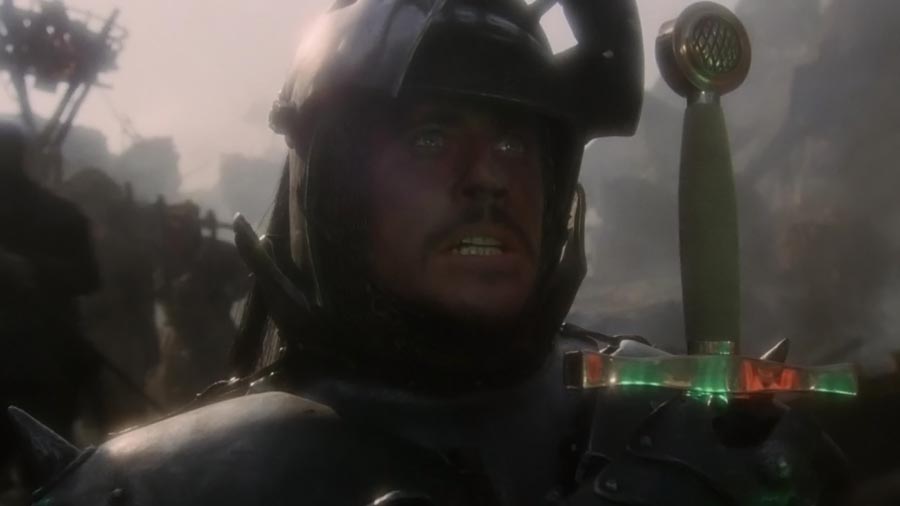
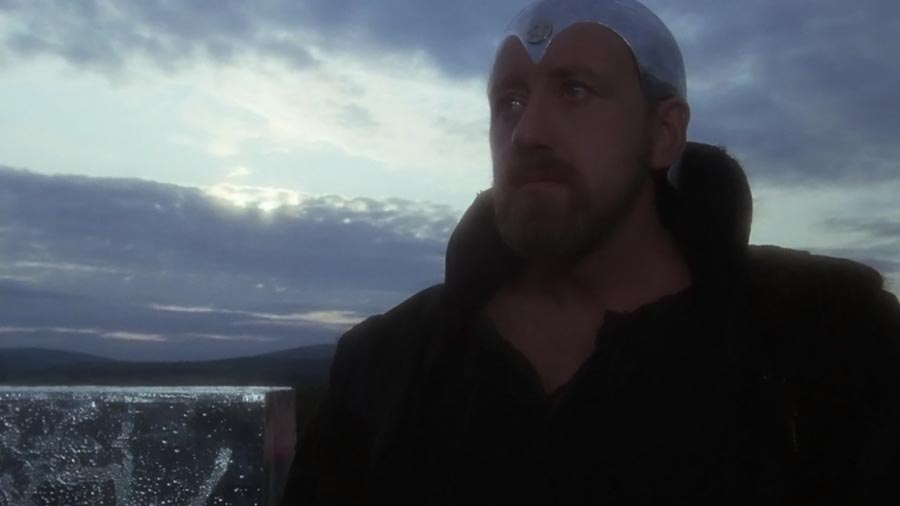
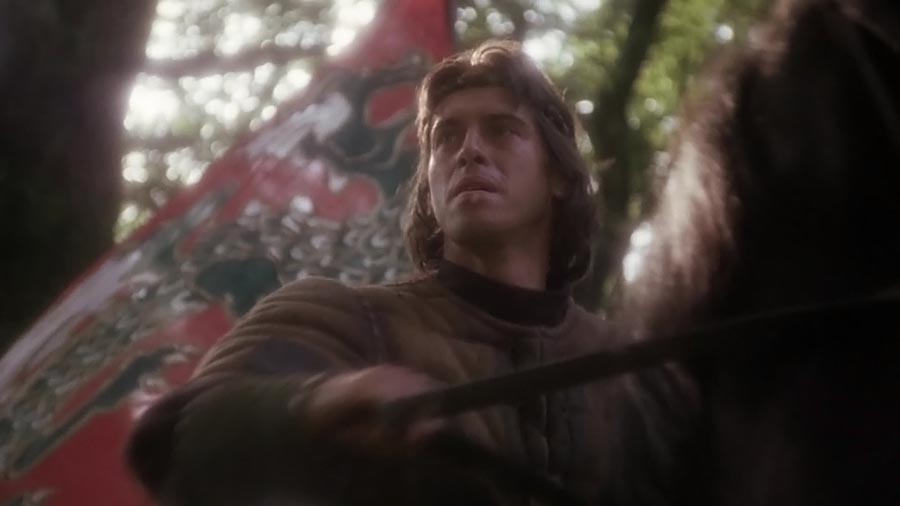
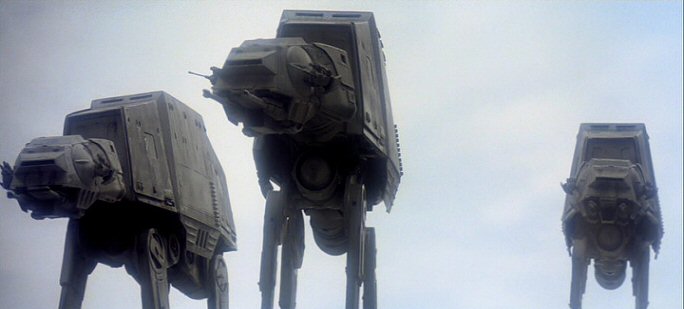
This glow is reminiscent of the diffused look of medieval fantasy movies like "Excalibur" or sci fi movies like the original star wars:

excalibur.jpg


empire6.jpg


Which does indeed make more sense regarding the thought process behind the Hobbit look.

But both these movies came out before I was even born.

Being from different generations, we have a different reading of the same look.

very interesting posts, appreciate the discussion :-)
 
There may be an art decision to make the skies more fluorescent, incandescent or whatever. - However, if you have been around for long enough, there is also a truth related to climate change. From about 1988, the skies to my observation have become incrementally different, harder, stingier on the eyes than I remember as a kid. Some times of the year down here, the lower sky now seems to have a stronger return of light than the clouds when the clouds are at about half to five eighths. I know eyesight changes with age and blue acuity is apparently one of the casualties of dotage. I also know that colour photography deteriorates with the passage of time. Next time you view some old photos, take time out to look at the sky colours. They can't all be wrong. - In the meantime, I am quite content to let the art department play with the skies in "Lord Of The Rings" et al. It is a fantasy and sometimes fantasy if it is too real, falls over for me. Given that they shot in New Zealand and may have pointed cameras towards the south in some outdoors scenes and maybe shot at a time of the year when the ozone layer is still a bit thin in the skin?? - Then maybe I am also talking absolute rubbish.
 
Last edited:
robert, i think they did a lot of sky replacement. it seems to me the glow was a purely creative decision, not any kind of technical limitation. some will say that, and sweeping cameras, and hfr makes it look 'cheap', 'video', 'gamish'... that's a pov, i thought it was beautiful and i absolutely hadn't given any thought about the amount of glow in the sky until this thread popped up.

our analytic cognition is very separate from our narrative cognition... it can sometimes take over and pull us out of a story. i'm not saying it's not possible to walk in both worlds, but i find that most of my focus needs to go into watching the narrative, and all the analytic/logical stuff gets logged away for later. the only exception may be when something is so amazingly done that an analytical awareness adds to the awesomeness of the experience. at least, that's my personal formula for getting the most out of movies. it's all about balancing conscious and unconscious focus between analytic and narrative cognition. if you go in critical from the start, especially about one certain thing like camera-quality or framerate or fx or whatever... you'll probably be disappointed, and you'll be missing it.

http://books.google.com/books?id=IF...9&dq="narrative+cognition"+and+"paradigmatic"

http://books.google.com/books?id=b6...8&dq="narrative+cognition"+and+"paradigmatic"

http://wikis.sub.uni-hamburg.de/lhn/index.php/Cognitive_Narratology
 
Is it bad that I preferred the look of the first Hobbit over Smaug? I was not feeling the skys at all nor the filters used...I loved the sharpness of the first one for some reason.
 
Is it bad that I preferred the look of the first Hobbit over Smaug? I was not feeling the skys at all nor the filters used...I loved the sharpness of the first one for some reason.

well, according to the data so far... 53.333% of people might agree with you or just not care.

does it bother anyone else that the discussion about one of the most major features shot on red has centered mostly on post-filtration/coloring/compositing and about 3 gopro shots. i mean... come on, guys.

:emote_headwall:
 
I just saw the movie and I noted the following:
  • Seemed like there was some inconsistency to the look. Even within scenes, shots would sometimes stand out to me as "different".
  • The skies did bother me sometimes, in particular seems like the ones with Gandolf were the most distracting. However, not enough to make me dislike the movie. Just something that jumped out at me at times.
  • There were scenes that, like in the original, seemed very video game like. However, not as much as the trailer for the new 300 movie. Yikes! I know it's the style of those films but it simply looks like it was shot in a studio against greenscreen.
  • I saw this in 24fps this time. I know we don't all agree about the 48fps concept but I will say this, I do prefer 24fps. I will probably go back and watch this again in 48fps but my eyes have kind of made up their mind. I just enjoy the 2D, 24fps films more. Call it conditioning, call it whatever. But I can understand why some may prefer 48. We all see the world differently.
And I do want to say these are just some technical observations. I thought the movie was enjoyable. Yes, some of the CG was clunky in addition to the other things I mentioned but none of it took me out of the story. I can't say the same about the first Hobbit when I saw it in HFR. That did take me out of the story for a while. But people have worked extremely hard on these movies to create these fantastical worlds that would be impossible to create in such detail otherwise so to that end I tip my hat to everyone involved. I can barely wrap my head around the amount of work necessary to pull that off.
 
Back
Top