Welcome to our community

Be a part of something great, join today!

  • Hey all, just changed over the backend after 15 years I figured time to give it a bit of an update, its probably gonna be a bit weird for most of you and i am sure there is a few bugs to work out but it should kinda work the same as before... hopefully :)

The Gentleman's Underwater Bubble Blower Thread

Nice shot Jim. I guess after our stay, the island is busy restocking the beer and conch fritter supplies. :-)
 

Attachments

  • two hammerheads.jpg
    two hammerheads.jpg
    51.6 KB · Views: 0
Nice shot Jim. I guess after our stay, the island is busy restocking the beer and conch fritter supplies. :-)

Nice shots guys, was nice to meet you there, love the black and whites. Ron's monochrome must be killer.

Tom, yes the day after you guys left I went to order cracked conch and they said there wasn't any and that this guy named Tom ate it all.

Best,
Frazier
 
Nice shots guys, was nice to meet you there, love the black and whites. Ron's monochrome must be killer.

Tom, yes the day after you guys left I went to order cracked conch and they said there wasn't any and that this guy named Tom ate it all.

Best,
Frazier

Great to see you Frazier and nice photos you posted! That was one Boat full of Red Epics!!!
 
Since we're on the theme, I've decided to name these two, wait for it....


Rodgers & Hammerstein :yesnod:
 

Attachments

  • Rodgers & Hammerstein.jpg
    Rodgers & Hammerstein.jpg
    60 KB · Views: 0
The weight of DeepX is 4.5kg. It is made of precision machined aluminium and the diameter is approximately 180mm. I'm not sure of the weight of the Nauticam NA-DP4 monitor housing, but I think it is less than 1kg.

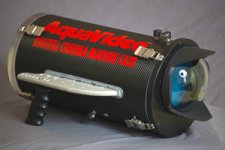
I stand corrected: The original Epic/Scarlet housing shown below weighs about 17 pounds - and easily accommodates virtually any configuration of Epic likely to be used by a professional, with aluminum frontplate; solid handle mount wings and mounting points for lights and such; provision for RED bricks, Anton Bauer, RED Pro battery module, etc., internal RED 5" LCD which also provides ability to do focus and iris with the RED electronic mounts (or many other functions) using the LCD buttons (which is NOT possible with an aftermarket monitor like the DP4); and numerous off the shelf port options that accommodate both SLR lenses and large cinema lense - inexpensive 6" and 8" acrylic domes and 8" glass dome, extensions, long macro ports, etc. It is also fairly easy to do a Nikonos mount frontplate as I mentioned in an earlier post for those who would like
that option.

The AquaVideo™ UWEpic-SLP (for "Shorter Length PVC" or "SLR lenses PVC" take your pick) takes off about 7" in length, a little bit in diameter, and weighs about 5 lbs. lessand still accommodates the RED LCD with the controls. It is geared more for those using SLR lenses, but is not limited to them as it is easy to accommodate the same lenses as the regular Epic using different front plates (similar to how Gates does it with Deep Epic). The aluminum version will be essentially the same - just out of aluminum so about 4 pounds heavier and $1900 more expensive.

Pricing :
UWEpic-SLP $4500 USD (PVC)
UWEpic-SLA $6399 USD (Aluminum)

90 watt hour custom lithium ion batteries $399 charger $149.00


The weight of DeepX is 4.5kg. It is made of precision machined aluminium and the diameter is approximately 180mm. I'm not sure of the weight of the Nauticam NA-DP4 monitor housing, but I think it is less than 1kg.


More and more 3D productions seem to stear away from beam splitters and use software solutions that become more powerful and cheaper every day. For example emotion 3D, allows converting 3D footage shot with wider stereo base (side-by-side) to generate intermidiate and smaller IA to adjust the depth in post. This is useful for generating different depth profiles (parallax) for different distribution: mobile devices, TV, cinema and IMAX - all of which requiring different stereo base.

Nice of you to piss on my parade even though it was a casual remark not even related to underwater or anything competitive to you. As usual you couch your statement in such a way that, although misleading, it isn't completely wrong. ("more and more, blah, blah, blah"). Of course your statement is trying to offset the problems inherent in the ridiculously large interaxial of your side by side underwater 3D rig but there are problems with large IA that aren't amenable software fixes. But since this is the Gentleman's I will leave it at that.
 

Attachments

  • epichousingstarboard300.jpg
    epichousingstarboard300.jpg
    50.8 KB · Views: 0
Michael, I just provided information that is factual and informative. Software depth adjustment has nothing to do with 3Deep as we, just like you, are involved in development of a beam splitter rig. I thought it relevant to mention this as there are others involved in 3D here.

The reason I pointed out emotion 3D is not to "piss on your parade", Ross's, Jonny's, Gates' or my own. It is because there are currently underwater IMAX productions as well as several hollywood features shot with single camera and using software, similar to emotion 3D, to generate depth maps and spit out several stereo base outputs for different screen sizes. It is just a fact, or trend that I have noticed and that has been brought up on the CML list a few times.

You seem to pay little attention to the market and then post nonesense all the time. So, I thought it would be helpful and interesting for you (and others) to know and something I had to face too. Having head in the sand (or, as Tom described it, keeping cards close to your chest) just because it may not fit with the rig that you invested in is not helpful to anyone. I was the first to dismiss dome ports despite investing more than anyone else in this technology and having the best dome port ever made.
 
what is most certainly true is that the more the camera crew leaves to Post...the higher that post cost becomes and 3d manipulation is very expensive....It can make or break your pitch proposal.

emotion 3D is cheaper than any beam splitter and gives you infinite ability to adjust stereo base and produce output not just baked in for IMAX screen, but for any screen size. This is done to reduce the cost and use simpler, less expensive, more agile production workflow.
 
Hey guys, the last thread was shut down because it went the way you now seem to be taking it. Either start your own 'my sheep is prettier than your sheep' thread, or take it down a notch.

Send me your paypal details, I'll buy both of you a chill-out beer.

:emote_hippie:
 
emotion 3D is cheaper than any beam splitter and gives you infinite ability to adjust stereo base and produce output not just baked in for IMAX screen, but for any screen size. This is done to reduce the cost and use simpler, less expensive, more agile production workflow.

It looks fantastic, but I have not seen any post houses here in Los Angeles using After Effects for the big screen. I am however thrilled to see 2d to 3d conversion, but the last film that i went to a preview--not yet released--Titans of the IceAge for Imax theater release had some beautiful 2d to 3d aerial conversions...but the cost was handsome....BUT, it did beat cost of flying a 3d rig around in a jet ranger by a bit...but these companies don't use tools like After Effects, FCPX or Premier.....not for large screen that i have seen in LA anyway...television however---well that's a different beast and likely a great workflow---That said, Dashwood has some AMAZING 3d tools as a plugin for FCPX--their expensive tool suite that is...AND, very good toolset to produce 3d television products IMO--which is well......my opinion.

Edit: agreed, using 2d to 3d is FAR cheaper. In fact so much so that we don't even need a beam-splitter or parallel rig...but i'll bet there are some real advantages to shooting 2 eyes.....not of least of which is the volume perception.....not sure of the proper wording, but i'm sure i can be corrected by somone out there.
 
OK.. this is getting thick. My company, Next3D, encodes stereoscopic content from just about every major studio, independent producers, large-format filmmakers (in fact, DR Roller is a Next3D co-founder), Turner Sports, and ESPN. It is true that view-syntheis has gained popularity and that there are a number of innovative new techniques in development to automate depth map construction (e.g. http://www.3dfocus.co.uk/3d-news-2/disney-test-trifocal-camera-to-end-3d-rigs/11660). HOWEVER, everyone who has every used a view-syntheis solution knows it's a major compromise (cost vs quality) over native stereo because the missing occlusion information is, well... MISSING. And, when the depth data is NOT acquired concurrent with the 2D footage (the usual case) the results are even worse for the occlusions. In most cases, this edge data is hand painted in, frame-by-frame. We happen to be privy to a recent quality-of-experience test where view-synthesis totally bombed for live sports. Occlusion information is a vitally important component of stereo perception and blurry or improperly formed edges will cause eye-strain like crazy.

So, beamsplitters are a little like what Winston Churchill said about democracy... they are the worst possible type of stereoscopic motion-picture acquisition tool that exists, except for every other tool. You keep building, Mike.

-- David Cole, Next3D
 
Agreed that emotions should be toned down, although yes, the old modus operandi rears its ugly head once again, so it may be difficult to contain one's feelings...

Onto 3D, both parties are right. Johnny is 100% on the money (no pun intended) in that leaving a lot of conversions for post substantially shoots up budget numbers. Now mind you, this is not stereo conversion from 2D sources, but relatively simple realignment, and yet, people charge a LOT for this service. Why? Very few can do it well. And when I say relatively simple, I speak from experience, I have done plenty of it. The days of the heavy iron are returning if you ask me. Just because we are now using solid state media instead of tape, and because many software solutions that are priced within anyone's reach can do what million dollar hardware did just a few years ago, does not mean that there isn't exorbitantly expensive equipment out there. and 3D is one of th areas where post houses are charging an arm and a leg for work that they sell as voodoo when it isn't. Like color correction, stereo post relies more on an eye and instinct for when, where and how much/little can you converge images and get away with it, and this is more of an art than a learned technique. that's why, even with all the money they throw at it, so many 3d movies, both acquired and converted, look so horrible, because despite all their heavy iron gear and their astronomical prices, those facilities have no true understanding of the stereo space. Thus, leaving too many decisions to them can not only become prohibitively expensive, they can also, simply put, f...p up your material.

On the other hand, yes, more and more can be done in post. I, for one, hate mirror rigs and would only use them for close up stuff. Anything wide, I'm happy to shoot parallel and eliminate all that suffering and drama. I understand the need for smaller interaxials, and marvel at the guts and skill of companies like Gates for creating something like DEEP PULSAR. I'm just saying that there are, indeed, ways to shoot parallel and get away with a lot, to the point where you can deliver anything you're asked for by a client, if you know how to use the post tools appropriately. That is just me of course, and it would be hard to argue against all the other guys out there with names and reputations who have chosen beamsplitter rigs. But again, I think a big part of it stems from the fact that very few people actually understand stereo post, a dark magic that remains more elusive than color grading or anything else. Emotion 3D is amazing, even if its interface is almost as nightmarish as Speedgrade's (must be some northern European thing) and it will only get better from here on. Bending, stretching, compressing, and generally affecting specific parts of an image so that it blends seamlessly with another is an art that is becoming more and more mature, so in a couple of years, it won't matter how you shoot, you WILL be able to make anything look like you need it to in post. And as general rule, the wider you shoot the more options you got, not the opposite.

I would like to test Pawel's parallel rig, sounds like a lot could be extracted from it...
 
OK.. this is getting thick.

Perhaps, but given the 'voodoo' nature of the art Rudi mentions, and the prices being charged to stick the doll in secret places, I find the comment somewhat disingenuous.

In mapping depth and occlusion information, does a 3D rig require two of the same cameras to acquire footage? in the continuing absence of a viable post solution, why could a much lesser, smaller, and cheaper camera not be mounted and synced to the primary unit for the sole purpose of capturing that data? The name of the game here is parallax, nothing more, nothing less, is it not? Depth perception requires two eyes, they do not necessarily have to see at equal acuities, in my view.

Light shed much appreciated, this forum has a solid reputation for generous folks in the know sharing information, educating the great unwashed, and illuminating the dark places.
 
given the 'voodoo' nature of the art

Stereo is a pain in the ass process from acquisition to distribution. Most of the folks STILL in the 3D ecosystem (now that the bloom is so firmly off the rose) are NOT selling voodoo. They work tirelessly to keep the quality of the end product high and not tear the audiences' eyes out. They realize that there are only a few more bad 3D movies between survival and another dark age for 3D.

does a 3D rig require two of the same cameras to acquire footage?

No, in fact the Fraunhofer rig (http://www.3dfocus.co.uk/3d-news-2/d...-3d-rigs/11660) uses two small satellite cameras to acquire the depth map and the "fill" pixels for the torn occlusions. The problem is - now you have 3 streams to encode and transmit (for live 3D) instead of 2 streams that compress well with a differential process. And - if you think matching a set of stereo lenses is hard...

The name of the game here is parallax

Occlusion cues are FAR more important stereo perceptual cues than parallax. In fact, when parallax occlusion cues don't agree, it causes the worst kind of rivelry and a nasty headache. So, any measure that reduces the quality of occlusions in a visually apparent way will detract from viewer comfort and appreciation of the stereo scene. It's fact.


Apologies for getting so far afield of bubbleblowing.

-- DC
 
Last edited:
With the direction this discussion went, I'm wondering (even though it was clearly stated in the original post that referred to it in passing) if people understand that my Aero3D™ mirror rig is for normal topside use - nothing to do with underwater or the arguments of how much interaxial or post-convergence you can get away with when shooting underwater - which is typically significantly more than you can get away with for surface work.

The Aero3D is a relatively low-cost rig (sub-$5000) priced to compete in the range of the 3D film factory and Hurricane rigs but designed to be both lighter and much more solid and square (i.e. camera and mirror alignment) than those units.
 
Johnny, what was the per/second cost of dimensionalizing the aerial 2D footage you mentioned?

....that i do not know. BUT, what i can say is that i was recently at a screening with RPG in Los Angeles who oversaw post production for Titans of the Ice Age and they had some great aerials shot in 2d....speaking to the post supervisor those were some of our questions...cost of this....and that is something we would have to hash out with the folks that did it--another LA firm...there is not a per second cost....more of an hourly fee. when we ask costs...there's a grin and a reply of "well, just keep it to as few seconds as possible please". But what i can say the folks that did the 2d to 3d conversions for the film did a fantastic job...i thought it was as good as anything i've seen shot in 3d....you would NEVER have known.
 
Back
Top